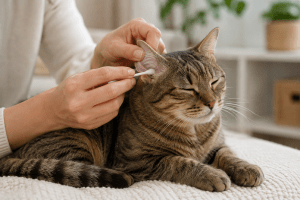
Why does my cat bite me gently? Most of the time it is not aggression at all but a love bite, a soft, affectionate nibble that shows your cat is comfortable with you and treats you as part of its social group. Cats also nip gently during play, to get your attention, or as a polite ‘that’s enough’ during petting. The key is reading the context and body language, because the same mouth that gives a tender nibble can deliver an overstimulated warning. This guide explains what gentle cat bites really mean, why cats target hands, feet, noses, and hair, how to tell affection from aggression, and how to redirect biting that goes too far.
Gentle bites make more sense alongside the rest of a cat’s body language. See the guides on cat body language and why cats lick you, and explore more on the Waldev homepage.
On this page
Gentle bites are usually love bites
The reassuring headline, and the answer most owners are hoping for, is that a soft bite from a relaxed cat is usually a sign of affection rather than any kind of aggression.
When your cat gives you a gentle nibble that does not break the skin, especially while it is relaxed, purring, kneading, or grooming you, it is almost always what people call a ‘love bite’: a soft, affectionate mouthing that is part of how cats show closeness and treat you as part of their social group. Far from meaning your cat dislikes you, these gentle bites usually mean the opposite, that your cat is comfortable, bonded, and being affectionate in a very feline way. The behaviour is closely tied to social grooming and the gentle nibbling cats do with each other and with kittens, so being on the receiving end is a compliment of sorts. This is quite different from a hard, defensive, or fearful bite, which comes with tense, unhappy body language. The whole skill in understanding cat bites is reading the context: a soft nibble from a purring, relaxed cat is love or communication, while a hard bite from a tense, ears-back cat is a very different message. Because gentle bites are so often misread as bad behaviour, it is worth knowing that in most cases your cat is not being mean at all, and the rest of this guide explains the various friendly and communicative reasons behind gentle biting, and how to tell them from the rare genuinely aggressive bite.
Why cats give love bites
To understand love bites, it helps to know where the behaviour comes from, because it is rooted in the natural social and grooming behaviour of cats rather than being something odd or unique to your pet.
Love bites are thought to stem from the social behaviours cats use with one another. Cats that are bonded groom each other, a behaviour called allogrooming, and during this mutual grooming they use their teeth as well as their tongues, giving gentle nibbles to work through fur, remove debris, and reinforce their social bond. Mother cats also use their mouths gently on their kittens. So when your cat softly nibbles you, often after or during licking, it is treating you like a fellow cat and a member of its social group, grooming and bonding with you in the way it would with a trusted companion. Love bites can also be a form of communication and interaction, a way of engaging with you, showing affection, or simply making contact. They are usually delivered with relaxed, contented body language, purring, half-closed eyes, a loose posture, which marks them clearly as friendly. Understanding this origin takes any worry out of the behaviour: a cat that love-bites is not being aggressive or badly behaved but is displaying a natural, affiliative behaviour that signals trust and closeness. The main thing to manage is simply the pressure, since even an affectionate nibble can occasionally be a little harder than you would like, which is easily redirected, as covered later.
It is worth reassuring owners who worry that a love bite means they are doing something wrong: they almost never are. A cat that feels safe enough to mouth you gently, exposing its own vulnerability in the process, is showing a level of trust it does not extend to just anyone, so the behaviour is best received as the compliment it is. The occasional too-firm nibble is simply a cat that has not perfectly calibrated its pressure, much as an excited person might grip your hand a bit too tightly, and it is easily softened over time by the gentle redirection described later, rather than being a sign of any problem in the relationship.
Why cats lick then bite
One of the most common specific patterns owners ask about is the lick-then-bite, where a cat grooms you affectionately and then adds a little nip, and this too usually has an innocent explanation.
The lick-and-nibble sequence is classic grooming behaviour. When cats groom each other, they alternate licking with gentle bites, using their teeth to work through knots and stubborn bits of fur that the tongue alone cannot manage, so the lick followed by a nibble is exactly the pattern of feline mutual grooming. When your cat does this to you, licking your skin or hair and then giving a soft bite, it is grooming you as it would a companion cat, which is an affectionate, bonding gesture and a real sign of acceptance. There are a couple of other possibilities within the same friendly range. The lick-and-bite can be playful, especially in a lively or young cat, shading from grooming into gentle mouthy play. It can also be a mild signal that the cat is starting to get overstimulated by the contact and is transitioning from fully enjoying it toward having had enough, in which case the bite is a soft early warning rather than aggression. Reading the cat tells you which: if the licking and nibbling are soft and the cat is relaxed and purring, it is affectionate grooming; if the bites are getting firmer and the body is tensing, the cat is edging toward ‘that’s enough.’ In most cases, though, a gentle lick-then-nibble from a contented cat is simply your cat grooming and bonding with you.
Petting-induced overstimulation
Not every gentle bite is pure affection, though; one of the most important things to understand is the bite that comes during petting, because it is communication, a cat saying ‘that’s enough,’ and reading it correctly prevents a lot of nips.
Many cats enjoy being stroked, but only up to a point, and beyond that the sensation can become too much, over-arousing or even irritating, leading the cat to bite to bring the petting to an end. This is known as petting-induced overstimulation, or sometimes petting aggression, though ‘aggression’ overstates what is really a communication problem. The cat is not being malicious; it has simply reached its threshold for that kind of contact and is telling you, in the clearest way it has, that it would like you to stop. The bite in this situation is often quicker and firmer than a love bite, and crucially it is almost always preceded by warning signals that the cat gives before resorting to teeth. The reason people get ‘suddenly’ bitten during a nice cuddle is usually that they missed those earlier signs. Some cats have a low threshold and can only tolerate brief stroking; others are fine for a long time. Certain areas, the belly, the base of the tail, being restrained, are common triggers. The key to preventing these bites is not to stop petting your cat altogether but to learn its individual limits and its warning signs, and to stop before it reaches the point of biting, which keeps the interaction positive for both of you. Recognising overstimulation as communication rather than bad behaviour changes how you respond to it entirely.
There is a physiological side to overstimulation worth knowing, because it explains why the switch can feel so sudden. Repetitive stroking, especially over the same spot, builds up sensory input that can tip from pleasant to over-arousing, and some cats seem to have a lower tolerance for this than others, going from contented to overloaded quickly. It is not that the cat suddenly turned on you; the enjoyable sensation simply crossed a line into too-much, and the cat did what cats do and said so with its mouth. Understanding it as a sensory threshold rather than a mood swing helps owners take the bite less personally and focus on spotting the approach of that threshold in time.
The warning signs to watch for
Because overstimulation bites are almost always preceded by signals, learning to read those signals is the single most useful skill for avoiding bites during petting, so it is worth knowing them clearly.
Before a cat bites during petting, it typically gives a series of escalating signs that it is reaching its limit, and catching these early lets you stop in time. Watch for the tail: a tail that starts flicking, twitching, or thrashing from side to side is a strong sign of growing irritation or arousal. Watch the skin along the back, which may twitch or ripple. Watch the ears, which may turn to the sides or flatten back (‘airplane ears’). Notice if the cat goes tense, stops purring, or its purr changes, or if it turns its head to look at your hand or the spot you are stroking. Some cats give a low warning sound or a sudden stillness. Dilating pupils and a general shift from relaxed to alert are also clues. Any of these means the cat is approaching its threshold, and the right response is to stop stroking and take your hand away, giving the cat space, before it feels the need to bite. Over time you will learn your particular cat’s early signs and its tolerance, so you can keep petting sessions within its comfort zone. The great value of reading these signals is that it turns ‘my cat bites me for no reason’ into ‘my cat warned me and I can now respond,’ which prevents the bites and keeps the relationship happy, since the cat learns you listen to it.
That last point matters more than it might seem. When a cat gives its warning signals and the petting stops in response, the cat learns that its polite communication works and that it does not need to escalate to a bite to be heard. When those signals are repeatedly ignored, some cats give up on the warnings and go straight to biting, which is how a cat gets a reputation for biting ‘without warning.’ So reading and respecting the early signs is not only about avoiding a single nip; over time it teaches the cat that gentle communication is effective, which keeps the whole relationship calmer and makes bites rarer.
Play biting and the hunting instinct
Another major source of gentle biting, especially in young and lively cats, is play, because biting is a natural part of how cats play and hunt, and understanding this explains a lot of nipping at hands and feet.
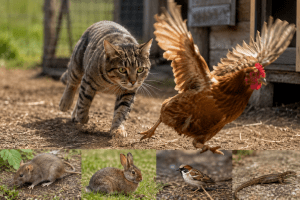
Cats are predators, and play in cats is largely practice for hunting, so it naturally involves stalking, pouncing, grabbing, and biting. When a cat plays, it may grab your hand or foot and give it a bite, mouthing and ‘wrestling’ with it as it would with prey or a playmate, and in most cases this play biting is gentle and not intended to hurt, especially in a cat with good bite inhibition learned as a kitten. Kittens and young cats are particularly bitey in play, since they are full of energy and still learning, and littermates normally teach each other to moderate their bites, which is one reason a hand-reared or singleton kitten may bite harder. The problem arises mainly when people, often unintentionally, teach a cat that hands and feet are toys, by wiggling fingers for the kitten to attack or letting it pounce on moving feet, which encourages biting those body parts. The behaviour itself is normal predatory play, not aggression, but it is best redirected onto appropriate toys so the cat does not learn to treat human skin as prey. Plenty of interactive play with wand toys and things the cat can chase, catch, and ‘kill’ channels this hunting energy appropriately and reduces the urge to bite hands and feet. So play biting is natural and usually gentle, and the aim is not to suppress the cat’s play drive but to aim it at toys rather than people.
An important consequence of this is that a cat that bites a lot in play is very often a cat that is under-stimulated rather than badly behaved. A single indoor cat with no hunting outlet and little interactive play has a full tank of predatory energy and few appropriate ways to spend it, so it turns to the moving targets available, your hands and feet. Owners sometimes try to solve play biting by withdrawing and interacting with the cat less, which backfires, since it leaves the cat even more pent up. The more effective answer is usually the opposite: more structured play with proper toys, so the energy has somewhere to go, which tends to reduce the ambushes on people markedly.
Interactive play satisfies the instinct behind play biting. See the guides on cats and laser pointers and cat paw behaviour for more on play and interaction.
Biting your nose, hair, and feet
Owners often ask about very specific biting targets, the nose, the hair, the feet, and each of these popular targets has its own usually harmless explanation worth knowing.
Biting or nibbling your nose or face is generally affectionate and grooming-related. The face and head are a focus of social grooming between cats, so a cat that gently mouths your nose or chin is often grooming and bonding with you, and your nose is also warm, moves, and carries your scent, all of which draw feline attention. Chewing or biting hair is another common one, linked partly to grooming behaviour, since a cat may ‘groom’ your hair as it would fur, and partly to the texture or the smell of hair products, which some cats find appealing; a few cats develop a real fixation on chewing hair. Biting feet is very often pure play and predatory instinct: feet move in enticing, prey-like ways, particularly when they twitch under a duvet or walk past, and this triggers a cat’s urge to stalk and pounce, so ‘attacks’ on feet, especially ankles and toes, are usually hunting play rather than any dislike. Biting hands frequently combines play and, during petting, overstimulation. In each of these cases the behaviour is generally normal and not a sign of an unhappy or aggressive cat, though where it becomes a nuisance, such as a cat ambushing feet or chewing hair, it can be discouraged and redirected onto toys, and hair-chewing that becomes obsessive is worth a vet mention. Knowing that these targeted bites have simple, benign explanations takes the mystery out of them.
The under-the-covers foot attack deserves a special mention, since so many owners are ambushed by it at night. To a cat, toes wiggling beneath a duvet are an irresistible small moving target, exactly the kind of half-hidden prey a cat is wired to pounce on, so it is pure hunting play with no ill intent. The fix is simply not to let feet under covers become a game: keep a toy by the bed to redirect an over-keen cat, tire it out with play before bedtime, and avoid moving your feet enticingly when the cat is in pouncing mode. Understanding it as hunting rather than hostility makes it much easier to manage without taking it personally.
Attention-seeking and kittens
Two further contexts are worth covering, because they explain a lot of gentle biting: cats that bite to get your attention, and the extra bitiness of kittens, both of which are normal but can be shaped.
Some cats learn to give a gentle bite or nibble as a way of getting attention, whether they want food, play, or interaction. If a soft bite reliably makes you look at, talk to, or engage with the cat, even to say ‘no’, the cat may learn that biting works as a way to get a response, so an attention-seeking nip is really communication that has been accidentally reinforced. The way to manage this is to make sure biting does not pay off, by not rewarding it with attention, while giving the cat plenty of positive attention, play, and interaction at other times so it does not need to resort to biting. Kittens deserve a special note, because they are naturally very bitey. Kittens explore the world with their mouths, play hard, are teething, and are still learning bite inhibition, the skill of controlling how hard they bite, which they normally learn from their mother and littermates who yelp or stop playing when bitten too hard. A kitten that bites a lot is usually normal, but it is the ideal time to teach good habits: always redirect biting onto toys rather than hands, end play if the kitten bites skin, and never encourage it to attack fingers or feet, so it grows up understanding that human skin is not for biting. Cats that learned poor bite inhibition as kittens, such as orphans or singletons, may bite harder as adults and need more patient redirection. In both attention-seeking and kitten biting, the behaviour is normal and manageable with consistent, calm handling.
The teething angle is worth a moment for kitten owners, because a kitten between roughly three and six months is losing baby teeth and growing adult ones, and like a teething baby it may chew and bite more to relieve the discomfort. Offering safe things to chew, and being patient through this phase, helps, and it usually settles once the adult teeth are in. Throughout kittenhood, the consistent message of redirecting bites onto toys and never onto skin pays off enormously later, since the habits a kitten forms about what is acceptable to bite tend to stick into adulthood, which is why the early months are the best time to get it right.
Love bite vs. aggressive bite
While most gentle biting is benign, it is important to be able to distinguish a friendly or communicative bite from a genuinely aggressive one, because the body language and the response required are very different.
The difference is mostly in the pressure and, above all, the body language surrounding the bite. A love bite or play bite comes from a relaxed, comfortable, or playful cat: soft pressure that does not break skin, loose and relaxed or bouncy body language, often purring, half-closed eyes, or engaged play, and no real intent to harm. An aggressive or defensive bite is the opposite: it is hard, meant to make you stop or back off, and it comes with clear signs of fear, anger, or threat, flattened ears, hissing or growling, a tense or crouched body, an lashing tail, dilated pupils, and a defensive or agitated demeanour. Overstimulation bites sit in between, a firmer ‘stop’ bite from a cat that was enjoying petting until it reached its limit, preceded by the warning signs already described. The context differs too: aggressive biting is usually driven by fear, feeling threatened or cornered, pain, or territorial or redirected aggression, rather than by affection or play. Recognising which kind of bite you are dealing with matters because the responses differ, a love bite needs only gentle redirection if it is too hard, overstimulation needs you to read the warnings and stop in time, while genuine fear or defensive aggression needs you to give the cat space, avoid punishment, remove the trigger, and, if it is frequent or new, seek help. The reassuring point is that most gentle bites owners worry about are firmly in the affectionate or communicative category, not the aggressive one.
How to redirect biting
Whether you simply want gentler love bites or need to curb play or attention biting, the same humane, effective principles apply, and none of them involve punishment, which tends to make biting worse.
Start with the golden rule: never use your hands, fingers, or feet as toys, since letting a kitten or cat attack them directly teaches it that human skin is fair game, so always play with wand toys, balls, or toys the cat can grab, wrestle, and ‘kill’ at a safe distance from your body. Give plenty of interactive play, several short sessions a day, to burn off the predatory energy that drives play biting, and finish sessions letting the cat ‘catch’ the toy so it feels satisfied. For petting bites, learn your cat’s warning signs and limits and stop before it reaches the point of biting, keeping sessions within its comfort zone. When a cat does bite, do not shout, hit, or physically punish it, as this frightens the cat, damages trust, and often increases fearful or defensive biting; instead, calmly stop the interaction and withdraw your attention, so biting simply ends the fun rather than earning a reaction, and the cat learns it does not achieve anything. Redirect a cat that goes to bite onto a toy. Make sure the cat has enough enrichment, stimulation, and outlets generally, since a bored or under-stimulated cat bites more. Be consistent, and give everyone in the household the same rules. Finally, if biting is hard, frequent, aggressive, or a new change, rule out pain or a medical cause with your vet, as covered next. With patience and consistency, most biting can be reduced and redirected, and gentle love bites, of course, are usually fine to simply enjoy as the affection they are.
When biting needs a vet
Finally, while gentle love bites are nothing to worry about, certain kinds of biting do warrant veterinary attention, particularly when biting is a new change, because it can signal an underlying problem.
Most gentle, affectionate, or playful biting from a relaxed, happy cat needs no medical input and is just normal feline behaviour to understand and, where needed, redirect. But see the vet if biting or aggression is a new development in a previously gentle cat, since a sudden change in temperament, including new irritability or biting when touched, can be a sign of pain (from arthritis, dental disease, an injury, or another problem) or of illness, and cats often express pain as a reduced tolerance for handling. Also seek advice if biting is frequent, hard, breaking skin, or genuinely aggressive and fearful, rather than the gentle communicative kind, especially if you cannot identify a trigger or manage it with the approaches above. A vet can examine the cat to rule out or treat a medical cause, and can refer you to a qualified cat behaviourist for persistent behavioural aggression, which is often very treatable with the right plan. It is also worth noting, on the human side, that cat bites that do break the skin can become infected and sometimes need medical attention, so a bite that punctures the skin, especially if it becomes red, swollen, or painful, should be cleaned and watched, and seen by a doctor if it looks infected. In short, enjoy your cat’s gentle love bites, redirect play and petting bites with patience, but treat a new onset of biting or genuine aggression as a reason to check for pain or illness with your vet.
Frequently asked questions
Why does my cat bite me gently?
A gentle bite that does not break the skin is usually a friendly or affectionate gesture, often called a ‘love bite,’ where the cat is mouthing you softly as a form of contact, grooming, or play rather than aggression. Cats also nibble gently during petting when they are enjoying it, or to get your attention. Sometimes a soft bite is an early ‘that’s enough’ signal during stroking, a polite warning before the cat becomes overstimulated. Context tells you which: a relaxed, purring cat giving soft nibbles is being affectionate, while a bite that follows tail-twitching, flattened ears, or skin-rippling is asking you to stop. So a gentle bite is usually positive or communicative, not a sign of a mean cat.
What is a cat love bite?
A love bite is a soft, gentle nibble a cat gives, usually without any real pressure or breaking the skin, as a sign of affection or bonding. It is thought to relate to social grooming and the gentle nibbling cats do to each other and to kittens, so when your cat gives you these soft bites, often while relaxed, purring, or grooming you, it is treating you as part of its social group. Love bites are typically accompanied by relaxed body language and are quite different from a hard, defensive bite. They are generally nothing to worry about and are a sign your cat feels comfortable with you, though if they become too hard you can gently redirect the behaviour.
Why does my cat lick me and then bite me?
Licking followed by a gentle bite is very common and usually part of grooming and affection: your cat is grooming you as it would a fellow cat, and the little nibble mimics the way cats use their teeth to work through fur during mutual grooming, so a lick-then-nibble is often a bonding, allogrooming behaviour. It can also be playful, or a mild sign that the cat is getting a bit overstimulated and is transitioning from enjoying the contact to having had enough. If the lick-and-bite is soft and the cat is relaxed, it is affectionate; if the bites get harder or come with tense body language, the cat is signalling it wants a break.
Why does my cat bite my nose, hair, or feet?
These specific targets usually have simple explanations. Biting or nibbling your nose or face is often affectionate and grooming-related, since the face is a focus of social grooming between cats, and your nose may also be interesting for its warmth and scent. Chewing or biting hair is common too and is linked to grooming behaviour, as well as attraction to hair products or simply the texture. Biting feet is very often play: feet move in enticing ways, especially under covers or when walking, triggering a cat’s hunting and pouncing instinct, so foot attacks are usually predatory play rather than aggression. In each case it is generally normal behaviour, though play biting can be redirected to toys if it becomes a nuisance.
Why does my cat bite me during petting?
This is often ‘petting-induced overstimulation’ (sometimes called petting aggression): the cat enjoys being stroked up to a point, then the sensation becomes too much or irritating, and it bites to say ‘that’s enough.’ The bite is communication, not malice, and it is usually preceded by warning signs, tail flicking or thrashing, skin twitching or rippling along the back, ears turning back or flattening, a pause in purring, or the cat becoming tense or looking round at your hand. Learning to read these signs and stopping before the bite prevents it. Some cats also have areas (like the belly or base of the tail) they dislike having touched. Keeping petting sessions shorter and watching the cat’s signals reduces these bites.
How do I stop my cat biting me?
First work out why: gentle love bites and play bites are normal, so the aim is usually to redirect rather than punish. Never use your hands or feet as toys, since that teaches biting; use wand toys and toys the cat can grab and ‘kill’ instead, and give plenty of play to burn off predatory energy. For petting bites, watch for the warning signs and stop before the cat reaches its limit. If the cat bites, do not shout or hit (which increases fear and aggression); instead calmly stop interacting and withdraw attention, so biting does not get a reaction. Provide enrichment, and rule out pain or a medical cause if biting is new or hard. Consistency and reading the cat’s signals are key.
When is cat biting a problem rather than affection?
Gentle, occasional love bites and normal play biting from a relaxed cat are not a problem. Biting becomes a concern when it is hard enough to hurt or break skin, frequent, or clearly aggressive, driven by fear, defensiveness, or overstimulation rather than affection, and especially if it is a new change in a previously gentle cat, which can signal pain, illness, or stress. Aggressive biting with flattened ears, hissing, growling, or a tense, defensive posture is different from a love bite and may need addressing. Because a sudden increase in biting or aggression can have a medical cause (such as pain), and because problem biting can often be improved with the right approach, persistent or hard biting is worth discussing with your vet, who can check for medical causes and refer to a behaviourist if needed.
The quick version
Why does my cat bite me gently? A soft nibble that doesn’t break skin, especially from a relaxed, purring cat, is usually a love bite: an affectionate, grooming-related gesture that shows your cat is bonded to you. Cats also lick then nibble as grooming, play-bite hands and feet out of hunting instinct, and give a firmer ‘that’s enough’ bite when overstimulated during petting, which is almost always preceded by warning signs (tail flicking, rippling skin, ears back). Read the body language: relaxed and soft means affection or play, tense with flattened ears and hissing means back off. Never use hands or feet as toys, redirect biting onto wand toys, don’t punish, and see the vet if biting is new, hard, or aggressive, since that can mean pain.
For more on cat behaviour, see the guides on cat body language, why cats lick you, and why cats bite feet and hair. Browse the full cat blog, the pet calculators, and more free tools on the Waldev homepage.
Note: This guide is for general education. Gentle love bites are normal, but a new onset of biting or genuine aggression can signal pain or illness, so consult your veterinarian if biting is new, hard, or aggressive; a vet can rule out medical causes and refer to a behaviourist. Cat bites that break human skin can become infected and may need medical attention.
Gentle biting is often affectionate or play; reading body language distinguishes it from aggression. Pet owner resources →
A new onset of biting or aggression can reflect pain or illness and is worth a vet check. Locate a hospital →