When a cat licks you what does it mean? That raspy little tongue working away at your hand or cheek can be puzzling, but it is one of the most affectionate things a cat does. Cats groom the companions they are closest to, so when your cat licks you it is treating you as one of its own, family to be cared for, bonded with, and marked with a shared scent. There is often a nurturing, motherly quality to it, sometimes a taste for the salt on your skin, and frequently a bid for your attention. This guide explains everything a lick can mean, why the tongue feels like sandpaper, why cats lick then bite, whether it is hygienic, and when a change in licking is worth a closer look.
Licking is one of many bonding behaviours. See kneading and purring, learn about love bites and overstimulation, and explore more on the Waldev homepage.
On this page
Grooming and social bonding
The single most important thing to understand about a cat licking you is that it is grooming you, and grooming, in the feline world, is a deeply social, bonding act reserved for close companions, which is why being licked is such a compliment.
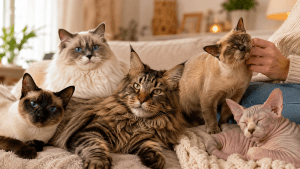
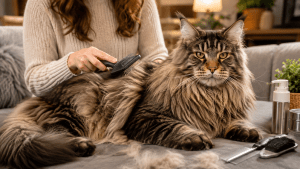
Cats spend a large part of their waking lives grooming themselves, but they also groom each other, a behaviour called allogrooming, and crucially they do this only with cats (and people) they are close to and trust. Bonded cats that live together will lick each other’s heads, necks, and faces as a way of maintaining their relationship, sharing scent, and reinforcing that they belong to the same social group. It is a gesture of friendship, trust, and mutual care, not something cats do with strangers or with cats they dislike. So when your cat licks you, it is extending this intimate, affiliative behaviour to you, treating you as a member of its inner circle, a fellow member of the group to be groomed and cared for just like a trusted feline companion. In a multi-cat home you can watch this play out directly: the cats that groom each other are invariably the ones that also sleep together and get along, while cats that do not get on never share a grooming session. That is a significant statement from an animal that is selective about who it grooms. Understood this way, being licked is not an odd quirk but a direct translation of feline friendship into a form you can feel: your cat is saying, in the clearest language it has, that you are one of its own and that it wants to look after you and stay bonded with you. Everything else a lick can mean, affection, scent-marking, mothering, taste, attention, sits on top of this foundational truth that licking is social grooming among close companions.
Affection, trust, and ‘you are family’
Flowing directly from grooming’s social meaning is the plainest message of a lick, which is affection and trust, the cat’s way of telling you that it loves you and considers you family.
Because cats groom only those they are comfortable and bonded with, a cat that licks you is showing that it feels safe, relaxed, and attached in your company. Licking is, in effect, one of the ways a cat says ‘I trust you’ and ‘you are mine,’ and it usually comes wrapped up with other signs of contentment and affection, purring, kneading, settling in close, slow blinks, so that the whole picture is unmistakably one of a happy, bonded cat. To be chosen for grooming is to be accepted into the cat’s family group, and many behaviourists regard being licked as one of the strongest signs of feline affection there is, on a par with a cat sleeping on you or greeting you with an upright, quivering tail. Owners who have earned a cat’s grooming have earned something a cat gives only sparingly, which is why it is worth recognising for the honour it is. It also reflects a real sense of security: a cat will only relax into grooming a companion when it feels safe and unthreatened, so a licking cat is a comfortable, trusting cat. For owners who sometimes wonder whether their independent-seeming cat is truly attached to them, a lick is reassuring evidence that it is; the cat is treating you exactly as it would a beloved feline friend or family member. So at heart, when a cat licks you it means it feels close to you and counts you as one of its own, which is about as warm a message as a cat can send.
Scent and marking you
Layered into the grooming and affection is a quieter, scent-based purpose, because for cats grooming is not only about cleaning and bonding but also about creating and maintaining a shared group scent.
Scent is central to how cats understand their world and their relationships, and a big part of allogrooming between bonded cats is the exchange and blending of scent. When cats groom one another they mingle their smells, building a communal ‘group scent’ that marks who belongs to their family or colony, so that members of the group all carry a reassuringly familiar, shared odour. When your cat licks you, it is doing the same thing with you: taking in your scent and depositing its own, folding you into that shared-scent family so that you smell, to the cat, like one of the group. This is a bonding and reassuring act rather than a possessive or hostile one; surrounding itself with the familiar scent of its trusted people and blending its smell with theirs helps a cat feel that its world is safe and its social bonds are intact. It is closely related to the way cats rub their cheeks and bodies against you or head-butt you, all of which also share scent and mark you as familiar. So part of what a lick accomplishes, alongside the cleaning and the affection, is this steady maintenance of a shared family scent, a way for your cat to keep reaffirming that you belong together. It is one more reason licking tends to come from relaxed, bonded cats and to feel like the affectionate, inclusive gesture it truly is.
The mothering instinct
Another thread running through many cats’ licking, especially the gentle, attentive kind, is a nurturing, motherly instinct, which traces the behaviour back to the very start of a cat’s life.
Grooming is one of the first experiences a kitten has: its mother licks it thoroughly from birth, to clean it, to stimulate it, to comfort it, and to bond with it, so from the earliest days licking is associated with care, warmth, and love. Kittens then learn to groom themselves and each other, carrying that association into adulthood. For the rest of a cat’s life, being groomed and grooming others stays linked to that first, deepest experience of being cared for. When an adult cat grooms a companion, or you, there is often an echo of this maternal, caregiving behaviour: the cat is, in a sense, mothering and looking after you, treating you with the same nurturing attention a mother cat gives her kittens or that littermates give each other. It is one of the more touching things about living with a cat, that a gesture born between a mother and her newborn kittens should end up aimed at you. This is why licking can feel so tender, and why cats will sometimes lick a person persistently as if determined to get them properly clean and cared for. It is particularly common in affectionate, nurturing cats and in the context of relaxed, close moments. Far from being strange, this mothering quality is simply the cat drawing on the deepest, earliest meaning of grooming, care for a loved one, and directing it at you. So when your cat licks you gently and attentively, part of what is happening is that it is caring for you the way cats care for those they love, an instinct rooted in the bond between a mother cat and her kittens and generously extended to include you.
Taste, salt, and your skin
Not every lick is purely emotional, and a more down-to-earth reason cats lick people deserves its place too, which is simply that human skin can taste interesting to a cat.
Your skin carries a range of tastes and smells that a curious cat may find appealing, and this can prompt or prolong licking quite apart from the affectionate motives. The classic example is salt: human sweat leaves salt and other residues on the skin, and some cats are drawn to lick sweaty or recently-active skin for that salty taste. Beyond salt, your skin and hands often carry traces of food, cooking, lotions, moisturisers, soaps, or other products, all of which can smell and taste interesting to a cat and encourage a lick or two, this is a common reason cats particularly like to lick hands, which touch everything, and faces, which may carry the taste of cosmetics or food. It is worth a small note of caution here: because cats may lick off creams and products, you should avoid letting a cat lick skin where you have just applied medication, sunscreen, or cosmetics that could be harmful if the cat ingests them, and keep any such products out of reach. In most cases, though, the taste factor is harmless and simply adds a practical, investigative motive to the emotional ones; your cat likes you and it also finds the salt or the leftover smell of your lunch quite moreish. So if your cat makes a beeline to lick your hands or your skin after exercise, do not be offended, it is affectionate and it thinks you taste good, and offering a wipe of plain water can reduce the salty appeal if the licking is too much. Rinsing off sweat after exercise before settling down with your cat is a simple way to make yourself a little less tempting if the salt-licking gets carried away.
Attention and comfort
Two more motives round out the picture of why cats lick, both of them common and both easy to spot once you know them: seeking your attention, and self-soothing for comfort.
Cats are clever about getting a response from their humans, and just as they learn that a paw tap or a meow works, some learn that licking you reliably gets your attention, a reaction, a stroke, a word, or eye contact, so a lick can be partly a request to interact, especially if it comes when the cat wants play, food, or fuss. You can usually tell this motive by context: the licking is directed at getting you to respond and often eases once you engage with the cat. If a quick stroke or a word makes the licking stop, attention was almost certainly what the cat was after all along. The other motive is comfort and self-soothing. Grooming is a naturally calming, comforting activity for cats, releasing tension and helping them relax, which is why a content cat often grooms itself as it settles, and why the act of licking you can be part of a cat’s own relaxation, a soothing ritual it performs when it feels cosy and secure with you. In this sense licking you can be as much about the cat comforting itself in your reassuring presence as about comforting or cleaning you, and the two blend together in a happy, bonded cat. Both of these motives are benign and affectionate in the ordinary run of things. It is only when licking becomes markedly excessive or clearly driven by stress, rather than relaxed contentment, that the self-soothing motive tips into something worth a second look, which the later section on excessive licking covers. For the most part, attention-seeking and comfort licking are simply more facets of a cat that is bonded to you and at ease in your company.
Why the tongue feels rough
Anyone who has been licked by a cat knows the distinctive sandpapery rasp of the tongue, and the reason for it is a fascinating piece of feline anatomy that also explains why grooming is such an effective behaviour.
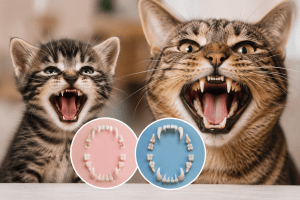
A cat’s tongue is covered in hundreds of tiny, backward-facing, hook-shaped spines called papillae, which are made of keratin, the same tough material as the cat’s claws and your own fingernails. These little barbs give the tongue its rough, scratchy texture, and they are a superb grooming tool: acting like a built-in comb, they let the cat detangle and clean its fur, pull out loose hair and dirt, and spread the skin’s natural oils through the coat to keep it healthy, and recent research has shown they even help wick saliva down to the skin to cool the cat and clean efficiently. It is a strikingly clever piece of natural engineering, doubling as a comb, a cleaning cloth, and a cooling system all in one. The same spines help a cat rasp the last of the meat from a bone and lap up water. When this specialised tongue is turned on your skin, those keratin hooks are what you feel as a rough, dragging sensation, and because they are designed to catch and pull, a lot of licking on one spot can leave your skin feeling raw or slightly irritated. All of this is entirely normal; the rough tongue is just your cat’s grooming equipment doing exactly what it evolved to do. There is nothing wrong with it and nothing to worry about, though if your cat likes to lick the same patch of your skin repeatedly, it is reasonable to gently redirect it after a while to save your skin from the sandpaper treatment. So the rasp that surprises so many people is simply the feel of a beautifully engineered feline comb at work.
Why cats lick then bite
A very common follow-up question is why a cat will lick you affectionately and then, seemingly out of nowhere, give you a nibble or a bite, and the answer is usually reassuring once you understand the possibilities.
The lick-then-bite sequence has several benign explanations, and reading the cat’s body language tells you which is in play. Often it is simply thorough grooming: when cats groom themselves and each other they use gentle nibbles as well as licks, for example to work through a knot or tackle a stubborn spot, so a lick followed by a soft nip can just be your cat grooming you as it would a fellow cat. It can also be a ‘love bite,’ a gentle, inhibited nibble that some cats use as a sign of affection and closeness, not aggression. A third and very frequent cause is overstimulation: a cat that is being petted or is in a bout of licking can gradually become over-aroused, and a bite is its way of signalling ‘that is enough now,’ which is why it helps to watch for the escalating warning signs, a flicking or thumping tail, twitching skin, ears turning back, a stiffening body, and to stop or give space before the nip arrives. Occasionally the licking and biting is playful or a bid for attention. In the ordinary case, as long as the bites are gentle and inhibited and the cat is otherwise relaxed, the lick-bite combination is normal grooming or affection with a polite ‘enough’ attached, and nothing to worry about. What is different, and worth heeding, is a hard, painful bite delivered with tense, aggressive body language, which means the cat is genuinely overstimulated or unhappy and wants you to stop, in which case the right response is to calmly disengage and give it room rather than to continue.
Is it safe and hygienic?
Given how affectionate licking is, most owners are happy to allow it, but it is sensible to know the simple hygiene limits so you can enjoy your cat’s grooming while keeping everyone healthy.
For most healthy people, an occasional cat lick on intact skin is low-risk and nothing to be anxious about. Cats’ mouths do carry bacteria, however, so a few common-sense precautions are worth following. It is best not to let a cat lick broken skin, open wounds, cuts, grazes, or spots, since that is where bacteria could get in, and never to let a cat lick your eyes, lips, inside your mouth, or other mucous membranes. Washing the licked area, and your hands, afterward, particularly before you eat or touch your face, is a sensible habit. People who are immunocompromised, pregnant, elderly, or very young should be more cautious, as they are more susceptible to infections that can occasionally pass from animals to people, and may prefer to limit face and hand licking and to be especially careful about washing. As mentioned earlier, you should also keep a cat from licking skin where you have applied medicines, creams, or cosmetics that could harm the cat if swallowed. Within those limits, though, letting a healthy cat lick your hand or arm from time to time is generally fine for a healthy adult with intact skin; just wash afterward and steer the licking away from wounds and from your face near the eyes and mouth. If you have particular health conditions or concerns, your doctor is the right person to advise on what is sensible for you. So the practical answer is that licking is usually safe in moderation with a little care, rather than something to forbid entirely.
When licking is a concern
Finally, while licking is overwhelmingly a positive, affectionate behaviour, it is worth knowing the signs that a change in licking, or licking taken to an extreme, might be telling you something more, whether about the cat’s feelings or its health.
Most licking, and even a moderate increase in it, is simply affection, bonding, comfort, or attention-seeking, and needs no concern; a cat that starts licking you a bit more after a change at home, for instance, is usually just seeking extra reassurance. The signs to pay attention to involve marked changes and extremes. Because grooming is self-soothing, a cat under stress or anxiety, from changes in the household, conflict with another pet, boredom, or insecurity, may lick more as a way of calming itself, so a notable rise in licking alongside other signs of stress is worth addressing by looking at what has changed and improving the cat’s sense of security and enrichment. More important is over-grooming directed at the cat itself: compulsive licking that produces bald patches, thinning fur, or sore, irritated skin on the cat is not normal and can stem from stress or from a physical problem such as itchy skin, allergies, fleas or other parasites, or pain in the area being licked, all of which warrant a veterinary check to find and treat the cause. Similarly, if a cat suddenly and obsessively licks one spot on its body, it may be signalling pain or irritation there. So the guidance is balanced: enjoy normal licking and do not worry about a modest increase, but treat genuinely excessive or compulsive licking, licking clearly driven by stress, or any over-grooming that damages your cat’s own coat or skin, as a reason to look into the cause and, if it persists or the cat is harming itself, to consult your vet.
Frequently asked questions
When a cat licks you what does it mean?
When a cat licks you it usually means affection, bonding, and acceptance. Cats groom the companions they are closest to, a behaviour called allogrooming, so by licking you your cat is treating you like a member of its family or social group and showing that it trusts and cares about you. Licking also mingles scents, marking you as familiar and ‘part of the group,’ which strengthens the bond. There is often a nurturing element too, echoing the way a mother cat grooms her kittens, so your cat may be mothering and caring for you. More practical motives can play a part: your skin may carry an appealing taste, salt from sweat, food residue, or lotions, that a cat finds interesting, and licking can also be a way of getting your attention or of self-soothing when the cat is relaxed. So a cat licking you is generally a warm sign, affection, trust, grooming you as one of its own, with perhaps a little taste-testing and attention-seeking mixed in, and it is one of the clearer ways a cat shows it feels bonded to you.
Why does my cat lick me then bite me?
The lick-then-bite sequence is common and usually harmless, and it typically means one of a few things. Often it is part of grooming: cats use gentle nibbles as well as licks when they groom themselves and each other, for instance to work through a tangle, so a lick followed by a soft nip can simply be your cat grooming you thoroughly. It can also be a ‘love bite,’ a gentle, affectionate nibble that is part of how some cats show fondness, not aggression. Another common cause is overstimulation: during a bout of licking or petting a cat can become over-aroused, and a bite is its way of saying ‘that is enough now,’ so watch for the warning signs (tail flicking, skin twitching, ears turning, tensing) and stop before the nip. Occasionally licking and biting is play or a bid for attention. As long as the bites are gentle and inhibited and the cat is relaxed, the lick-bite combo is normal grooming or affection with a side of ‘enough.’ Hard, painful bites, or bites with tense, aggressive body language, are different and mean the cat is overstimulated or unhappy and needs space.
Why does my cat’s tongue feel so rough when it licks me?
A cat’s tongue feels like sandpaper because it is covered in hundreds of tiny, backward-facing, hook-shaped spines called papillae, made of keratin (the same material as claws and human nails). These little barbs are a brilliant grooming tool: they act like a built-in comb, letting the cat detangle and clean its fur, remove loose hair and dirt, and distribute skin oils, and they also help rasp meat from bones and lap up water efficiently. When that spiny tongue is applied to your skin, it feels distinctly rough and scratchy, and a lot of licking in one spot can even make the skin a little sore or irritated. So the rough feel is completely normal and is simply your cat’s specialised grooming equipment at work; it is nothing to worry about, though if your cat licks the same patch of your skin a great deal you may want to gently redirect it to spare your skin.
Why does my cat lick my hair, face, or hands?
Cats lick different parts of you for slightly different reasons, but the themes are the same: grooming, affection, scent, and taste. Licking your hair is often social grooming and bonding, your cat treating your hair as it would another cat’s fur, and it may be drawn to the smell or taste of hair products; it can also be a mothering, caring gesture. Licking your face is usually a strong sign of affection and trust, since the face is an intimate area cats groom on their closest companions, and your skin there may also carry appealing salt or tastes. Licking your hands is common because your hands touch everything and so carry interesting smells and tastes, food, lotion, salt, and because hands are what pet and interact with the cat, so licking them is both taste-testing and an affectionate, attention-related response to being stroked. In all these cases the licking generally signals that your cat feels bonded to you and is grooming and marking you as its own, with the particular spot often chosen for its accessibility, its scent, or its taste.
Is it safe and hygienic to let my cat lick me?
For most healthy people, the occasional cat lick on intact skin is low-risk and nothing to be alarmed about, but there are sensible limits. Cats’ mouths carry bacteria, so it is wise not to let a cat lick broken skin, open wounds, cuts, or grazes, and never to let a cat lick your eyes, lips, or any mucous membranes, and to wash the area (and your hands) afterward, especially before eating. People who are immunocompromised, pregnant, very young, or elderly should be more cautious, as they are more vulnerable to infections that can pass from animals. It is also best not to let a cat lick your face if you have just applied medications, creams, or cosmetics that could be harmful to the cat if ingested. For a healthy adult with intact skin, though, a cat licking your hand or arm now and then is generally fine; simply wash afterward and avoid letting it lick broken skin or your face near the eyes and mouth. If you have any specific health concerns, your doctor can advise on your situation.
Why has my cat suddenly started licking me a lot, or licking excessively?
A cat that suddenly increases how much it licks you, or that licks (you or itself) excessively, is usually still being affectionate, but a marked change is worth understanding. In many cases more licking simply reflects more bonding, comfort-seeking, or attention-seeking, for example after a change in routine, and it is benign. However, excessive licking can sometimes be a self-soothing response to stress or anxiety, since grooming is calming for cats, so a cat that is stressed by changes at home, conflict, boredom, or insecurity may lick more, whether that is licking you or over-grooming itself. Compulsive licking, or over-grooming that causes bald patches or sore skin on the cat itself, can point to stress or to a physical problem such as itchy skin, allergies, fleas, or pain, and warrants a vet check. So a moderate increase in licking you is usually just extra affection or reassurance-seeking, but a sudden marked change, especially with signs of stress, or any over-grooming that damages the cat’s own coat or skin, is worth looking into and, if it persists or the cat is harming its skin, discussing with your vet.
Should I let my cat lick me, and how do I stop it gently if I want to?
Whether to allow licking is your choice; it is an affectionate behaviour, so if you enjoy it and it is on intact skin (not wounds, face near eyes and mouth, or freshly-applied products), there is no problem letting your cat groom you a little, and it strengthens your bond. If you would rather limit it, because the rough tongue irritates your skin or you find it too much, the kind approach is to redirect gently rather than punish. Calmly move your hand or body away, or stand up, without a dramatic reaction, and offer an alternative such as a stroke, a toy, or some play so the cat still gets interaction. You can redirect the cat’s grooming urge by petting or brushing it, which often satisfies the mutual-grooming instinct. Avoid pushing the cat away sharply, scolding, or startling it, since licking is meant affectionately and a harsh response can confuse or upset the cat. Keeping the sessions short and ending them calmly lets you enjoy your cat’s affection without letting the licking go on longer than you like. So enjoy the grooming if you wish, and if not, redirect kindly and give the cat another way to connect with you.
The quick version
When a cat licks you what does it mean? Mostly affection and bonding. Cats groom (lick) only the companions they trust, a behaviour called allogrooming, so licking you means your cat treats you as family, someone to care for, bond with, and mark with a shared scent. There is often a mothering, nurturing echo of how a mother cat grooms her kittens, plus a taste element (your skin may carry appealing salt, food, or lotion), and sometimes a bid for attention or a bit of self-soothing. The tongue feels rough because it is covered in tiny keratin spines (papillae) that work like a comb. Licking then a gentle bite is usually grooming, a love bite, or an ‘enough now’ overstimulation signal, watch the tail and body and stop before a hard nip. Occasional licking on intact skin is low-risk; avoid wounds, eyes, and mouth, and wash afterward. A big, sudden increase in licking, stress-driven licking, or over-grooming that leaves the cat with bald or sore patches is worth a vet check.
For more on how cats show affection, see kneading and purring, love bites and overstimulation, and cat body language and sounds. Browse the full cat blog, the pet calculators, and more free tools on the Waldev homepage.
Note: This guide is for general education. Licking is normally affectionate, but avoid letting a cat lick broken skin, wounds, your eyes or mouth, or skin with freshly-applied medicines or cosmetics, and wash afterward; immunocompromised, pregnant, elderly, and very young people should take extra care. A sudden marked increase in licking, stress-driven licking, or over-grooming that causes bald patches or sore skin on your cat can indicate stress, allergies, parasites, or pain. Consult your veterinarian for over-grooming or any concerning change, and your doctor for personal health questions.
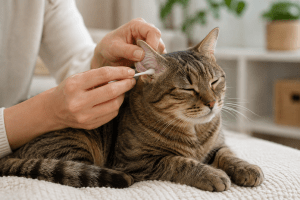
Cats groom (lick) those they are bonded with, sharing scent and affection as they would with a trusted companion. Pet owner resources →
Excessive licking or over-grooming that damages the coat or skin can reflect stress, allergies, parasites, or pain and needs a vet. Locate a hospital →