How do you keep cats off your vehicle without harming them? Paw prints, scratches, and cats lounging on a warm bonnet are a common frustration, but the humane and effective answer is to understand why cats are drawn to cars, warmth, height, and shelter, and then remove or replace that appeal while using gentle deterrents. There is also a serious safety angle: in cold weather cats shelter in warm engine bays and can be badly hurt when the engine starts, so a simple check can save a life. This guide covers how to keep cats off your car, porch, and yard humanely, the scents and motion deterrents that work, the engine-bay danger, and how the approach differs for your own cat, a neighbour’s, or a stray.
Scent and stray cats are central here. See scents cats hate, helping feral and stray cats, and explore more on the Waldev homepage.
On this page
Why cats climb on cars
The most effective way to keep cats off your vehicle is to understand why they are drawn to it in the first place, because the best deterrence works by removing or replacing that appeal rather than simply chasing cats away.
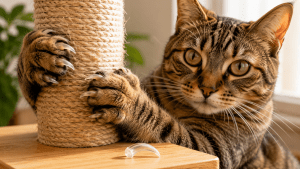
Cats climb on and shelter around cars for a few very understandable reasons, all rooted in normal feline preferences. Warmth is the biggest draw. A car that has been driven, or that has sat in the sun, holds heat, and the engine bay in particular stays warm for a long time after the engine is switched off, so on a cold day a car, especially its bonnet and engine compartment, is an appealing warm spot, and cats are dedicated heat-seekers. Height and a good vantage point are a second attraction: cats love to perch somewhere elevated where they can survey their surroundings and feel secure, and the roof or bonnet of a car offers exactly that raised lookout. Shelter is a third reason, the underside of a car, the wheel arches, and the engine bay provide a covered, sheltered refuge out of wind, rain, and cold, which is especially tempting to outdoor, stray, and feral cats with nowhere warmer to go. On top of all this, the smooth, often sun-warmed metal is simply comfortable to lie on. A dark-coloured bonnet in particular can become pleasantly warm even on a cool but sunny day, which is why cats so often choose it for an afternoon nap. Recognising these motivations is genuinely useful, because it points to the most effective and humane strategy: rather than only trying to startle cats off, you remove the appeal (for instance by covering the car so it is neither warm nor smooth to lie on) and, where the cat is a resident or neighbourhood animal, you give it a better warm, sheltered, elevated spot elsewhere, addressing the underlying reason it keeps coming back. This is why two households can try the same spray and get different results: the one that also gave the cat a warmer, more comfortable alternative usually has far more success.
The engine-bay danger
Before the deterrents, one safety point is so important that it comes first, because keeping cats off your car is not only about protecting paintwork but about protecting the cats from a genuine and sometimes fatal danger.
The warmth that makes an engine bay so appealing to a sheltering cat also makes it deadly. Cats, particularly outdoor, stray, and feral cats, are drawn to the residual heat of a recently-driven engine and may climb up into the engine compartment or wheel arches to keep warm, curling up near the still-warm engine block. If the car is then started or driven off, a cat in there can be caught in moving parts, the fan, the fan belt, the drive components, or injured by the movement of the vehicle, and the result is often severe injury or death. This is a well-known hazard, most common in cold weather, and it can happen to any car whether or not the owner has a cat, since it is usually neighbourhood, stray, or feral cats that seek shelter in a stranger’s warm engine bay. Because of this, one habit is genuinely life-saving and worth making automatic in cold weather: before you start the engine, bang loudly on the bonnet a few times, and honk the horn or knock on the sides of the car, to startle any hidden cat into fleeing before you turn the key; some people also open the bonnet to check. It takes only a few seconds and can save a cat’s life. Getting into the habit every single cold morning, even when you are in a hurry, is what makes the difference, since the one time you skip it could be the time a cat is there. So while the rest of this guide is about the nuisance of cats on your car, keep this at the front of your mind: the most important reason to keep cats away from vehicles, and above all to check before starting one in the cold, is that the engine bay can kill. It is worth mentioning this to family members and neighbours too, since a single person forgetting the check is all it takes for a tragedy.
Covers and removing the appeal
Turning to keeping cats off the car itself, one of the simplest and most effective methods tackles the appeal head-on, and that is to physically cover and change the surface so the car is no longer an inviting place to lie.
A car cover is arguably the single most useful tool, because it does two jobs at once. It protects the paintwork and glass from scratches, paw prints, and claw marks, and it removes much of what attracts the cat in the first place, a fitted cover makes the surface less warm, less smooth, and generally less comfortable and appealing to lie on, so cats are far less inclined to settle there. Using a good-quality, well-fitted cover whenever the car is parked, especially overnight and in cold weather, is a reliable, humane, and damage-preventing approach. Beyond a full cover, some people make the surfaces less inviting in other ways, such as placing textured or lightly uncomfortable (but harmless) mats on favoured spots like the bonnet, or using covers on specific areas, the idea being to change the pleasant smooth warmth into something a cat would rather not lie on. The principle behind all of this is the same as understanding why cats climb on cars: if you take away the warmth and comfort that draw them, you remove the reason they come, which tends to be more effective and lasting than trying to scare a determined cat off a spot it finds genuinely appealing. A cover also has the practical bonus of keeping your car clean and protected generally. So if cats on your car are a persistent problem, a proper car cover is usually the best first line of defence, addressing both the damage and the underlying attraction in one step. It also has the advantage of working around the clock without any effort from you once it is on, unlike scents or devices that need topping up or resetting.
Scent deterrents
Alongside physically changing the surface, scent deterrents are a popular and humane way to make a car or an area unappealing to cats, working with a cat’s strong dislike of certain smells, though they must be used safely.
Because cats have a very sensitive sense of smell and dislike certain odours, applying scents they find unpleasant around a car or area can discourage them. Citrus is the classic and most reliable choice: most cats dislike the smell of oranges, lemons, and limes, so placing fresh citrus peels near or around the car, or using a citrus-scented spray in the area, often puts cats off. Other disliked scents that can help include diluted vinegar wiped on surfaces (not on the cat), coffee grounds, certain strong herbs, and commercial cat-repellent sprays made for the purpose. There is one very important safety caution: although essential oils are sometimes suggested as cat deterrents, many essential oils are toxic to cats, so you should not use essential oils where a cat could lick them, walk through them, or heavily inhale them, safer scents like citrus peel and diluted vinegar are much better choices. You should also never use anything that could poison, burn, or otherwise harm a cat. Bear in mind that scent deterrents fade over time and wash away in rain, so they need regular refreshing to keep working, and they are most effective when combined with other methods such as a car cover and motion deterrents, and with removing attractants. Used sensibly and safely, disliked scents, above all citrus, are a genuinely useful, humane component of keeping cats off a car or out of an area, so long as you steer well clear of toxic substances like essential oils. Keeping a small bag of citrus peel topped up on the bonnet or nearby is a cheap, simple habit that costs almost nothing and bothers no one.
Motion-activated deterrents
Among the most effective humane deterrents, particularly for driveways, yards, and around parked cars, are motion-activated devices, which discourage cats by startling them harmlessly whenever they approach.
The standout option is the motion-activated sprinkler. This device detects an approaching animal and releases a short, sudden burst of water, which most cats strongly dislike, so they quickly learn to steer clear of the protected area; because the water is harmless and merely startling, it is both humane and often highly effective, making it one of the best deterrents for keeping cats away from a car, driveway, or garden. Motion-activated air-spray deterrents work on the same startle principle, emitting a harmless puff of air or spray when a cat comes near. Ultrasonic cat repellents take a different approach, emitting a high-frequency sound (inaudible to people) that is meant to be unpleasant to cats as they approach; these have more mixed results, some owners find them helpful while other cats ignore them or get used to them, and their effectiveness can depend heavily on placement and the specific device. In general, the motion-activated sprinkler tends to be the most consistently effective humane deterrent, with ultrasonic devices a more hit-or-miss option worth trying as a supplement. As with all these methods, the point is to startle or gently discourage the cat without causing it any harm, and combining a motion deterrent with a car cover, disliked scents, and the removal of attractants gives much better results than relying on any single measure. So for a genuinely troublesome cat problem around your vehicle or yard, a motion-activated sprinkler is one of the most reliable humane tools available. Most are simple to set up on a garden hose and run on batteries, and once positioned they largely look after themselves, quietly guarding the spot day and night.
Removing attractants
Deterrents work far better when you also take away the things that draw cats to your property in the first place, so an important and often overlooked step is simply removing the attractants that make your car, porch, or yard appealing.
Cats, especially strays and neighbourhood cats, are drawn to places that offer food, shelter, and comfort, so reducing those removes much of the reason they visit. Food is the biggest magnet: do not leave pet food (or your own) outside near the car or on the porch, feed indoor pets indoors, and clear up any spilled food, because a reliable food source will keep bringing cats back no matter how many deterrents you use. This is the most common reason a cat problem persists despite every spray and gadget: somewhere, something is still feeding them. Tracking down and removing that food source is often the breakthrough that finally solves it. Secure your rubbish bins with tight lids so cats cannot scavenge, and keep compost covered. Remove or block appealing shelter and hiding spots if you do not want cats settling, such as gaps under sheds, porches, or decking, and cosy nooks, though take care never to trap an animal inside when sealing a space. Around the car specifically, the warmth and comfort are the attractants, which is why covering the car (removing the warm, smooth surface) is so effective. The general principle is that deterrents discourage cats from coming, while removing attractants reduces why they want to come at all, and the two together are far more powerful than either alone. A property that offers no food, no easy shelter, and no comfortable warm spots simply gives cats little reason to linger, so pairing attractant-removal with your chosen deterrents is a key part of a lasting, humane solution. It is the difference between constantly shooing cats away and simply becoming a place they no longer think of visiting.
Keeping cats off porches and yards
The same humane, multi-pronged approach that keeps cats off a car works just as well for porches, gardens, and yards, with a few extra options suited to outdoor spaces.
For porches and yards, combine removing attractants, safe deterrents, and, where possible, physical measures. Start with attractants: no food left out, secure bins, and reduced shelter as described above. Use scent deterrents cats dislike, citrus peels, diluted vinegar, coffee grounds, or commercial repellents, around the area, always avoiding toxic essential oils. Motion-activated sprinklers are particularly effective and humane in gardens and driveways, startling cats away with a harmless spray. Physical measures come into their own outdoors: cat-proof fencing or fence-top barriers can keep cats out of a yard, protective netting or dense planting can shield garden beds cats might use as a toilet, and there are humane, harmless spike or textured strips designed to make ledges, fences, and railings uncomfortable to walk or sit on (these are meant to deter, not injure). Certain plants that cats tend to dislike, such as rue or the so-called ‘scaredy cat plant’ (Coleus canina), can help discourage cats from garden areas. These work best as one layer among several rather than a complete solution on their own, since a determined cat may simply route around them. Keeping garden soil and beds less inviting as a litter area, for instance by covering bare soil, also helps, since cats like to dig in loose earth. Throughout, the same rules apply: use only humane methods that discourage without harming, refresh scent deterrents regularly, and combine several approaches for the best effect. And if the cats are strays or feral, contacting a local TNR or rescue group is worthwhile, both to help the cats humanely and to reduce their numbers over time, which addresses the problem at its source. Neutered community cats also roam and spray far less, so working with a TNR group often reduces the nuisance itself, not just the number of cats.
Your cat, a neighbour’s, or a stray
The right fuller solution depends partly on whose cat is causing the trouble, because while the humane deterrents are similar, the best long-term approach differs for your own cat, a neighbour’s, and a stray or feral.
If it is your own cat climbing on your car or going where you would rather it did not, the most effective long-term fix is management and better alternatives rather than deterrents alone. Provide appealing warm, elevated, sheltered resting places elsewhere, a cat tree, a heated or cosy bed by a sunny window, a covered outdoor shelter, so the cat has a more attractive spot than the car, and give it plenty of play and enrichment so it is less inclined to roam and seek its own entertainment; you can gently and consistently discourage it from the car (kept covered) while redirecting it to its own places. If it is a neighbour’s cat, the most neighbourly and often most effective route is a polite conversation with the owner about the problem, combined with humane deterrents on your own property, since you cannot control another person’s cat but you can make your space unappealing to it. Most owners are reasonable once they understand the problem, particularly the engine danger, which they may not have thought about. Framing it as a shared safety concern for the cat rather than a complaint about the animal tends to get a much warmer and more cooperative response. If it is a stray or feral cat, humane deterrents will move it along, but the kinder and more lasting answer for neighbourhood cats is to involve a local TNR (trap-neuter-return) or rescue group, which helps the individual cats and gradually reduces the local population. In every case, only humane methods are acceptable, and harming, injuring, or poisoning cats is both cruel and, in many places, illegal. So identify whose cat it is and match your approach, alternatives and redirection for your own, communication plus deterrents for a neighbour’s, and TNR or rescue for strays, while always keeping your deterrence humane.
Keeping it humane
Finally, running through everything above is one non-negotiable principle worth stating plainly on its own, because it protects both the cats and you: whatever you do to keep cats off your vehicle or property must be humane.
The goal of all these methods is to gently discourage cats and make your car, porch, or yard unappealing, never to hurt, frighten severely, trap to harm, or poison them. Humane deterrents, covers, disliked but safe scents, motion-activated sprinklers, physical barriers, and removing attractants, all work by making an area unattractive or by harmlessly startling a cat, which is exactly the right approach. What must be avoided entirely is anything that could injure or kill a cat: no poisons or toxic substances (including, as noted, essential oils where a cat could be exposed), no harmful traps, no sharp or dangerous ‘deterrents’ meant to wound, and nothing that could cause suffering. Beyond being cruel, harming cats is illegal in many places and can carry serious consequences, and it is simply not a legitimate way to solve the problem. Remember too the welfare angle from the other direction: the cats climbing on your car, especially strays and neighbourhood cats, are often just seeking warmth and shelter, so the kindest and most effective long-term solutions frequently involve giving cats better options or, for strays, connecting with TNR and rescue services. Approached this way, keeping cats off your vehicle becomes a matter of patient, humane, consistent deterrence combined with removing attractants and, where relevant, offering alternatives, which protects your property, keeps the cats safe (including from the deadly engine-bay hazard), and stays firmly on the right side of both kindness and the law.
Frequently asked questions
How do you keep cats off your vehicle?
The most effective approach is to combine removing what attracts cats with humane deterrents and, ideally, a better alternative for the cat. Cats climb on cars for warmth, a high vantage point, and shelter, so tackle those draws. Practical humane methods include: using a car cover, which both protects the paintwork and removes the appealing warm, smooth surface; applying scents cats dislike, such as citrus (peels or a citrus spray) placed near or around the car; using motion-activated deterrents like a motion-triggered sprinkler or air spray nearby; and making the surface less inviting (some people use textured mats or covers). Removing attractants matters too, do not leave food out near the car, and secure bins. Crucially, always use humane methods only, never anything that could harm the cat, and offer the cat a more appealing warm, sheltered spot elsewhere if it is a resident or neighbourhood cat. And in cold weather, always bang on the hood and check before starting the engine, since cats shelter in warm engine bays and can be seriously injured. Consistency across several gentle methods works best, as no single deterrent is guaranteed.
Why do cats climb on cars in the first place?
Cats climb on cars for a few understandable reasons, all rooted in normal cat preferences. Warmth is the biggest: a car that has been running or sitting in the sun holds heat, and the engine bay in particular stays warm for a long time after driving, so on cold days a car is an appealing warm spot, and cats love warmth. Height and vantage are another draw: cats like to perch up high where they can survey their surroundings and feel safe, and the roof or bonnet of a car offers exactly that elevated lookout. Shelter is a third reason, the underside of a car or the engine compartment provides a covered, sheltered place out of wind and rain, especially attractive to outdoor, stray, or feral cats seeking refuge. The smooth, often sun-warmed surfaces can also simply be comfortable to lie on. Understanding these motivations is useful because the most effective deterrence works by removing or replacing the appeal, taking away the warmth and comfort (for example with a cover), and offering the cat a better warm, sheltered, elevated spot elsewhere, rather than just trying to scare it off, which addresses why the cat is there in the first place.
Is it dangerous for cats to get in or under a car engine?
Yes, this is a genuine and serious danger, especially in cold weather, and it is the single most important safety point about cats and cars. Cats, particularly outdoor, stray, and feral cats, are drawn to the warmth of a recently-used engine and may climb up into the engine bay or wheel arches to shelter and keep warm. If the car is then started or driven, the cat can be caught in moving parts such as the fan or fan belt, or by the moving of the vehicle, and be severely injured or killed. Because of this, a vital habit in cold weather is to check before you start the engine: bang loudly on the hood (bonnet) a few times, and/or honk the horn or knock on the sides, before starting up, to startle any sheltering cat into leaving. Some people also open the hood to check. This simple step can save a cat’s life. It applies whether or not you own a cat, since neighbourhood, stray, and feral cats are the ones most likely to seek shelter in a stranger’s engine bay. So beyond the nuisance of paw prints and scratches, the real reason to keep cats away from your vehicle, and to check before starting it in the cold, is that the engine bay can be deadly.
What scents keep cats off cars and away from areas?
Scents cats dislike can be used as humane deterrents around cars, porches, and gardens, with citrus being the most popular and reliable. Cats generally dislike the smell of citrus (oranges, lemons, limes), so placing fresh citrus peels around or near the car or area, or using a citrus-scented spray, often discourages them. Other smells many cats avoid include vinegar (diluted, on surfaces), certain strong herbs, coffee grounds, and some commercial cat-repellent sprays designed for the purpose. Important safety caution: while some sources suggest essential oils as deterrents, many essential oils are toxic to cats, so you should not use essential oils where a cat could lick, walk through, or heavily inhale them, safe options like citrus peel or diluted vinegar are far better. Also avoid anything that could poison or harm a cat. Scent deterrents fade and need refreshing, especially outdoors in rain, and they work better combined with other methods (covers, motion deterrents) and with removing attractants. So citrus and other safe disliked scents are a useful, humane part of keeping cats off a car or out of an area, provided you avoid toxic substances like essential oils and reapply as needed.
How do I keep cats off my porch or out of my yard humanely?
The same humane, multi-method approach works for porches and yards as for cars: remove attractants, use safe deterrents, and give cats a reason to go elsewhere. Remove what draws them: do not leave pet food outside, secure rubbish bins, and clear away shelter and hiding spots if you do not want cats settling. Use scent deterrents cats dislike (citrus peels, diluted vinegar, commercial repellents) around the area, avoiding toxic essential oils. Motion-activated sprinklers are very effective and humane in yards, a sudden harmless spray of water startles cats away without hurting them, as are motion-activated deterrents. Physical measures help: cat-proof fencing or barriers, uncomfortable-to-walk-on surfaces on ledges (some people use special spike strips designed to be harmless, or textured mats), and protecting garden beds with netting or by planting densely. Some plants cats dislike (like rue or the ‘scaredy cat plant’) can help in gardens. Always keep methods humane, the aim is to gently discourage, never to injure, trap, or poison a cat, which is also often illegal. If the cats are strays or feral, contacting a local TNR or rescue group is worthwhile, both to help the cats and to manage numbers. Consistency and combining methods give the best results.
Do ultrasonic or motion-activated deterrents work on cats?
Motion-activated deterrents, especially motion-triggered sprinklers, are among the most effective and humane options, while ultrasonic devices have more mixed results. A motion-activated sprinkler detects an approaching cat and releases a short, harmless burst of water, which most cats strongly dislike, so they quickly learn to avoid the area; because it is startling but not harmful, it is a humane and often very effective deterrent for yards, driveways, and around cars. Motion-activated air-spray deterrents work on a similar startle principle. Ultrasonic cat repellents emit a high-frequency sound (inaudible to humans) meant to be unpleasant to cats when they approach; some people find them helpful, but results are variable, as some cats ignore or habituate to them, and effectiveness can depend on placement and the device. In general, motion-activated sprinklers tend to be the most reliably effective humane deterrent, and combining a couple of methods works better than relying on one. Whatever you choose, the key is that it should startle or gently discourage the cat without causing it any harm. So yes, motion-activated deterrents (particularly sprinklers) generally work well and humanely, while ultrasonic devices may help some of the time but are less consistent.
Should I try to deter my own cat, or a neighbour’s or stray cat, differently?
The humane deterrents are similar, but the fuller solution differs depending on whose cat it is. If it is your own cat climbing on your car or going where you would rather it did not, the best long-term fix is to provide better alternatives and management: give it appealing warm, elevated, sheltered resting spots elsewhere (a cat tree, a warm bed by a window), plenty of play and enrichment so it is less bored, and, for a car, keep it covered; you can gently discourage and redirect rather than relying only on deterrents. If it is a neighbour’s cat, a polite conversation with the owner, alongside humane deterrents on your property, is often the most effective and neighbourly route. If it is a stray or feral cat, humane deterrents will move it along, but the kinder and more lasting approach to neighbourhood cats is to involve a local TNR (trap-neuter-return) or rescue group, which helps the cats and reduces their numbers over time. In all cases, only humane methods should be used, harming, trapping to hurt, or poisoning cats is both cruel and often illegal. So match the approach to the situation, alternatives for your own cat, communication for a neighbour’s, and TNR or rescue for strays, always using humane deterrence.
The quick version
How do you keep cats off your vehicle? Remove the appeal and add humane deterrents. Cats climb on cars for warmth, a high vantage point, and shelter, so a well-fitted car cover (which removes the warm, smooth surface and protects paintwork) is the best single fix. Add scents cats dislike (citrus peel or spray, diluted vinegar, never toxic essential oils), and motion-activated deterrents, especially a motion-activated sprinkler, which is one of the most effective humane options. Remove attractants: no food left out, secure bins, block cosy shelter. Critically, in cold weather bang on the bonnet and honk before starting the engine, cats shelter in warm engine bays and can be killed by the fan or belt. The same methods (scents, motion sprinklers, physical barriers, disliked plants) keep cats off porches and yards. For your own cat, give better warm, high, sheltered spots and more play; for a neighbour’s, talk to the owner plus deter on your property; for strays, involve a TNR or rescue group. Only ever use humane methods, harming or poisoning cats is cruel and often illegal.
For more, see scents cats hate (and how to use them safely), helping feral and stray cats, and how to play with and enrich your cat. Browse the full cat blog, the pet calculators, and more free tools on the Waldev homepage.
Note: This guide is for general education. In cold weather, always bang on the bonnet and honk before starting your engine, cats shelter in warm engine bays and can be killed. Use only humane deterrents; never poison, injure, or harmfully trap cats, which is cruel and often illegal. Do not use essential oils as deterrents where cats could be exposed, as many are toxic to cats. For stray or feral cats, contact a local TNR or rescue group.
Cats seek warmth and shelter on cars; covers, safe scents, and motion sprinklers deter them humanely. Pet owner resources →
Cats sheltering in warm engines can be killed when a car starts; check before starting in cold weather. Locate a hospital →