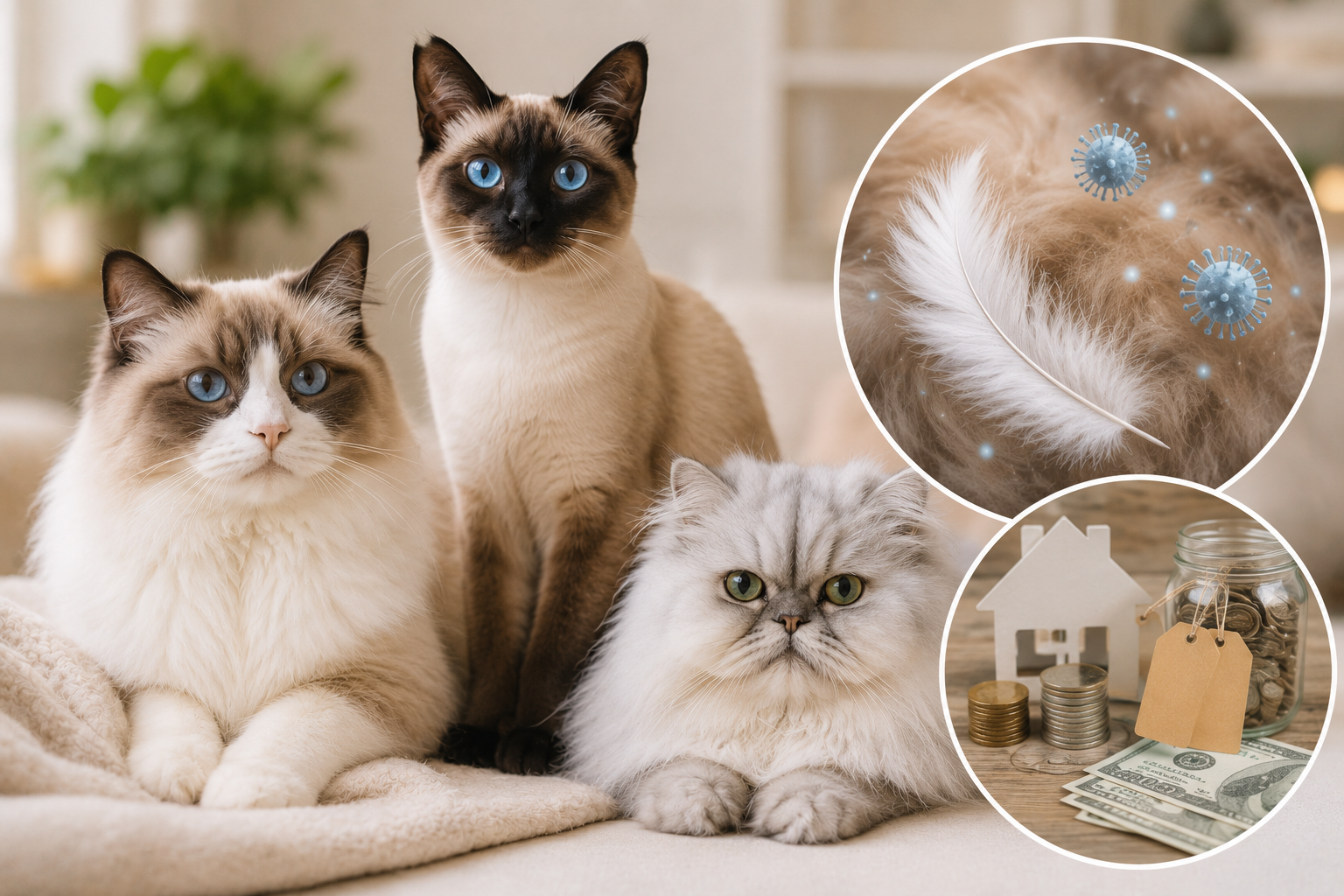
Are Ragdoll cats hypoallergenic? It is one of the most common questions from would-be owners with allergies, and the honest answer is no, no cat breed is truly hypoallergenic, and Ragdolls, being large and long-haired, are far from allergy-friendly. Allergies come from a protein cats produce, not their fur, so every cat can trigger them. This guide clears up the hypoallergenic myth, then answers the practical questions people ask alongside it: how much Ragdoll, Siamese, and Persian cats cost, where Siamese cats come from, what makes some cats pricey, whether to buy or adopt, the special care long-haired breeds need, and the curious question of whether a serval could kill a human.
Owning any cat is a commitment. Estimate the cost with our cat cost calculator, see what caring for a cat involves, and grooming and coat care, and explore more on the Waldev homepage.
On this page
Are Ragdolls hypoallergenic?
Because this is the headline question and a genuinely important one for allergy sufferers considering the breed, it deserves a clear, direct answer: no, Ragdoll cats are not hypoallergenic, and neither, in truth, is any cat.
Ragdoll cats are not hypoallergenic, and it is a myth, one that applies to cats generally, that any breed is truly free of allergens. The reality is that no cat breed is genuinely hypoallergenic, because cat allergies are not caused by fur but by a protein (explained in the next section) that all cats produce. Ragdolls specifically are a poor choice for allergy sufferers rather than a good one: they are large, long-haired cats that groom and shed a great deal, and since grooming and shedding are exactly how cat allergen gets spread onto the coat and into the home, a long-haired, heavily-shedding breed like the Ragdoll tends to distribute allergen widely. So not only is the Ragdoll not hypoallergenic, its coat type works against allergy sufferers rather than for them. This matters because the ‘hypoallergenic’ label is sometimes attached to breeds in marketing or wishful thinking, and someone with a cat allergy who buys a Ragdoll expecting relief is likely to be disappointed, and to react to the cat. If you have a cat allergy and are set on a cat, it is important to understand that no breed is a guaranteed safe bet, and that some breeds sometimes described as ‘lower-allergen’ (covered below) are still not truly hypoallergenic. So the plain answer to the question is that Ragdolls are not hypoallergenic, no cat is, and Ragdolls in particular, as long-haired shedders, are among the less allergy-friendly rather than more, which allergy sufferers should factor into their decision. It is far better to learn this before bringing a cat home than to face the heartbreak of having to rehome a beloved pet because of allergies that never eased.
What actually causes cat allergies
To understand why no cat is hypoallergenic, and why the fur-length assumption is misleading, it helps to know what actually triggers cat allergies, because the real culprit is not what most people think.
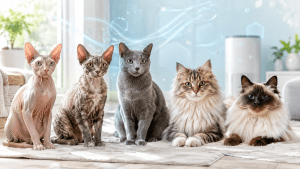
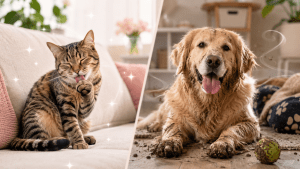
Cat allergies are caused principally by a protein called Fel d 1, which cats produce in their saliva, skin (sebaceous glands), and other secretions, not by their fur or hair as such. Here is the crucial mechanism: when a cat grooms itself, it spreads saliva (full of Fel d 1) all over its coat, and as the cat sheds fur and dander (tiny flakes of skin), this allergen-laden material is distributed onto surfaces and into the air throughout the home, where allergic people breathe it in or contact it and react. So it is the protein, carried on saliva, skin, and dander and spread via grooming and shedding, that causes the allergy, and every cat, regardless of breed or coat length, produces Fel d 1. This is why no cat is truly hypoallergenic: they all make the allergen. It also explains why coat length alone does not determine allergenicity, even a hairless cat like the Sphynx still produces Fel d 1 on its skin and saliva and can cause reactions. Sphynx cats are sometimes sought out by allergy sufferers for this reason, only for the owner to discover the allergen is still very much present on the bare skin. That said, there is some variation: individual cats and certain breeds may produce somewhat less Fel d 1 or shed less, so breeds like the Siberian and Balinese (despite being long-haired) are sometimes said to be lower in allergen, and the Sphynx sheds no fur to carry it around, but none of these is genuinely allergen-free, and all can still trigger allergies in sensitive people. Understanding that the allergen is a protein spread by grooming and shedding, not the fur itself, is the key to seeing why ‘hypoallergenic cat’ is essentially a myth, and why a long-haired, shed-prone breed like the Ragdoll is, if anything, worse for allergies rather than better. If allergy really is the concern, an allergist and, ideally, spending time around the specific cat before committing will tell you far more than any breed label.
How much Ragdoll cats cost
Moving to the practical side of the question, since many people asking about Ragdolls are considering getting one, it is worth covering what they cost, with the caveat that prices vary widely and change over time.
Ragdolls are a popular pedigree breed, prized for their large size, striking blue eyes, gentle temperament, and soft, semi-long coats, and they generally sit in the moderately-expensive range for pedigree cats, though the exact price varies considerably. Their famously placid, floppy-when-held nature (which gives the breed its name) makes them one of the most sought-after family cats, and that popularity keeps demand, and prices, fairly steady. From a reputable breeder, a Ragdoll kitten typically costs somewhere from several hundred up to a couple of thousand in local currency, with pet-quality kittens at the lower end of the range and show-quality or breeding-quality kittens, or those from prestigious champion bloodlines, commanding considerably more. Several factors influence where in that range a particular kitten falls: a strong, documented pedigree and champion lines raise the price, as do the breeder’s reputation and the health testing they do, full registration papers, and the kitten being properly vaccinated, microchipped, wormed, and vet-checked before sale, all of which are marks of a responsible breeder and worth paying for. It is essential to remember that the purchase price is only the beginning: owning a Ragdoll brings ongoing costs, food, litter, routine and emergency veterinary care, pet insurance, and grooming needs for their longer coat, over a lifespan that commonly runs from around twelve to seventeen years, so the lifetime cost far exceeds the kitten price. It is also worth knowing that Ragdolls and Ragdoll-crosses do sometimes come up in rescue organisations (including breed-specific rescues) for a much lower adoption fee, which is a worthwhile route to consider. Because prices differ by region and change over time, treat any figure as a rough guide, check current local prices, and budget for the full lifetime cost of the cat rather than just the upfront amount. A helpful way to do this is to add up the yearly running costs and multiply across the cat’s expected lifespan, which quickly puts the kitten price into perspective.
Siamese and Persian prices and origins
Alongside Ragdolls, Siamese and Persian cats are among the breeds people most often ask about in terms of price and background, so it is worth covering both their costs and, in the Siamese case, the popular question of where they come from.
Siamese and Persian cats are both well-established, popular pedigree breeds, and their prices, like the Ragdoll’s, vary considerably with breeder, pedigree, location, and quality rather than sitting at one fixed figure. As a rough guide, a Siamese kitten from a reputable breeder often falls in a broadly similar pedigree price range to other breeds, roughly several hundred up to over a thousand or more for kittens from top show lines, and Persian kittens likewise typically occupy a comparable pedigree bracket, with the price for both shaped by bloodline and pedigree, the breeder’s reputation and health testing, registration, and whether the kitten comes vaccinated, microchipped, and vet-checked; because exact figures vary by region and change over time, current local prices should always be checked. On origins, the question people most often ask is where Siamese cats come from, and the answer is Thailand, which was historically known as Siam, giving the breed its name. The Siamese is one of the oldest and most recognisable cat breeds in the world, originating in Thailand (Siam), where it was long prized, before becoming hugely popular internationally. Persians, by contrast, take their name from Persia (modern-day Iran), with which their history is associated. With both breeds, prospective owners should factor in ongoing costs and care: Persians in particular, with their long, dense coats and flat faces, need substantial daily grooming and can be prone to certain breed-related health issues, while Siamese are active, vocal, people-oriented cats. Anyone considering a Siamese should be ready for a talkative, demanding, and very sociable companion that dislikes being left alone. And as with any breed, rescues sometimes have Siamese, Persians, or their crosses available for a much lower adoption fee. So both are pedigree cats in a similar broad, variable price range, and, to answer the origin question directly, Siamese cats come from Thailand (Siam). It is a nice piece of history that one of the world’s most familiar cat breeds carries the old name of its homeland in its own name.
What makes cats expensive
Since cat prices range so enormously, from free or a small adoption fee up to thousands for a pedigree kitten, it helps to understand the factors that drive the cost, so you can judge what you are paying for and what is reasonable.
Several factors combine to determine a cat’s price. Breed and rarity are the biggest: pedigree cats cost far more than non-pedigree (domestic shorthair/longhair) cats, and among pedigrees, some breeds, particularly rarer or highly fashionable ones, command higher prices than others. Pedigree and bloodline matter greatly: a kitten from champion or show-winning lines, with fully documented ancestry and registration papers, costs more than a pet-quality kitten of the same breed. The breeder’s reputation and practices are a major factor and an important one for welfare: responsible breeders who health-test their breeding cats, rear kittens in a clean, well-socialised home environment, and provide vaccination, worming, microchipping, and a vet check, charge more, and are well worth it, than backyard breeders or kitten mills (which cut these corners and should be avoided). The kitten’s grade and purpose play a part: ‘show-quality’ or ‘breeding-quality’ kittens cost more than ‘pet-quality’ ones. Location and local demand affect prices, which differ by country and region. Age and specifics matter too: kittens usually cost more than adult cats, and certain sought-after colours or patterns can raise the price, while whether the cat is already neutered, vaccinated, and microchipped is factored into the cost. Standing in sharp contrast to all of this, adopting from a rescue or shelter costs only a modest adoption fee (which typically already includes neutering, vaccination, and microchipping) and gives a home to a cat in need. So a cat’s price reflects its breed and rarity, pedigree and bloodline, the breeder’s quality and care, the kitten’s grade, location, age, and what is included, and understanding these factors helps you recognise a fair price, spot the red flags of irresponsible breeding, and appreciate adoption as the low-cost, ethical alternative. Paying a high price is no guarantee of a healthy, well-adjusted cat either, which is why how and from whom you get a cat matters more than the figure on the price tag.
Buying vs. adopting
Whether to buy a pedigree kitten from a breeder or adopt from a rescue is a decision many prospective owners face, and while both can be right, it is worth understanding the case for adoption and, if you do buy, how to do it responsibly.
Adopting from a rescue or shelter is a wonderful, lower-cost, and ethical option that gives a home to a cat in need, and it deserves serious consideration first, even if you have a particular breed in mind. Shelters and rescues are full of cats and kittens of every kind, including purebreds and breed-crosses, and there are breed-specific rescues dedicated to breeds like Ragdolls, Siamese, and Persians, so it is entirely possible to adopt a specific breed. It can take a little patience to find a particular breed in rescue, but signing up with breed-rescue waiting lists often pays off in time. Older cats of a given breed turn up in rescue especially often, and they can make wonderfully settled, low-drama companions for the right home. Adoption fees are far lower than breeder prices and usually already cover neutering, vaccination, and microchipping, and you have the satisfaction of rehoming a cat that needs one. If, having considered adoption, you decide to buy a pedigree kitten from a breeder, it is essential to choose a responsible, ethical one. A good breeder health-tests their breeding cats for the conditions relevant to the breed, raises kittens in a clean home environment with plenty of early socialisation, is knowledgeable and transparent, happily lets you visit and see the kittens with their mother, provides vaccination, worming, and often microchipping, gives you health and care information, and is clearly more concerned with their kittens’ welfare and finding good homes than with making a fast sale. A breeder who asks you plenty of questions about your home and lifestyle is usually a good sign, since it shows they care where their kittens end up. Just as importantly, avoid the alternatives: backyard breeders, kitten mills or ‘farms’, and anyone selling kittens too young, in poor or hidden conditions, without health information, or willing to hand a kitten over with no questions, because buying from them funds poor welfare and often results in sickly, poorly-socialised kittens. So the balanced guidance is to consider adoption first (including breed rescues) as the cheaper, kinder route, and if you choose to buy, to insist on a genuinely responsible, health-testing breeder and to steer well clear of kitten mills and backyard breeders.
Long-haired breed care
Since several of the breeds people ask about, Ragdolls, Persians, and others, are long-haired, and since coat care is a real commitment, it is worth understanding the special care these breeds need before choosing one.
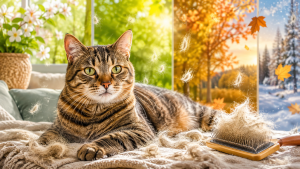
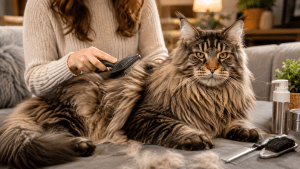
Long-haired breeds such as Ragdolls, Persians, and Maine Coons need considerably more grooming than short-haired cats. Their long coats are prone to tangling and matting, so they require regular brushing, often daily or near-daily, to keep the coat healthy, comfortable, and free of mats, with Persians typically needing the most because their very long, dense coats mat especially easily. A neglected long coat can develop painful, tight mats that pull on the skin and may ultimately need professional grooming or clipping to resolve, so committing to regular brushing is essential for these breeds. Long-haired cats are also more prone to hairballs from swallowing loose fur during grooming, and regular brushing (by removing that loose hair before the cat ingests it) helps reduce them. Beyond coat care, some of these breeds carry particular health considerations: Persians and other flat-faced ‘brachycephalic’ breeds can experience breathing difficulties, eye problems and tear staining, and dental crowding because of their facial structure, and various pedigree breeds are predisposed to specific inherited conditions, which is precisely why buying from a breeder who health-tests is so important, and why pet insurance is worth considering. In all other respects, these breeds have the same fundamental needs as any cat, a good diet, veterinary care, enrichment, play, and companionship, but the extra grooming time (and sometimes the cost of professional grooming), plus any breed-specific health watch-points, should be factored into the decision to take one on. Setting aside a regular grooming slot in your week, and getting the cat used to being brushed from kittenhood, makes the coat care much easier to keep up with in the long run. So long-haired and flat-faced pedigree cats are beautiful and often wonderfully affectionate, but they are higher-maintenance, especially for coat care, and a prospective owner should be genuinely ready for that ongoing commitment.
Can a serval kill a human?
Finally, a question that often comes up alongside exotic-cat searches deserves a clear answer, both for accuracy and for safety: can a serval kill a human, and are servals suitable as pets?
A serval is a medium-sized wild African cat, not a domestic pet, and while it is very unlikely to kill a healthy adult human, it is emphatically not a safe or suitable animal to keep as an ordinary pet. Servals are much smaller than the big cats (lions, tigers, leopards) that can kill people, and in the wild they hunt small prey such as rodents and birds rather than large animals, so a serval killing a fit adult human would be highly unusual. However, that does not make them safe: a serval is a powerful, athletic wild predator with strong hunting instincts, capable of inflicting serious injuries with its teeth and claws, and it poses a genuine risk, especially to small children, and behaves unpredictably compared with a domestic cat. Keeping a serval is a serious undertaking that demands specialist knowledge, large secure outdoor enclosures, and often special licences or permits, and it is outright illegal or heavily restricted in many jurisdictions. Servals also have complex dietary, spatial, and behavioural needs that a normal household simply cannot meet, so they do not thrive as pets and do not make good ones. It is worth noting that domestic-serval hybrids, Savannah cats, are bred to capture the exotic look while being more manageable, but even these can be demanding, and early-generation hybrids retain substantial wild traits. Later-generation Savannahs behave much more like ordinary domestic cats, but the earliest crosses need experienced owners and, in some areas, permits of their own. The responsible bottom line is that a serval, while unlikely to kill a healthy adult, is a wild animal that can seriously injure people, is unsuitable and frequently illegal as a pet, and is not remotely comparable to a domestic cat, wild cats belong in the wild or in proper specialist sanctuaries and facilities, not in the home, and prospective cat owners are far better served by a domestic breed or a rescue cat. The appeal of an exotic cat is understandable, but a friendly domestic cat offers all the companionship without the danger, the legal headaches, or the welfare compromises.
Frequently asked questions
Are Ragdoll cats hypoallergenic?
No, Ragdoll cats are not hypoallergenic, and in fact no cat breed is truly hypoallergenic. Cat allergies are mainly caused by a protein called Fel d 1, produced in a cat’s saliva, skin, and glands and spread onto the fur and into the environment through grooming and shedding, not by fur itself. All cats, including Ragdolls, produce Fel d 1, so all can trigger allergies in sensitive people. Ragdolls are actually large, long-haired cats that shed and groom a lot, spreading allergen around, so they are not a good choice for allergy sufferers and are certainly not ‘hypoallergenic.’ Some breeds are sometimes described as lower-allergen (such as the Siberian, Balinese, or the hairless Sphynx) because they may produce less Fel d 1 or shed less, but even these are not truly hypoallergenic and still cause reactions in many allergic people. So if you have a cat allergy, do not assume a Ragdoll (or any breed) will be safe; no cat is genuinely hypoallergenic, and Ragdolls in particular are a long-haired, allergen-spreading breed rather than an allergy-friendly one.
How much do Ragdoll cats cost?
Ragdoll cats are a popular pedigree breed and are generally moderately expensive, though prices vary widely by location, breeder, pedigree, and quality. From a reputable breeder, a Ragdoll kitten typically costs somewhere in the region of several hundred to a couple of thousand (in local currency/dollars), with pet-quality kittens at the lower end and show-quality or breeding-quality kittens, or those from top bloodlines, costing considerably more. Factors that push the price up include a strong pedigree and champion lines, the breeder’s reputation and health testing, registration papers, and the kitten coming vaccinated, microchipped, and vet-checked. Beyond the purchase price, remember the ongoing costs of owning a Ragdoll (food, litter, vet care, insurance, grooming for their long coat), which add up over a 12-to-17-year lifespan. You may also find Ragdolls or Ragdoll-crosses through rescue organisations for a much lower adoption fee, which is worth considering. Because exact prices change over time and differ by area, treat any figure as a rough guide and check current local prices, and factor in lifetime costs, not just the upfront kitten price, when budgeting for a Ragdoll.
How much do Siamese and Persian cats cost, and where are Siamese cats from?
Siamese and Persian cats are both popular pedigree breeds with prices that, like Ragdolls, vary considerably by breeder, pedigree, location, and quality. As a rough guide, a Siamese kitten from a reputable breeder often costs in a similar broad range to other pedigree cats (roughly several hundred up to over a thousand or more for show lines), and Persian kittens likewise typically fall in a comparable pedigree price range, with prices for both influenced by bloodline, breeder reputation, health testing, and registration; exact figures vary by region and change over time, so check current local prices. As for origins: Siamese cats come from Thailand, historically known as Siam, which is where the breed gets its name; they are one of the oldest and most recognisable cat breeds, originating in Thailand and later becoming popular worldwide. Persians, by contrast, are associated with Persia (modern Iran) in their history. With both breeds, factor in ongoing costs (Persians in particular need daily grooming for their long coats and can have breed-related health issues), and consider that rescues sometimes have these breeds for a lower adoption fee. So Siamese and Persians are pedigree cats in a similar broad price bracket to other breeds, prices vary and change, and Siamese cats originate from Thailand (Siam).
What makes some cats more expensive than others?
Several factors determine a cat’s price, which is why costs range so widely. Breed and rarity matter most: popular or rare pedigree breeds cost more than moisture domestic (non-pedigree) cats, and some breeds are pricier than others. Pedigree and bloodline: kittens from champion or show-winning lines, with documented ancestry and registration papers, cost more than pet-quality kittens. Breeder reputation and practices: responsible breeders who do health testing, provide good early care, vaccinate, microchip, deworm, and vet-check their kittens, and rear them well, charge more, and are worth it, than backyard breeders or kitten mills (which should be avoided). Quality/purpose: ‘show-quality’ or ‘breeding-quality’ kittens cost more than ‘pet-quality’ ones. Location: prices vary by country and region and with local demand. Age and type: kittens usually cost more than adults, and specific colours or patterns can affect price. Whether the cat is neutered, vaccinated, and microchipped is also factored in. By contrast, adopting from a rescue or shelter costs far less (just an adoption fee) and gives a home to a cat in need. So a cat’s price reflects its breed, pedigree, the breeder’s quality and care, its purpose and quality grade, location, and what is included, and adoption is always a lower-cost, worthwhile alternative to buying.
Can a serval cat kill a human?
A serval is a medium-sized wild African cat, not a normal domestic pet, and while a serval is very unlikely to kill a healthy adult human (they are far smaller than big cats like lions and typically hunt small prey such as rodents and birds), it is still a wild predator that can inflict serious injuries with its teeth and claws, and it is not safe or appropriate to keep as an ordinary pet. Servals are powerful, athletic wild animals with strong hunting instincts, and they can bite and scratch severely, posing a genuine risk especially to small children, and they are unpredictable compared with domestic cats. Keeping a serval requires specialist knowledge, large secure enclosures, and often special licences or permits, and it is illegal or heavily restricted in many places. Servals also have complex dietary and behavioural needs that a normal home cannot meet, and they do not make good pets. There are domestic-serval hybrids (Savannah cats) bred to look exotic while being more manageable, but even these can be demanding and, in early generations, part-wild. So while a serval is unlikely to kill a healthy adult, it is a wild animal that can injure people, is unsuitable and often illegal as a pet, and is not comparable to a domestic cat; wild cats belong in the wild or in proper specialist facilities, not the home.
Should I buy from a breeder or adopt from a rescue?
Both are valid, but adopting from a rescue or shelter is a wonderful, lower-cost option that gives a home to a cat in need, and it is well worth considering first, including for specific breeds. Rescues and shelters are full of cats and kittens (including purebreds and breed-crosses, and breed-specific rescues exist for breeds like Ragdolls, Siamese, and Persians) that need homes, and adoption fees are far lower than breeder prices while usually including neutering, vaccination, and microchipping. If you do choose to buy a pedigree kitten from a breeder, it is essential to choose a responsible, ethical breeder: one who health-tests their cats, rears kittens in a clean home environment with good socialisation, is knowledgeable and transparent, lets you see the kittens with their mother, provides vaccination, worming, and often microchipping, and is more interested in their kittens’ welfare than a quick sale. Avoid backyard breeders, kitten mills, and anyone selling kittens too young, in poor conditions, or without health information, as these support poor welfare and often produce sickly or poorly-socialised kittens. So consider adoption first (including breed rescues) as a cheaper, ethical route, and if you buy, insist on a responsible, health-testing breeder and steer clear of kitten mills.
Do long-haired breeds like Ragdolls and Persians need special care?
Yes, long-haired breeds such as Ragdolls, Persians, and Maine Coons need more grooming than short-haired cats, and some have breed-specific needs to be aware of. Their long coats are prone to tangles and mats, so they need regular, often daily or near-daily, brushing to keep the coat healthy and mat-free, especially Persians, whose very long, dense coats can mat easily and may need the most grooming. Neglected long coats can become painfully matted and may require professional grooming or clipping. Some long-haired and flat-faced breeds also have particular health considerations: Persians (and other flat-faced ‘brachycephalic’ breeds) can have breathing, eye (tear staining), and dental issues related to their facial structure, and some pedigree breeds are predisposed to certain inherited conditions, which is why buying from a health-testing breeder matters. Long-haired cats can also be more prone to hairballs from grooming, so regular brushing (which removes loose hair) helps. Beyond grooming, these breeds have the same core needs as any cat, good food, vet care, enrichment, and companionship, but you should factor the extra grooming time (and sometimes grooming costs) and any breed-related health considerations into your decision. So long-haired and flat-faced pedigree breeds are lovely but higher-maintenance, especially for coat care, and prospective owners should be ready for that commitment.
The quick version
Are Ragdoll cats hypoallergenic? No, and no cat truly is. Cat allergies come from the protein Fel d 1 (in saliva, skin, and dander, spread by grooming and shedding), not fur, so every breed produces it. Ragdolls, being large, long-haired heavy shedders, are actually a poor choice for allergy sufferers. Some breeds (Siberian, Balinese, Sphynx) are called ‘lower-allergen’ but still aren’t truly hypoallergenic. On prices: Ragdoll, Siamese, and Persian kittens from reputable breeders all fall in a broad, variable pedigree range (roughly several hundred to a couple of thousand+ depending on bloodline, breeder, quality, and location, always check current local prices), and lifetime costs far exceed the purchase price. Siamese cats come from Thailand (historically Siam); Persians are linked to Persia (Iran). Price depends on breed, pedigree, breeder quality, kitten grade, and location, adoption (including breed rescues) is a much cheaper, ethical alternative. Long-haired breeds (Ragdoll, Persian) need frequent brushing and some have breed-related health issues. And a serval? Unlikely to kill a healthy adult but a wild predator that can injure people, unsuitable and often illegal as a pet.
Plan the cost with the cat cost calculator, and see what caring for a cat involves and grooming and coat care. Browse the full cat blog, the pet calculators, and more free tools on the Waldev homepage.
Note: This guide is for general education. No cat breed is truly hypoallergenic; if you have a cat allergy, consult an allergist before getting a cat. Cat prices vary widely by region and change over time, treat figures as rough guides and check current local prices, and buy only from responsible, health-testing breeders (never kitten mills or backyard breeders), or adopt from a rescue. Servals and other wild cats are not suitable pets and are illegal or restricted in many places. Consult your veterinarian about breed-related health and care.
No cat is truly hypoallergenic; the Fel d 1 protein, not fur, causes allergies, and all breeds produce it. Pet owner resources →
Buy only from responsible, health-testing breeders or adopt from a rescue; factor in lifetime costs and care. Locate a hospital →