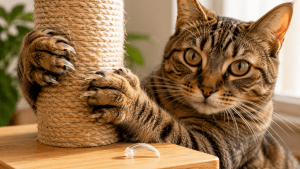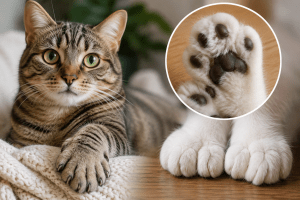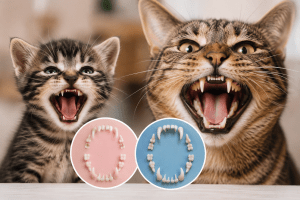
Are cats cleaner than dogs? It is one of the great friendly debates between pet lovers, and the answer leans toward cats: they groom themselves meticulously, use a litter box by instinct, and rarely need bathing, whereas dogs need washing, walking, and a fondness for rolling in unspeakable things. But ‘cleaner’ is only part of the cats-versus-dogs story. This guide compares the two fairly and enjoyably across the questions people actually ask, cleanliness and smell, speed and agility, whether dogs are really scared of cats, whether dogs can eat cat food (or chickens can), and, ultimately, which makes the better pet, spoiler: the one that suits you.
Cats’ cleanliness comes from grooming. See why cats rarely need baths, how and why cats groom, and what caring for a cat involves, and explore more on the Waldev homepage.
On this page
Are cats cleaner than dogs?
Since cleanliness is the headline question, it deserves a clear and fair answer, because while cats do have a real edge, the picture is a little more nuanced than a simple win.
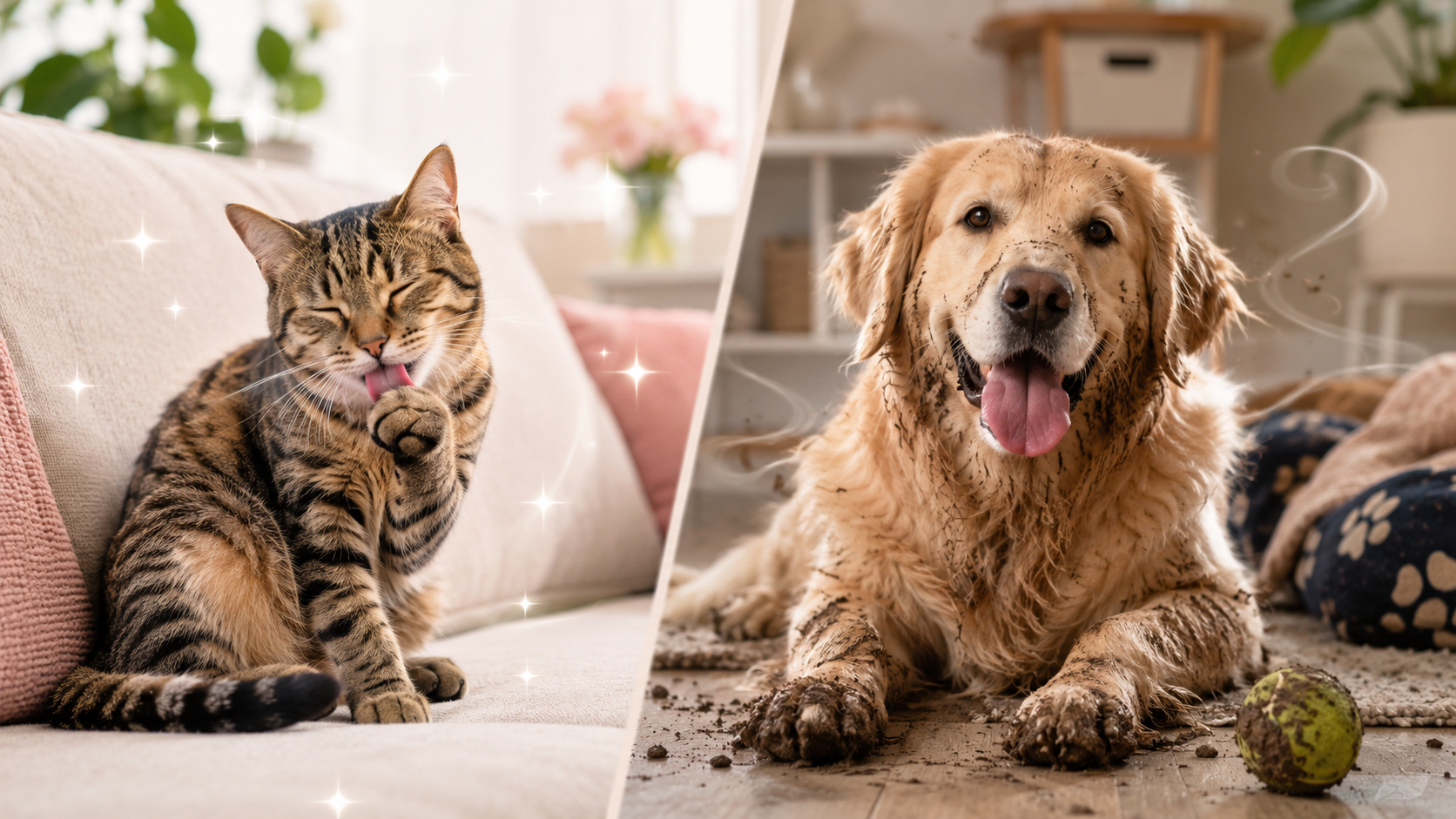
Generally speaking, yes, cats are usually considered cleaner than dogs in everyday terms, and the main reasons are two of their most distinctive traits: they are meticulous self-groomers, and they are naturally litter-trained. A cat spends a large portion of its waking hours grooming itself with its tongue, keeping its coat clean, tidy, and largely free of odour, which is why cats rarely need bathing at all. Dogs, by contrast, cannot groom themselves anywhere near as effectively, so they often need regular baths and can develop a characteristic ‘doggy’ smell between them. On toileting, cats use a litter box by instinct and bury their waste, keeping things contained and tidy indoors, whereas dogs must be taken outside to toilet and are far more inclined to roll in mud, dirt, or smelly things and to track dirt back into the house. All of this gives cats a genuine reputation for cleanliness. That said, ‘cleaner’ is not absolute and cats are not spotless: they shed hair (sometimes copiously) that gets on furniture and clothes, they cough up hairballs, and their litter box needs regular cleaning and will smell if neglected, so a cat household’s tidiness depends on good litter hygiene. A daily scoop and a properly-sized, well-placed box are really all it takes to keep the one genuine downside of cat cleanliness under control. And of course an individual cat or dog can be dirty if not cared for. So the fair conclusion is that cats are generally cleaner and lower-odour than dogs, and need much less bathing, thanks above all to their self-grooming and litter use, but both animals need care, and the difference is one of degree rather than cats being effortlessly pristine. Anyone who has vacuumed cat hair off a sofa or scooped a litter box will happily confirm that the tidy cat still comes with its own housekeeping.
Grooming and self-cleaning
The single biggest reason cats out-clean dogs is their remarkable self-grooming, so it is worth looking more closely at how cats keep themselves clean, because it is the foundation of their tidy reputation.
Cats are among the most fastidious self-groomers in the animal world, and they are superbly equipped for it. A cat’s tongue is covered in tiny, backward-facing, keratin spines called papillae that act like a built-in comb, letting the cat detangle its fur, lift out loose hair and dirt, and spread the skin’s natural oils through the coat to keep it clean, conditioned, and water-resistant. Cats devote a large share of their day to this grooming, working methodically over their whole body and using their paws to clean their face and head, and the result is a coat that stays clean, glossy, and largely odour-free without any help from us. This is why a healthy cat almost never needs a bath, its own grooming does the job. Dogs simply do not have this ability: they cannot lick themselves clean nearly as effectively, do not have the same self-cleaning tongue, and rely on their owners for bathing and grooming to stay fresh, which is why regular baths are a normal part of dog care but an exceptional event for cats. Grooming also does more for cats than cleaning, it regulates temperature, soothes and de-stresses them, and stimulates the skin, but its cleaning function is what gives cats their edge in tidiness. It is worth noting the flip side: because cats groom so much, they swallow loose fur and can get hairballs, and heavy shedding still means cat hair around the home, so self-grooming, while excellent, does not make cats mess-free. Still, this constant, effective self-cleaning is the core reason cats are generally cleaner and less smelly than dogs, and it is one of the qualities cat lovers most appreciate. There is something quietly satisfying about sharing your home with a pet that keeps itself immaculate with no help beyond the occasional brush.
Smell compared
Closely tied to cleanliness is the question of smell, and here too cats generally come out ahead of dogs, though with one big caveat that every cat owner knows well.
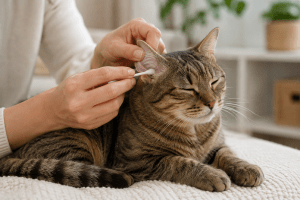
Cats usually have noticeably less body odour than dogs, and the reason is largely the same constant self-grooming that keeps them clean: by licking their coat throughout the day, cats remove dirt and odours and keep their fur fresh, so a healthy, well-groomed cat rarely develops a strong smell and needs bathing only rarely. Dogs, unable to groom themselves as thoroughly, tend to have more noticeable body odour, the familiar ‘doggy’ smell, produced by their skin and coat oils, are more prone to rolling in smelly things, and often need regular baths to stay fresh. So cat-for-cat and dog-for-dog, the cat is usually the lower-odour animal. The big caveat, of course, is the litter box. While the cat itself may smell of very little, its litter box can smell strongly, even offensively, if it is not cleaned regularly, so the odour level of a cat household depends heavily on good litter box hygiene, scooping daily and changing the litter as needed. Kept clean, the box need not smell; neglected, it certainly will. A second exception is the unneutered male cat, whose urine is extremely pungent and who may spray it to mark territory, one of the strongest cat smells there is, which neutering dramatically reduces. It is also worth knowing that if a cat itself develops an unusual or bad smell (beyond litter or intact-male issues), it can signal a health problem, such as dental disease (bad breath), skin issues, or infection, that warrants a vet check. This is a useful reminder that cleanliness and health are linked: a normally fastidious cat that starts to smell is often telling you something is wrong. So on smell, cats generally beat dogs thanks to self-grooming, provided the litter box is kept clean and intact males are neutered, and any genuinely smelly cat is worth having checked. A sudden change in how a cat smells, especially bad breath, is one of those subtle signs that owners can easily miss but that often points to a treatable problem.
Are cats faster than dogs?
Moving from cleanliness to athletics, another popular cats-versus-dogs question is which is faster, and the answer is a satisfying ‘it depends’, because cats and dogs are built for different kinds of speed.
Whether cats are faster than dogs depends on what you mean by fast and which breeds you compare. A typical domestic cat can sprint at roughly 30 miles per hour (about 48 km/h) in short bursts, and cats have outstanding acceleration, agility, and jumping and climbing ability, so over a very short distance, and for quick, darting, acrobatic manoeuvres, a house cat is genuinely fast and remarkably nimble, able to accelerate, change direction, and leap in ways that would leave many dogs floundering. A cat scaling a fence or vanishing straight up a tree in a heartbeat is a display of raw athleticism that few dogs can match. However, many dogs are faster in outright and sustained terms: the greyhound, the fastest dog breed, can reach around 40 to 45 mph (roughly 70 km/h), well beyond a house cat’s top speed, and can sustain high speed over distance far better than a cat, and various other dog breeds are also fast, powerful runners with real stamina. The key difference is in design: cats are sprinters and acrobats, built for short, explosive bursts of speed and exceptional agility to ambush and catch prey over a short dash, whereas many dogs are better endurance runners, built to chase and cover ground over longer distances. So a house cat can out-accelerate and out-manoeuvre many dogs in a short scramble and is extraordinarily agile, but the fastest dogs are faster outright and have vastly more endurance. Neither is simply ‘faster’ than the other; it comes down to distance, the specific breeds, and whether you prize explosive sprint speed and agility (cats’ strength) or top-end speed and stamina (many dogs’ strength), which is exactly what makes the comparison such fun. It is a bit like comparing a gymnast with a marathon runner: both are superb athletes, but at completely different events.
Why some dogs are wary of cats
One of the most entertaining questions in the cats-versus-dogs rivalry is why some dogs seem scared of cats, and the answer says a lot about how these two very different animals read each other.
Dogs are not usually genuinely ‘scared’ of cats in a deep sense, but many dogs are wary of or cautious around them, and there are good reasons. Cats can be surprisingly assertive little animals: rather than fleeing like typical prey, a cat that feels threatened will often stand its ground, puff up, hiss, swat, and unsheathe its claws, and a swipe to a dog’s sensitive face or nose is genuinely painful. A dog that has been scratched by a cat, or that instinctively senses a cat might lash out, quickly learns to treat cats with respect and caution. Cats also behave unpredictably from a dog’s point of view: a dog may expect a small animal to run so it can chase, but a cat that instead confronts it, holding its ground and staring it down, can confuse and unnerve the dog, throwing off its instincts. Some dogs, too, are simply timid by nature or were not socialised with cats when young, so they are nervous around them. It is important to stress that this dynamic is far from universal: plenty of dogs and cats live together perfectly happily, many dogs are indifferent or even friendly toward cats, and the opposite stereotype, dogs chasing cats as prey, is also real, with some dogs viewing cats as something to pursue. So a dog’s wariness of cats, where it exists, usually stems from healthy respect for a cat’s claws and from the cat’s confident, unpredictable behaviour rather than from true fear, and the relationship between any particular dog and cat depends enormously on their individual temperaments, experiences, and how they were introduced and socialised. A cat and dog raised together from a young age will often become firm friends, which shows how much of the rivalry is learned rather than innate.
Can dogs eat cat food?
Living in a mixed cat-and-dog household throws up practical questions, and a very common one is whether it matters if the dog eats the cat’s food, so it is worth clarifying, because the answer is ‘occasionally fine, but not as a diet’.
An occasional small amount of cat food, or a cat treat, is unlikely to harm a healthy dog, but cat food is not suitable as a regular diet for dogs, so you should not feed a dog cat food routinely or let it become a habit. The reason lies in the different nutritional needs of the two species. Cat food is formulated specifically for cats, who are obligate carnivores, so it is considerably higher in protein and fat, and richer overall, than dog food, and it is balanced for cats’ particular requirements, including added nutrients like taurine that cats must have. Dogs, as more omnivorous animals, need a different balance. A dog that regularly eats cat food therefore ends up on an unbalanced diet, too high in protein and fat, which can cause digestive upset in the short term and, over time, contribute to weight gain and potentially strain organs such as the pancreas, while missing the specific nutritional balance a dog needs. Over months and years, that imbalance can add up to real health problems, which is why vets discourage feeding cat food to dogs beyond the odd stolen mouthful. The rich, high-fat nature of cat food is a particular concern for dogs that are prone to pancreatitis. So while a dog stealing the odd mouthful of cat food or a cat treat now and then is generally not a cause for alarm, cat food should never be a dog’s staple. The sensible approach in a multi-pet home is to feed each animal its own appropriate food and, if the dog keeps raiding the cat’s bowl, to feed the cat somewhere the dog cannot reach, such as up high or behind a barrier the cat can pass but the dog cannot. A high shelf, or a microchip-activated feeder that only opens for the registered cat, solves the problem neatly in many mixed households. So dogs can tolerate occasional cat food or treats without harm, but they should eat food made for dogs, not cat food, as their regular diet.
Can chickens eat cat food?
A more unusual but genuinely common question, especially for anyone keeping both cats and backyard chickens, is whether chickens can eat cat food, and the answer follows a similar logic to the dog question.
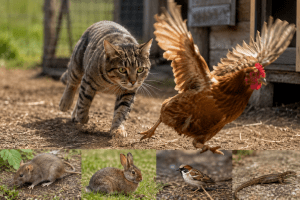
Chickens can eat small amounts of cat food occasionally as a protein-rich treat, but cat food should not be a regular or major part of a chicken’s diet, because it is not formulated for a chicken’s nutritional needs. Chickens are omnivores and naturally eat some animal protein, insects, worms, and the like, so the high protein content of cat food means a little can act as a protein boost, and some chicken keepers do offer a small amount of cat food now and then, particularly to hens that are moulting and need extra protein to regrow feathers. However, cat food is too high in protein and fat for a chicken’s long-term diet and is not nutritionally balanced for poultry, so feeding it in large amounts or as a staple is inappropriate and could cause health problems; chickens should get the bulk of their nutrition from a proper complete poultry feed formulated for them. A few sensible cautions apply: avoid cat foods heavy in additives, and be aware that fish-based cat food fed in quantity can taint the flavour of eggs, and never give spoiled food. So chickens can have occasional small amounts of cat food as a treat or a protein top-up, especially during moulting, but it must not replace their proper chicken feed and should only be given in moderation now and then, with a complete poultry diet remaining their staple. Treats of any kind, cat food included, are best kept to a small fraction of what a flock eats each day so the balanced feed still does the nutritional heavy lifting. As with dogs, the theme is that cat food is made for cats, and other animals can have a little occasionally but should eat their own species-appropriate diet.
Which is the better pet?
Finally, the question underlying the whole cats-versus-dogs debate is which makes the better pet, and the honest, fair answer is that neither is better in the abstract, they are different, and the right choice is the one that fits your life.
Cats and dogs are simply different kinds of companions, each with strengths, so the question is not which is superior but which suits you. Cats are generally more independent and lower-maintenance: they do not need walking, they use a litter box, they groom themselves, and they cope comparatively well with being alone during a working day, which makes them well-suited to busy people, to flats and smaller homes, and to anyone wanting a more self-sufficient, low-fuss companion, and, as this guide has explored, they tend to be cleaner and quieter too. For someone who is out at work all day, a cat’s greater independence can be the deciding factor between a happy pet and a lonely one. Dogs are typically more dependent and higher-maintenance: they need daily walking and exercise, more training, and generally more of your time, attention, and space, but for many people that is part of the appeal, dogs offer intense companionship, trainability, and an interactive, sociable, outdoorsy relationship that suits those with the time and energy to give it. For an active person or family who love the outdoors and want a companion for walks and play, a dog is often the perfect fit. The daily walk that some people see as a chore is, for the right owner, one of the great joys of dog ownership. On affection, it is worth dispelling a myth: the idea that dogs are loving while cats are aloof is largely untrue, as cats bond strongly and affectionately with their people, just often in subtler, more independent ways, so both can be deeply loving companions. Many lifelong dog people who adopt a cat are surprised to find just how affectionate and attached a cat becomes once it trusts them. There is no universal winner. The better pet is the one that matches your lifestyle, home, schedule, and preferences: choose a cat if you want a more independent, lower-maintenance, clean, and quiet companion that fits a busy or apartment life, and a dog if you want a more interactive, trainable pet and have the time, space, and energy for its greater needs, and remember that many households happily welcome both and enjoy the best of each. So rather than cats versus dogs, the real answer is cats and dogs each being wonderful in their own way, with the right pet being a personal choice, not a contest. The happiest pet owners are usually those who chose the animal that genuinely fits their life, rather than the one they felt they ought to prefer.
Frequently asked questions
Are cats cleaner than dogs?
Generally, yes, cats are usually considered cleaner than dogs in day-to-day terms, mainly because cats are meticulous self-groomers and are naturally litter-trained. Cats spend a large part of the day grooming themselves with their tongue, keeping their coat clean and largely odour-free, so they rarely need bathing, whereas dogs cannot groom themselves nearly as well and often need regular baths and can develop a ‘doggy’ smell. Cats also use a litter box by instinct and bury their waste, and they tend to keep themselves and their toileting tidy, while dogs need to be taken outside to toilet and are more likely to roll in dirt, mud, or smelly things and to bring dirt indoors. That said, ‘cleaner’ is not absolute: cats shed and can leave hair everywhere, cough up hairballs, and their litter box needs regular cleaning and can smell if neglected, and a poorly-kept cat or dog of either species can be dirty. So while cats are generally cleaner and lower-odour than dogs and need far less bathing, both need care, and the difference is one of degree, cats have a real edge in self-cleaning and low odour, but no pet is maintenance-free.
Are cats faster than dogs?
It depends on the comparison, because it varies by breed and by whether you mean short-burst speed or sustained running. A typical domestic cat can sprint at roughly 30 miles per hour (about 48 km/h) in short bursts, and cats have superb acceleration, agility, and jumping and climbing ability, so over a very short distance and for quick, agile manoeuvres, a house cat is very fast and nimble. However, many dog breeds are faster, especially over longer distances: a greyhound, the fastest dog breed, can reach around 40 to 45 mph (about 70 km/h) and sustain high speed far better than a cat, and various other dog breeds are also fast runners with good stamina. Cats are sprinters and acrobats built for short, explosive bursts and agility (to ambush prey), while many dogs are better distance runners with more stamina. So a house cat is quick and agile and can out-accelerate and out-manoeuvre many dogs in a short scramble, but the fastest dogs are faster outright and have far more endurance, meaning neither is simply ‘faster’, it depends on distance, breed, and whether you value sprint speed and agility or sustained running.
Do cats smell less than dogs?
Yes, cats generally have less body odour than dogs, largely because of their constant self-grooming and some differences in their skin and coat. A healthy, well-groomed cat keeps itself very clean by licking its coat throughout the day, which removes dirt and odours and helps keep the fur fresh, so cats rarely develop a strong smell, and they need bathing only occasionally. Dogs, by contrast, cannot groom themselves as thoroughly, have skin and coat oils that can produce a characteristic ‘doggy’ odour, are more prone to rolling in smelly things, and often need regular baths to stay fresh. The main potential odour source with cats is not the cat itself but its litter box, which can smell strongly if it is not cleaned regularly, so a cat household’s cleanliness depends a lot on good litter box hygiene. Unneutered male cats are also an exception, as their urine and spraying are very pungent (neutering greatly reduces this). So, cat for cat and dog for dog, cats usually smell less than dogs thanks to their self-grooming, with the caveat that the litter box must be kept clean, and that a smelly cat (beyond litter or intact-male spraying) can also indicate a health or dental problem worth a vet check.
Why are some dogs scared of cats?
Dogs are not usually truly ‘scared’ of cats in a deep sense, but many dogs are wary of or cautious around cats, and there are understandable reasons. Cats can be surprisingly assertive and will stand their ground, hiss, swat, and scratch when they feel threatened, and a cat’s claws to the face or nose are painful, so a dog that has been scratched (or that instinctively senses a cat might lash out) learns to be respectful or cautious around cats. Cats can also behave unpredictably from a dog’s point of view, standing firm and confronting rather than running, which can confuse or intimidate a dog expecting prey to flee. Some dogs are simply timid or under-socialised with cats and so are nervous around them. It is worth noting this is not universal, many dogs and cats coexist happily, some dogs are indifferent or friendly to cats, and the classic ‘dogs chase cats’ dynamic also exists (some dogs see cats as prey to chase). So a dog’s wariness of cats usually comes down to respect for a cat’s claws and its confident, unpredictable behaviour rather than true fear, and dog-cat relationships vary enormously depending on the individual animals and their experiences and socialisation.
Can dogs eat cat food or cat treats?
An occasional small amount of cat food or a cat treat is unlikely to harm a healthy dog, but cat food is not suitable for dogs as a regular diet, so you should not feed dogs cat food routinely. Cat food is formulated specifically for cats, who are obligate carnivores, so it is much higher in protein and fat and richer than dog food, and it contains nutrients balanced for cats’ needs (like added taurine) rather than dogs’. Because of this, a dog eating cat food regularly can get an unbalanced diet, too much protein and fat (which can cause digestive upset, and over time weight gain and potentially strain on organs like the pancreas), and it misses the specific balance a dog needs. So while a dog sneaking the odd bite of cat food or a cat treat now and then is generally not an emergency, cat food should not be a dog’s regular food. Dogs should eat food formulated for dogs, and cats food formulated for cats, since their nutritional needs differ. If a dog regularly steals cat food, it is worth feeding the cat separately (for example up high where the dog cannot reach). So dogs can tolerate occasional cat food or treats but should not be fed cat food as a diet, as it is too rich and not balanced for them.
Can chickens eat cat food?
Chickens can eat small amounts of cat food occasionally as a protein-rich treat, but cat food should not be a regular or major part of a chicken’s diet, because it is not formulated for chickens’ nutritional needs. Cat food is high in protein and fat and is designed for obligate carnivores, so a little can provide a protein boost for chickens (which are omnivores and do eat some animal protein, like insects, in nature), and some keepers offer a bit of cat food occasionally, especially to moulting hens needing extra protein. However, feeding chickens too much cat food, or making it a staple, is not appropriate: it is too high in protein and fat for a chicken’s long-term diet, is not balanced for their needs, and could cause health issues, and chickens should get most of their nutrition from a proper poultry feed. Also avoid cat food with lots of additives or fish (which can affect egg flavour), and never give spoiled food. So chickens can have occasional small amounts of cat food as a treat or protein supplement, but it should not replace their proper chicken feed, and it is best given only now and then in moderation, with a complete poultry diet as their staple.
Which is a better pet, a cat or a dog?
Neither a cat nor a dog is universally ‘better’, they are different, and the right choice depends on your lifestyle, preferences, and circumstances, so it is about which suits you rather than which is superior. Cats are generally more independent and lower-maintenance: they do not need walking, use a litter box, groom themselves, and cope better with being alone during a working day, which suits busy people, flats, and those wanting a more self-sufficient companion, and they are often quieter and cleaner. Dogs are typically more dependent and higher-maintenance: they need walking and exercise, more training, and more of your time and attention, but many people love their strong companionship, trainability, and interactive, sociable nature, and dogs suit those with the time, space, and energy for them. In terms of affection and bonding, both can be deeply loving companions in their own ways, the stereotype that dogs are affectionate and cats aloof is largely a myth, as cats bond strongly with their people too, just often more subtly. So the better pet is simply the one that fits your life: choose a cat if you want a more independent, lower-maintenance, clean, and quiet companion, and a dog if you want a more interactive, trainable pet and have the time and energy for its greater needs, and remember many households happily keep both.
The quick version
Are cats cleaner than dogs? Generally yes, cats are meticulous self-groomers (their comb-like tongue keeps them clean and low-odour) and are litter-trained by instinct, so they rarely need baths, while dogs need bathing, walking, and love to roll in smelly things. But cats aren’t spotless: they shed, get hairballs, and their litter box smells if not cleaned, so keep it clean. On smell, cats usually beat dogs (caveat: the litter box and unneutered males). On speed, it depends, house cats sprint ~30 mph with amazing acceleration and agility (built for short bursts), but fast dogs like greyhounds hit ~40-45 mph and have far more stamina. Some dogs are wary of cats out of respect for their claws and confident, unpredictable behaviour, not true fear (and many get along fine). Dogs can have occasional cat food/treats but not as a diet (too high in protein/fat, unbalanced for dogs); chickens can have a little cat food occasionally as a protein treat but not as a staple. Which is the better pet? Neither, it depends on your lifestyle: cats for a more independent, low-maintenance, clean, quiet companion; dogs for a more interactive, trainable pet if you have the time and energy.
For cat cleanliness and care, see why cats rarely need baths, how cats groom, and what caring for a cat involves. Browse the full cat blog, the pet calculators, and more free tools on the Waldev homepage.
Note: This guide is for general education and light comparison. Do not feed dogs cat food (or chickens cat food) as a regular diet, it is unbalanced for them; each species needs its own complete diet. A genuinely smelly cat (beyond the litter box or an unneutered male) can indicate dental or skin disease or infection and warrants a vet check. Introduce cats and dogs (or other pets) gradually and supervised. Consult your veterinarian about diet and any health concerns for your pets.
Cats are generally cleaner and lower-odour thanks to self-grooming and litter use; each species suits different owners. Pet owner resources →
Feed each species its own complete diet; a persistently smelly cat can signal a health problem needing a vet. Locate a hospital →