Are male cats more affectionate? It is one of the most common questions from people choosing a cat, and the short answer is that sex plays only a small role. Some neutered males are wonderfully cuddly, but plenty of female cats are just as loving, and the real drivers of affection are socialization, neutering, breed, and individual personality. This guide explains what the evidence really says about male versus female affection, why neutering matters so much, which breeds are known for being the most affectionate, how to read the signs that your cat loves you, and how to help any cat become more affectionate over time.
Affection is about trust and communication. Learn to read cat body language, understand how cats recognise their owners, and why your cat sleeps with you, and estimate the cost of owning an affectionate breed with the cat cost calculator.
On this page
Are male cats more affectionate?
Because this is the headline question, here is the honest answer before we get into the detail, since it is the thing most prospective and current cat owners really want settled.
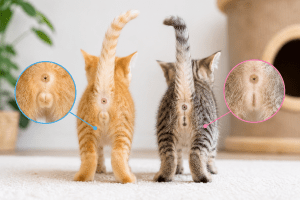
Are male cats more affectionate? The truthful answer is: not reliably, and sex is only a small piece of the puzzle. There is a popular belief that male cats, particularly neutered toms, are more affectionate, laid-back, and lap-loving than females, and there is a grain of truth to it for some cats. Some owners and some surveys do report that neutered males tend to be a touch more relaxed and sociable, while some females can be a little more independent or reserved. But these are broad averages with enormous overlap between the sexes, and they come with countless exceptions: there are extraordinarily cuddly female cats and famously aloof male cats. What the evidence and experienced cat people consistently emphasise is that individual personality, early socialization to humans, and whether the cat is neutered matter far more than sex when it comes to how affectionate a cat is. In other words, if you meet ten male cats and ten female cats, you will find a full spread of personalities in each group, and the sex of the cat will tell you very little about how loving any particular one will be. So while you may hear that toms are more affectionate, you should not choose a cat on sex alone and expect guaranteed cuddles. The most affectionate cat you ever meet might be a female tabby from a shelter, and the most standoffish might be a pedigree tom, because the sex label simply does not carry that information. The rest of this guide unpacks the factors that really do predict affection, so you can make a far better-informed choice.
Why the reputation exists
If sex is only a small factor, it is worth understanding why the belief that male cats are more affectionate is so widespread, because the reasons behind it are revealing and partly rooted in real patterns.
The reputation of male cats as more affectionate comes from a mix of anecdote, some genuine tendencies, and, above all, the effects of neutering. First, there is the power of anecdote: a great many cat owners have stories of a wonderfully loving, lap-sitting tomcat, and these vivid, positive stories circulate and reinforce the reputation, while the equally common aloof male or ultra-cuddly female stories get less attention. Second, there is a real behavioural pattern linked to neutering, which we cover fully in the next section: neutered male cats often become notably mellow, sociable, and people-oriented once the hormonal drive to roam, spray, and defend territory is gone, so a neutered tom can indeed be a very affectionate, easy-going companion, feeding the impression that males are more loving. Third, some observers feel that female cats, shaped by maternal instincts and perhaps a more self-contained temperament, can be a little more independent or selective in their affection, though this is a sweeping generalisation with many exceptions. It is important to stress that all of these are tendencies with huge individual variation, not rules, and much of what people attribute to sex is really down to neutering, socialization, and personality. So the belief that male cats are more affectionate exists partly because of real effects (especially the mellowing influence of neutering on toms) and partly because of anecdote and generalisation, and it should never be treated as a guarantee for any individual cat.
Neutering: the bigger factor
If there is one thing that influences a cat’s affection far more than its sex, it is whether the cat has been neutered or spayed, so this factor deserves a section of its own.
Neutering (for males) and spaying (for females) generally makes cats calmer, more settled, and more affectionate, and this effect is so significant that it often outweighs the cat’s sex entirely. In unneutered male cats, hormones drive a whole set of behaviours that pull the cat away from being a cuddly companion: a strong urge to roam in search of mates (which also puts them at risk from traffic and fights), territorial spraying of strong-smelling urine, aggression and fighting with other cats, and general restlessness. Neutering removes much of this hormonal drive, and as a result neutered males typically become more home-loving, settled, sociable, and affectionate, which is exactly why so many people find their neutered toms to be such loving pets. Spayed females similarly avoid the restless, loudly vocal, and sometimes irritable behaviour that comes with repeatedly going into heat, and tend to be more consistently calm and affectionate as a result. Beyond temperament, neutering and spaying bring major health and welfare benefits: they prevent unwanted litters (a huge issue given cat overpopulation), reduce the risk of certain cancers and reproductive diseases, and cut down on roaming, fighting, and the injuries and infections that come with them. The practical upshot for anyone wanting an affectionate pet is clear: whether a cat is neutered matters more than whether it is male or female. Prospective owners who fixate on choosing a male in the hope of a cuddlier cat are often looking at the wrong variable entirely. A neutered cat of either sex is far more likely to be a settled, loving companion than an unneutered, hormone-driven one. As always, talk to your veterinarian about the best timing to neuter or spay your particular cat. So neutering is the bigger factor: it is one of the most powerful influences on how affectionate and settled a cat becomes, and it applies to both sexes.
What really drives affection
With sex playing only a small role and neutering playing a large one, it helps to lay out the full set of factors that truly shape how affectionate a cat is, because understanding them helps you choose and raise a loving cat.
Several factors, taken together, do far more to determine a cat’s affection than its sex. The most important is early socialization: kittens that are gently handled and exposed to people, sounds, and everyday life during the critical socialization window (roughly the first two to seven weeks and beyond) tend to grow into confident, people-friendly, affectionate adults, whereas kittens with little positive human contact in that period often remain shy, fearful, or aloof no matter their sex or breed. This is why a well-socialized cat of any sex is usually far more affectionate than a poorly socialized one. Two kittens from the very same litter can grow into completely different adults purely because one was handled kindly and often in those early weeks and the other was not. Next is neutering, covered above, which strongly influences how settled and loving a cat is. Breed and genetics play a role too: some breeds and family lines are predisposed to be more people-oriented and cuddly, as we discuss in the next section, though this is a tendency rather than a guarantee. The individual cat’s innate temperament matters enormously, cats, like people, are simply born with different personalities, and some are naturally more gregarious and affectionate than others. A cat’s past experiences also shape it: a cat that has known kindness tends to trust people, while one that has been mistreated or is fearful may take time to warm up. This is why so many rescued cats need extra patience at first, and why earning the trust of a once-mistreated cat is such a rewarding experience for an owner. Finally, the cat’s current environment and how it is treated matter: a cat that feels safe, secure, and respected, and that is interacted with gently and on its own terms, is far more likely to be affectionate than one that is stressed, frightened, or handled roughly. So the real drivers of affection are socialization, neutering, breed and genetics, individual temperament, past experiences, and environment, and it is this combination, not the cat’s sex, that you should focus on if affection matters to you.
The most affectionate breeds
Since breed is one genuine (if imperfect) predictor of affection, it is worth knowing which cat breeds are most often described as loving and cuddly, so you have a useful starting point if you are choosing a cat.
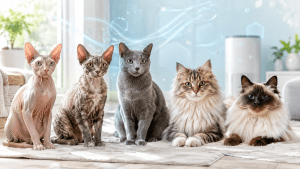
Several cat breeds have earned reputations as especially affectionate, cuddly, and people-oriented, though it is important to remember that individuals within any breed vary widely and that mixed-breed cats can be every bit as loving. The Ragdoll is perhaps the most famous of the affectionate breeds, named for its tendency to go limp and relaxed when picked up, and known for following its owners from room to room like a devoted shadow. Ragdolls are typically docile and gentle, happy to be carried and cradled in a way many cats would never tolerate, which makes them a favourite for families wanting a placid, cuddly companion. The Maine Coon, the large ‘gentle giant’, is celebrated for its friendly, gentle, dog-like sociability. These big cats often greet visitors at the door and enjoy being part of whatever the household is doing, which is a large part of why the breed is so consistently ranked among the most companionable. The Siamese is highly social, vocal, and intensely bonded to its people, often craving constant interaction. A Siamese will happily hold long ‘conversations’ with you and can become unhappy if left alone for long stretches, so it suits a home where someone is around a good deal of the day. The Persian is a gentle, calm lap cat that loves serene affection. It tends to prefer a quiet, peaceful household and gentle handling over boisterous play, rewarding a calm owner with hours of contented lap time. The Sphynx, the striking hairless breed, is famous for being extraordinarily warm-seeking, cuddly, and attention-loving, in part because, without a coat, it seeks out body heat. Other breeds frequently listed among the most affectionate include the Scottish Fold, the Burmese and Tonkinese (both remarkably people-focused), the Birman, the Abyssinian, the Bombay, and the Ragamuffin, among others. These breeds tend to actively seek human company, enjoy laps and cuddles, and form close bonds with their families. Many of them dislike being left alone for long periods and do best in homes where they get plenty of company and attention through the day. That said, breed is only a tendency, not a promise: a well-socialized cat of any breed, or a loving mixed-breed rescue, can be wonderfully affectionate, while an ‘affectionate breed’ cat that was poorly socialized may turn out reserved. If you are set on a purebred, note that these breeds often come with a higher purchase price and, in some cases, specific care or health needs, so it is worth researching costs before committing. So if affection is a priority, breeds like the Ragdoll, Maine Coon, Siamese, Persian, and Sphynx are excellent starting points, but always meet the individual cat, and never overlook the loving potential of a well-socialized moggy.
Signs your cat loves you
Whatever your cat’s sex or breed, learning to recognise feline affection is key, because cats express love in subtle ways that are easy to miss if you are expecting dog-style enthusiasm.
Cats show affection through a rich but understated body language, and once you learn to read it you will see just how much your cat communicates its trust and love. One of the clearest signs is the slow blink: when a cat looks at you and slowly closes and opens its eyes, it is offering a ‘cat kiss’, a gesture of trust and contentment, and you can slow-blink back to return the sentiment. Head-butting and rubbing against you (called bunting) is another strong sign; the cat is depositing its scent on you, marking you as part of its family. Purring in your company usually signals contentment and connection. Some cats even purr softly as they settle onto your lap, a sound many owners find as comforting to hear as the cat presumably finds it to make. Kneading, the rhythmic ‘making biscuits’ motion with the paws, is a comforting behaviour carried over from kittenhood and is often directed at a person the cat feels bonded and secure with. A cat choosing to sleep on or right next to you is a major sign of trust, because cats are at their most vulnerable when asleep and only settle like that with those they feel safe around. Other signs include following you around the house, greeting you when you come home, showing you their belly (a display of trust, though not always an invitation to touch it), gentle ‘love bites’ or licking you (grooming you as they would a bonded companion), and approaching you with the tail held upright with a little curl at the tip, a friendly, happy greeting. It is worth remembering that different cats express affection differently: some are dedicated lap cats, while others show their love simply by choosing to be in the same room as you, so affection is not only about cuddling. So to know whether your cat loves you, watch for slow blinks, head-butting, purring, kneading, following you, and sleeping near you, all signs that your cat feels safe with you and considers you family.
Bonding with one person
A related question many owners ask is whether cats, and male cats in particular, bond more strongly with one person, so it is worth addressing what really shapes a cat’s attachments.
Both male and female cats are capable of forming strong bonds, sometimes with one particular person and sometimes with the whole household, and there is no reliable rule that male cats bond more intensely with a single person than females do. Whether a cat becomes especially attached to one individual depends far more on the cat’s own personality and on who feeds it, plays with it, and spends the most quality time with it than on its sex. Many cats, of either sex, clearly develop a favourite person, the one they seek out, sleep on, greet most enthusiastically, and follow around, while others spread their affection more evenly across everyone in the family. Some breeds noted for intense bonding, such as the Siamese, may attach very strongly to a chosen person, but again that is a breed and personality trait rather than a male-versus-female difference. So if your male cat has bonded closely with you, that is not because toms as a group bond more with one person; it is because of your individual cat’s temperament and the relationship you have built through daily care and interaction, and a female cat can bond just as fiercely. The most reliable way to deepen a bond with any cat, regardless of sex, is consistent, gentle, positive interaction: being the one who feeds and plays with it, respecting its boundaries, and offering affection on its terms rather than forcing it. So bonding with one person is about the individual cat and your relationship, not about whether the cat is male or female.
How to make a cat more affectionate
Finally, whatever cat you have, you are not simply stuck with its current level of affection, so it helps to know how to gently encourage a cat to become more loving and trusting over time.
While a cat’s baseline temperament is partly innate, you can often help a cat grow more affectionate and trusting through patience, positive interaction, and respect for its boundaries, even though you cannot force affection on any cat. The foundation is always to interact gently and on the cat’s own terms: never force handling, never corner or grab a cat that wants space, and let the cat choose to approach you, which steadily builds trust. Regular play sessions with wand toys and similar interactive toys are a powerful bonding tool, they let the cat express natural hunting behaviour, burn off energy, and associate you with fun. Ten or fifteen minutes of active wand play once or twice a day satisfies much of a cat’s predatory drive and often leaves it relaxed and ready for a cuddle afterwards. Food and treats help too, because cats readily form positive associations with the person who provides them, so hand-feeding treats can warm a shy cat to you. Timing your play and feeding for the same times each day also gives an anxious cat a predictable routine, and predictability is deeply reassuring to cats. Crucially, respect the cat’s signals: when a cat shows it wants to be left alone (by moving away, flattening its ears, or twitching its tail), give it space, because pushing a cat that wants distance damages the very trust you are trying to build. Provide a secure, enriched environment with hiding spots, vertical space, and predictable routines, since a cat that feels safe is far more able to be affectionate than one that is stressed or frightened. Use slow blinks to communicate calm and affection in a language the cat understands, and simply spend consistent, low-pressure time near the cat so it grows comfortable in your presence. For a shy, fearful, or newly adopted cat, patience is everything, let it come to you in its own time, and expect the process to take weeks rather than days. Neutering or spaying, as covered, also supports a calmer, more affectionate cat. Over time, many initially reserved cats blossom into far more loving companions as trust builds. A shy rescue that hid under the bed for its first fortnight can, months later, be the cat sleeping on your chest each night, and that transformation is one of the quiet joys of patient cat ownership. So yes, you can nurture affection through gentle, patient, positive interaction, play, treats, respect for boundaries, and a secure environment, though some cats will always be more independent than others, and that independence is part of their charm too.
Frequently asked questions
Are male cats more affectionate than female cats?
There is a widespread belief that male cats are more affectionate than female cats, and while there is a grain of truth behind it for some cats, the honest answer is that sex is only a small factor and individual personality matters far more. Some owners and some surveys do report that male cats, especially neutered males, tend to be a little more relaxed, sociable, and lap-loving, while some females can be a touch more independent or reserved. But these are broad averages with huge overlap, and there are plenty of extremely cuddly female cats and aloof male cats. Far more important than sex are things like whether the cat was well socialized to people as a kitten, whether it is neutered (neutering tends to make both sexes calmer and more affectionate by removing hormone-driven behaviours), its breed, its early experiences, and simply its own individual temperament. So while you may hear that toms are more loving, you should not choose a cat on sex alone expecting guaranteed cuddliness. A far better predictor is meeting the individual cat and seeing its personality, and choosing a cat that is well socialized, neutered, and, ideally, from an affectionate breed or line if that matters to you. In short, male cats are not reliably more affectionate; some are, some are not, and the individual cat is what really counts.
Why do people say male cats are more affectionate?
People say male cats are more affectionate largely because of a mix of anecdote, some real tendencies, and the effects of neutering. Many cat owners share stories of especially loving, lap-sitting tomcats, and these anecdotes reinforce the reputation. There is also some behavioural basis: neutered male cats in particular often become notably mellow, sociable, and people-oriented once the drive to roam, spray, and defend territory is removed, so a neutered tom can be a very affectionate, laid-back companion. Some observers also feel that female cats, shaped by maternal instincts, can be a little more independent or selective in their affection, though this is a broad generalisation. It is worth stressing that these are tendencies with enormous individual variation, not rules, and much of a cat’s affection comes down to socialization, neutering, and personality rather than sex. So the reputation of male cats as more affectionate comes partly from real patterns (especially the mellowing effect of neutering) and partly from anecdote and generalisation, but it should not be taken as a guarantee for any individual cat.
Does neutering or spaying make a cat more affectionate?
Yes, neutering (for males) and spaying (for females) generally tends to make cats calmer and more affectionate, and this is one of the biggest factors behind how loving a cat is, often more influential than the cat’s sex. In unneutered males, hormones drive behaviours such as roaming to find mates, territorial spraying, aggression, and restlessness, and neutering removes much of this drive, so neutered males typically become more settled, home-loving, sociable, and affectionate. Spayed females likewise avoid the restless, vocal, and sometimes irritable behaviour of being in heat, and tend to be more consistently calm and affectionate. Neutering and spaying also bring major health and welfare benefits (preventing unwanted litters, reducing certain cancers and diseases, and reducing roaming and fighting). So if you want an affectionate, settled pet cat, having it neutered or spayed is one of the best things you can do, and it means the difference between a hormone-driven, roaming cat and a mellow, home-loving companion often matters more than whether the cat is male or female. As always, consult your veterinarian about the right timing for neutering or spaying your cat.
What are the most affectionate cat breeds?
Several cat breeds are especially known for being affectionate, cuddly, and people-oriented, though remember that individual cats within any breed vary and that mixed-breed cats can be just as loving. Breeds frequently listed among the most affectionate include the Ragdoll (famous for going limp and relaxed when held and following owners around), the Maine Coon (a gentle, sociable ‘gentle giant’ often described as dog-like), the Siamese (highly social, vocal, and bonded to their people), the Persian (gentle, calm lap cats), the Sphynx (the hairless breed, known for being extremely warm-seeking, cuddly, and attention-loving), the Scottish Fold, the Burmese and Tonkinese (both very people-focused and affectionate), the Birman, the Abyssinian, and the Bombay, among others. These breeds tend to seek out human company, enjoy laps and cuddles, and bond closely with their families. However, breed is only a tendency: a well-socialized cat of any breed or a mixed-breed rescue can be wonderfully affectionate, while even an ‘affectionate breed’ cat that was poorly socialized may be reserved. So if affection is a priority, these breeds are a good starting point, but meeting the individual cat and choosing a well-socialized, neutered animal matters just as much as the breed label.
How can I tell if my cat is affectionate or loves me?
Cats show affection in their own subtle ways, which are not always as obvious as a dog’s, so learning feline body language helps you recognise a cat that loves and trusts you. Common signs of an affectionate, bonded cat include: seeking out your company and choosing to be near or on you; slow blinking at you (often called ‘cat kisses’, a sign of trust and affection); head-butting or rubbing against you (bunting), which marks you with their scent as family; purring when with you; kneading (‘making biscuits’) on you, a comforting behaviour carried over from kittenhood; sleeping on or near you (a big sign of trust, as cats are vulnerable when asleep); following you around; greeting you; showing you their belly (a sign of trust, though not always an invitation to touch it); gentle ‘love bites’ or licking (grooming you as they would a bonded companion); and holding their tail upright with a little curl when they approach you. A cat that does these things is showing trust and affection. Different cats express love differently, some are lap cats, others prefer to simply be in the same room, so affection is not only about cuddling. So to tell whether your cat is affectionate, watch for slow blinks, head-butting, purring, kneading, seeking your company, and sleeping near you, all signs your cat feels safe with and bonded to you.
Do male cats bond more with one person?
Both male and female cats can form strong bonds, sometimes with one particular person and sometimes with the whole household, and there is no strong, reliable rule that male cats bond more with one person than females do. Whether a cat becomes especially attached to one person tends to depend more on the individual cat, on who feeds, plays with, and spends the most time with it, and on early socialization, than on the cat’s sex. Some cats, of either sex, clearly choose a favourite person, the one they seek out, sleep on, and follow, while others are affectionate with everyone in the family. Certain breeds known for intense bonding (like the Siamese) may attach strongly to a particular person, but this is a breed and personality trait rather than a male-versus-female one. So while your male cat may well bond closely with you, that is not because male cats as a group bond more with one person; it is down to your individual cat, your relationship, and how you interact, and a female cat can bond just as intensely. The best way to strengthen a bond with any cat is consistent, gentle, positive interaction: feeding, play, respect for its boundaries, and affection on its terms.
Can I make my cat more affectionate?
Yes, while a cat’s baseline temperament is partly innate, you can often help a cat become more affectionate and trusting through patience, positive interaction, and respect for its boundaries, though you cannot force affection. Key ways to encourage affection include: always interacting gently and on the cat’s terms (never forcing handling), which builds trust; using regular play sessions (with wand toys and similar) to bond and burn off energy; offering treats and food, which cats associate with positive feelings toward you; respecting the cat’s signals and giving it space when it wants to be left alone (pushing a cat that wants space damages trust); providing a secure, enriched environment where the cat feels safe (a frightened or stressed cat is less affectionate); using slow blinks to communicate calm and affection in a way cats understand; and simply spending consistent, low-pressure time near the cat so it grows comfortable with you. For a shy, fearful, or newly adopted cat, going slowly and letting it approach you in its own time is especially important. Neutering or spaying also helps, as covered. Over time, many initially reserved cats become far more affectionate as trust builds. So yes, you can nurture affection through gentle, patient, positive interaction and a secure environment, even if some cats will always be more independent than others, and building trust is the foundation of a more affectionate cat.
The quick version
Are male cats more affectionate? Not reliably, sex is only a small factor. Some neutered males are very cuddly, but plenty of female cats are just as loving, and the real drivers of affection are early socialization, neutering, breed, and individual personality. The reputation exists partly because neutered toms often become mellow and people-loving once the hormonal drive to roam and spray is gone, so neutering matters far more than sex. Well-socialized kittens grow into affectionate adults regardless of sex. Breeds known for affection include the Ragdoll, Maine Coon, Siamese, Persian, Sphynx, Burmese, Tonkinese, Birman, and Abyssinian, though any well-socialized cat, including a mixed-breed rescue, can be wonderfully loving. Cats show love through slow blinks, head-butting, purring, kneading, following you, and sleeping near you. You can help any cat become more affectionate with gentle, patient, positive interaction, play, treats, respect for its boundaries, and a secure environment. Choose a cat by meeting its individual personality, not by its sex.
For more, learn to read cat body language, understand how cats recognise owners, and why your cat sleeps with you, and estimate ownership costs with the cat cost calculator. Browse the full cat blog, the pet calculators, and more free tools on the Waldev homepage.
Note: This guide is for general education about cat behaviour and affection. Every cat is an individual, so do not choose a cat on sex alone; meet the animal and assess its personality. Neutering or spaying supports a calmer, more affectionate cat and brings health benefits, consult your veterinarian about the right timing for your cat. If a cat is unusually fearful, aggressive, or withdrawn, speak with your vet or a qualified feline behaviourist.
Affection depends far more on socialization, neutering, and personality than on a cat’s sex. Pet owner resources →
Neutering and spaying help cats become calmer and more affectionate and bring major health benefits. Locate a hospital →