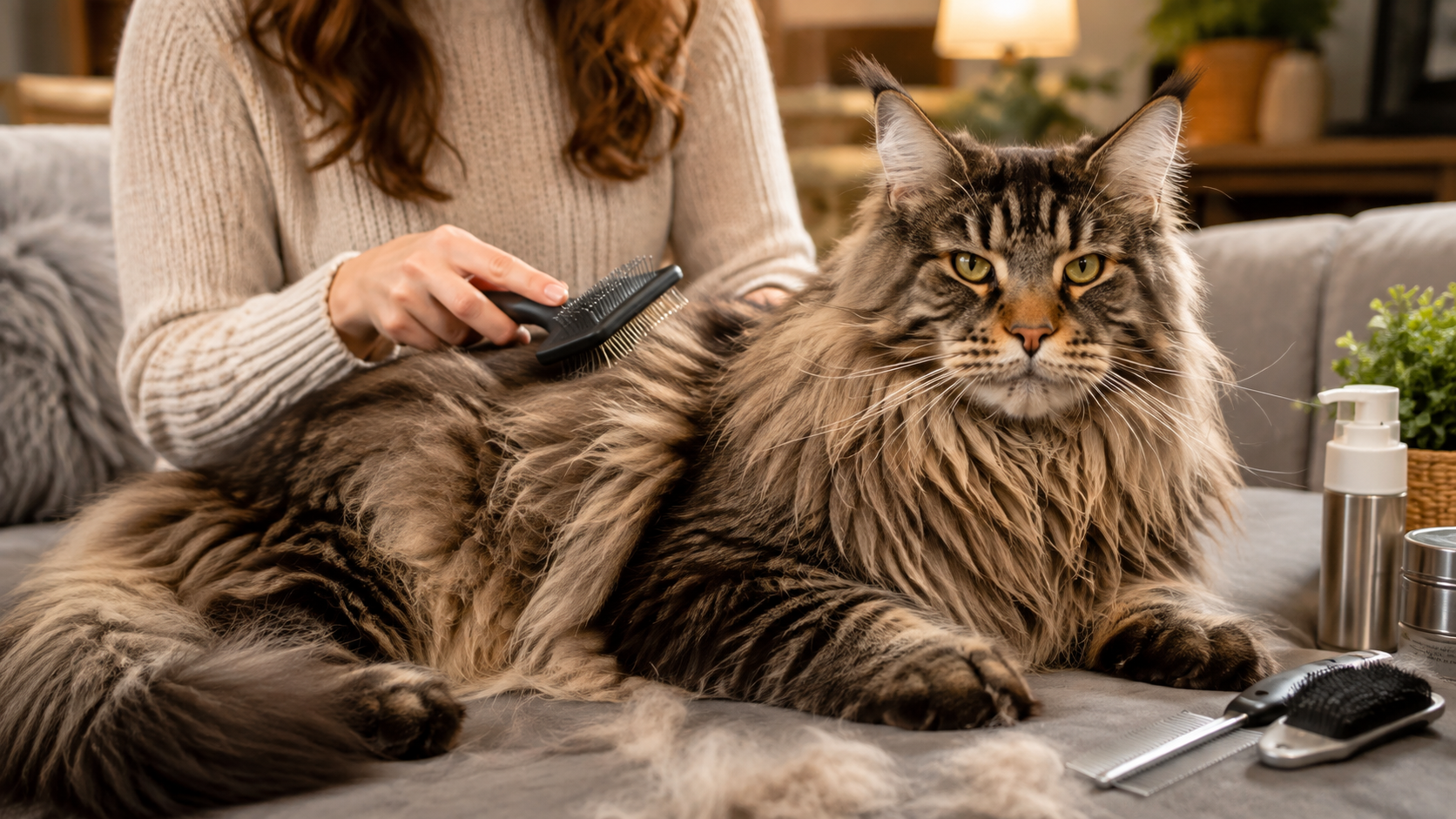
Do Maine Coon cats shed? Yes, they do, these magnificent ‘gentle giants’ have long, thick, dense coats, so they shed noticeably (more so in spring), and their long fur means that hair is very visible around the home. The good news is that with regular brushing, a Maine Coon’s shedding is quite manageable, and the same grooming keeps their glorious coat mat-free. A stainless steel comb worked down to the skin, followed by a slicker brush over the longer guard hairs, removes the dead undercoat that would otherwise clump into painful mats behind the ears and along the belly. But shedding is just one part of living with this remarkable breed. This guide covers Maine Coon shedding and grooming needs, their impressive size, how to tell whether your cat is a Maine Coon, whether they shed more than other cats (and the hypoallergenic myth), their temperament and health, and the special care their size demands.
Maine Coons are a large, long-haired breed. See cat breed prices and traits, grooming long coats, and polydactyl cats (common in Maine Coons), and estimate ownership costs with the cat cost calculator.
On this page
Do Maine Coons shed?
Since shedding is the headline question, here is the clear answer before we explore the breed’s coat and care in detail, because it is the thing prospective and current Maine Coon owners most want to know.
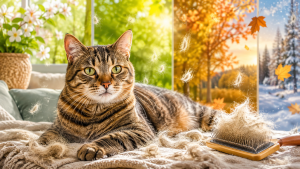
Yes, Maine Coon cats shed. They are long-haired cats with a thick, dense coat, so like all furry cats they naturally shed hair as their coat renews itself, and because of their large size and long fur, that shedding is quite noticeable, you will find long cat hairs around your home. That said, it is worth putting it in perspective: Maine Coons are not necessarily the heaviest shedders among cats, and many owners find that, with regular grooming, the shedding is moderate and manageable, though certainly more than you would get from a short-haired cat. Like other cats, Maine Coons tend to shed more heavily on a seasonal basis, especially in spring, when they lose part of their thick winter coat as the weather warms (and indoor Maine Coons, in constant light and heat, shed more steadily year-round rather than in sharp seasonal peaks). Because their fur is long and luxurious, the hair they shed is long and highly visible, and their dense coat is also prone to tangling and matting if it is not groomed regularly. The single most important factor in keeping a Maine Coon’s shedding under control is frequent brushing, which removes loose hair before it ends up on your furniture, prevents mats, and keeps the coat healthy. So the answer is a clear yes, Maine Coons shed, with noticeable, often seasonally heavier shedding of their long coat, and the way to manage it is consistent grooming, which the sections below explain in detail.
The Maine Coon coat
To understand a Maine Coon’s shedding and grooming, it helps to appreciate the breed’s distinctive coat, which is one of its most beautiful and defining features and the reason for both its glamour and its care needs.
The Maine Coon has a long, thick, shaggy, water-resistant double coat that developed to protect the breed in the harsh, cold winters of its native New England, and it is quite distinctive. Rather than being a uniform length all over, the Maine Coon’s coat is characteristically shorter on the head and shoulders and longer and fuller on the belly, flanks, and the back legs (forming feathery ‘trousers’ or ‘britches’), with a prominent, mane-like ruff of longer fur around the neck and chest, especially noticeable in full-coated cats. The tail is long and very bushy, plumed with long fur. This double coat consists of a soft, dense insulating undercoat beneath longer, coarser guard hairs, and its density and length are what make it so warm, water-resistant, and luxurious, and also what make it shed visibly and prone to matting. The coat can vary a little between individuals and with the seasons (it is often fuller in winter), and it comes in a huge range of colours and patterns. Because the coat is long and dense, it needs regular grooming to stay in good condition and to prevent the tangles and mats that such fur readily forms, particularly in the longer areas like the ruff, belly, armpits, and trousers. Understanding the nature of this glorious coat, long, dense, double, and shaggy, explains both why Maine Coons are so striking to look at and why they come with real grooming commitments, which the next section covers. So the Maine Coon coat is a long, thick, water-resistant double coat with a ruff and bushy tail, beautiful but high-maintenance, and central to the breed’s shedding and grooming story.
Grooming needs
Flowing directly from that magnificent coat is the Maine Coon’s most significant care requirement, regular grooming, so it is worth spelling out exactly what looking after this coat involves.
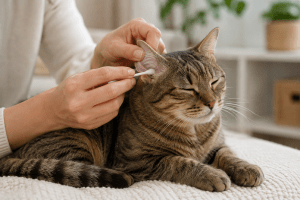
Maine Coons need frequent, regular grooming, considerably more than a short-haired cat, because their long, thick, dense coats readily tangle and mat without it. A sensible guideline is to brush a Maine Coon at least two to three times a week, and ideally more often, some owners brush daily, particularly during the heavier shedding periods, to remove loose hair before it spreads and mats, keep the coat healthy and comfortable, and reduce hairballs. It is important to pay special attention to the areas most prone to matting: behind the ears, the armpits, the belly, and the feathery ‘trousers’ on the hind legs, where tangles form most easily and can quickly become tight mats if missed. Using tools suited to a long, dense double coat, typically a combination of a wide-toothed comb (to work through the coat and find tangles) and a slicker brush or de-shedding tool (to remove loose undercoat), makes grooming far more effective than a single brush. Regular grooming does more than manage shedding: it prevents painful mats (which, if they form and are neglected, can pull on the skin and may ultimately need clipping out by a professional groomer), reduces hairballs by removing swallowed-bound hair, distributes the skin’s oils, and lets you regularly check the skin and coat for any problems. Occasional baths are sometimes used to keep a Maine Coon’s coat in top condition, though not usually necessary, and conveniently many Maine Coons rather like water, which can make bathing easier. The key message for anyone considering a Maine Coon is that its beautiful coat is a real, ongoing commitment: you must be prepared to brush frequently. So grooming a Maine Coon means brushing several times a week or more, targeting mat-prone areas with the right tools, to keep that stunning coat healthy, comfortable, and mat-free.
How big they get
Alongside their coat, the other thing everyone knows about Maine Coons is their size, and it is worth covering just how big these ‘gentle giants’ really get, because their scale affects both their care and their charm.
Maine Coons are one of the largest domestic cat breeds, and their impressive size is a defining feature, earning them the nickname ‘gentle giants’. Adult Maine Coons are considerably bigger than an average cat: males commonly weigh around 5.5 to 8 kg (roughly 12 to 18 pounds) or more, and females around 3.5 to 5.5 kg (about 8 to 12 pounds), with especially large individuals exceeding these ranges. Beyond sheer weight, Maine Coons are remarkable for their length: they have long, rectangular bodies and long, bushy tails, and the breed holds records for length, some of the longest domestic cats on record have been Maine Coons, measuring over a metre (more than three feet) from nose to tail tip. Their long fur, big bushy tail, and substantial frame make them look even larger than they weigh. Because that frame carries so much coat, the sheer volume of hair a healthy Maine Coon drops during a seasonal change can surprise first-time owners, even though the rate per square inch is normal. Another notable point is that Maine Coons grow slowly, typically taking around three to five years to reach their full adult size, considerably longer than most cats, which reach adult size within a year or so, so a young Maine Coon keeps filling out for several years. Because of their size, Maine Coons need appropriately large and sturdy accessories, big litter boxes (a standard tray can be too small), strong cat trees and furniture that can bear their weight, sizeable scratching posts, and larger, suitably-portioned food, all of which owners should plan for. So Maine Coons get large, with males often 5.5 to 8 kg or more and very long bodies and tails, making them one of the biggest cat breeds, true gentle giants that grow slowly into their full, impressive size.
How to tell if it’s a Maine Coon
A very common question, especially from owners of large, fluffy cats, is how to tell whether their cat is actually a Maine Coon, and while there are strong clues, there is also an important caveat about certainty.
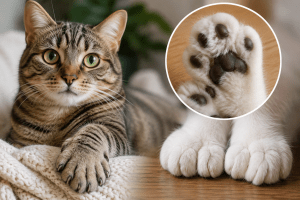
You can look for the Maine Coon’s distinctive physical and personality traits, but it is important to know up front that without pedigree documentation you often cannot be certain, because many cats are Maine Coon mixes or are simply large, long-haired cats that happen to resemble the breed. That said, the classic Maine Coon features are worth knowing. Physically, look for: large size and a long, rectangular, muscular body; a long, thick, shaggy, water-resistant coat that is longer on the belly and forms a mane-like ruff around the neck; a long, very bushy, plumed tail; large, wide-set ears that are often tufted at the tips (the so-called ‘lynx tips’) and furry inside; big, tufted paws (and note that Maine Coons were historically often polydactyl, with extra toes); a broad chest, sturdy legs, and high cheekbones; and large, expressive eyes. In terms of temperament, Maine Coons are famous as friendly, gentle, sociable, playful ‘gentle giants’ that are often strikingly dog-like, following their owners around, and many have a characteristic soft chirping or trilling voice instead of a typical meow. However, and this is the key caveat, all of these traits can also appear in mixed-breed cats and other large, fluffy cats, so they are strong clues rather than proof. The only way to confirm a cat is a genuine pedigree Maine Coon is through documentation, pedigree papers from a registered breeder (or breed DNA and lineage records). So look for the size, shaggy coat, tufted ears, bushy tail, big tufted paws, and gentle, dog-like temperament as strong indicators, but remember that a confirmed Maine Coon comes with papers, and a great many wonderful ‘Maine Coon-looking’ cats are simply lovely mixes.
Do they shed more than other cats?
Owners often want to know whether Maine Coons shed more than other cats, and the answer is nuanced, along with the important truth that, despite some myths, they are not hypoallergenic.
Maine Coons shed a noticeable amount because of their long, thick coats, but they are not necessarily the most extreme shedders among cats; how much they seem to shed depends on grooming, the season, and the individual cat. Their long fur means the hair they shed is long and very visible around the home, and their dense double coat does produce a fair amount of loose hair, so owners certainly notice the shedding, considerably more than with a short-haired cat. Shedding tends to increase seasonally, especially in spring. However, with regular brushing, much of that loose hair is captured before it spreads through the house, so a well-groomed Maine Coon is quite manageable, and some other long-haired breeds shed as much or more. In truth, what really sets Maine Coons apart is less that they shed unusually heavily and more that they need diligent grooming to manage their coat and prevent matting. It is also important to bust a common myth: no cat, including the Maine Coon, is hypoallergenic. All cats produce the Fel d 1 protein in their saliva and skin, and a large, heavily coated breed simply spreads more of it around the home, so allergy sufferers should spend time with an adult before committing. Despite occasional claims, Maine Coons are not a low-allergen breed and can trigger cat allergies just like any other cat, because all cats produce the Fel d 1 allergen, and a Maine Coon’s heavy coat spreads plenty of allergen-carrying dander and hair around, so anyone with a cat allergy should not assume a Maine Coon will be safe. So Maine Coons shed noticeably, long, visible hair, seasonally heavier, and need regular grooming, but they are not necessarily worse shedders than other long-haired cats, and, importantly, they are not hypoallergenic and can provoke allergies like any cat.
Temperament and as pets
Beyond their coat and size, the reason Maine Coons are so beloved is their wonderful temperament, so it is worth describing what they are like as companions, because personality is a huge part of the breed’s appeal.
Maine Coons are widely cherished as pets for their friendly, gentle, sociable, and playful nature, which, combined with their large size, gives them their ‘gentle giant’ reputation. They tend to be affectionate and people-oriented, often forming strong bonds with their families and being good with children and other pets, including dogs. Famously, Maine Coons are frequently described as dog-like: many follow their owners from room to room, greet them, enjoy being involved in household life, and can even be taught tricks or to walk on a harness, reflecting their intelligence and sociability. They are typically playful and remain kitten-like in their love of games well into adulthood, and many have that endearing soft chirping or trilling voice rather than a loud meow, along with, quite often, a curious fondness for water. All of this makes Maine Coons very popular and generally excellent family companions for those who can meet their needs. The main practical demands, as covered, are their grooming (frequent brushing of the long coat) and their size (larger accessories and more food), plus the enrichment and companionship their sociable, intelligent natures require, they can become bored or lonely if left without stimulation and attention. Given those needs are met, Maine Coons reward their owners with a big, affectionate, engaging, gentle personality that many people find irresistible. So as pets, Maine Coons are affectionate, gentle, sociable, intelligent, and playful gentle giants, wonderful companions for a household ready to provide the grooming, space, and interaction such a special breed deserves.
Health considerations
Like all pedigree breeds, Maine Coons have some breed-associated health predispositions, so it is important for owners and prospective owners to be aware of them, because knowing about them helps you choose and care for a healthy cat.
Maine Coons are generally robust, long-lived cats, but the breed does have several health conditions it is more predisposed to, which responsible breeders screen for and owners should know about. The most significant is hypertrophic cardiomyopathy (HCM), a heart disease that thickens the heart muscle and is relatively common in the breed; there is a genetic test for one Maine Coon-associated form, and reputable breeders screen their breeding cats (by DNA testing and heart scanning). Given their large size, Maine Coons can also be prone to hip dysplasia, a developmental joint condition, more often seen in big, heavy cats. Other conditions the breed can be predisposed to include spinal muscular atrophy (SMA, a genetic condition affecting muscles, for which there is a DNA test) and polycystic kidney disease (PKD), among others. This is precisely why it matters to obtain a Maine Coon from a reputable, health-testing breeder who screens their breeding cats for the relevant conditions (or to consider adopting), as this reduces the risk of inherited disease, and why regular veterinary care and awareness of these issues are important throughout the cat’s life. With good care, a healthy diet, veterinary attention, and grooming, most Maine Coons live long, happy lives, commonly well into their teens. So the Maine Coon’s health considerations centre on breed predispositions such as HCM, hip dysplasia, SMA, and PKD, which make choosing a health-testing breeder (or a rescue) and maintaining good veterinary care especially worthwhile for this breed.
Special care for their size
Finally, beyond grooming and health awareness, a Maine Coon’s size and character mean a few practical adjustments to everyday care, so it is worth summarising what living with a gentle giant involves.
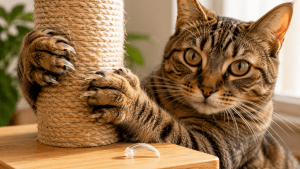
Beyond their well-known grooming needs, Maine Coons require care suited to their large size and active, sociable nature, though otherwise their care is much like any cat’s. Because of their size, they benefit from appropriately large and sturdy accessories: a big litter box (a standard-sized tray is often too small for a Maine Coon to use comfortably), a strong, large cat tree and climbing furniture built to take their weight, generous scratching posts, and larger food portions appropriate to their bigger frame, fed, as with any cat, to maintain a healthy weight rather than to overfeed. Their intelligence, playfulness, and sociability mean they need plenty of interactive play, enrichment, and companionship: Maine Coons can become bored or lonely without stimulation and attention, so games, puzzle toys, climbing opportunities, and time with their people all help keep them happy, and many enjoy learning tricks or walking on a harness. Their noted fondness for water can make grooming, or the occasional bath, easier and is a charming quirk. A warm bath every few months during heavy shedding loosens dead undercoat quickly, and many Maine Coons tolerate it far better than the average cat. As a large, slow-maturing breed, they benefit from a good-quality diet that supports healthy growth and maintenance over their long development. And, as covered, they should have regular veterinary care with awareness of the breed’s health predispositions. In every other respect, a Maine Coon needs the same essentials as any cat, good food, fresh water, a clean litter area, veterinary care, affection, and a safe environment. So the special care a Maine Coon needs comes down to frequent grooming, larger and sturdier accessories and suitable food portions for its size, and ample play and companionship for its clever, sociable nature, all on top of the standard care every cat deserves.
Frequently asked questions
Do Maine Coon cats shed?
Yes, Maine Coon cats do shed, they are long-haired cats with a thick, dense coat, so they naturally shed hair, and because of their size and long fur, that shedding is quite noticeable. That said, Maine Coons are not necessarily the heaviest shedders relative to some other long-haired breeds; many owners find their shedding moderate and manageable given regular grooming, though it is certainly more than a short-haired cat. Like other cats, Maine Coons often shed more heavily on a seasonal basis, particularly in spring, when they lose part of their thick coat as the weather warms (with indoor Maine Coons shedding more steadily year-round). Their long, luxurious coat means the shed hair is long and visible around the home, and their dense fur is also prone to tangling and matting if not groomed. The key to managing a Maine Coon’s shedding is regular, frequent brushing, which removes loose hair before it spreads, prevents mats, and keeps the coat healthy. So Maine Coons definitely shed (as all furry cats do), with noticeable, often seasonal shedding of their long coat, and the answer to keeping it under control is consistent grooming.
How much grooming does a Maine Coon need?
Maine Coons need regular, frequent grooming, more than a short-haired cat, because of their long, thick, dense coats, which are prone to tangling and matting. A good guideline is to brush a Maine Coon at least two to three times a week, and ideally more often (some owners brush daily), especially during heavy shedding periods, to remove loose hair, prevent mats and tangles, and keep the coat healthy and comfortable. Pay particular attention to areas prone to matting, such as behind the ears, the armpits, the belly, and the ‘trousers’ on the back legs. Using a suitable brush or comb for a long, dense double coat (like a wide-toothed comb and a slicker brush) helps you get through the coat effectively. Regular grooming also reduces hairballs (by removing hair the cat would otherwise swallow) and gives you a chance to check the skin and coat. Occasional baths are sometimes used for this breed to keep the coat in good condition, though not usually necessary. Neglecting grooming can lead to painful mats that may need professional clipping. So a Maine Coon’s long coat means committing to frequent brushing (several times a week or more), which prospective owners should be ready for as part of caring for this beautiful but high-maintenance-coated breed.
How big do Maine Coon cats get?
Maine Coons are one of the largest domestic cat breeds, known as ‘gentle giants’, and they are notably big, long, and substantial cats. Adult Maine Coons are typically much larger than an average cat: males often weigh around 5.5 to 8 kg (roughly 12 to 18 lbs) or more, and females around 3.5 to 5.5 kg (about 8 to 12 lbs), though large individuals can exceed these ranges. Beyond weight, they are remarkable for their length, Maine Coons have long bodies and long, bushy tails, and they hold records for length (the longest domestic cats on record have been Maine Coons, measuring over a metre / more than 3 feet from nose to tail tip). They also grow slowly, taking around 3 to 5 years to reach their full adult size, longer than most cats. Their large frame, long fur, and big bushy tail make them look even bigger. Because of their size, Maine Coons need appropriately sturdy and large accessories (big litter boxes, sturdy cat trees, larger food portions than a small cat), and their size and slow growth are worth bearing in mind. So Maine Coons get large, males commonly 5.5 to 8 kg+ and very long, making them one of the biggest cat breeds and true ‘gentle giants’.
How can I tell if my cat is a Maine Coon?
You can look for the Maine Coon’s distinctive physical and temperament features, but be aware that without pedigree papers you often cannot be certain, as many cats are Maine Coon mixes or simply large, fluffy cats that resemble the breed. Classic Maine Coon traits to look for include: large size and a long, rectangular, muscular body; a long, thick, shaggy, water-resistant coat that is longer on the belly and ruff (a mane-like ruff around the neck) and shorter on the shoulders; a long, very bushy tail; large, wide-set ears often with tufts of fur at the tips (‘lynx tips’) and tufts inside; big, tufted paws (Maine Coons historically often had extra toes, being polydactyl); a broad chest and sturdy legs; and expressive, often large eyes. Temperament-wise, Maine Coons are known as friendly, sociable, gentle, playful ‘gentle giants’ that are often dog-like in following their owners, and many have a distinctive chirping/trilling voice rather than a typical meow. However, these traits also appear in mixed-breed cats, so the only definitive way to confirm a pedigree Maine Coon is documentation from a registered breeder (or DNA/pedigree records). So look for the size, coat, tufted ears, bushy tail, and gentle-giant temperament as strong clues, but recognise that a truly confirmed Maine Coon comes with pedigree papers, and many ‘Maine Coon-looking’ cats are lovely mixes.
Do Maine Coons shed more than other cats?
Maine Coons shed a noticeable amount because of their long, thick coats, but they are not necessarily the most extreme shedders among cats, and how much they seem to shed depends on grooming, season, and the individual. Their long fur means the hair they do shed is long and very visible around the home, and their dense double coat produces a fair amount of loose hair, so owners certainly notice shedding, more than with a short-haired cat. Shedding tends to increase seasonally, especially in spring. However, with regular brushing, much of that loose hair is captured before it spreads, so well-groomed Maine Coons are quite manageable, and some long-haired breeds shed as much or more. What Maine Coons definitely require, more than many cats, is grooming to manage their coat and prevent matting, rather than being uniquely heavy shedders. It is also worth noting that no cat, including the Maine Coon, is hypoallergenic; despite some myths, Maine Coons are not a low-allergen breed and can trigger cat allergies like any cat (and their heavy coat spreads plenty of allergen-carrying dander and hair). So Maine Coons shed noticeably (long, visible hair, seasonally heavier) and need regular grooming, but they are not necessarily worse shedders than other long-haired cats, and they are not hypoallergenic.
Are Maine Coons good pets, and do they have any health issues?
Maine Coons are widely loved as pets for their friendly, gentle, sociable, and playful ‘gentle giant’ temperament; they tend to be affectionate, good with families and other pets, intelligent, and often dog-like in their attachment to their owners, which makes them very popular. The main practical demands are their grooming needs (frequent brushing for the long coat) and their size (needing larger accessories and more food). Like all pedigree breeds, Maine Coons have some breed-associated health predispositions that owners and breeders should be aware of: they can be prone to hypertrophic cardiomyopathy (HCM, a heart disease), hip dysplasia (a joint problem, notable given their size), spinal muscular atrophy, and polycystic kidney disease, among others. Responsible breeders screen their breeding cats for the relevant conditions (such as HCM and genetic tests), which is a key reason to buy from a reputable, health-testing breeder or to consider adoption. With good care, a healthy diet, veterinary care, and grooming, Maine Coons generally live long, happy lives (often into their teens). So Maine Coons make wonderful, affectionate, gentle pets, provided you can meet their grooming and size needs and are aware of the breed’s health considerations, choosing a health-testing breeder (or a rescue) helps ensure a healthy cat.
Do Maine Coons need special care beyond grooming?
Beyond their significant grooming needs, Maine Coons need care suited to their large size and active, sociable nature, but otherwise their care is much like any cat’s. Because of their size, they benefit from appropriately large and sturdy accessories: a big litter box (a standard one may be too small), a strong, large cat tree or climbing furniture that can take their weight, sizeable scratching posts, and larger food portions appropriate to their bigger frame (fed to maintain a healthy weight, as with any cat). Maine Coons are intelligent, playful, and sociable, so they need plenty of interactive play, enrichment, and companionship, they can get bored or lonely without stimulation and attention, and many enjoy games, puzzle toys, and even learning tricks or walking on a harness. Many Maine Coons also have a noted fondness for water, which can make grooming or the occasional bath easier and is a fun quirk. As a large, slow-maturing breed, they need a good-quality diet to support healthy growth and maintenance. And, as noted, they should have regular veterinary care with awareness of breed health issues. Otherwise, they need the same essentials as any cat: good food, fresh water, litter care, vet care, love, and a safe environment. So a Maine Coon’s special needs are mainly frequent grooming, larger accessories and food portions for its size, and plenty of play and companionship for its sociable, intelligent nature, alongside standard cat care.
The quick version
Do Maine Coon cats shed? Yes, they’re long-haired with a thick double coat, so they shed noticeably (long, visible hair), more in spring, though with regular brushing it’s manageable and they aren’t necessarily the heaviest shedders. Their glorious long, shaggy, water-resistant coat (with a ruff and bushy tail) needs frequent grooming, brush at least two to three times a week (or daily), targeting mat-prone areas (behind ears, armpits, belly, back-leg ‘trousers’) to prevent painful mats. Maine Coons are one of the largest cat breeds (‘gentle giants’), males often 5.5 to 8 kg+ and very long, and they grow slowly over three to five years, so they need big litter boxes, sturdy cat trees, and larger food portions. To spot a Maine Coon, look for large size, shaggy coat, tufted ‘lynx-tip’ ears, bushy tail, big tufted paws, and a gentle, dog-like, chirping temperament, but only pedigree papers confirm it (many are lovely mixes). They are NOT hypoallergenic, no cat is. Temperament: friendly, gentle, sociable, playful, dog-like, wonderful pets. Health: the breed is prone to HCM (heart), hip dysplasia, SMA, and PKD, so choose a health-testing breeder or adopt.
For more, see cat breed prices and traits, grooming long coats, and polydactyl cats, and estimate costs with the cat cost calculator. Browse the full cat blog, the pet calculators, and more free tools on the Waldev homepage.
Note: This guide is for general education. Maine Coons need frequent grooming to prevent painful mats, which may require professional clipping if neglected. No cat, including the Maine Coon, is hypoallergenic. The breed is predisposed to health conditions including hypertrophic cardiomyopathy (HCM), hip dysplasia, spinal muscular atrophy, and polycystic kidney disease, so buy from a reputable, health-testing breeder (or adopt) and maintain regular veterinary care. Consult your veterinarian about breed health, diet, and care.
Maine Coons are large, long-haired ‘gentle giants’ that shed and need frequent grooming; they are not hypoallergenic. Pet owner resources →
The breed is prone to HCM, hip dysplasia, and other conditions; choose a health-testing breeder and regular vet care. Locate a hospital →