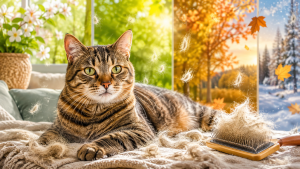
Do cats shed their claws? If you have ever found a small, curved, hollow claw-shaped shell stuck in your cat’s scratching post and panicked that your cat had torn off a nail, this guide is for you. The reassuring answer is yes, cats shed their claws, or rather the worn outer layers of them, and it is a completely normal, healthy part of keeping their claws sharp. This guide explains how cat claws are built, why cats shed the outer sheaths, what the shed pieces look like, how scratching and grooming drive the process, whether you still need to trim your cat’s claws, and the warning signs that mean a claw problem needs a vet.
Claw shedding and scratching go hand in hand. Learn how to redirect scratching, understand cat paw behaviour, and why cats knead and purr, and explore more free tools on the Waldev homepage.
On this page
Do cats shed their claws?
Since this is the question that brings most people here, usually after finding a mysterious claw-shaped object, here is the clear answer before we explore how and why it happens.
Yes, cats shed their claws, or, to be precise, they shed the outer layers of their claws. A cat’s claw does not grow as a single solid spike; it grows in layers, rather like an onion, and as a new, sharper claw develops underneath, the old, worn outer sheath (the outer husk of the nail) is shed to reveal the fresh claw beneath. This is a completely normal, healthy, lifelong part of how a cat maintains its claws. The reason so many owners ask the question is that they find these shed sheaths around the home, small, curved, hollow crescents that look alarmingly like whole claws, and jump to the conclusion that their cat has lost a nail or suffered an injury. In reality, the cat has simply cast off the worn outer layer and has a perfectly good new claw underneath. Cats drive this shedding process themselves in two main ways: by scratching, which snags and pulls off the loose outer sheaths from the front claws, and by grooming, chewing at their claws (especially the back ones) to strip away the old husks. So the answer is a clear yes: cats shed the outer layers of their claws throughout their lives to keep them sharp and healthy, and finding the discarded sheaths is normal and nothing to fear. This also explains why scratching surfaces are so essential, they are a key tool cats use to maintain their claws. The rest of this guide explains the process in detail, and, importantly, the difference between normal shedding and a genuine claw problem.
How a cat’s claw is built
To understand claw shedding, it helps to know a little about how a cat’s claw is actually constructed, because its layered, retractable design is the key to the whole process.
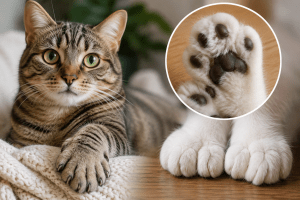
A cat’s claw is a remarkable structure, quite different from a human nail. It is made of keratin (the same protein as our nails and hair) and grows in layered sheaths, one over another, so that the claw is essentially built up of successive layers, with the newest, sharpest claw forming underneath the older outer layers. Inside the base of each claw is a sensitive area called the quick, which contains blood vessels and nerves and appears as a pink region when you look at a pale claw; this is the part you must avoid when trimming, because cutting it hurts the cat and bleeds. Cat claws are also retractable (technically protractible): at rest the claws are drawn back and hidden within the paw, kept sheathed and off the ground, which keeps them sharp and quiet, and the cat extends them when needed for scratching, climbing, hunting, or defence. This retractability is one reason cat claws stay so much sharper than a dog’s, they are not constantly worn down on the ground. A dog’s claws click on hard floors precisely because they cannot retract, whereas a cat can walk silently with its claws safely sheathed. Because the claw grows in layers around the sharp new claw underneath, the outermost layer eventually becomes worn and dull and needs to come away, which is where shedding comes in. Cats also have dewclaws, the higher-up ‘thumb’ claws on the inner side of the front legs (and sometimes extra toes in polydactyl cats), which do not touch the ground and so are not worn down by walking, meaning they need particular attention in claw care. It is the dewclaws that most often overgrow and curl into the pad on older cats, precisely because nothing naturally files them down. Understanding that the claw is a layered, retractable, keratin structure with a sensitive quick at its base explains both why cats shed the outer layers and why claw care matters. So a cat’s claw is a layered, retractable keratin structure that grows a sharp new claw beneath worn outer sheaths, and shedding those sheaths is simply how the claw renews itself.
Why cats shed claw sheaths
With the claw’s layered structure in mind, it becomes clear why cats shed the outer sheaths, and the reasons all come back to keeping the claws in top working order.
Cats shed their claw sheaths to keep their claws sharp, healthy, and functional; it is a natural renewal process, not a defect or a problem. Because a cat’s claw grows continuously in layers, the outermost layer gradually becomes worn, dull, blunted, and frayed with use. As a fresh claw grows underneath, that tired outer sheath is loosened and shed, exposing the sharper, healthier new claw beneath, a renewal not unlike the way a snake sheds its skin to reveal new skin underneath. This shedding serves several clear purposes. It keeps the claws sharp, which a cat relies on for hunting, climbing, gripping, and self-defence. A blunt claw is far less useful for any of these, so the constant renewal is really about keeping the cat’s most important tools in working order. It removes the worn, damaged outer layers that would otherwise blunt the claw. And it is simply part of the ongoing growth and renewal that keeps the claws in good condition throughout the cat’s life. This is also one of the central reasons cats scratch: it is not merely destructive behaviour or spite, but an important claw-maintenance activity. Dragging the claws down a rough surface helps pull off the loose, worn outer sheaths, alongside the other functions of scratching, which include marking territory (through scent glands in the paws and the visual mark), stretching the body, and relieving stress. Cats also groom their claws with their teeth, particularly the hind claws that scratching reaches less well, chewing off the old husks. So cats shed their claw sheaths as a healthy, natural way of renewing and sharpening their claws, and scratching and grooming are the behaviours through which they carry out that renewal, which is precisely why every cat needs suitable scratching surfaces to do the job properly.
What shed claws look like
Since the appearance of a shed claw is what alarms most owners, it is worth describing exactly what these discarded pieces look like, so you can recognise one for what it is.
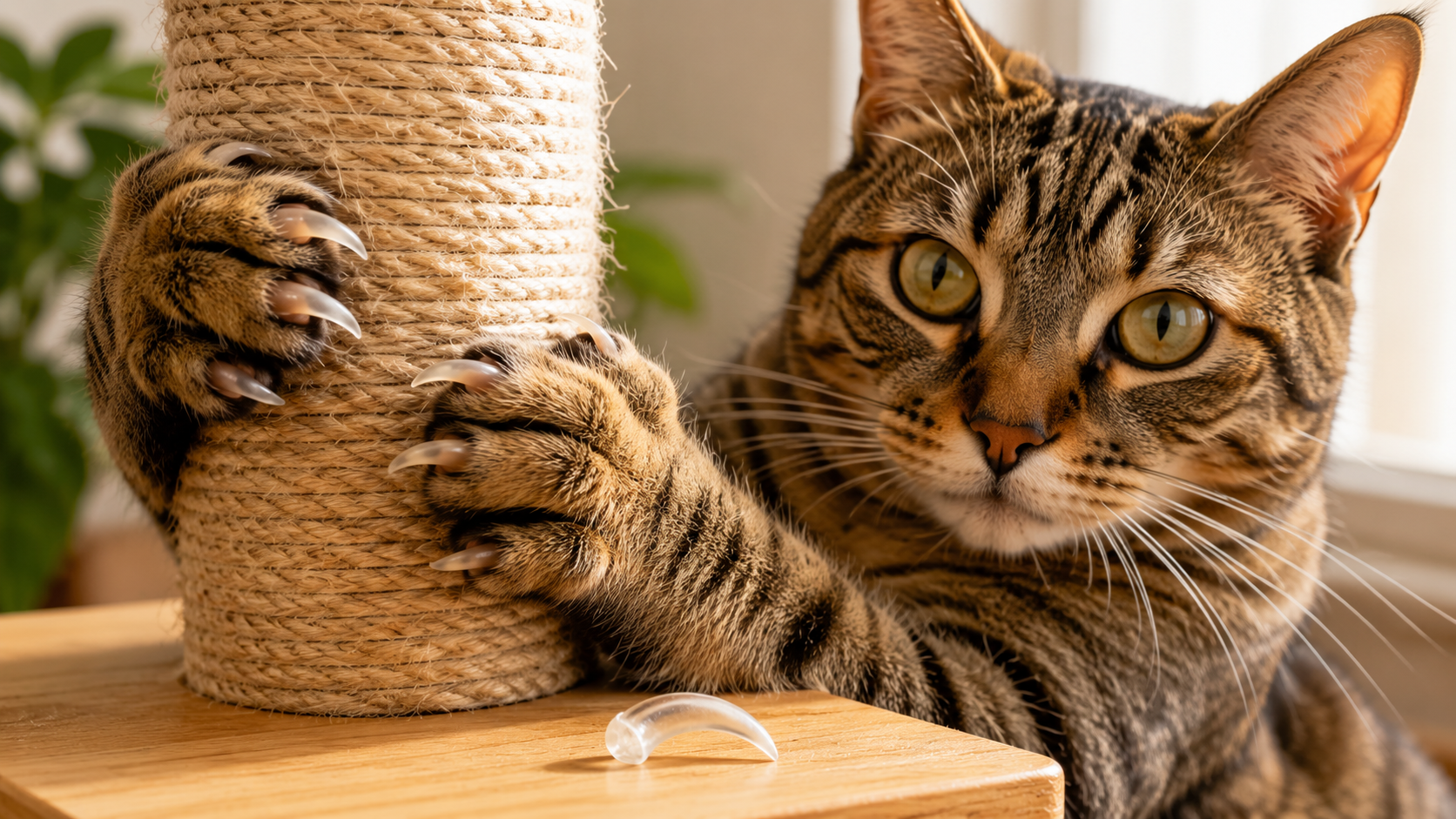
Shed cat claws, or more accurately shed claw sheaths, look like small, curved, hollow crescent shapes, essentially the empty outer husk or shell of a claw. They are usually translucent, pale, or a slightly amber colour, thin and light, curved to follow the shape of the claw, and hollow, because they are only the outer casing that has come away from the sharp new claw underneath. People commonly describe them as looking like a tiny claw-shaped shell, a little crescent, or, disconcertingly, like a whole small claw, which is exactly why they cause alarm. If you look closely, though, you can usually see that the piece is a hollow shell rather than a solid claw, which is the giveaway that it is a shed outer layer and not a lost nail. Holding it up to the light makes the hollow centre obvious, and once you have identified one you will never mistake them again. You are most likely to find these sheaths in the places your cat scratches and rests, since scratching is what pulls them off: lodged in scratching posts and cat trees, worked deep into carpet or rugs, tucked into the cat’s bed or a favourite sleeping spot, or occasionally lying on the floor. Finding one is completely normal and, far from being a worry, is a sign your cat is maintaining its claws properly by scratching. The first time owners find one, many panic and inspect their cat’s paws expecting to find a bleeding, missing claw, only to discover every claw present and healthy, because the shed sheath is just the discarded outer layer. So shed cat claws look like small, curved, hollow, translucent claw-shaped shells, and coming across them around your cat’s scratching areas is a healthy, reassuring sign, not a cause for concern.
Scratching and grooming
Because scratching and grooming are how cats actually shed their claw sheaths, it is worth looking at these behaviours more closely, since supporting them is the key to healthy claws.
Scratching is not a behaviour to be discouraged; it is an essential, natural activity through which a cat maintains its claws, among other important functions. When a cat scratches a rough surface, it drags the claws down and the friction snags and pulls off the loose, worn outer sheaths from the front claws, helping the sharp new claws underneath emerge. At the same time, scratching lets the cat mark territory (both visually and with scent from glands in the paws), stretch its muscles and spine, and relieve stress, so it meets several needs at once. This is why trying to stop a cat scratching altogether is both impossible and unfair; the goal instead is to redirect it onto appropriate surfaces. Providing sturdy scratching posts and pads (both vertical posts, which many cats prefer for a full stretch, and horizontal scratchers, since cats have individual preferences), placing them where the cat likes to scratch, and using materials like sisal, cardboard, or rough wood, all encourage a cat to scratch where you want and to maintain its claws well. For the back claws, which scratching reaches less effectively, cats turn to grooming: you will often see a cat chewing and nibbling at its hind claws, stripping off the old outer husks with its teeth as part of its regular self-grooming. So scratching and grooming are the two natural mechanisms by which cats shed their claw sheaths, front claws mainly through scratching, back claws mainly through chewing, and giving your cat good scratching surfaces is essential both for its claw health and for saving your furniture. If your cat is scratching furniture, the solution is better scratching options and redirection, not punishment.
How often it happens
Owners often want to know how frequently claw shedding happens, so it is worth setting out what to expect, while remembering that it varies from cat to cat.
There is no fixed timetable for claw shedding, but cats shed the outer sheaths of their claws regularly throughout their lives as part of ongoing claw renewal, and crucially it happens on a claw-by-claw basis rather than all at once. As a rough guide, a cat may shed the outer layer of each individual claw somewhere between every few weeks and every couple of months, but this varies considerably with the individual cat, its age, its activity level, and how much it scratches and grooms. A very active cat that scratches a great deal may shed its sheaths more readily, because vigorous scratching helps pull them off, while a more sedentary cat may shed more slowly. This is one reason lazy or overweight cats sometimes end up with thicker, overgrown claws that need more human help than those of a busy outdoor hunter. Because the timing differs from claw to claw, you will never see a cat shed all its claws at once, instead the renewal is staggered across the paws, which is why owners usually only notice it when they happen upon a single shed sheath. The front claws, which the cat uses and scratches with most, tend to shed their sheaths through scratching, whereas the back claws are usually maintained by the cat chewing them during grooming. Age plays a role too: kittens and young cats, whose claws grow quickly, and older cats, who may scratch and move less, can differ in how their claws renew, and senior cats in particular sometimes need extra help with nail care because they wear their claws down less. Because the whole process is gradual and claw-by-claw, it mostly goes unnoticed. So cats shed their claw sheaths regularly and continuously throughout life, roughly every few weeks to a couple of months per claw, with the exact frequency depending on the individual cat and how active it is.
Do you still need to trim?
A very practical question follows naturally: if cats shed and maintain their own claws, do you still need to trim them? The answer is that many cats do still benefit from trimming, and it is worth explaining why.
Even though cats shed their claw sheaths naturally and maintain their claws by scratching, many cats still benefit from having their claws trimmed, because natural shedding and scratching do not always keep the claws at an ideal length, particularly for indoor, older, and less active cats. Outdoor and very active cats often wear their claws down through activity and shed sheaths through vigorous scratching, so they may need little or no trimming. But indoor cats, senior cats, and cats that scratch less can develop claws that grow too long, and overgrown claws can catch on carpets and fabrics, split, or, in the worst cases, curl round and grow into the paw pad, an ingrown claw, which is painful and can become infected. This is a particular risk for the dewclaws, the higher ‘thumb’ claws that never touch the ground and so are not worn down at all, and for older cats whose claws thicken and who scratch less. Regular claw trimming, typically every few weeks, keeps claws at a safe length, reduces damage from scratching, and prevents ingrown claws. To trim safely, use proper cat nail clippers, gently press the toe to extend the claw, and snip only the clear, sharp tip while carefully avoiding the pink quick, which contains nerves and blood vessels; when in doubt, trim less rather than more. It is especially important to check the dewclaws and the claws of older or less active cats regularly. Providing good scratching surfaces also helps cats keep their own claws in shape. If you are unsure how to trim safely, or your cat strongly resists, your vet or a groomer can do it and show you the technique. So natural shedding does not remove the need for claw care: many cats, especially indoor and senior ones, still need regular nail trims and claw checks, and you should consult your vet if a claw looks overgrown, ingrown, damaged, or infected.
When to worry
Finally, since the whole point of understanding normal shedding is to recognise when something is not normal, it is important to know the warning signs that a claw needs veterinary attention.
While claw shedding itself is entirely normal, there are claw-related signs that are not normal and do warrant attention or a vet visit, so it helps to know the difference between healthy shedding and a genuine problem. You should be concerned, and should consult your vet, if you notice any of the following: a claw that is broken, torn, split, or bleeding, or a toe that is swollen, red, painful, warm, or oozing, all of which suggest injury or infection; a claw that has overgrown and curled round into the paw pad (an ingrown claw), which is painful and prone to infection and is especially a risk with the dewclaws and in older cats; a cat that is limping, holding up a paw, licking or biting excessively at a foot, or reluctant to bear weight on it; claws that appear excessively brittle, crumbling, misshapen, or discoloured, or several claws affected at once, which can occasionally point to an underlying health condition; or any sign of pain when you touch the paws or claws. Remember the key distinction: losing the occasional hollow outer sheath is normal and healthy, whereas losing a whole solid claw, or seeing pain, injury, infection, or ingrowth, is not. An overgrowing claw on an older or less active cat should be trimmed before it can become ingrown. So you should worry about your cat’s claws if you see injury, infection, ingrown claws, overgrowth, brittleness, discolouration, or pain, and have a vet examine any of these, but a simple shed claw sheath found around the home is nothing to worry about at all. Whenever you are unsure, a quick check with your veterinarian is the safest course, especially for paw and claw problems, which can be painful and worsen if left.
Frequently asked questions
Do cats shed their claws?
Yes, cats do shed their claws, or more precisely, they shed the outer layers of their claws. A cat’s claw grows in layers, a bit like an onion, and as a new, sharper claw grows underneath, the old, worn outer sheath (the outer husk of the nail) is shed to reveal the fresh claw beneath. This is a completely normal and healthy part of a cat’s claw maintenance, and it happens throughout a cat’s life. You may sometimes find these shed claw sheaths (which look like small, curved, hollow crescents or ‘claw shells’) around your home, often stuck in scratching posts, cat trees, carpets, or bedding, and many owners are alarmed at first, thinking their cat has lost a whole claw or broken a nail. In fact it is just the discarded outer layer, and the cat has a perfectly good new claw underneath. Cats help this shedding process along by scratching, which pulls off the loose outer sheaths, and by grooming, when they chew at their claws (especially the back claws) to remove the old husks. So cats do not lose their whole claws in normal shedding; they shed the outer nail layers to keep their claws sharp and healthy, which is why providing scratching surfaces is so important. If a cat loses an entire claw, or a claw looks damaged, swollen, or infected, that is not normal shedding and warrants a vet visit.
Why do cats shed their claw sheaths?
Cats shed their claw sheaths to keep their claws sharp, healthy, and functional, it is a natural maintenance process that renews the claw. A cat’s claw grows continuously in layers, and over time the outer layer becomes worn, dull, and frayed. As a new claw grows underneath, the old outer sheath is loosened and shed, revealing the sharper, healthier new claw beneath, much as some other animals renew their claws or how a snake sheds its skin. This shedding serves several purposes: it keeps the claws sharp for hunting, climbing, defence, and gripping; it removes worn, damaged outer layers; and it is part of the continual growth and renewal of the claw. Cats actively assist this process through scratching, which is one of the main reasons cats scratch: dragging their claws down a rough surface helps pull off the loose, worn outer sheaths (as well as marking territory, stretching, and maintaining claw health). Cats also groom their claws with their teeth, particularly the hind claws, chewing off the old husks. So cats shed their claw sheaths as a normal, healthy way of renewing and sharpening their claws, and scratching and grooming are how they help that renewal along, which is exactly why cats need appropriate scratching surfaces.
What do shed cat claws look like?
Shed cat claws, more accurately shed claw sheaths, look like small, curved, hollow crescent shapes, essentially the empty outer husk or ‘shell’ of a claw. They are typically a translucent, pale, or slightly amber colour, thin, light, and curved to the shape of the claw, and hollow, since they are just the outer layer that has come away from the new claw underneath. People often describe them as looking like a tiny claw-shaped shell, a little crescent, or what looks like a whole small claw. Because they are hollow shells rather than solid claws, you can often see that they are just the outer casing. You are most likely to find them lodged in the places a cat scratches or rests: stuck in scratching posts and cat trees, worked into carpet or rugs, in the cat’s bed or favourite sleeping spots, or occasionally on the floor. Finding one is completely normal and is a sign your cat is maintaining its claws properly by scratching. Many owners panic the first time they find one, fearing the cat has torn off a claw, but a shed sheath is simply the discarded outer layer, and the cat is fine, with a healthy new claw underneath. So shed cat claws look like small, curved, hollow, translucent claw-shaped shells, and finding them around scratching areas is a normal, healthy sign, not a cause for concern.
How often do cats shed their claws?
There is no fixed schedule, but cats shed the outer sheaths of their claws regularly throughout their lives as part of ongoing claw renewal, and it happens on a claw-by-claw basis rather than all at once. As a rough guide, a cat may shed the outer layer of each claw every few weeks to couple of months, but this varies with the individual cat, its age, activity level, and how much it scratches. Active cats that scratch a lot may shed sheaths more readily (because scratching helps pull them off), while the timing differs from claw to claw, so you will not see a cat shed all its claws at once. The front claws, which a cat uses and scratches with most, often shed their sheaths through scratching, while the back claws are typically maintained by the cat chewing them off during grooming. Kittens and young cats, whose claws are growing fast, and older cats may show differences in how their claws renew (older cats sometimes scratch less and may need more nail-care help). Because the process is gradual and claw-by-claw, most owners only notice it when they happen to find a shed sheath. So cats shed their claw sheaths regularly and continuously throughout life, roughly every few weeks to months per claw, with the exact frequency depending on the individual cat and how much it scratches and grooms.
Do I need to trim my cat’s claws if they shed naturally?
Even though cats shed their claw sheaths naturally, many cats, particularly indoor cats, older cats, and less active cats, still benefit from having their claws trimmed, because natural shedding and scratching do not always keep the claws at an ideal length. Outdoor and very active cats often wear their claws down through activity and shed sheaths through vigorous scratching, so they may need little or no trimming. However, indoor cats, senior cats, and cats that scratch less may develop claws that grow too long, which can catch on things, split, or, in the worst cases, curl round and grow into the paw pad (an ingrown claw), which is painful and can become infected, this is a particular risk for the dewclaws (the ‘thumb’ claws on the inner front legs) and for older cats. Regular claw trimming (typically every few weeks, using proper cat nail clippers and taking care to avoid the pink ‘quick’) keeps claws at a safe length, reduces damage from scratching, and prevents ingrown claws, and it is especially important to check the dewclaws and the claws of older or less active cats. Providing good scratching surfaces also helps cats maintain their own claws. If you are unsure how to trim safely or your cat resists, your vet or a groomer can trim the claws and show you how. So natural shedding does not remove the need for claw care: many cats, especially indoor and senior cats, still need regular nail trims and claw checks to stay healthy. Consult your vet if a claw looks overgrown, ingrown, damaged, or infected.
Is it normal to find cat claws around the house?
Yes, it is completely normal and healthy to find shed claw sheaths around your house, and it is a sign that your cat is maintaining its claws properly, not a sign of a problem. Because cats shed the outer layers of their claws as part of normal claw renewal, and because they do this partly by scratching, you will naturally find the discarded sheaths in the places your cat scratches and rests: embedded in scratching posts and cat trees, worked into carpets and rugs, tucked into the cat’s bed, or on the floor. Finding these small, curved, hollow claw-shaped shells simply means your cat is doing exactly what it should, keeping its claws sharp and healthy through scratching and grooming. It is not a sign of injury, illness, or that the cat has lost a claw, the cat has a healthy new claw underneath each shed sheath. There is no need to do anything about the sheaths except tidy them up, and their presence in scratching areas is actually a good sign that your cat is using its scratching surfaces well. The only time claws around the house would be a concern is if you found a whole claw (a solid claw, not a hollow sheath) together with signs of injury, such as bleeding, limping, or a damaged toe, which would suggest a broken or torn claw needing veterinary attention. So finding shed claw sheaths around the home is entirely normal and healthy; it is just evidence of your cat keeping its claws in good order.
When should I worry about my cat’s claws?
While claw shedding is normal, there are some claw-related signs that are not normal and do warrant attention or a vet visit, so it is worth knowing the difference between healthy shedding and a problem. You should be concerned and consult your vet if you notice: a claw that is broken, torn, split, or bleeding, or a toe that is swollen, red, painful, or oozing (signs of injury or infection); a claw that has grown too long and curled round into the paw pad (an ingrown claw), which is painful and prone to infection, this is especially a risk with the dewclaws and in older cats; a cat limping, licking or biting excessively at a paw, or reluctant to put weight on a foot; claws that seem excessively brittle, crumbling, misshapen, or discoloured, or multiple claws affected at once (which can sometimes indicate an underlying health issue); or any sign of pain when you touch the paws or claws. Also, if an older or less active cat’s claws are overgrowing because it is not wearing them down, they need trimming before they become ingrown. Losing the occasional hollow outer sheath is normal; losing a whole solid claw, or signs of pain, injury, infection, or ingrowth are not. So worry about your cat’s claws if you see injury, infection, ingrown claws, overgrowth, brittleness, or pain, and have a vet check any of these, but a simple shed claw sheath is nothing to worry about. When in doubt, a quick check with your veterinarian is always the safest course.
The quick version
Do cats shed their claws? Yes, they shed the worn outer layers (sheaths) of their claws, not whole claws. A cat’s claw grows in layers like an onion, and as a sharp new claw forms underneath, the old outer husk is shed to reveal it, a normal, healthy, lifelong process. Shed sheaths look like small, curved, hollow, translucent claw-shaped shells, and you will find them stuck in scratching posts, carpets, and cat beds; finding them is a good sign, not an injury. Cats drive the process by scratching (which pulls sheaths off the front claws) and grooming (chewing the back claws), which is why scratching surfaces are essential. It happens claw-by-claw, roughly every few weeks to months per claw, so cats never shed all their claws at once. Despite natural shedding, many indoor, senior, and less active cats still need regular nail trims to prevent overgrown or ingrown claws, especially the dewclaws. Worry only if you see a broken, bleeding, or ingrown claw, a swollen or painful toe, limping, or brittle, discoloured claws, all of which need a vet.
For more, learn how to redirect scratching, understand cat paw behaviour, and why cats knead and purr. Browse the full cat blog, the pet calculators, and more free tools on the Waldev homepage.
Note: This guide is for general education. Shedding the hollow outer claw sheath is normal; losing a whole solid claw, bleeding, swelling, limping, an ingrown claw, or a painful, infected toe is not, and needs veterinary attention. Trim claws carefully with proper cat clippers, avoiding the pink quick, and have your vet or groomer help if you are unsure. Consult your veterinarian about any claw or paw problem, overgrown or ingrown claws, or if your cat resists nail care.
Cats shed the outer layers of their claws naturally through scratching and grooming to keep them sharp. Pet owner resources →
Indoor and older cats often need regular nail trims to prevent overgrown or ingrown claws; see a vet for problems. Locate a hospital →