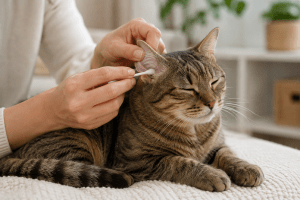
Can cats purr in their sleep? Yes, they can, and if you have ever heard a soft rumble from a cat curled up dozing on your lap, you have witnessed one of the sweetest signs of feline contentment there is. Purring is tied to relaxation and comfort, so a cat drifting off somewhere it feels safe will often purr as it settles, sometimes while gently kneading, the paw-pushing action lovingly known as ‘making biscuits.’ This guide explains why cats purr as they sleep and doze, what purring really means, why cats knead and where the biscuit-making comes from, why the two so often go together, how to handle claws without hurting the bond, and the one situation where purring is worth a second look.
Purring and kneading are part of a wider language. See why your cat sleeps next to you, learn what it means when a cat licks you, and explore more on the Waldev homepage.
On this page
Can cats purr in their sleep?
To answer the headline question directly before exploring the why, yes, cats really can purr in their sleep, or more precisely as they doze and drift into and out of sleep, and it is a completely normal and charming thing to hear.
Purring is bound up with a relaxed, contented state, so the moments when a cat is sinking into a comfortable sleep, or resting in that light, dozing half-sleep, are exactly when a soft purr is most likely to emerge. A cat that has curled up somewhere it feels safe, on your lap, against your side, in a favourite cosy spot, is often deeply relaxed as it settles, and that contentment can spill out as a gentle purr while it nods off. You are most likely to hear this sleep purring during light, dozing sleep rather than in the deepest, stillest phases, and it very often accompanies the cat falling asleep in a trusted place, sometimes together with a bit of kneading before it fully drops off. The sequence of settling, kneading, purring, and slowly closing the eyes is one many owners come to know well, a nightly wind-down that is as comforting to watch as it is for the cat to perform. A dozing cat may also start purring the instant it half-wakes to your touch, your voice, or a stroke, and then drift back to sleep still rumbling. It is one of those small domestic sounds that many owners find deeply soothing themselves, a soft signal that all is well with their cat. It is no wonder that the sound of a purring cat is often recommended as a natural way to unwind after a long day. The steady rhythm has a calming effect on people much as it does on the cat itself. All of this is normal and, more than that, it is a lovely sign: a cat purring itself to sleep or purring softly as it dozes is almost always a comfortable, secure, contented cat, one that feels safe enough to relax completely. So if your cat purrs as it sleeps on you, take it as the compliment it is, your presence is helping it feel calm and happy enough to purr its way into a nap.
What purring really means
To appreciate sleep purring fully, it helps to understand what purring means in general, because although we most associate it with a happy cat, the full picture is a little richer and more interesting.
In the great majority of everyday situations, purring signals contentment, relaxation, comfort, and wellbeing, the sound of a cat that feels good. Cats purr when they are being stroked and are enjoying it, when they are curled up warm and cosy, when they are close to a trusted person, when they are eating something they like, and, as we have seen, when they are relaxing into sleep. Each of these moments has something in common: the cat feels safe and its needs are met, which is the underlying condition that turns the purr on. In these contexts, the purr is essentially the cat’s audible signature of a happy, easy state, and it is one of the most reassuring sounds an owner can hear. Purring also has a social and communicative side: kittens purr almost from birth, and purring passes between a mother and her kittens as part of their bond and reassurance, and adult cats may purr toward their people partly to communicate and to solicit attention or care, some cats even develop a special insistent ‘solicitation purr’ when they want feeding. This clever purr often has a higher, more urgent note woven into it that people find hard to ignore, much like a baby’s cry, which is exactly what makes it so effective at getting breakfast served. There is, though, an important further layer, which is that cats also purr to comfort and calm themselves when they are stressed, frightened, unwell, or in pain, a self-soothing use of the purr covered later in this guide. For now, the key point is that in relaxed, cosy, sleepy, affectionate settings, which is where sleep purring and kneading belong, purring reliably means a content and comfortable cat, and that is exactly what you are hearing when your cat purrs its way to sleep.
How and why cats purr
It is worth a short look at how cats actually produce that famous rumble and why they evolved to do it, because the mechanism and origins add to the picture of what a sleep purr represents.
A cat purrs by rapidly signalling the muscles of its voice box (larynx) to twitch, which opens and closes the space between the vocal cords many times a second; as the cat breathes in and out, air passing through this rapidly vibrating gap produces the continuous rumbling purr, which is why a cat can purr steadily on both the inhale and the exhale in a way it cannot with an ordinary meow. This is also why a purr can go on for minutes at a time without a break, unlike a meow, which the cat has to pause and draw breath to repeat. This ability appears very early, kittens can purr within the first days of life, which is central to why purring is so tied to the mother-kitten bond and to feelings of comfort and security. A newborn kitten, blind and deaf for its first days, can still feel the vibration of its mother purring and purr back, so the sound is quite literally one of the first forms of communication a cat ever knows. As for why cats purr, the leading understanding is that it began as a signal and self-comfort behaviour around nursing and closeness and broadened into the multi-purpose signal we know: a way to express and reinforce contentment, to communicate with mother, kittens, and humans, and to self-soothe in times of stress or discomfort. That range is part of what makes the purr such a fascinating sound, since a single behaviour can carry so many different messages depending on the situation. Intriguingly, some researchers have noted that the frequencies of a cat’s purr fall in a range associated with tissue healing and pain relief, raising the possibility that purring is not only emotional but may have physical self-healing benefits, which could help explain why cats sometimes purr when hurt or ill. It is a neat idea that the same purr which tells you your cat is happy may also, in harder moments, be quietly helping it heal. For the sleepy, cosy purr, though, the relevant thread is the oldest one: purring as the sound of a safe, comfortable, contented cat, which is precisely the state a cat is in as it purrs itself to sleep.
Kneading: making biscuits explained
Alongside the sleep purr, the other behaviour owners adore and ask about is kneading, the rhythmic paw-pushing so charmingly nicknamed ‘making biscuits,’ so it deserves a full explanation of what it is and where it comes from.
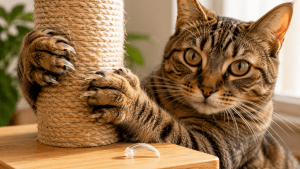
Kneading is the action of a cat pushing its front paws alternately in and out against a soft surface, left then right, in a slow rhythmic motion, often with the claws gently extending and retracting on each push, and sometimes with the cat looking blissfully half-asleep as it does it. The affectionate name ‘making biscuits’ comes from how much the motion resembles a baker kneading dough. The behaviour’s origins lie in kittenhood: newborn kittens knead against their mother’s belly while nursing, and this paw-pushing helps stimulate the flow of milk. Because kneading is paired from the very start with feeding, warmth, the mother’s body, and the deep comfort and security of nursing, it becomes strongly associated with contentment and safety. That early association is the key to understanding why adult cats keep doing it long after weaning: kneading is a comforting, instinctive behaviour that a cat returns to when it feels the same kind of relaxed, cosy, secure contentment it knew as a nursing kitten. So when a grown cat settles onto a soft blanket, a cushion, or your lap and begins to make biscuits, it is, in a sense, revisiting a very early feeling of comfort and safety, which is why kneading is such a reliable sign of a happy, relaxed, contented cat and why it so often appears just as a cat is getting cosy and preparing to sleep. You will frequently see a cat knead a few times, circle, and then settle down for a nap in the very spot it has just been patting, the whole sequence a little ritual of getting comfortable. Watching it, you can almost see the cat working through an ancient checklist inherited from its wild ancestors before allowing itself to rest.
Why cats knead
Although the kittenhood-comfort explanation is the heart of it, kneading actually serves several overlapping purposes in an adult cat, and knowing them rounds out the picture of what your biscuit-making cat is expressing.
The first and most important reason is contentment and comfort: a relaxed, happy cat kneads as an expression of that cosy, secure, satisfied feeling, which is why you so often see it when a cat is warm, settled, being petted, or drifting toward sleep. Closely linked is affection and bonding: because kneading is tied to the loving mother-kitten relationship, a cat kneading on a trusted person is showing affection and treating that person as a source of comfort and security. A second purpose is scent-marking and territory: cats have scent glands in the pads of their paws, so as a cat kneads a surface, or you, it deposits its scent and quietly marks it as familiar and ‘theirs,’ part of its home and family. A third is nest-making: in the wild, cats pat and tread down grass, leaves, or bedding to create a soft, safe, comfortable spot to lie in or to prepare a nest, and domestic cats keep this instinct, so kneading a blanket or cushion before lying down is partly the cat making itself a cosy bed. Some also point to a possible stretching or comfort-in-the-body element to the rhythmic motion. The slow, repetitive movement may simply feel good to the cat, in the way a person might stretch and flex on waking, adding a small physical pleasure to the emotional comfort. Often several of these blend together, a cat kneading your lap before a nap is contentedly expressing happiness, showing affection, marking you with its scent, and preparing a comfy spot all at once. Whichever mix is at play, the common thread is that kneading is a positive, relaxed, comfort-related behaviour, which is why it is such a welcome sight and why it belongs so naturally with the sleepy purr.
Why cats knead and purr together
Owners very often notice that kneading and purring arrive as a pair, a cat making biscuits and rumbling away at the same time, and there is a satisfying reason these two behaviours go hand in hand.
Kneading and purring so frequently occur together because both spring from the very same relaxed, contented, secure state and both trace back to the same root in kittenhood. In a nursing kitten, kneading stimulates the mother’s milk while purring accompanies the comfort, warmth, and closeness of feeding, so from the earliest days the two behaviours are bundled together with the blissful, safe, satisfied feeling of being a well-fed kitten snuggled against its mother. When an adult cat finds itself in a comparable state of cosy, secure contentment, curled on a soft lap, warm, safe, and bonded, it naturally revisits that early feeling and expresses it through the same paired behaviours, kneading and purring at once. That is why the combination is one of the strongest and most touching signals of feline happiness there is: a cat that kneads and purrs together is broadcasting deep contentment and affection through two channels simultaneously, a living echo of the secure bliss it felt as a kitten. It is easy to see why so many people describe a kneading, purring cat as the very picture of happiness; few sights in a home are as unmistakably content. It is the kind of moment that reminds an owner exactly why they share their life with a cat. These quiet, cosy interludes are the heart of the bond. When your cat does this on you, the message could hardly be warmer, it feels as safe, content, and cared-for with you as a kitten does with its mother, and it is telling you so with every push of its paws and every rumble of its purr. Understood this way, a kneading, purring cat on your lap is about the highest compliment a cat can pay, and it is well worth pausing to enjoy.
Why your cat kneads on you
Many owners specifically wonder why their cat chooses to knead on them, sometimes insistently, and the answer is a flattering one worth spelling out on its own.
When your cat kneads on you rather than on a blanket or cushion, it is singling you out as a source of comfort and safety, and it generally reflects trust, affection, and contentment. Of all the surfaces available to it, the cat has picked the one attached to its favourite person, which says a great deal about how it feels toward you. Because kneading carries that deep kittenhood association with the security and warmth of a nursing mother, a cat that kneads on you is, in effect, treating you as it once treated its mother, a being it feels utterly safe and comforted with, which is a strong statement of trust. Kneading on you is also an affectionate, bonding gesture: it usually comes when the cat is happy and relaxed in your company, often with purring, settling down, and a wish to be close, all signs it enjoys being with you. A cat will not knead on a person it distrusts or dislikes, which is part of what makes being chosen for biscuit-making feel so special. The scent-marking element adds another layer, since the glands in the cat’s paw pads mean that by kneading you it is gently marking you as familiar and ‘its own,’ claiming you as part of its family. To the cat, marking you this way is not possessive in a demanding sense but reassuring, surrounding itself with familiar, trusted smells makes the world feel safe. And because kneading is also nest-making, a cat that kneads your lap or chest before curling up there is preparing its chosen spot, you, for a comfortable rest. Put together, a cat kneading on you is saying that it trusts you completely, feels safe and content with you, sees you as a source of comfort, and counts you as family, which is a genuinely lovely thing, even on the occasions when its enthusiastic claws make you wince. That claw problem is real and worth solving kindly, which the next section covers.
Managing claws kindly
The one downside of being loved through kneading is that the claws can hurt, so it is worth knowing how to manage the sharpness without discouraging the affectionate behaviour or upsetting your cat, because how you respond matters to the bond.
The guiding principle is to protect your skin while letting the cat keep expressing its contentment, not to punish or suppress a happy, trusting behaviour. Several gentle measures work well together. Keeping your cat’s claws trimmed and blunt (or using vet-approved soft claw caps if you and your vet prefer) reduces the sharpness of each knead considerably. A quick trim every couple of weeks, taking only the sharp tips and avoiding the pink quick, is usually enough, and many cats tolerate it well if it is done calmly and paired with a treat. Slipping a thick, soft barrier, a folded blanket, a cushion, a thick jumper, onto your lap between you and the cat’s paws lets the cat knead to its heart’s content while the claws sink harmlessly into fabric rather than skin. You can also gently redirect a kneading cat onto a soft blanket or bed of its own placed beside you, or softly encourage it to lie down and relax against you instead. What is best avoided is any sharp negative reaction, scolding, shouting, pushing the cat off roughly, or otherwise punishing it, because kneading is a loving, trusting behaviour, and reacting harshly can confuse the cat, dent its trust, and sour a moment that was meant as affection. With a little patience, trimmed claws, and a soft layer to knead on, the great majority of owners can happily enjoy their cat’s biscuit-making without the ouch, keeping both the comfort and the bond intact. Many owners come to treasure the kneading once the claws are managed, since it is such a clear and regular reminder that their cat feels safe and loved. So the answer to sharp kneading is management and kindness, not rejection, letting your cat go on telling you it loves you, just without drawing blood.
When purring is not about happiness
Finally, because it matters for reading your cat correctly, it is worth understanding the one important exception to the happy-purr rule, since cats also purr for reasons that have nothing to do with contentment.
As touched on earlier, purring is not exclusively a sign of a happy cat; cats also purr to soothe and calm themselves when they are stressed, frightened, unwell, or in pain. This self-comforting use of the purr is thought to be a way of managing distress, and it fits with the idea that purring may have calming and even physically restorative effects, some research links the low frequencies of purring to tissue healing and pain relief. Because of this, a cat may purr in situations that are anything but happy: in the stress of a vet’s waiting room, when frightened, when injured, or when seriously ill, using the purr to steady itself. The practical lesson is that purring should always be interpreted in context rather than taken as automatic proof of contentment. A cat purring while relaxed, kneading, cosy, being stroked, dozing off, or otherwise behaving completely normally is happy, and that is by far the most common scenario, including all the sleepy, biscuit-making purring this guide celebrates. But a cat that is purring while also showing signs that something is wrong, hiding away, sitting hunched, going off its food, breathing rapidly or with effort, reluctant to move, or otherwise seeming unwell or distressed, may be self-soothing through pain or illness rather than expressing joy, and that combination warrants a closer look and, if there is any doubt, a call to the vet. So the reassuring bottom line is that the cosy, kneading, sleepy purr is a genuine sign of a content cat, while a purr paired with signs of distress or illness is the exception to check, context, not the purr alone, tells you which you are hearing.
Frequently asked questions
Can cats purr in their sleep?
Yes, cats can and do purr in their sleep, or at least while dozing and drifting off. Purring is closely tied to a relaxed, contented state, and a cat that is sinking into a comfortable sleep, or lightly dozing, is often deeply relaxed and may purr softly as it settles. You are most likely to hear sleep purring in light, dozing sleep rather than in the deepest phases, and it frequently happens when a cat is falling asleep somewhere it feels safe, such as on your lap or curled against you, sometimes alongside kneading. A cat may also begin to purr the moment it half-wakes to your touch or voice and then drifts off again. So a soft purr from a sleeping or dozing cat is normal and usually a lovely sign of a comfortable, secure, contented cat. Purring is generally a positive, self-soothing behaviour, so a cat purring itself to sleep is typically simply happy and relaxed.
What does it mean when a cat kneads (makes biscuits)?
Kneading, often affectionately called ‘making biscuits’ because it looks like a cat kneading dough, is when a cat pushes its front paws in and out against a soft surface, alternating left and right, sometimes with claws extending and retracting. It is a normal, instinctive behaviour rooted in kittenhood: nursing kittens knead against their mother to stimulate milk flow, so the action is linked from the start with comfort, closeness, and feeding. Adult cats keep kneading as a sign of contentment and relaxation, often doing it when they are happy, cosy, and settling down, on a soft blanket, a lap, or you. Kneading can also be about marking territory (cats have scent glands in their paws), preparing a comfy spot to lie down (an echo of wild cats patting down grass or leaves), and showing affection and bonding toward a trusted person. So when your cat makes biscuits, it usually means it feels happy, comfortable, safe, and affectionate, one of the clearest signs a cat is content.
Why do cats knead and purr at the same time?
Cats often knead and purr together because both behaviours spring from the same happy, relaxed, contented state and share the same kittenhood roots. In nursing kittens, kneading stimulates the mother’s milk and purring accompanies the comfort of feeding and closeness, so the two become paired early with warmth, safety, and satisfaction. As adults, cats revisit that comfortable, secure feeling when they are cosy and bonded, for example curled on your lap, and they show it by kneading and purring at once, essentially expressing deep contentment and affection through both channels. The combination is one of the strongest signals a cat can give that it feels completely happy, safe, and attached to you, a little echo of the blissful, secure feeling it had as a kitten with its mother. So a cat that kneads and purrs on you together is paying you a warm compliment, telling you it feels as content and secure with you as a kitten does nursing, which is about as affectionate as cat behaviour gets.
Do cats knead in their sleep?
Yes, cats can knead as they doze or drift toward sleep, and some paw movements during actual sleep can look like kneading too. When a cat is settling down somewhere comfortable and feeling relaxed and content, it may knead a blanket, cushion, or your lap as part of getting cosy and preparing to sleep, often purring at the same time, before it fully drops off. Once a cat is asleep, you may also see its paws twitch, flex, or paddle during dreaming (REM) sleep, which can resemble kneading and may reflect a dream of kneading, nursing, running, or hunting. Both the pre-sleep kneading of a relaxed, settling cat and the paw twitching of a dreaming cat are completely normal and are signs of a comfortable, healthy cat. So kneading around sleep, whether the deliberate biscuit-making of a cat getting comfy or the dreamy paw movements of a sleeping one, is normal, endearing, and nothing to worry about.
Why does my cat knead on me specifically?
When your cat chooses to knead on you, it is generally a sign of trust, affection, and comfort, and it is worth taking as a compliment. Because kneading is rooted in the contented, secure feeling of a nursing kitten, a cat that kneads on you is associating you with that same warmth and safety, treating you as a source of comfort much as it did its mother. Kneading on you is also a bonding and affectionate behaviour, a way of showing it is happy and relaxed in your company, and it often comes with purring, settling down, and wanting to be close. There is a scent-marking element too, since cats have scent glands in their paw pads, so kneading you also gently marks you as ‘theirs,’ part of the cat’s family. Some cats knead a lap or chest before curling up to sleep there, combining comfort, affection, and nest-making. So a cat kneading on you is showing that it trusts you, feels safe and content with you, and sees you as a source of comfort and part of its family, which is a lovely thing even if the claws can be a bit much.
Kneading with claws hurts. How do I stop it without upsetting my cat?
Kneading is affectionate, so the aim is to manage the claws, not to discourage the loving behaviour or make your cat feel rejected. A few gentle approaches help. Keep your cat’s claws trimmed so the kneading is less sharp. Place a thick, soft barrier, a folded blanket, cushion, or thick jumper, on your lap between you and the cat’s paws so it can knead in comfort without the claws reaching your skin. You can gently redirect the cat to knead a nearby blanket or cushion instead. Some owners lie the cat down for a cuddle in a way that encourages relaxing rather than kneading, or gently distract with a stroke. What is best avoided is punishing, scolding, or pushing the cat away sharply, since kneading is a happy, trusting behaviour and reacting negatively can confuse or upset the cat and dent its trust. With patience and a soft barrier, most owners can happily enjoy their cat’s biscuit-making without the ouch. So protect your skin with trimmed claws and a soft layer, redirect kindly, and let your cat keep expressing its contentment.
Is it ever a bad sign when a cat purrs?
Purring is usually a sign of contentment, but not always, so it is worth knowing that cats also purr for other reasons, including self-soothing when stressed, frightened, unwell, or in pain. This is thought to be a comforting, calming mechanism, and some research suggests the vibrations of purring may even have self-healing benefits, so a cat may purr to soothe itself in a vet’s waiting room, when injured, or when seriously ill, not only when happy. Because of this, purring should always be read in context: a cat purring while relaxed, kneading, cosy, and behaving normally is happy, whereas a cat purring while also showing signs of distress or illness, hiding, hunched, off its food, breathing oddly, reluctant to move, or clearly unwell, may be self-soothing through discomfort and needs attention. So most purring, especially the sleepy, kneading, contented kind, is a good sign, but purring paired with signs of pain, illness, or distress is a reason to look more closely and, if in doubt, consult your vet. Context, not the purr alone, tells you which it is.
The quick version
Can cats purr in their sleep? Yes, cats purr as they doze and drift off, most often in light sleep and usually when they feel safe, such as on your lap, sometimes while kneading. It is a lovely sign of a comfortable, contented cat. Purring generally means relaxation and happiness, and it starts in kittenhood as part of the mother-kitten bond. Kneading, or ‘making biscuits,’ is the rhythmic paw-pushing that nursing kittens use to stimulate milk, so it stays linked for life with comfort, safety, and affection; adult cats knead when happy and cosy, to mark you with the scent glands in their paws, and to make a comfy nest. Cats knead and purr together because both come from the same secure, contented, kitten-like state, so a cat doing both on you is paying you a big compliment. Manage sharp claws with trims and a soft blanket rather than telling the cat off. One caveat: cats also purr to self-soothe when stressed or in pain, so a purr alongside signs of illness deserves a vet check.
For more on how cats show affection, see why your cat sleeps next to you, what it means when a cat licks you, and cat body language and sounds. Browse the full cat blog, the pet calculators, and more free tools on the Waldev homepage.
Note: This guide is for general education. Sleepy purring and kneading are normal, happy behaviours, but because cats also purr to self-soothe when stressed or in pain, a purr combined with signs of illness, hiding, hunching, loss of appetite, rapid or laboured breathing, reluctance to move, or seeming unwell, should not be assumed to mean the cat is content. Consult your veterinarian if your cat purrs alongside any signs of pain, illness, or distress.
Purring and kneading begin in kittenhood and usually signal comfort, contentment, and bonding in cats. Pet owner resources →
Cats also purr to self-soothe when unwell or in pain, so purring with signs of illness needs a vet. Locate a hospital →