What do stray cats eat? The honest answer is: whatever they can find to survive, a patchwork of hunted prey and scavenged human scraps that is rarely the balanced diet a cat really needs. If you have a stray visiting your garden, the kind and effective thing to offer is proper cat food and fresh water, not the milk of popular myth. This guide covers what stray and feral cats really eat, how to feed a stray safely, what cats eat in the wild as obligate carnivores, how to choose a good cat food and brand (including whether Sheba is any good and wet vs dry), whether cats can have pumpkin, and how much to feed a cat.
Cats are meat-eaters. See a cat’s carnivore diet and which meats are safe, helping stray and feral cats, check food safety with the cat food safety checker, and browse the pet calculators.
On this page
What stray cats eat
Starting with the central question, it helps to understand that a stray or feral cat’s diet is a matter of survival and opportunity rather than choice, which is why it is so different from, and poorer than, what a well-fed pet cat eats.
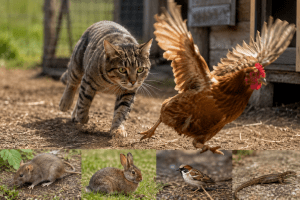
Stray and feral cats eat whatever they can find to stay alive, piecing together a diet from a mix of hunting and scavenging rather than enjoying anything balanced or reliable. Their main food sources are a few in number. First, hunted prey: drawing on their strong natural hunting instincts, strays catch and eat rodents (mice and rats), birds, insects, and other small animals, which for a truly feral cat may make up much of the diet. Second, scavenged human food: strays raid rubbish bins, dumpsters, and compost, and eat discarded scraps and leftovers, which is a major food source for cats living around people. Third, food put out by people: kind neighbours, dedicated cat feeders, and sometimes the scraps from restaurants and cafes provide meals for community cats. And fourth, near homes, strays will sometimes take pet food left out for other animals. The trouble with this survival diet is that it is inconsistent, unpredictable, and often nutritionally inadequate, so stray cats frequently struggle to get complete, balanced nutrition and may end up thin, undernourished, or in poor condition, especially in harsh weather or where food is scarce. This is exactly why offering a stray proper cat food and fresh water genuinely helps its wellbeing. So stray cats eat a scraped-together diet of hunted prey and scavenged human food and scraps, a survival regime rather than good nutrition, which is the backdrop to the sensible, kind ways of feeding a stray covered next.
Feeding a stray safely
If a stray cat is visiting you and you want to help, feeding it appropriately can make a real difference, but it is worth doing it safely and thoughtfully, both for the cat’s sake and to manage the practicalities.
The best thing to feed a stray cat is proper cat food, commercial wet food, dry food (kibble), or a combination, together with a supply of fresh, clean water, because this provides far better and more appropriate nutrition than scraps or leftovers. Wet food is particularly valuable as it supplies moisture and is highly palatable, while dry food is convenient, keeps well outdoors, and is easy to leave out. If you have no cat food to hand in an emergency, small amounts of plain cooked meat (such as plain chicken with no seasoning) or plain tinned fish can serve as a stopgap, but proper cat food is much better as a regular offering. Fresh water is important, as strays often lack access to clean water. Feed the cat in a safe, quiet spot where it can eat without being cornered or threatened, and remove uneaten wet food after a while so it does not spoil or attract pests. Be aware of the practical consequences of feeding a stray: a cat that is fed regularly will likely keep returning and may come to rely on you, and putting out food can attract other cats and wildlife, so it is worth thinking beyond just feeding. The most responsible approach is to pair feeding with contacting a local rescue organisation or TNR (trap-neuter-return) group, who can help determine whether the cat is a lost pet, a stray needing rehoming, or a feral cat suited to neutering and community care, and can support you in helping it properly. So feed a stray proper cat food and water in a safe spot, use plain cooked meat only as a stopgap, and, importantly, involve a rescue or TNR group so the cat gets the fuller help it may need.
The milk myth and foods to avoid
Before going further, one very common and well-meaning mistake deserves correcting, along with a clear list of foods to avoid, because feeding a stray (or any cat) the wrong things can do real harm.
The classic mistake is giving a cat a saucer of milk. Despite the enduring image of a cat lapping up cow’s milk, this is not good for cats: most adult cats are lactose intolerant, meaning they cannot properly digest the lactose (milk sugar) in cow’s milk, so milk commonly causes stomach upset and diarrhoea, which is especially unkind to a stray already struggling. So do not give cats cow’s milk; fresh water is what they need to drink. Beyond milk, several foods are toxic or unsafe for cats and must be avoided when feeding strays or pets alike: onion and garlic (and chives/leeks), which damage cats’ red blood cells; chocolate and caffeine; grapes and raisins; alcohol; xylitol (a sweetener); raw bread dough; and anything heavily seasoned, spicy, salty, or spoiled. Many human leftovers are therefore unsuitable, both because of these toxic ingredients and because rich, seasoned food upsets cats’ stomachs. This is a big part of why proper cat food is so much better than scraps: it avoids all these hazards and provides balanced nutrition. When you are unsure whether a particular food is safe for a cat, it is worth checking, and our cat food safety checker can help you quickly find out whether common foods are safe or dangerous for cats. So skip the milk (it causes upset), avoid the toxic and heavily-seasoned foods listed, give fresh water and proper cat food instead, and check anything you are unsure about, keeping both strays and pets safe from harmful foods.
What cats eat in the wild
To understand why cats need the kind of food they do, and why scraps and milk fall so short, it helps to look at what cats eat in the wild, because their natural diet is the template that good cat food is built to match.
In the wild, cats, including feral cats and the wild ancestors of domestic cats, are obligate carnivores that live on a diet of whole prey, meaning they eat animals almost exclusively. Their natural food is small prey: rodents such as mice, rats, and voles; birds; insects; small reptiles and amphibians like lizards and frogs; and other small creatures, eaten whole, including the muscle meat, organs, bones, and everything else, which together supply the full spectrum of nutrients a cat requires. This whole-prey diet is high in animal protein and fat and very low in carbohydrate, matching cats’ physiology as strict meat-eaters. Crucially, it provides certain nutrients that cats can only get, or get sufficiently, from animal tissue, the most famous being taurine, an amino acid that cats cannot synthesise in adequate amounts themselves and which is essential for healthy heart and eye function; a taurine-deficient diet causes serious disease in cats, which is one reason a cat cannot thrive as a vegetarian. Because cats are biologically dependent on nutrients found in meat, they are described as obligate (strict) carnivores, quite unlike dogs or people, who are more flexible omnivores. Understanding the wild diet makes clear why proper cat food is meat-based, high in animal protein, and fortified with nutrients like taurine, and why cats genuinely cannot be fed like small dogs or on human leftovers. So in the wild, cats eat whole small prey, a meat-rich carnivore’s diet, and that natural pattern is exactly what a good complete-and-balanced cat food is formulated to reproduce in a safe, convenient, nutritionally complete form.
What makes a good cat food
With the cat’s carnivorous nature in mind, it becomes easier to judge what makes a good cat food, which is a question of nutritional quality far more than of brand name or marketing.
The single most important quality in any cat food is that it is ‘complete and balanced’, meaning it contains all the nutrients a cat needs in the correct proportions to be fed as the sole diet. The best way to check this is to look for a statement on the packaging that the food is complete and balanced and meets recognised nutritional standards for the cat’s life stage, in the US this means meeting AAFCO nutrient profiles, with equivalent standards (such as FEDIAF in Europe) elsewhere. A food labelled ‘complementary’ or as a ‘treat’, by contrast, is not designed to be a complete diet on its own. Beyond being complete and balanced, a good cat food reflects the cat’s carnivorous needs: it should be meat-based and high in animal protein, ideally with named meat or fish sources (such as chicken, turkey, or salmon) prominent in the ingredient list, rather than being dominated by grain or plant fillers. It should also be appropriate to the cat’s life stage, kitten, adult, or senior foods are formulated differently, and to any special health needs the cat has. Both premium and many mainstream brands produce foods that meet these standards, so a higher price does not automatically mean better, and the key test for any product is whether it is complete, balanced, meat-based, and suited to your cat. For cats with specific health conditions, a vet may recommend a particular therapeutic or prescription diet. So a good cat food, regardless of brand, is one that is complete and balanced to recognised standards, meat-based and high in protein, and appropriate to the cat’s life stage and needs, and those qualities, not the label, are what you should judge a food by.
Choosing a brand (and is Sheba good?)
Since owners often ask about specific brands, including whether popular options like Sheba are any good, it is worth addressing how to think about brands, because the principle is the same across all of them.
There is no single ‘best’ brand of cat food that suits every cat, because the right choice depends on the individual cat’s needs, preferences, and health, and, as explained, the key is whether a given product is complete and balanced, meat-based, and appropriate for your cat, rather than the brand name itself. Both premium and many mainstream, widely-available brands offer complete, balanced foods that keep cats healthy. Taking the common example of Sheba: it is a popular, widely-available brand of wet cat food that is generally regarded as a reasonable, palatable mid-range option that many cats enjoy, so, yes, Sheba can be a perfectly good choice, provided you pick its complete-and-balanced products for the main diet (some products in any brand’s range are ‘complementary’ or treats rather than complete meals, so always check the label). The same logic applies to any brand you are considering: check that the specific product is labelled complete and balanced for your cat’s life stage, look at whether it is genuinely meat-based, and see whether your cat likes it and does well on it. It is also fine, and common, to feed a mix of brands or of wet and dry, as long as the main diet is complete and balanced. If your cat has particular health issues, or you are unsure what to feed, your vet is the best source of a tailored recommendation. So choosing a brand comes down to those quality checks rather than the name, Sheba and many other mainstream and premium brands can all be good, and the real test is a complete, balanced, meat-based food that your individual cat thrives on.
Wet vs. dry food
A related and very common question is whether to feed wet food or dry food, and the reassuring answer is that both can be good choices, each with its own advantages, so it comes down to your cat and your circumstances.
Wet (tinned or pouch) food and dry (kibble) food each have real benefits. Wet food’s biggest advantage is its high moisture content: because cats evolved from desert animals and have a naturally low thirst drive, many do not drink enough water, so the moisture in wet food helps keep them hydrated, which is beneficial for urinary tract and kidney health. Wet food is also usually very palatable and appealing, making it a useful choice for fussy eaters, older cats, or cats that need encouraging to eat. Dry food, on the other hand, is convenient, economical, and keeps well, it can be left out during the day without spoiling and used in puzzle feeders and food-dispensing toys for enrichment, and its texture may offer a small amount of dental benefit. The main considerations with dry food are ensuring the cat drinks enough water alongside it, and measuring portions carefully since it is calorie-dense and easy to overfeed. Many owners choose to feed a combination of wet and dry food, which can offer the hydration and palatability benefits of wet along with the convenience and enrichment potential of dry, a sensible middle path for many households. Ultimately, the best choice depends on your cat’s preferences and health, your budget, and your routine, and any of wet-only, dry-only, or mixed feeding can keep a cat healthy as long as the food is complete and balanced. So both wet and dry cat food can be good, wet excels for hydration and palatability, dry for convenience and enrichment, and a combination is a popular, sensible option, with your cat’s needs and your vet’s advice guiding the choice.
Can cats eat pumpkin?
Among the specific human foods owners ask about for cats, pumpkin comes up often, usually in the context of digestion, and it is one of the safer and genuinely useful options when given correctly.
Yes, cats can eat plain pumpkin in small amounts, and it can actually be beneficial, particularly for digestive health. The important qualifier is ‘plain’: use plain cooked or plain tinned pumpkin (pure pumpkin), never sugary, spiced pumpkin pie filling, which contains sugar and spices (and sometimes xylitol) that are unsuitable or harmful for cats. Plain pumpkin is a good source of soluble fibre and moisture, which is why it is often used to help with mild digestive issues: the fibre can help firm up mild diarrhoea and, at the same time, help relieve mild constipation by adding bulk and moisture to the stool, and some owners use a little to help move hairballs through or as a low-calorie way to add bulk for a cat on a weight-management plan. As for quantity, a little goes a long way: a common guideline is around one teaspoon (up to about a tablespoon for a larger cat) of plain pumpkin mixed into the food once or twice a day, starting with a small amount, since too much fibre can itself cause loose stools or digestive upset. Pumpkin is a supplement or occasional aid, not a substitute for a complete, balanced cat diet, and it is not a cure for serious problems: if your cat has ongoing or significant digestive issues (persistent diarrhoea, constipation, or vomiting), you should see a vet rather than relying on pumpkin. So the answer is yes, cats can have small amounts of plain pumpkin (about a teaspoon or so, plain only), which can gently help with mild digestive issues, but keep it modest and plain, and consult a vet for any persistent digestive problem.
How much to feed a cat
Finally, whether feeding a stray you have taken in or your own pet, a common practical question is how much and how often to feed a cat, and while it varies by individual, there are clear guidelines to follow.
How much to feed a cat depends on several factors, its weight, age, activity level, whether it is neutered, its health, and the calorie content of the specific food, so there is no single amount that fits every cat. The practical starting point is the feeding guide printed on the cat food packaging, which recommends daily amounts based on the cat’s body weight; use that as a baseline and then adjust according to your cat’s body condition, feeding a little less if it is gaining unwanted weight and a little more if it is too thin, aiming to keep it at a healthy weight where you can feel its ribs without a thick fat layer and it has a visible waist. On frequency, most adult cats do well on two measured meals a day, though dividing the daily ration into several smaller meals suits cats’ natural preference for eating little and often, and kittens need more frequent feeding (their food packaging will guide this). It is important to measure the food rather than continually topping up a bowl, because overfeeding and free-feeding readily lead to obesity, which is one of the most common and serious health problems in pet cats. Fresh water should always be available. Because the right amount varies so much between individuals, it is worth calculating properly for your cat and monitoring its condition, and you can find feeding and portion guidance among our pet calculators, while your vet can advise on the ideal diet and amount for your particular cat, especially if it has weight or health concerns. So feed a measured amount based on the food’s guidelines and your cat’s weight and body condition, usually split into two or more meals a day, always with fresh water, and adjust as needed to keep your cat healthy and at a good weight.
Frequently asked questions
What do stray cats eat?
Stray and feral cats eat whatever they can find to survive, which is a mix of scavenged food and hunted prey rather than a balanced diet. Their food sources typically include: hunted prey such as rodents (mice, rats), birds, insects, and other small animals, drawing on their natural hunting instincts; scavenged human food from rubbish bins, dumpsters, compost, and scraps or leftovers people discard or leave out; food deliberately put out by people (kind neighbours, cat feeders, or restaurants’ scraps); and, near homes, sometimes stolen pet food. This scavenged-and-hunted diet is often inconsistent and not nutritionally ideal, so stray cats can struggle to get complete nutrition and may be thin or in poor condition. If you want to feed a stray, the best thing to give is proper cat food (wet and/or dry) and fresh water, not milk (most cats are lactose intolerant) and not human foods that are unsuitable or toxic. So stray cats eat a survival diet of hunted prey and scavenged human food and scraps, which is why offering them appropriate cat food and water genuinely helps, ideally alongside contacting a local rescue or TNR group.
What should I feed a stray cat, and what should I avoid?
The best food to give a stray cat is proper cat food, either commercial wet food, dry food (kibble), or both, along with a supply of fresh, clean water, as this provides far better nutrition than scraps. Wet food is especially helpful as it provides moisture and is palatable, while dry food is convenient and keeps well outdoors. If you do not have cat food, small amounts of plain cooked meat (like plain chicken) or plain tinned fish can do in a pinch, but proper cat food is best. Crucially, avoid several things: do NOT give cow’s milk (despite the myth, most cats are lactose intolerant and milk causes stomach upset and diarrhoea), and avoid feeding foods toxic to cats such as onion, garlic, chocolate, grapes/raisins, and anything heavily seasoned, spicy, or spoiled. Provide fresh water at all times, which strays often lack. Feed in a safe, quiet spot, and be aware that regular feeding may lead the cat to return and can attract other animals, so it is worth pairing feeding with contacting a local TNR (trap-neuter-return) or rescue group. So feed a stray proper cat food and water, avoid milk and toxic/seasoned foods, and consider getting help from a rescue or TNR programme.
What do cats eat in the wild?
In the wild (and this includes feral cats and cats’ wild ancestors), cats are obligate carnivores that eat a diet of whole prey, meaning they hunt and eat animals almost exclusively. Their natural diet consists mainly of small prey such as rodents (mice, rats, voles), birds, insects, small reptiles and amphibians (lizards, frogs), and other small animals, eaten whole, including the meat, organs, bones, and so on, which provides the complete range of nutrients a cat needs. This whole-prey, meat-based diet is high in animal protein and fat and low in carbohydrate, and it supplies specific nutrients cats must get from meat, most famously the amino acid taurine, which cats cannot make enough of themselves and which is essential for their heart and eye health. This is why cats are described as obligate (strict) carnivores: they are biologically dependent on nutrients found in animal tissue and cannot thrive on a vegetarian diet. Understanding the wild diet explains why good cat food is meat-based and high in protein, and why cats need proper, complete cat nutrition rather than human food. So in the wild, cats eat whole small prey, a meat-heavy carnivore’s diet, which is the natural template that good commercial cat food is designed to replicate in a complete and balanced way.
What makes a good cat food, and how do I choose a brand?
A good cat food, whatever the brand, is one that is ‘complete and balanced’, meaning it provides all the nutrients a cat needs in the right proportions, so the most important thing to look for is a statement that the food is complete and balanced and meets recognised nutritional standards (such as AAFCO in the US or equivalent standards elsewhere) for the cat’s life stage. Beyond that, because cats are obligate carnivores, look for a food that is meat-based and high in animal protein, ideally with named meat sources (like chicken, salmon) high in the ingredients, rather than one dominated by fillers. Choose a food appropriate to your cat’s life stage (kitten, adult, senior) and any special needs. Both wet and dry foods can be good; wet food adds valuable moisture (helpful for hydration and urinary health), while dry is convenient, and many owners feed a combination. Brand quality varies, and both premium and many mainstream brands offer complete, balanced foods; a mid-range brand like Sheba, for example, is a widely-available wet food many cats enjoy, and the key test for any brand is whether it is complete and balanced and suits your individual cat. When in doubt, ask your vet for a recommendation, especially for a cat with health issues. So a good cat food is complete, balanced, meat-based, and life-stage appropriate, and choosing a brand is about those qualities more than the name.
Is Sheba good for cats, and is wet or dry food better?
Sheba is a popular, widely-available brand of wet cat food that is generally considered a reasonable, palatable mid-range option that many cats enjoy, and like any cat food, what matters most is that the specific product is complete and balanced (check the label) and suits your cat. Sheba offers complete wet foods as well as some treat/complementary products, so, as with any brand, choose the complete-and-balanced options as the main diet and use any ‘complementary’ or treat lines as extras. As for wet versus dry, both can be good, and each has advantages. Wet food is high in moisture, which helps keep cats hydrated and can be beneficial for urinary and kidney health (cats naturally have a low thirst drive), and it is often very palatable, useful for fussy eaters. Dry food is convenient, economical, keeps well, and can be left out or used in puzzle feeders, and it may help slightly with dental cleaning. Many owners feed a combination of wet and dry to get the benefits of both. The best choice depends on your cat’s preferences, health, and your circumstances. So Sheba is a decent, palatable wet-food brand (pick its complete-and-balanced products), and both wet and dry food can be good, with a mix often being a sensible approach; your vet can advise for your specific cat.
Can cats eat pumpkin, and how much should I give?
Yes, plain pumpkin is safe for cats in small amounts and can actually be beneficial, particularly for digestion. Plain, cooked (or plain tinned) pumpkin, not sugary pumpkin pie filling, which contains spices and sugar unsuitable for cats, is a good source of fibre and moisture, and it is often used to help with mild digestive issues: the fibre can help firm up mild diarrhoea and, conversely, help relieve mild constipation, and some owners add a little to help with hairballs or weight management (the fibre adds bulk with few calories). As for how much, a little goes a long way: a common guideline is around one teaspoon (up to a tablespoon for a larger cat) of plain pumpkin, once or twice a day, mixed into the cat’s food, and it is best to start with a small amount. Too much pumpkin (or too much fibre) can cause loose stools or digestive upset, so keep it modest. Use plain pumpkin only (no added sugar, spices, or ‘pie’ ingredients, and no xylitol-containing products). Pumpkin is a supplement, not a substitute for a complete cat diet, and if your cat has ongoing digestive problems, see a vet rather than relying on pumpkin. So yes, cats can have small amounts of plain pumpkin (about a teaspoon or so), which can help mild digestive issues, but keep it plain and modest and consult a vet for persistent problems.
How much and how often should I feed my cat?
How much to feed a cat depends on its weight, age, activity level, whether it is neutered, and the specific food’s calorie content, so there is no single universal amount, but there are sensible guidelines. Start with the feeding guide on the cat food packaging, which gives recommended daily amounts based on the cat’s weight, and adjust from there based on your cat’s body condition (whether it is maintaining a healthy weight, gaining, or losing). Most adult cats do well on two measured meals a day, though some owners split the daily ration into more, smaller meals (which suits cats’ natural pattern of eating little and often), and kittens need feeding more frequently. Measure the food rather than guessing or free-feeding to excess, since overfeeding leads to obesity, a very common and serious problem in cats. Provide fresh water at all times. Because the right amount varies so much by individual, it helps to use a proper calculation for your cat, to explore feeding and portion guidance among the pet calculators, and to always check your cat’s body condition and consult your vet if unsure. So feed a measured amount based on the food’s guide and your cat’s weight and condition, typically split into two or more meals a day, with fresh water always available, and adjust to keep your cat at a healthy weight.
The quick version
What do stray cats eat? Whatever they can find, hunted prey (rodents, birds, insects) plus scavenged human scraps, bin food, and food people put out, an inconsistent survival diet that often leaves them undernourished. To help a stray, give proper cat food (wet and/or dry) and fresh water, not milk (most cats are lactose intolerant, milk causes diarrhoea) and not toxic/seasoned foods (onion, garlic, chocolate, grapes). Pair feeding with a local rescue or TNR group. In the wild, cats are obligate carnivores eating whole small prey, a meat-rich, taurine-supplying diet, which is why good cat food is meat-based. A good cat food (any brand) is ‘complete and balanced’ to recognised standards, meat-based, high in protein, and life-stage appropriate; Sheba is a decent mid-range wet-food brand (pick its complete products). Both wet (great for hydration) and dry (convenient) food work, and a mix is popular. Cats can have small amounts of plain pumpkin (about a teaspoon, plain only, not pie filling) to help mild digestion. Feed a measured amount based on the food’s guide and your cat’s weight/condition, usually two-plus meals a day, and don’t overfeed (obesity is common).
For more, see a cat’s carnivore diet and safe meats and helping stray and feral cats, check foods with the cat food safety checker, and browse the pet calculators. Also see the full cat blog and the Waldev homepage.
Note: This guide is for general education. Do not give cats cow’s milk (most are lactose intolerant) or foods toxic to cats (onion, garlic, chocolate, grapes/raisins, xylitol, alcohol) or heavily seasoned, spicy, or spoiled food, check anything you’re unsure about. Feed only complete-and-balanced cat food as the main diet; use plain pumpkin only in small amounts. Persistent digestive problems, weight loss, or a stray in poor condition need a vet, and stray/feral cats are best helped via a rescue or TNR group. Consult your veterinarian about your cat’s diet and portions.
Cats are obligate carnivores needing complete, balanced, meat-based food; strays survive on prey and scraps. Pet owner resources →
Avoid milk and toxic foods; feed measured portions to prevent obesity, and see a vet for diet and health concerns. Locate a hospital →