Cats can have pork, and unlike a lot of “can my cat eat this” questions, meat is at least the right food group. Cats are obligate carnivores, built to run on animal protein. The catch is that the way we prepare and process meat, salting it, curing it, seasoning it with onion and garlic, is where the trouble starts. This guide goes meat by meat, from plain pork to jerky, bacon, deli slices, and raw beef, so you know which are fine as a treat and which to keep off the menu.
Pork first, since that is the question. Plain, cooked pork is not toxic to cats, and a small piece of lean, unseasoned pork as an occasional treat is fine. The reasons to keep it occasional rather than regular are that pork is fattier and saltier than the leaner meats, and that raw pork carries a higher parasite risk than beef or chicken, so it should always be fully cooked. No seasoning, no bones, no crackling, just a small piece of plain cooked meat. Treated that way, pork is a safe now-and-then treat, not a daily food.
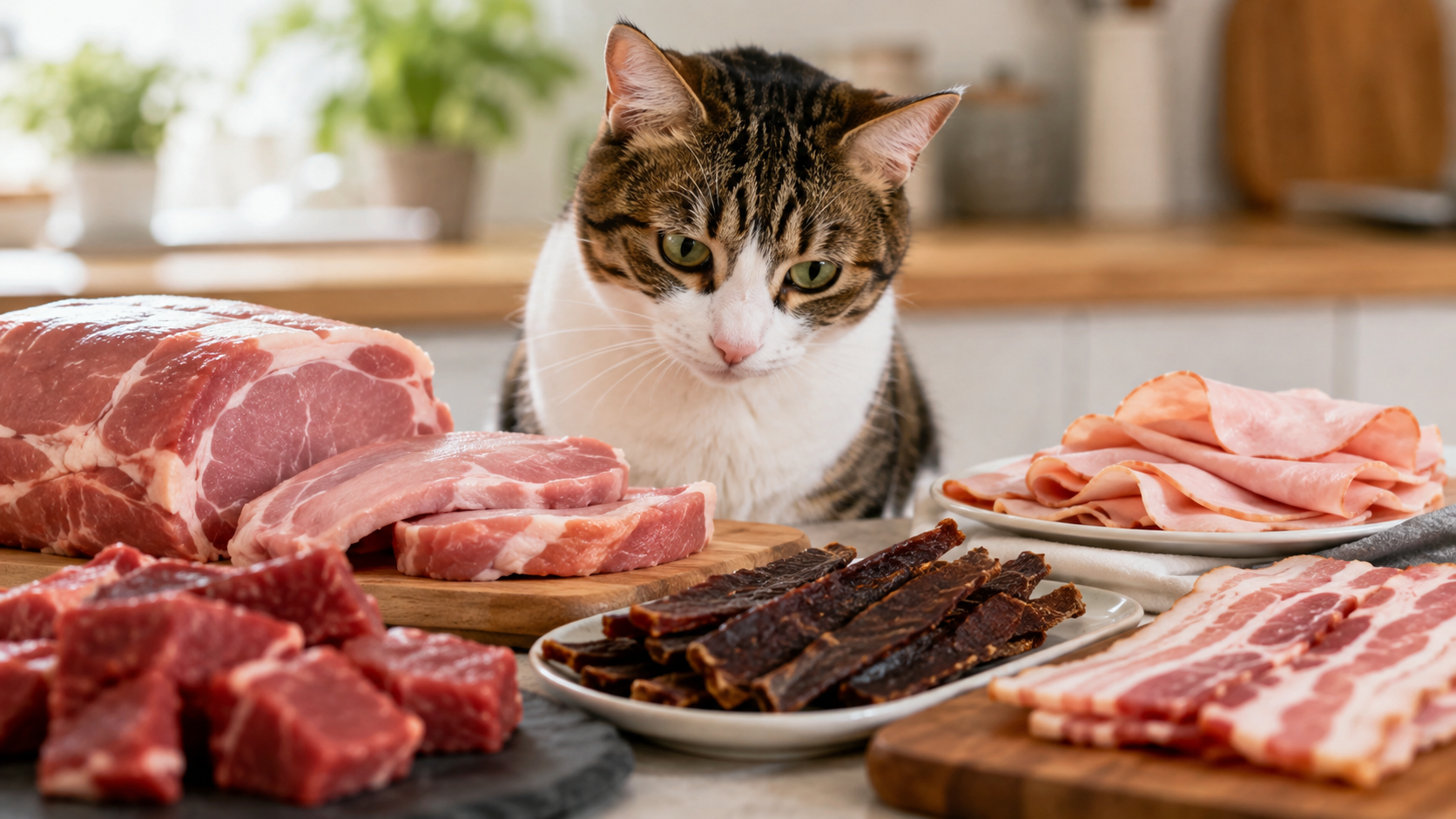
Here is the idea that runs through this whole topic. For a cat, plain meat is good and processed meat is the problem. A cat is designed to eat animal flesh, so the meat itself is rarely the issue. What turns a harmless piece of protein into something to avoid is what we do to it: the heavy salt in bacon and jerky, the onion and garlic powder in sausages and deli meats, the nitrates and preservatives in cured products, and the bones that splinter once cooked. Keep that split in mind, plain-and-cooked versus processed-and-seasoned, and most of the meat questions answer themselves.
Run any meat, food, or ingredient through the Cat Food & Toxin Safety Checker for an instant Safe, Caution, or Toxic verdict before you share a bite.
What this guide covers
Meat safety at a glance
Here is the fast reference. “Safe” means a good treat when plain and cooked. “Caution” means not toxic but too fatty, salty, or risky to be a good idea. “Avoid” means the processing or seasoning makes it a poor choice for cats.
| Meat | Verdict | Why |
|---|---|---|
| Cooked chicken / turkey | Safe | Lean, plain, boneless; an ideal treat |
| Cooked lean beef | Safe | Plain, unseasoned; a good treat |
| Bone broth (plain) | Safe | No onion/garlic/salt; hydrating and tasty |
| Pork (plain, cooked) | Caution | Not toxic but fatty and salty; occasional only |
| Liver | Caution | Fine in tiny amounts; too much is vitamin A toxicity |
| Raw beef / raw ground beef | Caution | Bacteria and parasite risk; handle carefully |
| Bacon & turkey bacon | Avoid | Very high salt and fat |
| Beef jerky | Avoid | Salt plus onion/garlic seasoning |
| Pepperoni | Avoid | Salt, fat, and spices including garlic |
| Bologna & deli meat | Avoid | Processed, salty, often seasoned |
| Spam | Avoid | Extremely high salt; heavily processed |
| Cooked bones | Avoid | Splinter; choking and perforation risk |
Why meat is a cat’s natural food
Before the meat-by-meat detail, it helps to understand why meat sits in a different category from every other food a cat might beg for. Cats are obligate carnivores, which is not a preference but a biological requirement.
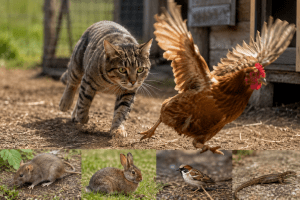
Unlike dogs or humans, who can get by on a mixed diet, cats must have nutrients that come only from animal tissue. The clearest example is taurine, an amino acid cats cannot make in sufficient amounts and must eat, found in meat. A cat deprived of taurine can go blind and develop a fatal heart condition called dilated cardiomyopathy, which is exactly why a cat cannot live on a vegetarian diet the way a dog sometimes can. It is also why cat foods are supplemented with taurine specifically, and why feeding a cat dog food long term is a real problem rather than a minor mismatch. Cats also need a high level of animal protein and certain fats and vitamins, like preformed vitamin A and the fatty acid arachidonic acid, in forms that plants do not provide. Their whole digestive system, from a short gut to the enzymes they produce, is tuned for meat rather than grains or vegetables. So when your cat is drawn to a piece of chicken or beef, that is not random begging, it is an animal responding to the food it is actually built to eat. This is also why meat, prepared properly, makes the best treat you can give a cat, and why the goal here is not to keep meat away but to keep the harmful processing and seasoning away while letting the cat enjoy the meat itself.
The portion rule still applies: even though meat is a cat’s natural food, treats of plain meat should stay within about ten percent of daily calories, with the rest coming from a complete cat food that is balanced for all the nutrients a cat needs. A plain-meat treat is not a complete meal on its own, because plain muscle meat alone lacks the calcium and full nutrient balance a cat needs, which is exactly what a complete cat food is formulated to provide.
Why your cat begs for your meat so intensely
If your cat turns into a different animal the moment you unwrap chicken or open a tin of tuna, that intensity has a real explanation, and it is different from the way a cat reacts to, say, a marshmallow.
With most human food, a cat’s interest is about fat, smell, or simple curiosity. With meat, it is instinct hitting its actual target. A cat is wired to detect and want animal protein, so the smell of cooking meat sets off a genuine feeding drive rather than idle curiosity. This is why a cat that ignores your toast will yowl and climb the counter for roast chicken. It is not being naughty, it is responding to the one thing on your plate it is truly built to eat, and no amount of scolding overrides a drive that deep. Understanding that helps in two ways. First, it makes the begging easier to manage with kindness rather than frustration, since the cat is following biology, not being difficult. Second, it points to the humane solution: give the drive a legal outlet with small pieces of the plain cooked meat this guide recommends, at a time you choose, rather than rewarding counter-surfing by handing over seasoned scraps from your plate. A cat fed a little plain meat as a deliberate treat is a lot less frantic than one hoping to steal a bite of something it should not have. It also keeps the cat off the counter and out of the roasting pan, which is safer for everyone at dinnertime.
The best meats to give a cat
If you want to treat your cat with meat, these are the ones to reach for, because they are lean, easy to digest, and closest to a cat’s natural diet.
Plain cooked chicken is the gold standard: lean, mild, and a favorite of most cats. A few small pieces of cooked, boneless, skinless chicken breast with no salt or seasoning is about as good as a cat treat gets, and it is cheap and easy to keep a little plain cooked chicken in the fridge for exactly this. Poaching or boiling is the cleanest way to cook it, since it needs no oil. Turkey is just as good, again cooked plain and boneless, and it is a nice option around holidays as long as it is unseasoned and skinless, since the skin and drippings are fatty and often salted, and holiday turkey in particular is usually brined and rubbed with seasonings that are not cat-safe. Set aside a small piece of plain inner meat before the bird is seasoned if you want to share, which is a nice way to include the cat in a holiday meal without any risk. Lean beef, cooked plain, is another solid choice, and many cats love it. The common thread is preparation: cooked through to kill any bacteria, boneless to remove the choking risk, and completely unseasoned, because the salt, oil, onion, and garlic we cook our own meat with are the parts that make it unsafe. Serve these as small pieces the cat can chew easily, warm or at room temperature rather than straight from the fridge, since cats prefer food around body temperature and a cold lump of meat is less appealing and harder on the stomach. Done that way, you have a treat a cat is genuinely built to enjoy.
Pork, in detail
Back to the meat that started the question. Pork is not toxic to cats, and a small piece of plain, cooked, lean pork is a fine occasional treat. Cats can digest it perfectly well. The reasons it sits in the caution rather than the ideal group are worth understanding, because they shape how to serve it.
The first is fat and salt. Pork is generally fattier than chicken or lean beef, and a lot of pork we eat is already salted or brined, so it delivers more fat and sodium than a lean treat should. The second is the raw risk. Raw pork has historically carried a higher risk of parasites, including trichinella, than other common meats, which is why the advice to cook pork thoroughly is even more important for a cat than the general rule. So plain, fully cooked pork in a small piece is fine, while raw pork is a firm no. The third is the form it usually comes in. Most pork that reaches a table is seasoned, cured, or processed, think sausages, gammon, or the pepperoni and spam covered below, and those forms are the ones to avoid. A plain cooked pork chop with the fat trimmed and no seasoning, cut into a small piece, is a safe occasional treat. Pork belly, crackling, sausage, bacon, and cured ham are not, because each adds heavy fat, salt, or curing on top of the meat. If you are carving a Sunday roast and your cat is circling, the kind move is to set aside a small piece of the leanest, unseasoned inner meat before you add salt, gravy, or stuffing.
Jerky, bacon, pepperoni, bologna, and deli meats
This group is where most of the “can my cat have this meat” questions land, and the answer for nearly all of them is the same: keep them away. The problem is never that the underlying meat is toxic, it is what has been done to it.
Beef jerky is a good example. The meat is just dried beef, which sounds cat-friendly, but human jerky is loaded with salt to preserve it and almost always seasoned with onion and garlic powder, plus sugar, soy, and preservatives. Onion and garlic are toxic to cats, damaging red blood cells and causing a form of anemia, so seasoned jerky is genuinely risky, not merely unhealthy, and the effect can build up from repeated small exposures rather than needing one big dose. A tiny piece of plain, unseasoned, low-sodium jerky would not poison a cat, but standard jerky off the shelf should be kept away. Bacon and turkey bacon are among the saltiest, fattiest things you could give a cat, so while a crumb will not poison a healthy cat, bacon is a poor treat and a real concern for cats with heart or kidney problems. The grease it is cooked in is as much a problem as the meat, so bacon fat drizzled over food, which some owners do as a “treat,” is one of the worse things you can offer, packing salt and grease into one spoonful. Pepperoni piles salt and fat onto spices that include garlic, so it is off the menu. Bologna, other deli meats, and spam are all heavily processed, salty, and often seasoned, and spam in particular is extraordinarily high in sodium, with a single slice carrying more salt than a cat should have in a day. Deli meats also often contain nitrates and other preservatives that a cat is better off without. None of these are a good idea, and the reason is consistent: salt, fat, and the onion and garlic that flavor processed meats. If you are ever unsure whether a processed meat is safe, the label is the tell: a long ingredient list with salt near the top and any form of onion or garlic is your answer, and plain cooked meat with an ingredient list of one item, the meat itself, is always the safer path.
See the guides on fish and seafood, dairy, human snacks, and vegetables for the rest of the “can my cat have this” questions.
Why salt is the hidden problem
Salt comes up again and again in this guide, so it is worth explaining why it matters so much for a cat, because it is the single biggest reason processed meats are a poor choice.
A cat is small, and its body handles far less sodium than ours. The salt levels that make bacon, jerky, deli meat, and spam taste good to us are enormous relative to a cat’s size. In modest amounts the main effect is just extra thirst and, over time, strain on the kidneys and heart, which are already common weak points in cats. In large amounts, salt can cause genuine sodium toxicity, with vomiting, tremors, and worse, though a cat would have to eat a fair bit of a very salty food to reach that point, which is why a single bite of ham is a shrug while a habit of salty scraps is the real worry. The practical concern is not usually a single dramatic poisoning, it is the steady load: a cat that regularly gets salty human meats is quietly stressing the organs that tend to fail in older cats. Because kidney disease is one of the most common causes of decline in senior cats, keeping a lifelong lid on salty treats is a small habit with a long payoff. This matters even more for a cat that already has kidney disease or heart disease, where a low-sodium diet is often part of the treatment, and a few bites of ham can undo careful management overnight, which is why owners of cats with these conditions have to be the strictest of all about human meats. So when this guide keeps flagging salt, it is not fussiness, it is the main reason the processed-meat group is off the menu.
A few more meats, quickly
Beyond the headline meats, here are fast verdicts on the others owners ask about, so they are all in one place.
Lamb is safe cooked plain, though it is one of the fattier meats, so trim it well and keep the portion small. It is a useful option for a cat with a chicken or fish sensitivity, since novel proteins like lamb sometimes suit cats that react to the common ones. Duck is fine cooked and boneless, again fatty, so a lean piece with the skin removed. Rotisserie chicken is a tricky one that catches a lot of people out: the meat itself is fine, but supermarket rotisserie birds are heavily salted and seasoned, often with garlic and onion powder in the rub and the skin, so if you share any, pull a small piece of plain inner breast meat and skip the skin and outer seasoned layer entirely, and if the bird smells strongly of garlic or herbs, it is safer to skip it altogether. Sausages, hot dogs, and gammon are all processed, salty, and seasoned, so they join the avoid list with bacon and pepperoni. Ham is cured and very salty, best kept away, and the honey-glazed and maple varieties add sugar on top of the salt, making them worse rather than better. Organ meats like heart and liver are actually rich in the nutrients cats need, heart being a natural source of taurine, and a small amount of cooked plain heart is excellent, but liver is the one to ration carefully, because too much liver causes vitamin A toxicity over time, which affects the bones and joints, so a tiny occasional piece is the ceiling rather than a regular serving. This is a rare case where a natural, nutritious meat becomes a problem through too much of a good thing, so treat liver as a seasoning-sized garnish rather than a serving. Cooked plain egg, though not a meat, is a great protein treat and worth mentioning alongside these, since scrambled or boiled egg with no salt, butter, or oil gives a cat quality protein in a form most enjoy. Raw egg white is the exception to avoid, as it can interfere with a B vitamin over time. Across all of them the same rule decides it: plain, cooked, boneless, unseasoned, small.
Raw meat and the raw-diet question
Raw meat is one of the more debated topics in cat feeding, so it deserves a clear-eyed look rather than a simple yes or no. Cats in the wild eat raw prey, and some owners feed raw diets deliberately, so raw meat is not unnatural for a cat. The concerns are practical.
The first is bacteria. Raw supermarket meat can carry salmonella, E. coli, and other bugs, and raw ground beef has the most surface area for contamination, so a scrap of raw mince from the counter is riskier than it looks, both for the cat and for the people handling it, and cats can shed some of those bacteria afterward even without seeming ill themselves. The second is parasites, which is why raw pork and raw wild game are singled out as higher risk. The third is balance: a raw diet of random meat scraps is not nutritionally complete for a cat, missing the careful balance of taurine, calcium, and other nutrients a cat needs. This is why the sensible version of raw feeding is not tossing a cat raw kitchen scraps, but using a properly formulated commercial raw diet, either frozen or freeze-dried, that has been balanced for cats and handled for safety. If a raw diet appeals to you, that is a conversation to have with your vet, who can help you do it safely, rather than something to improvise. As an occasional treat, a small piece of fresh, high-quality raw meat is lower risk than processed meat, but cooked plain meat sidesteps the bacteria question entirely and is the simpler safe choice for most owners. One more raw-feeding caveat worth knowing: raw fish is a special case, because some raw fish contains an enzyme that destroys thiamine, a B vitamin cats need, so raw fish is not a good regular raw choice even for owners who feed raw meat, a point covered in the fish and seafood guide.
Bones and bone broth
These two get confused, and they land in very different places. Cooked bones are dangerous, and bone broth is one of the better things you can offer.
Cooked bones, of any kind, are a genuine hazard. Cooking makes bones brittle, so they splinter when chewed, and those splinters can choke a cat or perforate its digestive tract. This applies to chicken, pork, fish, and every other cooked bone, which is why boneless is a rule for every meat treat. Raw bones are sometimes fed as part of raw diets and are less prone to splintering, but they carry their own choking and bacterial risks and are not something to improvise, so leave that to a vet-guided raw feeding plan. Bone broth, on the other hand, is a great option, provided it is plain. A broth made without onion, garlic, or added salt is hydrating, tasty, and gentle on the stomach, which makes it useful for a cat that is a bit under the weather or that does not drink enough water. The catch is that most store-bought and homemade broths for people contain onion and garlic, which are toxic to cats, so you need a plain broth made for pets or made yourself without those ingredients. Used that way, a little plain bone broth poured over food or offered on its own is a genuinely good treat, and freezing it into small cubes gives you single portions you can thaw as needed rather than a fridge full of broth going off. A warm cube stirred into food is also a good trick for tempting a cat that has gone off its meals. There is more on cat hydration in the guide on what cats can drink.
Kittens, seniors, and meat treats
A cat’s life stage changes how meat treats fit in. Kittens are growing fast on a carefully balanced kitten food, and every treat is calories not spent on that complete diet, so plain meat treats should be tiny and rare for them, and cut into small, soft pieces to avoid choking. Kittens also have more delicate stomachs, so a new meat is more likely to cause loose stool, which is another reason to go slow. There is no need to give a kitten raw meat to be “natural,” and the bacteria and parasite risks hit a small kitten harder; a complete kitten food already covers what it needs.
Senior cats sit at the other end. Many older cats have reduced kidney function, and some have heart disease, which is exactly where the salt in processed meats does the most harm, so a senior with any health condition should have meat treats cleared with the vet and kept plain and unsalted without exception. On the flip side, a lean, plain meat treat can be a good way to tempt an older cat with a fading appetite to eat, since the strong smell of warm chicken or a little plain bone broth over food can spark interest when kibble does not, and appetite is one of the first things to watch in an aging cat. For a healthy adult cat, a few small pieces of plain cooked meat now and then is a simple pleasure and a non-event, which is the situation most of this guide is written for. If weight is a concern at any age, the guide on what a cat should weigh is a useful companion read.
What if my cat ate seasoned or processed meat?
Cats are quick, and sooner or later one will grab a slice of pepperoni off a pizza or lick the seasoning off a roast. What to do depends on how much and what was in it.
For a small amount of a salty or fatty meat with no onion or garlic, a slice of plain ham or a bite of bacon, the likely worst case is thirst and maybe some loose stool. Keep fresh water available, hold off on more treats, and watch for a day. It usually passes. The situation to take more seriously is meat seasoned with onion or garlic, since those are actually toxic, or a large amount of anything very salty. Onion and garlic toxicity does not always show immediately; signs like weakness, pale gums, lethargy, or reddish urine can appear a day or two later as red blood cells are affected. If your cat has eaten a real amount of onion- or garlic-seasoned meat, do not wait for those signs to appear, call your vet or the ASPCA Animal Poison Control Center at (888) 426-4435 for advice. The same goes for a big salty binge, where excessive thirst, vomiting, or wobbliness would warrant a call, and for a cat that swallowed a cooked bone, where any gagging, drooling, or straining is a reason to go in. As with most of these situations, the physical evidence, a raided plate, an empty wrapper, is enough to justify checking in rather than waiting to see what happens. The guide on why cats vomit and when to worry covers the warning signs in more detail.
How to serve meat to a cat safely
Giving your cat a meat treat is easy to do well once you know the rules, and they are the same across every meat.
Cook the meat fully with no oil, butter, salt, or seasoning. Skip anything with onion or garlic, which are toxic to cats even in small amounts.
Take out every bone, peel off skin, and trim heavy fat. Bones splinter, and skin and fat are the parts that upset a cat’s stomach.
Offer bite-sized pieces the cat can chew easily. Small pieces prevent choking and keep the portion sensible.
A few small pieces is plenty. Treats of any kind should stay under about ten percent of daily calories, with a complete cat food doing the real feeding.
The first time you offer a new meat, give a small amount and watch for a day, since any new food can cause mild stomach upset.
Frequently asked questions
Can cats have pork?
Yes, cats can have small amounts of plain, cooked pork. It is not toxic, and cats can digest it, but pork is fattier and saltier than ideal, so it should be an occasional treat. Serve it fully cooked, unseasoned, with no bones, and never give raw pork, which carries a higher parasite risk than other meats.
Can cats eat beef jerky?
Most beef jerky is a poor choice. Human jerky is very high in salt and usually seasoned with onion and garlic powder, both toxic to cats, plus preservatives. A tiny piece of plain, unseasoned, low-sodium jerky would not poison a cat, but standard store jerky should be kept away. Plain cooked beef is a much better treat.
Is bacon safe for cats?
Bacon is not toxic, but it is one of the least suitable meats for a cat because it is extremely high in salt and fat. A tiny nibble now and then will not hurt a healthy cat, but bacon should not be a regular treat, and the salt is a real concern for cats with heart or kidney issues. Turkey bacon is no better, since it is still processed and salty.
Can cats eat raw beef?
Cats can eat raw beef, and some owners feed raw diets, but it carries a risk of bacteria and parasites and must be handled and sourced carefully. Raw ground beef in particular has more surface area for bacteria. If you want to feed raw, use a properly formulated commercial raw diet and talk to your vet, rather than feeding scraps of raw supermarket meat.
Can cats have pepperoni, bologna, or spam?
No, these are best kept away. All are heavily processed, very salty, and often seasoned with garlic and other spices that are unsafe for cats. Spam in particular is extremely high in sodium. None are toxic in a single crumb, but they are poor treats and the seasonings can be genuinely harmful, so stick to plain cooked meat instead.
Can cats have bone broth?
Yes, as long as it is plain. Bone broth made without onion, garlic, or added salt is hydrating and gentle, and useful for a cat that does not drink enough water. The catch is that most broths for people contain onion and garlic, which are toxic to cats, so use a pet-specific broth or make it yourself without those ingredients.
What is the best meat to give a cat?
Plain, cooked, boneless, unseasoned chicken, turkey, or beef is the best meat treat for a cat. These are lean, easy to digest, and close to what a cat is built to eat. Serve small pieces with no salt, oil, onion, or garlic, and keep treats to about ten percent of daily calories.
The quick version
Can cats have pork? Yes, plain and cooked in a small amount, though it is fatty and salty enough to be an occasional treat, and raw pork is out. The rule across all meat is that plain cooked meat is good and processed meat is the problem. Cooked chicken, turkey, and lean beef are the best treats, and plain bone broth is excellent. Keep away bacon, jerky, pepperoni, bologna, spam, and other processed or seasoned meats, because of salt, fat, and the onion and garlic in their seasonings. Cook everything through, remove bones and skin, and never season it.
When a food isn’t on this list, don’t guess. Run it through the Cat Food & Toxin Safety Checker, and see the guides on fish and seafood, vegetables, and human snacks. Explore more free tools on the Waldev homepage.
Nutrition disclaimer: This guide is for general education and is not a substitute for veterinary advice. Individual cats vary, and any cat with a health condition should have its diet guided by a vet. If you think your cat has eaten something harmful, such as heavily seasoned meat containing onion or garlic, contact your veterinarian or the ASPCA Animal Poison Control Center at (888) 426-4435 right away.
The ASPCA lists people foods to avoid feeding pets, including onions and garlic. ASPCA people foods to avoid →
The ASPCA Animal Poison Control Center is available 24/7 for suspected poisonings. Animal Poison Control →