Ice cream is not a good idea for cats, and the reason overturns one of the oldest images we have of them: the cat lapping a saucer of milk. Most cats are actually lactose intolerant, so dairy tends to upset their stomachs rather than nourish them. This guide runs through the dairy foods owners ask about, from ice cream and cheese to butter, cottage cheese, and goat milk, and clears up which are harmless in a taste and which to keep away.
Ice cream first. Plain vanilla ice cream is not toxic, so a stolen lick will not usually harm a cat, but it is a poor treat for several reasons at once. It combines sugar, which a cat cannot even taste, with fat and lactose, and since most cats are lactose intolerant, the usual result is diarrhea and an upset stomach a few hours later. The cold, eaten fast, can also make a cat uncomfortable or trigger a brief head-shake, the feline version of brain freeze. The cold can cause discomfort too. And two versions are genuinely dangerous rather than merely unhelpful: chocolate ice cream is toxic to cats, and sugar-free ice cream may contain xylitol, which is dangerous to pets even in small amounts. So while a bit of plain vanilla ice cream is not an emergency, it is not something to offer, and the chocolate, coffee, and sugar-free kinds can be a real problem rather than just a messy one.
The idea that runs through this whole topic is the lactose problem. The storybook picture of a happy cat lapping a bowl of milk is misleading, because while many cats do like the taste and fat of dairy, their bodies cannot digest the lactose sugar in it once they are past kittenhood. So most dairy is safe in the sense of not being toxic, but poorly tolerated, meaning it causes stomach upset rather than poisoning. That distinction, upset versus toxic, is the key to the whole topic. The exceptions in both directions matter: chocolate dairy is toxic and off limits, while a couple of options like goat milk and lower-lactose foods are gentler. Everything below assumes small amounts, and a willingness to stop if your cat reacts with loose stool, which a good number of cats will.
Run any dairy food or ingredient through the Cat Food & Toxin Safety Checker for an instant Safe, Caution, or Toxic verdict before you share a bite.
What this guide covers
Dairy safety at a glance
Here is the fast reference. “Tolerated” means non-toxic and okay in a tiny amount for cats that handle it, though many do not. “Avoid” means a poor treat because of fat, salt, or lactose. “Toxic” means keep it away entirely.
| Dairy food | Verdict | Why |
|---|---|---|
| Ice cream (plain) | Avoid | Sugar, fat, lactose; a lick won’t poison but upsets stomachs |
| Chocolate ice cream | Toxic | Chocolate is toxic to cats |
| Whipped cream | Avoid | Sugar and dairy; no benefit, causes upset |
| Butter | Avoid | Pure fat; not toxic but causes loose stool |
| Cow’s milk | Avoid | High lactose; the classic cause of cat diarrhea |
| Hard cheese | Caution | Some cats tolerate a tiny bit; lactose, fat, salt |
| Parmesan | Caution | Low lactose but very salty; tiny amounts only |
| Cottage cheese | Caution | Lower lactose; a little tolerated by some cats |
| Plain yogurt | Caution | Lower lactose; small amounts may be okay |
| Goat milk | OK | Lower lactose; better tolerated in small amounts |
| Churu (lickable treat) | OK | Not dairy; a meat/fish puree cat treat |
| Chocolate milk | Toxic | Chocolate is toxic to cats |
Why cats are lactose intolerant
The whole dairy question turns on lactose intolerance, so it is worth understanding properly, because it explains why the saucer-of-milk image is actually a small act of cruelty.
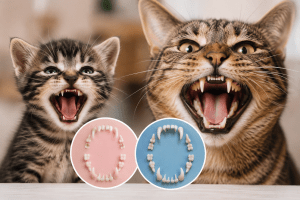
Lactose is the natural sugar in milk, and digesting it requires an enzyme called lactase. Kittens produce plenty of lactase, because they need it to digest their mother’s milk, which is exactly what nature intends for them. After weaning, though, most cats stop producing much lactase, since in the wild they would never drink milk again. That leaves the adult cat unable to break down lactose properly, so when a lactose-intolerant cat drinks milk or eats dairy, the undigested lactose ferments in the gut and draws in water, producing gas, bloating, and diarrhea, usually within a day. It is the same mechanism that affects lactose-intolerant people, and the discomfort is much the same: cramping, gas, and an urgent trip to the litter box a few hours later. The reason it shows up as diarrhea rather than simple indigestion is that the sugar itself pulls water into the bowel by osmosis, and the gut bacteria that ferment it produce gas as a byproduct, so the cat gets the bloating and the loose stool together, which is why a single generous saucer can undo a whole day for a sensitive animal. Individual cats vary in how much lactase they keep into adulthood, so a lucky few tolerate small amounts of low-lactose dairy without obvious trouble, while others react to the smallest taste with an upset stomach. There is no easy way to know which kind your cat is except by seeing how it reacts to a tiny amount, and even then the answer can drift as a cat ages and its digestion changes, so a cat that coped with a lick of yogurt as a youngster may react badly to the same thing years later. But as a rule, an adult cat is not built to handle milk, and the diarrhea it causes is not just unpleasant but can leave a cat dehydrated. This is why “milk for cats” is a myth worth retiring, however charming the picture of a cat and a saucer remains in storybooks and cartoons.
The lactose scale: not all dairy is equal. Milk and ice cream are high in lactose and the worst offenders, hard aged cheeses and butter are lower, and lactose-free cat milks are made specifically to sidestep the problem. The lower the lactose, the better tolerated, but “better” still is not “needed.”
Kittens and milk: what they actually need
The lactose story has one important exception, and it causes real harm when people get it wrong: kittens. Because kittens can digest milk, it seems logical to give an orphaned or young kitten cow’s milk, and that is a mistake worth heading off.
A kitten thrives on its mother’s milk, which is specifically suited to its needs, but cow’s milk is not the same thing. Cow’s milk has a different balance of protein, fat, and nutrients than a mother cat’s milk, and even though a young kitten can handle some lactose, cow’s milk does not provide what a kitten needs to grow properly and can cause diarrhea that is genuinely dangerous in an animal that small, since a tiny kitten dehydrates within hours. An orphaned or hand-reared kitten should be fed a proper kitten milk replacer, sold at pet shops and vets and formulated to match queen’s milk, never cow’s milk from the fridge. In a genuine emergency, with a hungry kitten and no replacer to hand at two in the morning, the right move is to keep the kitten warm and call an emergency vet for guidance rather than to reach for cow’s milk, because the wrong feed can do more harm than a short delay, and warmth matters as much as food for a very young kitten. If you find a young kitten and are unsure what to do, that is a same-day vet call, both for feeding advice and to check the kitten over. Once a kitten is weaned onto solid kitten food, it no longer needs milk of any kind, and its lactase production begins to fall, moving it toward the lactose intolerance of an adult cat. So the rule is simple: mother’s milk or a proper kitten milk replacer for the young, and no cow’s milk at any age, kitten or adult.
The milk myth: why cats seem to love it
If cats cannot digest milk, why is the image of a cat lapping a bowl so ingrained, and why does your cat come running when you open the milk? The answer is that cats are drawn to milk for reasons that have nothing to do with whether it is good for them.
What attracts a cat to milk is the fat and protein, not the lactose. Whole milk is rich and fatty, and a cat’s instinct steers it toward fatty, protein-rich foods, so a saucer of cream smells and tastes appealing even though the lactose will punish the cat later. There is also a nostalgic pull for some cats, an echo of nursing as a kitten, the one time in life when milk genuinely was exactly the right food. So the enthusiasm is real, but it is the enthusiasm of a cat that does not know the milk will give it a stomach ache, the same way a person might crave a rich dessert that they know will disagree with them an hour later. Understanding that the pull is about fat and instinct, not need, is what lets you say no to the pleading eyes at the fridge without feeling like you are depriving the cat of something it truly wants. The historic tradition of leaving out milk for cats, on farms and doorsteps, simply predates our understanding of feline lactose intolerance, and it persisted because the cats drank it eagerly and the consequences, a bit of diarrhea somewhere outside, were easy to miss or blame on something else. A barn cat with loose stool rarely got connected back to the saucer of milk. Knowing all this, the kind move is to skip the cow’s milk and offer fresh water and a proper cat treat instead, however persuasively the cat lobbies for the saucer. If the milk ritual matters to you both, a lactose-free cat milk gives you the moment without the stomach ache, poured into the same little saucer if that is part of the charm, so nothing is really lost except the upset that used to follow. Cats are creatures of habit, and once the fridge no longer produces a saucer of cow’s milk, most stop asking within a week or two and transfer their begging to whatever you do reach for instead.
Ice cream, whipped cream, and butter
These three are the rich, sweet, or fatty dairy treats people most often want to share, and all three land in the avoid column, for overlapping reasons.
Ice cream, as covered, stacks sugar, fat, lactose, and cold into one treat that most cats handle badly, with chocolate and xylitol versions crossing into toxic. Whipped cream is a similar story: it is cream and sugar, so it brings the lactose and fat problem plus added sugar for no benefit, and the aerosol kind can also contain additives and propellants a cat is better off not licking off a nozzle. The trend of giving a cat a little “pup cup” or a dab of whipped cream, borrowed from the dog world, is harmless as a rare, tiny lick for a cat that tolerates it, but it is not a good habit, and many cats will get loose stool from it. The photo may be cute; the aftermath in the litter box usually is not. Butter is pure fat, and while it is not toxic, a cat that eats butter can get diarrhea and, over time, the extra fat contributes to weight gain and can even trigger pancreatitis, a painful pancreas inflammation, in a susceptible cat. Butter is sometimes suggested as a home hairball remedy, on the idea that the fat lubricates the fur through, but there are safer, purpose-made hairball products, so there is little reason to give a cat a lump of butter for the job. It is also worth naming the cold factor with ice cream specifically, because a cat that gulps something frozen can get a sudden headache-like reaction and a shock to a stomach that never evolved to handle anything near that temperature, on top of everything else in the bowl. If you want your cat to share in a summer moment, a few licks of plain lactose-free cat milk chilled in the fridge, or a lick of the water from a can of tuna in spring water, gives the ritual without any of the sugar or the frozen shock. Across all three, the pattern is the same: not poisonous in a plain, tiny amount, but fatty and sugary treats a cat is better off without, with the flavored and sugar-free versions genuinely dangerous.
Cheese, cottage cheese, and parmesan
Cheese is the dairy food most cats tolerate best, which is why it comes up so often as a pill-hiding trick, but “best tolerated” still is not “good for them.”
Hard, aged cheeses are lower in lactose than milk, because much of the lactose is removed or broken down in the aging, so a tiny piece of hard cheese is tolerated by many cats without obvious upset. That is what makes a small cube of cheddar handy for hiding a pill as a one-off, since the strong smell and soft texture help a tablet go down unnoticed. The catch is fat and salt: cheese is calorie-dense and often salty, and parmesan in particular, though very low in lactose, is extremely salty, so it should be a tiny amount at most, and never a slab of it as a snack. Cottage cheese and plain yogurt are lower in lactose too, and some cats handle a small spoonful, with plain unsweetened yogurt sometimes offered for its live cultures, though the benefit for cats is unproven and the safer bet is a probiotic made for cats if gut health is the goal, since those are dosed and strained for feline digestion. Never give flavored or sweetened yogurt, which adds sugar and sometimes toxic ingredients, and be especially wary of any “light” or diet product, since those are the ones most likely to be sweetened with xylitol. A useful rule with cheese is that if you can taste the salt, it is too salty for a cat, whose whole daily sodium budget is a fraction of ours, so the sharp, mature cheeses people enjoy most are exactly the ones to keep smallest. The bottom line on cheese is that a small piece now and then, especially to deliver a pill, is fine for a cat that tolerates it, but it is a fatty, salty food with no real benefit, so it should not be a routine snack or a daily reward, and any cat that reacts with loose stool should skip it entirely rather than have it in smaller amounts.
Goat milk and lower-lactose options
If there is a milk a cat can have, goat milk is the closest thing, which is why it has a following among cat owners, though it comes with the usual caveats.
Goat milk is lower in lactose than cow’s milk and has smaller fat globules and a different protein structure that many cats digest more comfortably, so a small amount of plain goat milk is better tolerated and less likely to cause diarrhea than the same amount of cow’s milk. Some owners use it as an occasional treat, to add moisture to food, or to tempt a sick or elderly cat to take in a little something when its appetite is poor, where a few laps of warm goat milk can get a reluctant cat interested. Raw and fermented goat milk products marketed for pets take this further, with the fermentation lowering lactose further and adding cultures that some believe aid digestion, though the evidence in cats is thin. It is worth being honest that a lot of the enthusiasm for goat milk online runs ahead of what has actually been studied in cats, and much of it is borrowed from raw feeding communities rather than from feline nutrition research, so treat the bolder health claims with a pinch of salt. If you do want to try it, start with a teaspoon or two and watch the litter tray for a day before offering more, because even the gentler milks can loosen the stool of a cat that turns out to be especially sensitive, and every cat sits somewhere different on that scale. None of this makes goat milk a necessary food, and it is not a replacement for water or a complete diet, but it is a gentler option than cow’s milk if you want to offer a milky treat. The other lower-lactose route is a lactose-free cat milk, sold in pet shops, which has the lactose removed or broken down so cats can enjoy a milky drink without the digestive fallout. These are made for exactly this purpose and are the safest way to give a cat a “bowl of milk” experience. If your cat loves the idea of milk, a cat milk or a little goat milk is the humane way to indulge it, in a small amount, rather than cow’s milk. There is more on cat hydration and drinks in the guide on what cats can drink.
Is Churu dairy? A quick clarification
Churu comes up alongside dairy so often that it is worth clearing up directly, because it is easy to assume from the creamy, lickable texture that it is a dairy product. It is not.
Churu, the popular squeezable lickable treat, is usually made from chicken or fish puree with added water and thickeners, not milk, so the lactose problem does not apply to it at all. That is a big part of why it is so widely loved and generally well tolerated: it is essentially a wet, protein-based treat with very high moisture, which some owners use deliberately to help a cat take in more water, a real benefit for cats that do not drink enough, or to deliver medication mixed into the paste. Like any treat, it should stay within about ten percent of a cat’s daily calories and not crowd out complete food, and it is worth choosing plain varieties and checking the ingredients, since some contain added colors, thickeners, or flavor enhancers that a plainer version does without. But the key point for this guide is simply that Churu is a meat or fish treat, not dairy, so if you were worried about it as a dairy product, you can relax, and if you want a creamy, lickable treat that sidesteps the whole lactose issue, it is a genuinely good choice among cat treats. If you have been reaching for milk as the special thing you give your cat, a lickable meat treat is closer to what a carnivore actually wants anyway, so the swap tends to please the cat as much as it reassures you. For more on treats and cat foods generally, see the guide on cat food brands and treats.
Does a cat need any dairy at all?
With all the fuss about which dairy a cat can tolerate, it is worth stepping back to the simplest question: does a cat need dairy for anything? The answer is no, and it takes the pressure off the whole topic.
A cat is an obligate carnivore that gets everything it needs, calcium included, from a complete cat food built around animal protein. There is no nutrient in milk or cheese, calcium and protein included, that a cat cannot get in a more digestible form from proper cat food, so dairy is never filling a nutritional gap. This matters because people sometimes give dairy out of a vague sense that it is wholesome or that a cat should have milk, and that instinct simply does not apply. Once you know a cat needs no dairy at all, the tolerated foods, a scrap of cheese, a little goat milk, become what they really are: occasional treats for enjoyment, offered to cats that handle them, and nothing you ever have to include. If your cat cannot tolerate any dairy, it is missing out on nothing. And if you like giving your cat a creamy treat, the lactose-free cat milks and the meat-based lickable treats like Churu let you do that without asking the cat’s stomach to process something it is not built for. It also helps to remember that the calcium worry, the one that makes people picture a cat needing milk for strong bones, is a hangover from how we think about our own diets, not from anything about cats. A complete cat food is formulated with the calcium and phosphorus a cat needs in the right balance, and pouring milk on top does nothing useful and can, over time, add fat and calories a house cat does not burn off. The whole dairy question, in the end, is about indulgence rather than nutrition, which is a much more relaxed way to think about it.
The dairy dangers: chocolate and xylitol
Most dairy is a tolerance issue rather than a toxicity one, but two things turn a harmless-seeming dairy treat into a genuine danger, and they are worth stating clearly.
The first is chocolate. Chocolate milk, chocolate ice cream, and any chocolate-flavored dairy are toxic to cats, because chocolate contains theobromine, which cats cannot process well and which can cause vomiting, a racing heart, tremors, and worse. Dark and baking chocolate are the most dangerous because they have the most theobromine, but any chocolate dairy should be kept away entirely, including a lick of chocolate milkshake or a spoon of chocolate ice cream. The second is xylitol, the sugar substitute found in some sugar-free and “diet” dairy products like certain sugar-free ice creams and flavored yogurts. Xylitol is dangerous to pets, so any sugar-free or “no sugar added” dairy product needs its label checked for xylitol, sometimes listed as birch sugar, before it goes anywhere near a cat. Beyond those two, watch for coffee and dairy combinations, since caffeine is also toxic to cats, so a coffee ice cream, a tiramisu, or the foam off a latte carries that risk too. Alcohol-containing dairy drinks, like a cream liqueur, are dangerous for the same reason on the alcohol side. The practical rule is that plain dairy is a stomach problem, but flavored, chocolate, coffee, or sugar-free dairy can be a poisoning, so with dairy the flavor is often more dangerous than the dairy itself, which is a useful thing to keep in mind at the ice cream counter. If your cat eats chocolate dairy or a xylitol product, do not wait, call your vet or the ASPCA Animal Poison Control Center at (888) 426-4435. The guide on why cats vomit and when to worry covers the warning signs.
My cat ate dairy and now has diarrhea
Since dairy so often causes loose stool, it helps to know what to do when it happens, and when a bout of dairy diarrhea is nothing versus a reason to worry.
For a healthy adult cat that has had a bit of milk, ice cream, or cheese and developed loose stool, the usual course is mild and self-limiting. Stop the dairy, make sure fresh water is available so the cat stays hydrated, and let the stomach settle over the next day. Most cats bounce back on their own within a day, and the lesson is simply that this cat does not tolerate that dairy, so do not offer it again, no matter how much it enjoyed the taste going in. The picture changes if the diarrhea is severe, bloody, or lasts more than a day or two, if the cat is also vomiting repeatedly, or if it becomes lethargic or stops eating and drinking, since ongoing diarrhea can dehydrate a cat and may point to something beyond a simple dairy upset. Kittens and older cats are more fragile here, so a kitten with diarrhea after milk is a prompt vet matter rather than a wait-and-see, because dehydration can turn serious fast in a young or frail cat. And of course, if the dairy involved was chocolate-flavored or sugar-free with xylitol, that is a toxicity situation, not a tolerance one, so it warrants a call to the vet regardless of how the cat seems. It also helps to make a quick note of what and how much the cat ate and when the signs started, because that timeline is exactly what a vet will ask for and it saves guessing later if the upset drags on. There is more on reading digestive upset in the guide on why cats vomit and when to worry.
Frequently asked questions
Can cats eat ice cream?
Ice cream is not a good treat. Plain vanilla ice cream is not toxic, but it combines sugar, fat, and lactose, and most cats are lactose intolerant, so it commonly causes diarrhea and an upset stomach, and the cold can add discomfort. Chocolate ice cream is toxic, and sugar-free versions may contain xylitol, which is dangerous. A stolen lick of plain ice cream will not usually harm a cat, but it should not be a treat you give.
Are cats lactose intolerant?
Yes, most adult cats are. Kittens produce the enzyme lactase to digest their mother’s milk but lose most of it after weaning, so adult cats cannot properly digest the lactose in cow’s milk and dairy. That is why milk and dairy often cause diarrhea, gas, and stomach upset, despite the old image of a cat lapping a saucer of milk. Milk is not a suitable drink for cats.
Can cats have cheese?
A tiny amount of hard cheese is tolerated by some cats, but cheese is not a good regular treat. It contains lactose and is high in fat and salt, so it can cause stomach upset, and hard cheeses like parmesan are especially salty. A small piece to hide a pill is fine as a one-off, but cheese should not be a routine snack, and any cat that reacts with loose stool should not have it.
Is goat milk good for cats?
Goat milk is lower in lactose than cow’s milk and better tolerated by many cats, and some owners use it as an occasional treat or to tempt a sick cat to drink. It is still not a necessary food and not a substitute for water or a complete diet. If you offer it, use a small amount of plain goat milk and watch for stomach upset. Fresh water remains the only drink a cat needs.
Can cats have butter or whipped cream?
Neither is a good treat. Butter is pure fat and can cause diarrhea and, over time, weight gain or pancreatitis in susceptible cats. Whipped cream is dairy and sugar, so it brings the lactose and fat problem plus added sugar. A tiny lick will not poison a healthy cat, but neither should be given regularly, and the aerosol and flavored versions are best avoided entirely.
Is Churu dairy, and is it good for cats?
Churu is not dairy. Despite its creamy texture, it is a lickable treat made from chicken or fish puree with water, so the lactose problem does not apply. It is generally safe and well loved, and its high moisture can help hydration or deliver medication. Keep it within about ten percent of daily calories, choose plain varieties, and use it as a treat rather than a meal replacement.
What dairy is toxic to cats?
Chocolate dairy, including chocolate milk and chocolate ice cream, is toxic because of the chocolate, and sugar-free dairy may contain xylitol, which is dangerous to pets. Coffee-flavored dairy carries caffeine, which is also toxic. Plain dairy is mostly a stomach-upset issue, but these flavored versions can cause genuine poisoning, so check the flavor and the label before sharing.
The quick version
Can cats eat ice cream? Not really: plain ice cream is not toxic but combines sugar, fat, and lactose that upset most cats, and chocolate or sugar-free versions are genuinely dangerous. The theme across dairy is lactose intolerance, since most adult cats cannot digest milk, so milk, ice cream, whipped cream, and butter are poor treats that tend to cause diarrhea. Hard cheese and cottage cheese are better tolerated in tiny amounts, goat milk and lactose-free cat milk are the gentler milky options, and Churu, despite the texture, is a meat treat and not dairy at all. Keep chocolate and xylitol dairy away entirely.
When a food isn’t on this list, don’t guess. Run it through the Cat Food & Toxin Safety Checker, and see the guides on what cats can drink, human snacks, and meat. Explore more free tools on the Waldev homepage.
Nutrition disclaimer: This guide is for general education and is not a substitute for veterinary advice. Individual cats vary, and any cat with a health condition should have its diet guided by a vet. If you think your cat has eaten chocolate dairy or a product with xylitol, contact your veterinarian or the ASPCA Animal Poison Control Center at (888) 426-4435 right away.
The ASPCA lists people foods to avoid feeding pets, including chocolate and xylitol. ASPCA people foods to avoid →
The ASPCA Animal Poison Control Center is available 24/7 for suspected poisonings. Animal Poison Control →