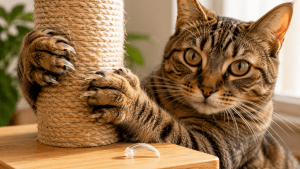
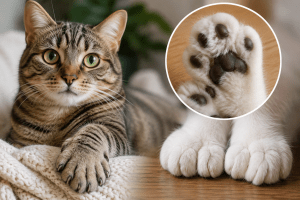
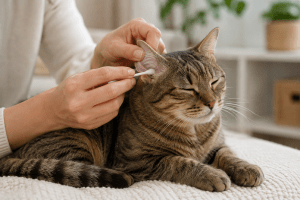
How to play with a cat is one of the most useful things any owner can learn, because good play is exercise, mental stimulation, and bonding all rolled into one, and it is the single best way to keep an indoor cat happy and well-behaved. The secret is simple: play to the cat’s hunting instinct. Move a wand toy like real prey, let your cat stalk, chase, and actually catch it, and finish on a win. This guide covers exactly how to play with a cat, how often, how to strengthen your bond, why you should never punish a cat, and the answers to the fun questions owners ask, from what music and colours cats like to whether they enjoy snow and how to coax a hiding cat out.
Play channels the hunting drive. See using laser pointers safely, redirecting foot-pouncing, and love bites and overstimulation, and explore more on the Waldev homepage.
On this page
Why play matters so much
Before the how, it is worth understanding just how important play is for a cat, because seeing play as a genuine need rather than an optional extra changes how seriously you take it, especially for indoor cats.
Play meets deep physical, mental, and emotional needs for a cat all at once. Physically, it is essential exercise: chasing, pouncing, and leaping keep a cat fit, agile, and at a healthy weight, and help counter the inactivity and boredom-related weight gain that so often affect indoor cats. Mentally, play satisfies the powerful hunting instinct every cat carries, giving its mind a proper workout and staving off the boredom, frustration, and stress that can otherwise spill over into problem behaviours such as aggression, over-grooming, excessive vocalising, or destructiveness. Emotionally, interactive play with you is a source of positive interaction that builds trust and strengthens the bond between you. Play also provides a crucial outlet for a cat’s predatory energy, which means a well-played-with cat is far less likely to redirect that energy onto your hands, ankles, or furniture. For indoor cats especially, this all matters even more, because they lack the natural stimulation, hunting, exploring, patrolling, that outdoor life provides, so the play and enrichment you offer effectively replace those missing outlets and are central to a good quality of life. Seen this way, regular play is not a treat you give when you have time but a core part of responsible cat care, as fundamental to a cat’s wellbeing as good food and a clean litter tray. A cat that is played with regularly is generally calmer, friendlier, and better behaved than one left to entertain itself, which is why time spent on play repays itself many times over. Understanding that is the foundation for everything that follows about how to do it well.
Play to the hunting instinct
The single most important principle of playing with a cat is to work with its hunting instinct, because a cat plays the way it hunts, and understanding the hunting sequence is the key to play that truly satisfies.
Every cat, however domesticated, is driven by an innate predatory sequence: spot prey, stalk it, chase it, pounce, catch it, and ‘kill’ it, followed naturally by eating, grooming, and sleeping. Play is essentially the cat rehearsing and satisfying this sequence, so the best play lets the cat move through the whole arc. In practice this means using toys and movements that mimic prey and let the cat express each stage: something small that darts, scurries, flutters, hides, and pauses like a mouse or bird, which the cat can fix on, stalk, chase, and finally pounce on and grab. The crucial and often-missed part is the catch. Because the hunting sequence is meant to end in catching and holding the prey, letting the cat actually catch the toy, sink its claws and teeth into something real, is what makes play satisfying rather than frustrating; endlessly chasing something it can never catch (a common pitfall with laser pointers) can leave a cat frustrated. So the guiding idea throughout is to think like the prey: move the toy as a frightened little animal would, away from the cat, into hiding, in quick unpredictable darts, never straight at the cat’s face, and let the cat win by catching it, ideally finishing the session with a definite catch and then a meal or treat, which completes the natural hunt-eat-groom-sleep cycle and leaves the cat satisfied and ready to settle. Every practical tip that follows is really just an application of this one principle: good play is a satisfying pretend hunt. Keep the image of a mouse in your mind as you move the toy and you will naturally do most of it right.
How to play, step by step
With the hunting principle in mind, the actual mechanics of a good play session are straightforward, and following a simple approach turns playtime into the satisfying hunt your cat is looking for.
Start by choosing an interactive toy you control, above all a wand or teaser toy (a stick with a string and a feather, ribbon, or small toy on the end), which lets you mimic prey while keeping your hands safely away from claws and teeth. Move it like a real animal: make it dart and dash along the floor, dart behind furniture and peek out, flutter briefly up like a bird, freeze as if hiding, then scurry away from the cat, quick, erratic, and prey-like, rather than waving it aimlessly in the cat’s face, which most cats find uninteresting or annoying. Let the cat do the work of hunting: give it time to notice, stalk, wiggle, and pounce, and importantly, let it catch the toy periodically, pausing so it can grab and ‘kill’ its prey, which keeps play satisfying rather than frustrating. Read your cat and keep the session to a sensible length, a few minutes at a time, stopping while it is still enjoying itself rather than pushing until it is bored or overstimulated (watch for a lashing tail, flattened ears, or a hard bite as signs to ease off). End on a successful catch, and ideally follow play with a small meal or treat, mirroring the natural hunt-then-eat rhythm and helping the cat wind down. A golden rule throughout: never use your bare hands or feet as the toy, since that teaches the cat that biting and scratching human skin is part of the game, which you will regret. Once a cat has learned that hands are prey, it is a hard habit to undo, so it is much easier never to start it, even with a cute, harmless-seeming kitten. Do this a couple of times a day and you have the core of excellent feline play.
Choosing the right toys
The right toys make play easier and more effective, and having a good, varied selection, and knowing how to keep them interesting, helps you provide both the interactive play you lead and the independent play your cat can enjoy alone.
For the interactive play you control, wand and teaser toys are the gold standard, because they let you animate ‘prey’ realistically while keeping your hands clear of teeth and claws; a variety of attachments (feathers, ribbons, fabric strips, small toy mice) lets you vary the ‘prey’ and keep things fresh. For catchable, hold-and-kick play, small toy mice and kick-toys let a cat grab, bite, wrestle, and bunny-kick a real object, satisfying the catch part of the hunt. Balls, crinkle balls, and toys that roll or move unpredictably engage the chase instinct with something tangible the cat can bat about, useful for solo play. Puzzle feeders and treat-dispensing toys are excellent for independent enrichment, making the cat ‘work’ for food and engaging its hunting-and-foraging drive while you are busy or out. To keep any toy interesting, rotate them: put some away and bring them out later so they feel novel again, since cats quickly lose interest in a toy that is always available. Choose safe toys, avoiding small parts, loose string, or anything that could be swallowed, and supervise play with string-type toys, putting wand toys away between sessions so the cat cannot chew or swallow the string unsupervised. With a mix of interactive toys for the play you lead and safe solo toys and puzzle feeders for independent times, you cover both the bonding, exercise-rich play sessions and the everyday enrichment that keeps a cat stimulated throughout the day. A good rule is to have more toys than you use at any one time, so there is always a fresh option to rotate in when interest in the current favourites starts to fade.
How often and how long
A common question is how much play a cat actually needs, and while it varies by individual, there are sensible guidelines that suit a cat’s natural rhythm and are easy to build into daily life.
Aim for regular, short daily sessions rather than one long stint. A good general target is at least two interactive play sessions a day of roughly ten to fifteen minutes each, adjusted to your cat: kittens and young, high-energy cats typically want more and will happily play several times a day, while older, calmer, or less mobile cats need gentler and shorter sessions but still benefit from and enjoy play adapted to their ability. The principle of little and often matters because it matches how cats naturally hunt, in short, intense bursts rather than sustained marathons, so several brief sessions spread through the day suit a cat far better than a single long one. Pay attention to your individual cat’s cues: some are keen for lots of play, others tire or lose interest quickly, and the right amount is whatever keeps your cat engaged and satisfied without pushing it into boredom or overstimulation, so stop while it is still enjoying itself. Timing can be strategic too: a good active session in the evening, followed by a meal, helps a cat burn off energy and settle for the night, which can reduce those early-morning wake-up demands. Above all, consistency is what counts, daily interactive play, even in modest amounts, delivers the exercise, mental stimulation, and bonding that keep a cat, and especially an indoor cat, physically and emotionally healthy, so building a little play into every day is one of the most valuable habits an owner can form.
Play, bonding, and trust
Beyond exercise and enrichment, play is one of the most powerful ways to build and deepen your relationship with a cat, so it is worth appreciating how playtime doubles as bonding time and how to use it to strengthen trust.
When you play with your cat, you are not just tiring it out; you are engaging in positive, enjoyable interaction on the cat’s own terms, which builds trust and strengthens your bond. A cat that regularly has fun, satisfying hunts with you comes to associate you with pleasure, stimulation, and good feelings, deepening its attachment and comfort with you. This makes play especially valuable for building a relationship with a new, shy, or nervous cat: interactive play with a wand toy lets a wary cat engage with you at a comfortable distance, through the toy rather than direct handling, and gradually learn that you are a source of good things, which can bring a timid cat out of its shell far more effectively than trying to pet or pick it up. Many rescue and foster carers rely on wand-toy play as their first tool with a frightened cat, precisely because it lets the cat choose how close to come. It is often the first sign of progress with a nervous cat, the moment it forgets its fear enough to swat at a feather. Play also gives you a positive way to interact that never involves force or pressure, so it is trust-building rather than trust-eroding. To get the most bonding value, play at your cat’s pace and preferences, pay attention to what it enjoys, let it succeed and feel good, and keep the experience positive and pressure-free. Over time, these shared, enjoyable sessions accumulate into a strong, trusting relationship. Combined with other positive interactions, gentle affection on the cat’s terms, treats, calm company, regular play is one of the surest routes to a cat that feels safe, happy, and closely bonded with you, which is exactly the relationship most owners hope for.
Why you should never punish a cat
Since owners often wonder how to correct or reprimand a cat that misbehaves, it is important to be clear on this: punishment is the wrong approach with cats, and understanding why, and what to do instead, protects both your cat’s wellbeing and your bond.
Punishing or reprimanding a cat in the traditional sense, scolding, shouting, smacking, spraying with water, or similar, simply does not work the way people hope, and it usually does harm. Cats do not link punishment to their behaviour the way we assume; instead of learning ‘I should not do that,’ the cat tends to learn ‘my human is sometimes frightening,’ so punishment frightens and stresses the cat, erodes its trust in you, and can actually make behaviour worse by increasing fear and anxiety, all without teaching the cat what it should do instead. The effective, humane alternative is positive and preventive. Reward and encourage the behaviour you want with treats, praise, play, and attention, so the cat is motivated to repeat it. Prevent or redirect unwanted behaviour rather than punishing it: give a scratching cat an attractive scratching post and reward its use, provide plenty of play so a bored cat does not create its own entertainment, and manage the environment to remove temptations. When a cat is doing something you dislike, calmly interrupt and redirect it to an acceptable alternative, then reward the good choice, never react with anger. And always ask why the cat is behaving that way, since unwanted behaviour is very often a sign of an unmet need, boredom, stress, insufficient play, or even a health problem, that is better solved by addressing the cause than by punishing the symptom. So the rule is simple and important: do not punish your cat, it damages trust and rarely works, and instead use positive reinforcement, redirection, prevention, and meeting your cat’s needs, which are what actually shape behaviour while keeping your relationship strong.
What cats like: music, colours, snow
Owners are naturally curious about their cats’ preferences, and a few popular questions, about music, colours, and snow, are worth answering both because they are interesting and because they shed light on how cats experience the world.
On music, cats are largely indifferent to human music but can respond positively to music composed specially for them. This ‘species-appropriate’ cat music is built around sounds and tempos meaningful to cats, incorporating elements like purring-style frequencies, birdsong, or suckling sounds and rhythms closer to a cat’s own, and studies have found cats show more signs of relaxation and interest in it than in human music. Among human music, calm, gentle, quiet pieces (such as soft classical) tend to relax cats most, while loud, fast, or jarring music can stress them, so to soothe a cat, play calm classical or purpose-made cat music softly and watch how your cat responds. On colours, cats do see colour but differently from us: they are thought to see somewhat like a red-green colour-blind person, perceiving blues and yellows relatively well while reds and greens look muted or greyish, with less vivid colour overall, so toys in blue and yellow may stand out more, though for cats, movement matters far more than colour in catching their interest, since their eyes are built for detecting motion and seeing in low light rather than for rich colour. On snow, reactions vary: many cats are curious and some enjoy briefly investigating or batting at snow, while others dislike the cold and wet, so if your cat does venture out, keep it brief and safe, cats chill quickly, ice-melt salt and chemicals are harmful to paws, and the cat should always be able to get back indoors to warm up. Together these answers paint a picture of an animal tuned to movement, low light, calming sounds, and its own comfort, rather than to the colours, music, and weather we might assume it shares our feelings about. Keeping these differences in mind helps you set up a home and a playtime that suit the cat as it actually is, not as a small person in fur.
Getting a cat out of hiding
Finally, a practical situation many owners face, a cat that hides and will not come out, deserves attention, because how you handle it matters for the cat’s trust and can also alert you to a health issue.
Cats hide when they feel scared, stressed, unwell, or overwhelmed, by a new home, a visitor, loud noises, a change in routine, or simply needing a safe retreat, and the cardinal rule is never to force a hiding cat out. Dragging a cat from its hiding place only intensifies its fear and damages its trust in you, achieving the opposite of what you want. Instead, give the cat time and space and let it emerge on its own when it feels safe, keeping the surroundings calm and quiet. You can gently encourage it: sit nearby and speak softly without looming or reaching in, offer tempting food or treats near the hiding spot or a little way out to lure it, and use a favourite wand toy to tempt it into play, which can draw a cat out almost despite itself. Make sure food, water, and a litter tray are easily and unthreateningly accessible nearby so the cat does not have to travel far or past a scary trigger. Reduce whatever is frightening it where you can, lowering noise, giving guests space, or removing the stressor. For a cat in a brand-new home, hiding is completely normal, and providing a quiet safe room and letting it come out at its own pace over hours or days is exactly the right approach. Importantly, watch for a health dimension: if a cat is hiding far more than usual, or hiding together with signs of illness such as not eating, lethargy, or other symptoms, that can indicate the cat is sick or in pain, since hiding is a classic sign of an unwell cat, and it is worth a vet check. So meet hiding with patience, gentle encouragement, and a safe environment rather than force, and stay alert to hiding that signals a health problem.
Frequently asked questions
How do I play with a cat the right way?
The best way to play with a cat is to tap into its hunting instinct with interactive toys and let it complete the hunt with a catch. Use wand or teaser toys (feathers, ribbons, or toy mice on a string) and move them like prey, darting, pausing, scurrying, hiding around corners, and fluttering, rather than waving them randomly in the cat’s face, so the cat can stalk, chase, and pounce. Crucially, let the cat actually catch the toy at times and end the session with a successful catch, so the hunting sequence resolves satisfyingly. Keep sessions short and frequent (several minutes, a couple of times a day), watch the cat’s interest, and stop before it gets bored or overstimulated. Never use your hands or feet as toys, which teaches biting and scratching. Rotate toys to keep them novel, provide solo toys and puzzle feeders for independent play, and adjust the style to the cat, older or less mobile cats still enjoy gentler play. Finishing play with a meal or treat mimics the natural hunt-eat-groom-sleep cycle and helps a cat settle. Play is exercise, mental stimulation, and bonding all at once, so regular, prey-style interactive play is one of the best things you can do for a cat.
How often and how long should I play with my cat?
Aim for regular, short daily play sessions rather than one long one. A good general guideline is at least two interactive play sessions a day of roughly ten to fifteen minutes each, though this varies with the cat’s age, energy, and health, kittens and young, active cats need more, while older or less active cats need gentler, shorter sessions but still benefit from play. The key is little and often: several short bursts spread through the day suit a cat’s natural pattern of brief, intense hunting activity better than a single marathon. Watch your individual cat, some want lots of play, others tire quickly, and follow its cues, stopping while it is still enjoying itself rather than pushing until it is bored or overstimulated. Playing at consistent times, and especially an active session in the evening followed by a meal, can help burn off energy and settle a cat for the night (and reduce dawn wake-ups). The most important thing is consistency: daily interactive play, even in short sessions, provides the exercise, mental stimulation, and bonding that keep a cat, particularly an indoor cat, happy and healthy.
Should I punish or reprimand my cat for bad behaviour?
No, you should not punish or reprimand a cat in the traditional sense, because punishment does not work well with cats and often backfires. Cats do not connect punishment with their behaviour the way people expect; instead, scolding, shouting, spraying with water, or physical punishment tends to frighten or stress the cat, damage its trust in you, and can actually worsen behaviour or cause fear and anxiety, without teaching the cat what to do instead. The effective, humane approach is positive: reward and encourage the behaviour you want (with treats, praise, play, and attention), and prevent or redirect unwanted behaviour rather than punishing it, for example, redirect a scratching cat to a scratching post, provide enough play so a bored cat does not act up, and remove or manage temptations. If a cat is doing something you dislike, calmly interrupt and redirect it to an acceptable alternative, then reward the good choice. Also consider why the cat is doing it, since unwanted behaviour often signals an unmet need (boredom, stress, or a health issue). So skip reprimands and punishment, which harm the bond and rarely work, and use positive reinforcement, redirection, and meeting the cat’s needs instead.
What kind of music do cats like?
Cats generally are not moved by human music the way we are, but research suggests they can respond positively to music specially composed for cats, sometimes called ‘species-appropriate’ cat music. This cat-specific music is designed around sounds and tempos relevant to cats, incorporating things like frequencies similar to purring, birdsong, or suckling sounds and rhythms closer to a cat’s own, and studies have found cats can show signs of relaxation and interest in response to it, more so than to human music. Among human music, if anything, many cats seem most relaxed by calm, gentle, quiet music such as soft classical pieces, while loud, fast, or jarring music may stress them. So if you want to use music to soothe your cat (for example during stressful times like vet visits or when home alone), calm classical music or purpose-made cat music are the best bets, played softly, and every cat is an individual, so watch whether yours seems calmer or more agitated and adjust accordingly. In short, cats like calm sounds and respond best to music made specifically for them, rather than to typical human favourites.
Do cats like snow, and what colours do cats like or see?
On snow: many cats are curious about snow and some enjoy briefly investigating or playing in it, batting at it or exploring, while others dislike the cold and wet and want nothing to do with it, it varies by individual. If a cat does go out in snow, keep it brief and safe: cats can get cold quickly, so limit time outside, watch for signs of cold, keep paws safe from ice-melt chemicals and salt (which are harmful), and make sure the cat can get back indoors to warm up. On colours: cats do see colour, but not like we do. They are thought to see the world somewhat similarly to a red-green colour-blind person, seeing blues and yellows relatively well while reds and greens appear muted or greyish, and their colour vision is less vivid than ours overall. So cats likely perceive blues and yellows best, which is why toys in those colours may stand out more to them, though for cats, movement matters far more than colour when it comes to catching their interest. Cats’ vision is optimised for detecting motion and for low light rather than for rich colour, which fits their nature as crepuscular hunters.
How do I get a cat out of hiding?
The best way to coax a hiding cat out is with patience and calm, never by force. Cats hide when they feel scared, stressed, unwell, or overwhelmed (by a new environment, a visitor, loud noises, or a change), and dragging a cat out of its hiding spot only deepens its fear and damages trust. Instead, give the cat time and space, keep the environment calm and quiet, and let it come out on its own when it feels safe. Encourage it gently: sit nearby speaking softly, offer tempting food or treats near the hiding place or a little way out, and use a favourite toy to lure it with play. Make sure it has easy, unthreatening access to food, water, and a litter tray nearby so it does not have to venture far. Reduce whatever is frightening it if you can (lower noise, remove or manage the trigger). For a cat in a new home, providing a safe, quiet room and letting it emerge at its own pace is normal and best. If a cat is hiding much more than usual, or hiding along with signs of illness (not eating, lethargy, other symptoms), that can indicate a health problem and is worth a vet check, since hiding is a common sign of a sick or in-pain cat.
Why is play so important for cats, especially indoor cats?
Play is genuinely important for cats because it meets deep physical, mental, and emotional needs, and this is especially true for indoor cats that cannot hunt and roam. Physically, play provides essential exercise, helping keep a cat fit, agile, and at a healthy weight and preventing the boredom-related weight gain and inactivity common in indoor cats. Mentally, play satisfies the strong hunting instinct every cat carries, engaging its mind and preventing the boredom, frustration, and stress that can otherwise lead to problem behaviours like aggression, over-grooming, or destructiveness. Emotionally, interactive play with you builds and strengthens your bond, providing positive interaction and trust. Play also gives a cat an appropriate outlet for its predatory energy, so it is far less likely to redirect that energy onto your hands, feet, or furniture. For indoor cats in particular, which lack the natural stimulation of the outdoors, owner-provided play and enrichment are essential to a good quality of life, replacing the hunting and exploring they would otherwise do. So regular play is not a luxury but a core part of caring for a cat: it keeps the body fit, the mind engaged, the behaviour balanced, and the bond strong.
The quick version
How to play with a cat? Play to its hunting instinct. Use a wand or teaser toy and move it like prey, darting, hiding, scurrying, fluttering, away from the cat, not in its face, so the cat can stalk, chase, and pounce, and crucially let it catch the toy and end on a successful catch (frustration builds when a cat can never catch its ‘prey’). Keep sessions short and frequent (aim for at least two 10 to 15 minute sessions a day), finish with a meal or treat to mirror the natural hunt-eat-sleep cycle, rotate toys to keep them novel, provide puzzle feeders for solo play, and never use your hands or feet as toys. Play is vital exercise, mental stimulation, and bonding, especially for indoor cats, and it also builds trust with shy cats. Never punish a cat, it frightens them and harms trust; use rewards, redirection, and meeting their needs instead. Cats relax to calm or cat-specific music, see blues and yellows best (but respond to movement most), and vary in liking snow. Never force a hiding cat out, use patience, food, and calm, and see a vet if hiding comes with illness signs.
For more on play and behaviour, see using laser pointers safely, redirecting foot-pouncing, and love bites and overstimulation. Browse the full cat blog, the pet calculators, and more free tools on the Waldev homepage.
Note: This guide is for general education about cat care and behaviour. Never punish a cat physically or by shouting, spraying, or scolding, it causes fear and stress and harms trust. Supervise play with string or wand toys and store them away between sessions to prevent swallowing. Keep snow outings brief and paws away from ice-melt chemicals. Hiding much more than usual, or hiding with not eating, lethargy, or other symptoms, can signal illness or pain. Consult your veterinarian for a cat that hides excessively or seems unwell.
Interactive, prey-style play gives cats vital exercise, mental stimulation, and bonding, especially indoor cats. Pet owner resources →
Positive reinforcement works with cats; punishment does not. Hiding with illness signs needs a vet. Locate a hospital →