Why do cats like feet? If your cat stalks your toes under the duvet, pounces on your ankles as you walk past, or bunny-kicks your feet at dawn, you are seeing one of the most instinctive of all cat behaviours in action. Moving feet look, to a cat, exactly like prey, small, quick, and unpredictable, so they switch on the hardwired hunting drive that every cat carries. Add a dash of scent interest and the discovery that attacking your feet gets a satisfying reaction, and your toes become an irresistible target. This guide explains why cats love, stalk, and bite feet, how to tell play from aggression, how to redirect the behaviour kindly, and the related habits of eating hair and biting noses, including when any of it is worth a vet’s attention.
Foot-attacking is predatory play. See why cats bite and love-bite, playing vs. fighting, and explore more on the Waldev homepage.
On this page
Feet look like prey
The heart of the answer to why cats like feet is that, to a cat, moving feet are not feet at all but prey, and understanding that transforms the behaviour from baffling to completely logical.
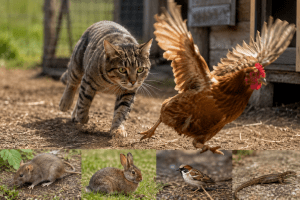
Every domestic cat, however pampered, carries the instincts of a small, efficient predator, hardwired to stalk, chase, pounce on, and catch moving prey. That hunting drive is triggered above all by a particular kind of movement: quick, small, darting, unpredictable motion, exactly the way a mouse scurries, an insect skitters, or a bird hops. Feet, as it happens, move in just that way. Wiggling toes, a foot shifting under the blankets, ankles walking briskly past, or feet twitching as you fall asleep all produce the small, fast, erratic movements that a cat’s brain reads as ‘prey,’ and the response is automatic: the cat stalks, fixes its gaze, wiggles its rear, and pounces. It is not making a considered decision to attack you; the movement simply switches on an ancient, involuntary hunting sequence, and your feet are the target that happens to be moving. The same cat that pounces on your toes will pounce just as readily on a rolling ball or a dragged string, which shows the trigger really is the movement rather than any feeling about you. This is why feet are such a universal feline fascination, and why the behaviour is strongest in kittens and young, energetic cats with lots of hunting drive and little else to hunt indoors. Seen through this lens, a cat attacking your feet is not being naughty or aggressive; it is being a cat, doing exactly what millions of years of evolution designed it to do, with your toes cast in the role of the mouse. Every other reason cats like feet, scent, play, attention, sits on top of this fundamental predatory response to movement.
Why feet under covers are irresistible
Owners often notice that feet are attacked most fiercely when they are under a blanket or duvet, and there is a good reason the covered foot is even more tempting to a cat than a bare one.
When your feet move under a blanket, sheet, or duvet, they create a shifting, lumpy, moving shape that the cat cannot see directly, and this is precisely what makes it so exciting. In the wild, a great deal of prey moves out of sight, under leaves, through grass, in a burrow, betrayed only by the movement it makes, and a cat is superbly equipped to detect and pounce on that hidden, moving quarry. A foot wriggling under the covers reproduces this scenario perfectly: something is clearly moving, the cat can see the movement of the fabric but not the ‘prey’ itself, and that hidden, twitching target is irresistible to the hunting brain, arguably even more so than a visible foot, because the mystery of the unseen mover heightens the predatory thrill. A visible foot is a known quantity, but a shape moving under fabric could be anything, and that uncertainty is exactly what a hunting brain finds most gripping. This is why so many cats lie in wait beside the bed, eyes fixed on the duvet, and launch themselves at the slightest toe-wiggle. It is a pure expression of the ambush-hunting instinct. The same principle is behind why cats love toys dragged under a rug or a blanket, and why the classic ‘moving hand under the covers’ game so reliably drives a cat wild. Anything that moves unseen beneath a surface taps straight into the ambush hunter every cat still carries under its domestic manners. So if your cat reserves its most enthusiastic attacks for your feet under the covers, it is because the hidden, moving shape is the ultimate trigger for its hunting instincts, not because it has anything against your feet in particular.
The scent of feet
Alongside movement, there is a secondary reason some cats are drawn to feet specifically, which is scent, because feet are among the more strongly-scented parts of the human body and cats live in a world governed by smell.
Feet carry a distinctive, concentrated personal scent, from sweat and the natural activity of the skin, and because cats experience the world so much through their highly sensitive noses, that strong smell can be genuinely interesting to them. Some cats are notably attracted to the scent of feet, socks, and shoes, sniffing and investigating them, or even rubbing against them, and this scent interest can add to the appeal of feet as a target beyond the movement alone. The smell also carries personal information about you, which a scent-oriented animal finds worth investigating. This is generally harmless curiosity, a cat gathering information and enjoying a strong, familiar smell, and it blends with the predatory and play motives rather than replacing them. A cat may sniff your feet intently one moment and pounce on them the next, moving seamlessly between investigating the scent and hunting the movement. It helps explain why a cat might home in on feet even when they are still, or become interested in shoes and socks left lying around. For most owners the scent factor is just a mildly amusing quirk, though if a cat is chewing or eating socks or other items, that strays into the territory of pica, discussed later, which does need addressing. In the ordinary way, though, a cat’s interest in the smell of your feet is simply part of how it explores and stays connected to you through scent, one more reason that of all the body parts available, feet hold a special fascination. It is a small reminder that to a cat, you are a landscape of interesting smells as much as a person, and feet happen to be one of the most information-rich parts of that landscape.
Play, energy, and attention
Two further motives complete the picture of why feet get attacked so often, and both are really about a cat needing an outlet, they are play and pent-up energy on the one hand, and attention-seeking on the other.
Indoor cats, especially young ones, have a great deal of hunting energy and often too few natural outlets for it, and feet make a convenient, ever-present, satisfyingly responsive target for that surplus drive. Pouncing on feet is, quite simply, fun for the cat: it gets to stalk, chase, grab, and bunny-kick, playing out the whole hunting sequence, which is deeply satisfying and burns off energy. A cat that has spent its hunting drive on a good play session is generally calmer and less inclined to go looking for trouble around your ankles. A cat that is under-stimulated and bored is far more likely to turn to your feet for entertainment, which is why the behaviour so often reflects a need for more play rather than any problem with the cat. Layered on top is attention: cats are quick to learn what gets a reaction, and attacking your feet reliably produces one, a yelp, a jump, a laugh, a chase, so even if you are not enjoying it, from the cat’s point of view it works, and behaviour that works gets repeated. From the cat’s side, it has simply found a reliable button that makes its human spring into action, and there is no reason it would stop pressing it unless a better option comes along. This is especially true first thing in the morning, when a hungry, wide-awake cat learns that pouncing on your feet is a brilliant way to rouse you and get breakfast started. The good news in all this is that because the behaviour is driven by a need for play, stimulation, and attention, it responds very well to giving the cat better outlets, plenty of interactive hunting-style play and a sensible feeding routine, which channels the energy away from your feet and onto toys, as the next sections describe.
Play or aggression?
Because being pounced on and bitten can hurt or startle, a fair question is whether foot-attacking is playful or aggressive, and reassuringly it is almost always the former, though it helps to know how to tell them apart.
The overwhelming majority of feet-attacking, particularly in kittens and young cats, is predatory play rather than true aggression. Playful hunting of feet has a recognisable pattern: the cat stalks and fixes on the target, wiggles its rear, and pounces, then grabs with its front paws, delivers inhibited bites that are not fully clamped down, and often bunny-kicks with its back legs, all while remaining fundamentally relaxed and quick to reset and do it again. The cat does not intend to hurt you, though its claws and teeth can still catch and sting, and the whole thing has the loose, bouncy quality of play. True aggression looks and feels different and is much less commonly aimed at feet: it is accompanied by tense, defensive or offensive body language, flattened ears, growling or hissing, dilated pupils, a stiff body, and a lashing tail, and the bites are harder and meant, and it is typically driven by fear, pain, or feeling threatened rather than by the sight of a moving target. Overstimulation can also tip an excited cat from play into a sharper nip. So the way to tell is to read the body: playful stalking and pouncing with inhibited bites and a relaxed, bouncy manner is play to be redirected onto toys, whereas hissing, growling, flattened ears, a rigid body, and hard, meant bites signal genuine aggression rooted in fear, pain, or stress, which is a different matter that may call for a vet or behaviourist, especially if it appears suddenly in a previously friendly cat. A cat that has always been gentle and abruptly starts biting hard is telling you something has changed, and pain is one of the most common hidden reasons behind such a shift.
How to redirect feet-attacking
Since foot-attacking is normal predatory play, the goal is not to punish it but to redirect that hunting energy onto proper targets, and a handful of consistent strategies work well for almost every cat.
The most important single measure is plenty of interactive play. Using wand toys, feather teasers, or toy mice, give your cat regular sessions in which it can properly stalk, chase, pounce on, and catch a satisfying target, ideally timing some of this for the periods when it tends to attack your feet, such as the evening and just before bed, so its hunting drive is spent on toys rather than on you. Keep a toy within reach so that the instant you see your cat eyeing your feet, you can toss or wiggle it away from your body and redirect the pounce onto the toy, teaching the cat that toys, not toes, are the prey. A crucial rule is never to use your own hands or feet as play objects, since doing so directly teaches the cat that they are fair game to hunt. When your cat does attack your feet, avoid the natural reactions that make it worse: do not squeal, jerk your feet away, or wrestle the cat, because sudden movement makes the ‘prey’ more thrilling and rewards the behaviour, and equally do not punish or frighten the cat, which harms trust without teaching anything useful; instead, hold still and become boring so your feet lose their prey appeal, then offer a toy as the acceptable outlet. For the specific problem of dawn foot-attacks, tackle the underlying hunger and energy with a consistent feeding routine, an automatic timed feeder for early breakfast, and good evening play. With enough appropriate outlets, consistent redirection to toys, and patience, the great majority of cats significantly reduce their attacks on feet, channelling that irrepressible hunting drive where it belongs. The change rarely happens overnight, but owners who commit to a couple of proper play sessions a day usually see the pounces on their feet dwindle within a few weeks.
Why cats eat and chew hair
A related question owners often pair with the feet one is why their cat licks, chews, or even eats hair, whether the owner’s hair, its own, or another pet’s, and the answer ranges from sweet to worth-watching.
In many cases, mouthing and licking hair is simply grooming and bonding. Because cats groom the companions they are close to, a cat that licks and gently chews your hair may be treating it much like another cat’s fur, grooming you as a member of its family, an affectionate, social behaviour, and it may well be drawn to the smell or taste of your shampoo or styling products. This is why cats often make a beeline for freshly washed hair, when the scent of the products is at its strongest. The interest usually fades once the scent does, so it tends to be strongest in the hour or two after you wash. Some cats also just seem to find the texture of hair satisfying to mouth and chew. It can be attention-seeking too, and there is a comfort dimension: cats that were weaned or separated from their mothers very early sometimes develop a habit of suckling or chewing on hair, wool, or fabric as a self-soothing behaviour that echoes nursing. These cats may seek out hair or wool particularly when they are settling down to rest, treating it as a comfort object much as a young child might a blanket. So far, so harmless. The important distinction is between licking or mouthing hair and actually eating and swallowing it. Repeatedly ingesting non-food items, including hair, wool, string, or fabric, is a behaviour known as pica, and it matters for two reasons: it can be a sign of stress, boredom, very early weaning, or occasionally a dietary or medical issue, and, more urgently, swallowed hair or fabric can cause digestive upset or, at worst, a dangerous intestinal blockage that may need surgery. Long-haired cats and keen groomers are already prone to hairballs from swallowing their own fur, so deliberately eating extra hair adds to that load and the risk it brings. So while affectionate grooming-style licking of your hair is nothing to worry about, a cat that genuinely eats and swallows hair or other non-food materials, or does so compulsively, should be gently discouraged, given more enrichment and play to relieve boredom or stress, and checked by a vet to rule out underlying causes and protect it from the real risk of a blockage.
Why cats bite and lick noses
Completing the trio of quirky targets, many cats show a particular interest in their owner’s nose, licking or gently nibbling it, and this too has a friendly explanation rooted in how cats bond.
Nose licking and gentle nibbling are generally affectionate, social behaviours closely tied to grooming and greeting. Cats greet and bond with those they trust by touching noses, sniffing faces, and grooming one another’s heads, so a cat that licks or softly nibbles your nose is often treating you like a close feline companion, offering a greeting, sharing scent, and showing affection, with your nose simply being a prominent and accessible feature of your face. When you lean in close, your nose is quite literally the first thing that meets the cat, so it becomes the natural point of contact for a greeting. It is the feline version of a friendly hello, delivered right where the two of you meet. Many cats reserve this nose greeting for their most trusted person, which makes it quietly special. Scent and taste add to the draw: your nose and breath carry your personal smell and often the scent of food, both of which a curious, scent-driven cat finds interesting to investigate. As with mouthing elsewhere, a gentle nibble on the nose can be a ‘love bite’ or part of enthusiastic grooming, and sometimes it is a bid for your attention. Provided it stays gentle and the cat is relaxed, a lick or soft nibble on the nose is a warm, bonding gesture to take as a compliment. The usual sensible cautions apply: for hygiene, it is best not to let a cat lick right at your eyes or mouth, you should not let it lick skin where you have just applied products that could harm it, and if a gentle nibble turns into a hard bite or is paired with tense body language, treat that as overstimulation and calmly give the cat some space. In the ordinary case, though, a cat that licks your nose is simply being affectionate and treating you as one of its own.
When it is a concern
To close, it is worth being clear that these behaviours are almost always normal and endearing, while flagging the specific circumstances in which feet-attacking or hair-eating crosses into territory that warrants attention.
The great majority of foot-pouncing is playful predatory behaviour, and the great majority of hair-licking is affectionate grooming, neither of which needs any concern beyond redirecting play and, if you like, discouraging the licking. There are, however, a few red flags. With feet, the concern is genuine aggression rather than play: if the attacks involve hard, meant bites with growling, hissing, fear, or pain, rather than playful stalking and inhibited nips, or if a normally friendly cat suddenly turns aggressive, that suggests fear, pain, overstimulation, or an underlying medical problem, and because a sudden change in temperament can signal illness, it is worth a vet check and possibly a behaviourist’s input. With hair, the concern is eating rather than grooming: occasional licking is fine, but a cat that actually swallows hair, wool, fabric, string, or other non-food items (pica) needs attention, because of both the underlying causes (stress, boredom, early weaning, or dietary or medical issues) and the serious risk of an intestinal blockage, so persistent or compulsive pica should be discouraged, enriched against, and assessed by a vet, urgently if you suspect the cat has swallowed something that could obstruct it. In both areas the guiding questions are the same: is this playful and inhibited or genuinely aggressive, is it occasional or compulsive, and is the cat ingesting non-food items or showing any sudden change, and when the answers point to aggression, compulsion, ingestion, or sudden change, that is when to involve your vet. Providing an enriched environment with plenty of play and stimulation goes a long way toward preventing both problem behaviours in the first place.
Frequently asked questions
Why do cats like feet?
Cats are drawn to feet mainly because feet move in ways that trigger a cat’s powerful hunting instinct. Toes wiggling under a blanket, feet shifting in bed, or ankles walking past all move in quick, small, unpredictable ways that look just like prey, a mouse or a bird, so a cat’s stalk-chase-pounce drive kicks in and it stalks and attacks. Feet under covers are especially irresistible because the cat cannot see what is making the shape move, which makes the ‘prey’ even more enticing. There is also a scent element: feet carry a strong personal scent, and some cats are attracted to or interested in that smell. Play and attention play a part too, pouncing on your feet is fun, and it reliably gets a reaction from you, so cats learn it works, and feet are often attacked in the early morning as part of waking you for food. So cats like feet because moving feet look like prey and satisfy the urge to hunt, they smell interesting, and attacking them is a fun, attention-getting game.
Why does my cat attack my feet, especially under the covers or in the morning?
Feet-attacking is predatory play, and covers and mornings make it more likely. Under a blanket or duvet, your moving feet create a shifting, hidden target that perfectly mimics prey moving under leaves or in a burrow, and because the cat cannot see the ‘prey’ directly, the movement is doubly tempting to stalk and pounce on. Mornings bring an extra driver: cats are naturally most active at dawn (they are crepuscular), so a cat that is wide awake, energetic, and hungry while you are still in bed may pounce on your feet both to burn off its hunting energy and to wake you up for breakfast. It is not aggression or spite; it is a bored, playful, or hungry cat treating your feet as the nearest available prey and attention button. The behaviour is most common in kittens and young, energetic cats. The fix is not to punish it but to redirect the hunting drive onto proper toys and to meet the cat’s needs for play and food, which the guide explains.
How do I stop my cat from biting or attacking my feet?
The key is to redirect the hunting instinct onto appropriate toys rather than punishing the cat, because feet-attacking is normal predatory play, not misbehaviour. The most effective single step is plenty of interactive play with wand toys, feathers, or toy mice, letting the cat stalk, chase, and catch a proper target, ideally in regular sessions and especially before the times it usually attacks (such as the evening and before bed), so its hunting energy is spent on toys instead of you. Keep a toy handy to toss or wiggle away from you the moment the cat eyes your feet, redirecting the pounce onto the toy. Avoid using your hands or feet as play objects, which teaches the cat that they are fair game. If your cat attacks your feet, do not squeal, jerk away, or wrestle it (that makes the ‘prey’ more exciting) or punish it (that harms trust); instead go still and boring so your feet stop being fun, then offer a toy. For morning foot-attacks, address hunger and energy with a feeding routine, a timed feeder, and evening play. With enough outlets and consistent redirection, most cats ease off attacking feet.
Is it play or aggression when my cat attacks my feet?
In the vast majority of cases, foot-attacking is play (specifically predatory play), not true aggression, particularly in kittens and young cats. Playful foot-hunting typically involves stalking, pouncing, grabbing with inhibited (not fully clamped) bites, and often bunny-kicking with the back legs, and the cat is usually relaxed, quick to move on, and does not intend to hurt, though play bites and scratches can still catch you. True aggression is different and less common toward feet: it comes with tense, defensive or offensive body language, flattened ears, growling or hissing, dilated pupils, a lashing tail, and harder, meant bites, and is usually triggered by fear, pain, or feeling threatened rather than by a moving target. Overstimulation during play can also tip a cat into a harder nip. So if your cat stalks and pounces on your feet in a playful, quick, inhibited way, it is play to redirect onto toys; if it attacks with genuine aggressive signals, is in pain, or seems fearful, that is a different issue that may need a vet or behaviourist. Reading the body language tells you which you are dealing with.
Why does my cat eat or chew my hair?
Cats licking, chewing, or eating hair, yours or their own or another pet’s, has several possible explanations. Often it is grooming and bonding: cats groom those they are close to, so a cat mouthing and licking your hair may be treating it like fur to groom, an affectionate, social behaviour, and it may be drawn to the smell or taste of your hair products. Some cats find the texture satisfying to chew. It can also be attention-seeking or a comfort behaviour, and cats separated from their mothers very early sometimes suckle or chew hair, wool, or fabric as a self-soothing habit. However, repeatedly eating non-food items, including hair, wool, or fabric, is a behaviour called pica, which can be linked to stress or boredom, to early weaning, or occasionally to dietary or medical issues, and matters because swallowed hair or fabric can cause digestive upset or, at worst, a dangerous blockage. So occasional grooming-style licking of your hair is usually harmless affection, but a cat that actually eats and swallows hair or other non-food materials, or does it compulsively, should be discouraged, given more enrichment, and checked by a vet, both to protect it from blockages and to look for an underlying cause.
Why does my cat bite or lick my nose?
Nose biting and licking are usually affectionate, social behaviours, closely related to grooming and bonding. Cats greet and bond with those they trust by touching noses, sniffing, and grooming faces, so a cat that licks or gently nibbles your nose is often treating you like a close companion, greeting you, sharing scent, and showing affection, your nose simply being a prominent, accessible part of your face. The nose also carries your scent and the smell of your breath (including food), which cats find interesting, so investigation and taste can play a part. As with other mouthing, a gentle nibble can be a ‘love bite’ or part of thorough grooming, and occasionally a bid for attention. As long as it is gentle and the cat is relaxed, nose licking and soft nibbling is a friendly, bonding gesture. The usual cautions apply: keep a cat from licking near your eyes or mouth for hygiene, do not let it lick freshly-applied products, and if a nibble becomes a hard bite or comes with tense body language, treat it as overstimulation and give the cat space. Otherwise, a lick on the nose is your cat being affectionate.
When is attacking feet or eating hair a concern?
Most foot-attacking and hair-licking is normal play or grooming and no cause for concern, but a few situations warrant attention. For feet: if the ‘play’ is actually aggressive, hard, meant bites with growling, hissing, fear, or pain rather than playful stalking and inhibited nips, or if a normally friendly cat suddenly becomes aggressive, that points to fear, pain, overstimulation, or a medical issue and may need a vet or behaviourist, since sudden behaviour change can signal illness. For hair: occasional grooming-style licking is fine, but actually eating and swallowing hair, wool, fabric, or other non-food items (pica) is a concern because it can cause digestive upset or a life-threatening blockage, and it can reflect stress, boredom, early weaning, or dietary or medical problems, so persistent or compulsive pica should be discouraged and checked by a vet. In both cases, the themes are the same: watch for genuine aggression versus play, for compulsive versus occasional behaviour, and for any sudden change or ingestion of non-food items, and involve your vet when those appear. Enriching the cat’s environment and providing plenty of play helps prevent both problem-pouncing and boredom-related chewing.
The quick version
Why do cats like feet? Because moving feet look like prey. Quick, small, unpredictable movements, wiggling toes, feet shifting under the covers, ankles walking past, trigger a cat’s hardwired stalk-chase-pounce hunting instinct, so it attacks. Feet under blankets are extra tempting because the cat senses a hidden, moving target, just like prey under leaves. Feet also carry a strong scent cats find interesting, and pouncing on them is fun and reliably gets your attention (especially at dawn, to wake you for food). It is play, not aggression, in most cases (relaxed stalking and inhibited bites), unlike genuine aggression with growling, flat ears, and hard bites. Redirect it with lots of wand-toy play, never using hands or feet as toys, staying still and boring when attacked, and a feeding routine for mornings. The related habits: licking/chewing your hair is usually grooming, but actually eating hair (pica) risks blockages and needs a vet; nose licking is affectionate greeting and grooming.
For more on play and biting, see why cats bite and love-bite, playing vs. fighting, and cat body language and sounds. Browse the full cat blog, the pet calculators, and more free tools on the Waldev homepage.
Note: This guide is for general education about cat behaviour. Foot-pouncing is normally play and hair-licking normally grooming, but hard, meant bites with growling or hissing, a sudden change to aggression in a friendly cat, or actually eating hair, wool, fabric, or other non-food items (pica, which risks a dangerous intestinal blockage) can indicate fear, pain, stress, or a medical problem. Consult your veterinarian for genuine aggression, sudden behaviour change, or any ingestion of non-food items, urgently if you suspect a blockage.
Cats pounce on feet because movement triggers their hunting instinct; redirecting it onto toys is the fix. Pet owner resources →
Eating hair or other non-food items can reflect stress or medical issues and risks a blockage, so needs a vet. Locate a hospital →