“Senior” sneaks up on cat owners, because cats hide aging so well. The widely used veterinary answer: a cat is mature from about 7, senior from about 11, and geriatric from 15 onward. But the number is only half the story — what changes at each threshold, and what care each stage needs, is what actually matters. This guide maps the whole back half of a cat’s life.
Want your cat’s exact stage? Enter its age in the free cat age calculator to see whether it’s mature, senior, or geriatric — and the human-year equivalent.
When does a cat become a senior?
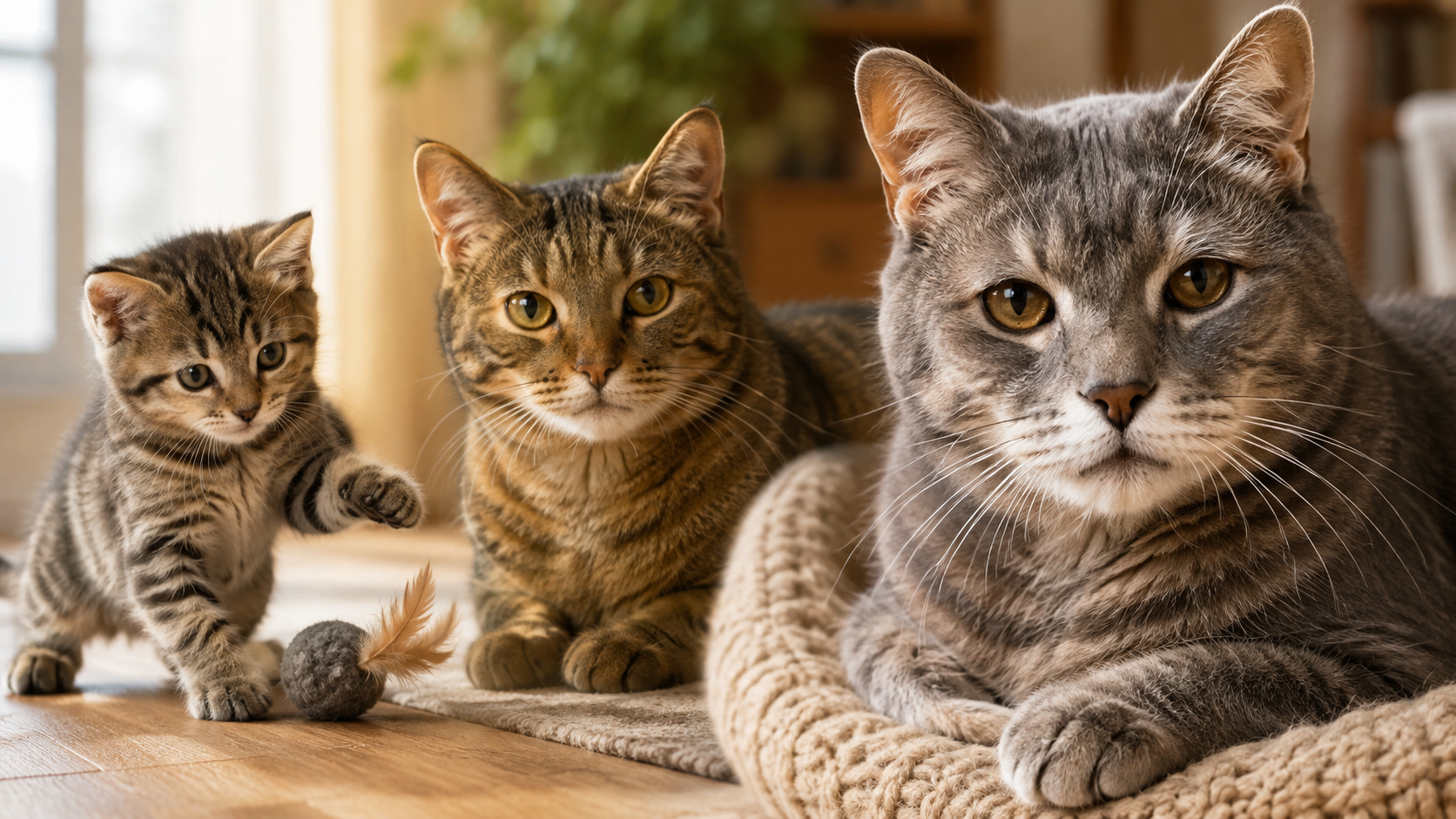
Veterinary life-stage guidelines used around the world place the boundaries roughly like this: cats are considered mature (the feline equivalent of middle age) from about 7 to 10 years, senior from about 11 to 14 years, and geriatric from 15 years onward. So the simplest answer to “when is a cat a senior?” is around 11 years old.
You’ll sometimes see the senior label applied a little earlier — some sources start it at 10, or even lump everything from 7 as “senior” in a looser sense. The reason for the spread is that aging is gradual and individual, not a switch that flips on a birthday. What everyone agrees on is the shape: a middle-aged “mature” phase in the late single digits, a true “senior” phase from around 11, and an advanced “geriatric” phase from 15. In human terms, an 11-year-old cat is roughly 60, and a 15-year-old is about 76 — genuinely elderly.
It’s worth knowing why veterinary medicine bothered to define these brackets at all, because it reveals what they’re for. The mature, senior, and geriatric stages aren’t just descriptive labels — each one comes with a recommended shift in care, especially around how often a cat should be examined and screened. The brackets exist to translate “your cat is getting older” into concrete actions: when to add bloodwork, when to move from annual to twice-yearly visits, when to start watching for specific conditions. That’s why pinning your cat to the right stage is genuinely useful rather than academic. A cat one year into the senior bracket and a cat five years in are in different places, and the staging system helps you and your vet treat them accordingly. The widely cited threshold of 11 is best understood not as the moment your cat becomes “old,” but as the moment a particular set of proactive care habits becomes worthwhile.
If you adopted without records, our guide on how to tell a cat’s age helps you estimate it, and the cat age calculator tells you which life stage that lands in.
The life-stage thresholds at a glance
Here are the recognised feline life stages from prime adulthood onward, with the human-equivalent age and the single most important care focus for each. Ages are illustrative guidelines — individual cats cross these thresholds a little earlier or later.
~28–40 human years
Peak condition. Focus: maintain healthy weight, dental care, and annual vet checks. The baseline you’ll compare later changes against.
~44–56 human years
Feline middle age. Focus: watch for weight gain, begin baseline senior screening, catch early disease before symptoms show.
~60–72 human years
Officially a senior. Focus: twice-yearly vet visits, joint support, monitoring kidneys, thyroid, and weight loss.
~76+ human years
Advanced age. Focus: comfort, accessibility, close monitoring, frequent checks, and managing any chronic conditions.
Why the “senior” label actually matters
It’s tempting to treat the senior threshold as a label and nothing more — your cat doesn’t suddenly feel different at eleven. But the label is a prompt, and that’s its whole value. It tells you to change a few specific things, and changing them early is what keeps senior cats healthy and comfortable for years longer.
The biggest reason is that cats hide illness. As small predators wired to mask weakness, they don’t show pain or sickness until it’s advanced — which means by the time an owner notices something is “off,” a disease may have been progressing silently for months. Many of the conditions that affect older cats, like kidney disease and hyperthyroidism, are far more manageable when caught early. The senior label is the cue to start looking before symptoms appear, through more frequent checkups and screening, rather than waiting for an obvious problem.
The label also reframes everyday behaviour. A senior cat who stops jumping onto the windowsill isn’t being lazy — her joints may ache. One who has accidents outside the litter box may be struggling to climb in, or signalling a medical issue, not “misbehaving.” Knowing your cat is a senior turns these signs from annoyances into information, and prompts kind, practical adjustments. In short, the threshold doesn’t change your cat — it changes how attentively and proactively you care for her, at exactly the point when that shift pays off most.
There’s a financial and emotional case for the senior label too, beyond the medical one. Catching a condition early through routine screening is almost always cheaper, less invasive, and less distressing than treating a crisis that has been building unnoticed for months. A kidney issue managed from its early stages with diet and monitoring is a very different experience — for cat and owner — than one discovered when the cat suddenly stops eating and needs emergency care. Proactive senior care front-loads a little effort and cost to avoid much larger amounts of both later, while giving your cat more comfortable, healthy years. Seen that way, the senior threshold isn’t a melancholy milestone but an opportunity: the moment you get to start actively protecting the back half of your cat’s life rather than reacting to it.
Why cats are so good at hiding their age
Of all the things that make senior cat care challenging, the hardest is that cats actively conceal the very signs you’re trying to read. Understanding why explains a lot about how to care for an aging cat — and why the calendar age can be a better guide than your cat’s apparent condition.
In the wild, a cat is both a predator and a potential prey animal. A small wildcat that visibly limps, moves slowly, or looks unwell becomes a target and loses out in competition for territory and food. Natural selection therefore favoured cats that hide weakness instinctively, masking pain and illness until they physically cannot anymore. Domestic cats carry this instinct intact. Your eleven-year-old who still leaps onto the sofa and grooms beautifully may be managing arthritis or early kidney changes you simply can’t see, because she is wired not to show them.
This has a direct, practical consequence: you cannot rely on a cat “seeming fine” as evidence that she is fine. By the time a hidden problem produces obvious symptoms — visible weight loss, refusing food, struggling to move — it is often well advanced. The whole logic of senior care flows from this. We increase vet visits, run routine bloodwork, and watch subtle metrics like weight and water intake precisely because the cat won’t volunteer the information herself. We’re compensating for an instinct that once kept cats alive in the wild but now hides treatable disease from the people trying to help.
It also reframes how to interpret the small changes that do slip through. A senior cat choosing a lower perch, grooming a little less, or sleeping in a new warm spot isn’t being lazy or fussy — she’s making the kind of quiet accommodation a stoic animal makes when something aches. Reading those subtle shifts as data rather than personality is one of the most valuable skills a senior cat owner can develop. When you know your cat’s age and stage, you know to look for them.
One last implication is worth spelling out, because it’s easy to get backwards. The fact that cats hide aging does not mean a senior cat who seems vigorous is secretly suffering — many older cats are genuinely comfortable and well. The point is subtler: a healthy appearance is not evidence either way, so you can’t use it to skip the screening. Treat “she seems fine” as the starting assumption to verify, not the conclusion. With routine checks confirming things actually are fine, you get the best of both worlds — peace of mind plus early warning if something changes. Without them, you’re trusting an animal that is biologically programmed to keep its problems to itself. That’s the core reason age and stage, rather than appearance, should drive senior care decisions, and why a clear-eyed sense of exactly how old your cat is matters so much at this point in her life.
Signs your cat is becoming a senior
Because the calendar and the body don’t always line up, it helps to recognise the physical and behavioural signs of aging directly. These tend to appear gradually from the mature years onward and accumulate into the senior stage.
Physical signs
Cloudy bluish lenses (nuclear sclerosis), greying around the muzzle, a coarser or duller coat, more prominent spine and hips from muscle loss, thicker or brittle claws, and dental wear or tooth loss.
Behavioural signs
More sleeping, less vigorous play, hesitation before jumping, choosing lower perches, increased night-time vocalising, stronger attachment to routine, and sometimes more clinginess or, conversely, withdrawal.
Grooming changes
Reduced self-grooming from stiff joints or dental discomfort, leading to a scruffier coat, mats over the back and hindquarters, and dandruff. Some seniors need help with brushing.
Subtle medical clues
Increased thirst and urination, gradual weight loss despite a good appetite, or changes in appetite. These can signal common senior conditions and warrant a vet visit rather than being chalked up to age.
Don’t dismiss changes as “just old age.” Increased thirst, weight loss, appetite changes, or new litter-box issues are exactly the early signs of treatable senior conditions like kidney disease and hyperthyroidism. Aging explains slowing down; it doesn’t explain sudden or specific changes — those deserve a check-up.
Average cat lifespan: how long do cats live?
How long a cat lives shapes how long it spends in the senior stages — and lifestyle is the dominant factor. The contrast between indoor and outdoor life is stark.
| Lifestyle | Typical average lifespan | Notes |
|---|---|---|
| Indoor cat | ~12–18 years | Protected from traffic, predators, fights, and many diseases; commonly reach the senior and geriatric stages |
| Indoor/outdoor cat | ~10–13 years | Some outdoor risk; intermediate longevity |
| Outdoor / free-roaming | Substantially shorter | Exposed to traffic, predators, disease, and weather; far lower average life expectancy |
Many well-cared-for indoor cats now live into their late teens, and reaching the early twenties — the equivalent of a human in their late nineties — is no longer rare. Verified record-holders have lived into their late twenties and beyond. The headline for planning: a healthy indoor cat will likely spend several years as a senior and possibly a few as a geriatric, so senior care isn’t a brief final chapter — it’s often a substantial portion of the cat’s life worth investing in.
This longevity trend is worth dwelling on, because it changes how to think about adopting and caring for cats. A few decades ago, a cat reaching its teens was notable; today it’s the expectation for an indoor cat with decent care, and the senior and geriatric years can stretch across a quarter or more of the animal’s entire life. If a cat lives to eighteen and becomes a senior at eleven, that’s seven years — nearly 40% of its life — spent in the stages this guide covers. Far from being a sad coda, the senior years are a major life chapter in their own right, often among the most affectionate and companionable. Planning for them well, rather than treating old age as an afterthought, is simply good cat ownership. Running your cat’s age through the cat age calculator each year is a small habit that keeps you oriented to where in that long arc your cat currently sits.
Curious what your senior cat’s age means in human years? The Waldev cat age calculator converts it instantly — and our cat years to human years guide explains the math.
Senior health conditions to watch for
Certain conditions become much more common as cats age. Knowing the warning signs — and the fact that several are very treatable when caught early — is the practical core of senior care. This is general awareness, not a diagnostic guide; anything you spot here is a reason to see your vet, not to self-treat.
| Condition | Common early signs | Why early detection helps |
|---|---|---|
| Chronic kidney disease | Increased thirst & urination, weight loss, reduced appetite | Very common in older cats; early management can significantly slow progression |
| Hyperthyroidism | Weight loss despite big appetite, hyperactivity, increased thirst | Highly treatable once diagnosed; bloodwork catches it |
| Arthritis / joint pain | Hesitation to jump, lower perches, stiffness, reduced grooming | Often underdiagnosed; pain relief and home changes greatly improve comfort |
| Dental disease | Bad breath, drooling, dropping food, pawing at the mouth | Painful and common; treatment restores comfort and appetite |
| Diabetes | Increased thirst & urination, weight change, appetite shifts | Manageable with treatment; early control improves outcomes |
| Cognitive decline | Night vocalising, confusion, altered sleep, litter-box lapses | Recognising it allows supportive changes and rules out other causes |
| High blood pressure | Often silent; sometimes vision changes | Frequently linked to kidney/thyroid issues; screening catches it |
Notice how many of these share the same early signs — increased thirst, urination, and weight changes. That overlap is exactly why senior cats benefit from routine bloodwork and vet screening: the signs alone can’t distinguish between conditions, but tests can.
The encouraging part of this list is how treatable or manageable most of these conditions are when found early. Hyperthyroidism, one of the most common, responds well to treatment once diagnosed, and many cats live comfortably for years afterward. Chronic kidney disease can’t be cured, but early intervention — dietary changes, hydration support, and monitoring — can meaningfully slow its progression and preserve quality of life. Arthritis, long underdiagnosed in cats precisely because they hide it, responds to pain management and simple home adjustments that can transform a stiff, withdrawn cat back into a comfortable one. Dental disease, once treated, often restores an appetite and energy the owner didn’t realise had faded. The recurring theme is that “old age” is rarely the real problem; specific, identifiable, often-manageable conditions are. The senior label and the screening it prompts are what let you find them in time. This is also why the worst thing an owner can do is attribute every change to age and stop investigating — the changes usually have causes, and the causes usually have answers.
Senior cat care checklist
Caring for a senior cat is mostly about small, thoughtful adjustments that add up to real comfort. Here’s a practical checklist.
None of these require special equipment or a transformed home — they’re the kind of low-effort, high-impact changes that a stiff, aging cat can’t ask for but clearly appreciates. The guiding principle is empathy: imagine doing your cat’s daily routine with sore joints, slightly worse eyesight, and less energy, and the right adjustments become obvious. A jump that was nothing at three is a real obstacle at fourteen; a tall-sided litter box that was fine becomes a daily struggle. Meeting those needs before they turn into problems — an avoided litter box, a missed meal, a cat stuck on the floor — is what good senior care looks like in practice.
More frequent vet visits. Move from annual to twice-yearly checkups, since six months is a long time at this life stage and early detection is everything.
Easy-access everything. Provide a litter box with a low entry, place food, water, and beds on the ground floor or with ramps/steps, and avoid making your cat jump or climb for essentials.
Warm, soft resting spots. Older joints appreciate warmth and cushioning. Soft, supportive beds in quiet, warm spots become favourites.
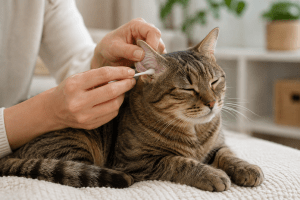
Grooming help. Gently brush a cat that can no longer groom thoroughly, watching for mats, and check claws, which may need more frequent trimming as they thicken and retract less.
Monitor weight and intake. Track weight, appetite, thirst, and litter-box habits. Note changes — they’re often the first sign of a treatable condition.
Keep them engaged. Gentle play and enrichment keep senior cats mentally and physically active, which supports both body and mind. Adjust intensity to their ability.
Maintain routine. Senior cats lean heavily on predictability. Consistent feeding times and a stable environment reduce stress.
How often do senior cats need the vet?
The single most impactful change you can make for an aging cat is increasing vet frequency. The general guidance:
At least annual checkups, with the vet often recommending baseline bloodwork to establish “normal” values for your individual cat — invaluable for spotting changes later.
Twice-yearly checkups are widely recommended. Regular bloodwork, urine tests, blood pressure, and weight monitoring catch the common senior conditions early.
Twice-yearly or more, depending on health. Cats managing chronic conditions may need more frequent monitoring to keep treatment on track.
Why twice a year rather than once? Because cats age faster than we do — six cat-months is roughly two human years at this stage. A lot can change in that window, and the whole point of senior care is catching those changes early. Knowing your cat’s precise age helps you and your vet decide on the right schedule; the cat age calculator confirms which stage you’re planning for.
It’s also worth understanding what these visits actually involve, so the recommendation doesn’t feel like an arbitrary expense. A senior wellness check typically goes beyond the quick once-over a young cat gets. Your vet will weigh the cat and compare against past records to catch gradual loss, examine the mouth for dental disease, feel the abdomen and assess body condition by hand, and often recommend bloodwork and a urine test to screen kidney function, thyroid levels, and other markers. Blood pressure may be checked too, since hypertension is common and often silent in older cats. The value isn’t in any single visit but in the trend line: by seeing the cat twice a year and testing routinely, the vet builds a picture of what’s changing and how fast, which is what makes early intervention possible. A single annual snapshot can miss a fast-moving change entirely; two snapshots a year, against a baseline established in the mature years, rarely do.
Feeding a senior cat
Nutrition needs shift in the senior years, though the right diet depends heavily on the individual cat and any health conditions. A few general principles — always run specifics past your vet, especially if your cat has a diagnosed condition.
Watch for weight loss, not just weight gain. While mature cats often need calorie control to avoid middle-age weight gain, many true seniors face the opposite problem: they lose muscle and weight, sometimes due to underlying disease or reduced ability to absorb nutrients. Unexplained weight loss in an older cat is a vet visit, not a diet to celebrate.
Prioritise quality protein. Senior cats generally still need plenty of good-quality, digestible protein to maintain muscle mass, unless a specific condition requires restriction. The old idea that all older cats need low-protein diets has been largely revised.
Keep them hydrated. Many senior conditions involve the kidneys, and good hydration helps. Wet food, water fountains, and multiple water stations encourage drinking.
Make eating easy. Dental pain can make eating uncomfortable. Softer food, or addressing dental disease, can restore a flagging appetite. Raised bowls may help cats with arthritis or other discomfort.
Adjust for conditions. Cats with kidney disease, diabetes, hyperthyroidism, or other issues often need specific therapeutic diets prescribed by a vet. This is where general advice ends and individualised veterinary nutrition begins.
Disordered appetite is a warning sign. Sudden changes in how much a senior cat eats or drinks — in either direction — are among the most important early signals of illness. Track them and report them rather than waiting.
A practical tip that ties the diet advice together: the easiest way to catch a senior cat’s nutritional problems early is to actually quantify intake rather than eyeballing it. In a single-cat home, knowing roughly how much your cat eats and drinks each day turns vague impressions (“she seems off her food”) into concrete data your vet can act on. In multi-cat homes this is harder, since cats share bowls, but even there you can watch for a cat lingering at the water bowl far more than usual, or hanging back at mealtimes. Because so many senior conditions announce themselves first through appetite and thirst, paying attention to these everyday details often gives you earlier warning than waiting for the cat to look unwell — which, given how well cats hide illness, may be far too late. Diet, in other words, isn’t just about what you put in the bowl; it’s a monitoring tool in its own right.
Helping your cat live a long, comfortable life
Reaching the senior and geriatric stages in good shape isn’t luck — it’s the cumulative result of choices made across a cat’s life. The biggest levers:
The single most powerful longevity factor. Indoor cats avoid the traffic, predators, fights, and diseases that cut outdoor lives short. A catio or supervised outdoor time offers enrichment with safety.
Obesity drives diabetes, joint disease, and a shorter life. Keeping a cat lean across its life is one of the most protective things you can do.
Vaccinations, parasite control, dental care, and — crucially — increasing checkup frequency with age catch problems while they’re still manageable.
Dental disease is common, painful, and linked to broader health problems. Regular dental care protects comfort and overall wellbeing.
Mental stimulation, play, and a stable, low-stress home support both physical and cognitive health into old age.
None of these require heroics — they’re steady, ordinary habits. Together they’re why so many cats now comfortably reach their late teens and beyond. And it starts with knowing where your cat is on the timeline, so you can match care to stage.
What the senior years actually look like, year by year
The thresholds tell you when stages begin; this section gives you the texture of living through them. Following a cat from middle age into advanced old age makes the abstract brackets concrete — and shows how care evolves alongside the cat.
The mature years (7–10): the quiet turn
Nothing dramatic announces this stage, which is exactly its trap. Your cat is still healthy, still playful in bursts, still very much herself — just a touch calmer, a little more inclined to nap in the sun than to tear around at midnight. Because she seems fine, it’s easy to coast. But this is the ideal window to establish a baseline: a set of “normal” bloodwork values, a recorded healthy weight, a dental check. These become the yardstick against which every later change is measured. A mature cat who gets a baseline at eight is far easier to help at twelve, because her vet knows what her normal looks like.
The early senior years (11–13): accommodation begins
Now the small adaptations start. You might notice she pauses before a jump she used to make without thinking, or picks the ottoman instead of the bookshelf. Her sleep deepens and lengthens. Maybe she’s a little less fastidious about grooming the base of her spine. This is the stage to start adapting the home — a litter box with a lower side, a step up to a favourite spot, a warm soft bed in a draught-free corner. It’s also when twice-yearly vet visits earn their keep, catching the first whispers of conditions like kidney disease while they’re most manageable. Care here is about meeting the cat halfway: noticing what’s becoming harder and quietly making it easier.
The late senior and geriatric years (14+): comfort first
By now your cat is genuinely elderly — the equivalent of a human in their seventies and beyond. The day reorganises around rest and warmth. She may need help grooming, more frequent claw trims, softer food, and patient routine. Some geriatric cats develop chronic conditions to manage; others simply slow down gracefully. The care priority shifts decisively toward comfort and dignity: easy access to everything she needs, gentle attention to changes, and close partnership with your vet. This is also when the bond often deepens — many owners describe their geriatric cats as more affectionate and companionable than ever. Caring well here is one of the quiet privileges of sharing your life with a cat. Knowing precisely how old she is, via the cat age calculator, helps you anticipate each shift rather than be caught off guard by it.
Related Waldev guides & tools
Senior care connects to the rest of a cat’s life story. Explore the full picture:
How to tell a cat’s age
Estimate an unknown age from teeth, eyes, coat, and behaviour — including senior signs.
Cat years to human years
See exactly how elderly your senior cat is in human-equivalent terms.
When do cats stop growing?
The other end of the timeline — how cats reach their adult size in the first place.
Heat, pregnancy & spaying by age
Reproductive milestones and why spaying supports long-term health.
External reference
The joint veterinary guidelines that define the mature, senior, and geriatric brackets used in this guide. Search “AAFP feline life stage guidelines.”
Cornell publishes detailed, owner-friendly resources on senior cat health, common age-related conditions, and care — a trustworthy place to dig deeper.
Frequently asked questions
At what age is a cat considered a senior?
Most veterinary guidelines consider a cat senior from around 11 years. The years from about 7 to 10 are called “mature” (feline middle age), 11 to 14 is “senior,” and 15 and beyond is “geriatric.” Some sources apply the senior label a little earlier, but around 11 is the widely used threshold.
Is a 7-year-old cat a senior?
A 7-year-old cat is usually classed as “mature” rather than senior — the equivalent of a human in their mid-forties. It’s the start of middle age, when baseline health screening becomes valuable, but true senior status typically begins around 11. Some looser definitions do call cats senior from 7.
How long do cats live on average?
Indoor cats commonly live around 12 to 18 years, and many now reach their late teens or early twenties. Outdoor and free-roaming cats have substantially shorter average lifespans due to traffic, predators, and disease. Lifestyle is the dominant factor, with indoor living strongly favouring longevity.
What are the first signs a cat is getting old?
Early signs include more sleeping, less vigorous play, hesitation before jumping, a slightly cloudy bluish tint to the eyes, greying around the muzzle, and a coarser coat. Medical signs like increased thirst, urination, or gradual weight loss can also appear and warrant a vet check rather than being dismissed as age.
How often should a senior cat see the vet?
Twice a year is widely recommended for senior cats (11+), versus annually for younger adults. Because cats age faster than humans, six months represents a significant span, and twice-yearly visits with bloodwork catch common senior conditions like kidney disease and hyperthyroidism early, when they’re most manageable.
Do senior cats need special food?
Often, but it depends on the individual. Many seniors benefit from quality, digestible protein to maintain muscle, good hydration, and easy-to-eat textures. Cats with conditions like kidney disease or diabetes may need specific therapeutic diets prescribed by a vet. Unexplained weight loss in a senior should always be investigated.
Why is my old cat meowing more at night?
Increased night-time vocalising is common in older cats and can stem from cognitive decline, reduced hearing or sight, high blood pressure, hyperthyroidism, or simply disorientation in the dark. Because several treatable conditions can cause it, it’s worth a vet visit rather than assuming it’s just age.
Can senior cats still play and be active?
Yes, and they should. Gentle play and enrichment keep senior cats mentally sharp and physically mobile, supporting joint health and wellbeing. Adjust the intensity to their ability — shorter sessions, ground-level toys, and games that don’t demand big jumps — but keep them engaged.
How do I make my home easier for an aging cat?
Provide a litter box with a low entry, place food, water, and beds where no jumping is needed (or add ramps and steps), offer warm soft bedding for sore joints, and keep the environment and routine stable. Small accessibility changes make a big difference to a senior cat’s comfort.
Find out exactly which stage your cat is in
So when is a cat a senior? Mature from about 7, senior from about 11, geriatric from 15 — and what matters most is matching your care to the stage. The senior label isn’t about your cat suddenly being old; it’s your cue to shift toward proactive vet care, easy-access comfort, and close monitoring, exactly when those changes do the most good.
The first step is knowing precisely where your cat sits. The free Waldev cat age calculator tells you the life stage and human-equivalent age in seconds, so you can plan the right care — whether your cat is just entering its mature years or well into a comfortable old age. The guide maps the stages; the calculator tells you which one you’re in.
Open the cat age calculator → to see if your cat is mature, senior, or geriatric.
Disclaimer: This article is for general educational purposes and is not veterinary advice. Life-stage ages, lifespans, and health information are illustrative and general; individual cats vary. Waldev is not affiliated with any veterinary organisation or brand mentioned. Always consult a licensed veterinarian for diagnosis, screening, and care of an aging cat.