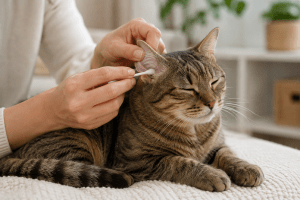
No, eucalyptus is not safe for cats, in either plant or oil form. That single answer opens a bigger and less obvious problem: cats are unusually vulnerable to essential oils in general, far more than dogs or people, and the scented products filling modern homes can quietly harm them. This guide explains why, sorts the oils and scents owners ask about into toxic and safer, and shows how exposure happens so you can keep your home pleasant without putting your cat at risk.
Start with eucalyptus itself. The ASPCA lists the eucalyptus plant as toxic to cats, and the essential oil is worse, because concentrated oils carry a much higher dose of the compounds a cat cannot handle. A cat exposed to eucalyptus can drool, vomit, become weak or wobbly, and in serious cases have trouble breathing. That applies to the plant, the oil, and eucalyptus-scented products like some chest rubs, cleaners, laundry scents, and candles. So the honest answer to “is eucalyptus safe for cats” is a clear no, and it is a useful gateway into the wider truth that most potent essential oils belong in the same category.
The reason this matters so much for cats comes down to their biology, which we will get into, but the practical takeaway is simple. Essential oils that are marketed as natural and healthy for people can be genuinely dangerous for a cat, and the danger is easy to miss because it often comes through the air from a diffuser or off the fur after grooming, not from a cat drinking a bottle. If you use essential oils, diffusers, or heavily scented products, the rest of this guide is worth reading before your cat pays for a fragrance you did not know was risky.
Run any oil, plant, or product through the Cat Food & Toxin Safety Checker for an instant Safe, Caution, or Toxic verdict before you use it near your cat.
What this guide covers
Why cats are so sensitive to essential oils
Understanding why cats react so badly to essential oils explains every verdict that follows, and it helps you judge oils not on this page. There are three reasons that stack together.
The first is the cat’s liver. Cats are missing much of an enzyme system called glucuronidation, which other mammals use to break down and clear certain chemicals, including many of the compounds in essential oils such as phenols and terpenes. In a person or a dog, those compounds are processed and excreted. In a cat, they linger and can build up to harmful levels, so a dose that is trivial for us can accumulate dangerously in a cat. The second reason is grooming. Any oil that lands on a cat’s coat, from a diffuser mist, a spill, or a well-meaning dab, does not just sit there. The cat licks it off and swallows it, turning skin exposure into an internal dose. The third reason is the cat’s airway. Cats have sensitive respiratory systems, and the fine droplets a diffuser puts into the air can irritate the lungs directly, which is a particular problem for a cat with asthma. Put those three together and you have an animal that can be poisoned by an essential oil through its skin, its mouth, or the air, from amounts that would never trouble a human.
There is a fourth factor that makes the difference starker than it sounds: size and metabolism. A cat weighs a small fraction of what an adult human does, so even setting aside the enzyme problem, the same airborne amount of an oil is a far bigger dose relative to a cat’s body. And unlike a human who can walk out of a scented room when it becomes too much, a cat may stay in its favorite spot, or be shut in a room with a diffuser, unable to remove itself from the exposure. So the cat gets a proportionally larger dose, cannot clear it, grooms more of it in, and often cannot escape it, four things compounding at once. That combination is why vets treat essential oils around cats with a seriousness that surprises owners who use the same products safely themselves.
The core rule: a scent being “natural” or “good for people” tells you nothing about whether it is safe for a cat. Cats process these compounds differently, so judge every oil on its own, and when unsure, keep it away.
Scents, asthma, and sensitive cats
One group of cats is at much higher risk from scented products, and it is worth flagging because the owners often do not know their cat is affected. Feline asthma is more common than people realize, and airborne irritants are a classic trigger.
A cat with asthma or any airway sensitivity can react to diffuser mist, candle soot, incense smoke, aerosol sprays, and strong fragrances the way a person with asthma reacts to smoke, with coughing, wheezing, and difficulty breathing. The tricky part is that the early signs are easy to mistake for something else: an occasional cough gets read as a hairball, and mild wheezing goes unnoticed for months. If your cat coughs in a crouched position with its neck extended, wheezes, or seems to breathe with extra effort, those are possible asthma signs, and a scented home could be quietly making it worse each day. For these cats, the ASPCA advice against diffusers is not a soft suggestion, it is a real caution, and the kindest move is a fragrance-free home. If you notice these signs, it is worth both cutting the scents and getting the cat checked, since feline asthma is manageable once diagnosed. The guide on why cats cough and wheeze goes into the signs in more detail.
Toxic vs. safer scents at a glance
Here is the fast reference. “Toxic” oils should be kept away from cats entirely. “Caution” covers the culinary herbs that are low risk in tiny plant amounts but whose concentrated oils are not, and situations that depend on how a scent is used. “Safer” covers the cat-friendly options.
| Scent / oil | Verdict | Why |
|---|---|---|
| Eucalyptus | Toxic | Plant and oil toxic; drooling, weakness, breathing trouble |
| Peppermint & mint oil | Toxic | Essential oil is toxic to cats |
| Tea tree (melaleuca) | Toxic | Even a few drops of concentrate can harm a cat |
| Citrus oils | Toxic | Concentrated citrus oil is toxic to cats |
| Cinnamon oil | Toxic | Essential oil is toxic; the spice is milder |
| Wintergreen | Toxic | Contains salicylate; toxic to cats |
| Pine oil | Toxic | Toxic to cats; also in some cleaners |
| Pennyroyal | Toxic | Highly toxic to cats |
| Ylang ylang | Toxic | Toxic essential oil |
| Clove | Toxic | Phenol-rich; toxic to cats |
| Chamomile | Toxic | Contact dermatitis, vomiting, diarrhea |
| Citronella | Toxic | Toxic plant and oil; in some insect repellents |
| Lavender (oil) | Toxic | Oil is toxic; the plant is milder |
| Frankincense | Caution | Not proven safe; keep away to be safe |
| Thyme / sage (herb) | Caution | Tiny culinary amounts low risk; oils are not |
| Catnip, silver vine, valerian | Safer | Cat-safe attractant plants |
The essential oils to keep away from cats
The list of oils toxic to cats is long, and rather than memorize every one, it is easier to treat concentrated essential oils as unsafe by default. Still, some deserve a specific mention because they are so common in homes.
Eucalyptus, covered above, is in many chest rubs, decongestant products, and cleaners. Peppermint and other mint oils are toxic and turn up in everything from diffuser blends to “natural” pest sprays. Tea tree oil, also called melaleuca, is one of the most dangerous, and the ASPCA notes that concentrated tea tree oil can cause problems from as little as seven or eight drops, which is why tea tree products marketed for skin should never be used on a cat. Even the diluted tea tree products sold for human skincare are too much for a cat that grooms the spot they touch. Citrus oils, the concentrated form rather than the fruit, are toxic, as is cinnamon oil despite the spice being milder. Wintergreen contains a salicylate related to aspirin and is toxic. Pine oil is toxic and doubles as a cleaner ingredient, which is why phenol and pine cleaners are a hazard covered in the guide on dangerous household products. Pennyroyal is highly toxic, and ylang ylang, clove, chamomile, and citronella all belong on the keep-away list too. Lavender oil is toxic, even though the lavender plant is milder, a distinction worth understanding.
It is worth understanding why “just a few drops” can be enough, because it runs against the intuition that a small amount of anything natural must be harmless. Essential oils are extraordinarily concentrated: it can take dozens of pounds of plant material to make a single small bottle of oil, so a drop of oil delivers a dose of the active compounds that a cat would never encounter from the living plant. Combine that concentration with a cat’s inability to clear the compounds, and the margin between “a pleasant scent to a human” and “a toxic dose to a cat” is much narrower than it looks. This is why the guidance for cats is so much stricter than for people or even dogs, and why “I only used a little” is not the reassurance it sounds like. A little of something a thousand times more concentrated than the plant, applied to an animal that cannot break it down, is not a little at all.
Essential oils, fleas, and skin: a dangerous trend
One specific use of essential oils causes more cat poisonings than it should, and it deserves calling out directly: using them on a cat’s skin or coat, usually as a “natural” flea remedy. It is a well-meaning idea and a genuinely risky one.
Tea tree oil is the worst offender here. Because it has a reputation as a natural antiseptic and insect repellent, people dab it on a cat for fleas, hot spots, or skin issues, and it is one of the most toxic oils for cats, dangerous from just a handful of drops. Applying it directly to the skin is the most concentrated exposure possible, and cats have died from it. The same goes for peppermint, eucalyptus, and citronella marketed in “natural” flea sprays and shampoos: putting a cat-toxic oil onto the animal you are trying to help is exactly backward. If your cat has fleas, use a flea product made and labeled for cats, from a vet or a reputable brand, not an essential oil blend. And never use a dog flea product on a cat, since many contain permethrin, which is separately deadly to cats, a point covered in the guide on dangerous household products. There is no safe DIY essential oil flea treatment for cats, however natural it sounds.
Never put essential oils on a cat’s skin. Direct application is the highest-dose exposure there is, and the oil is groomed off and swallowed on top of absorbing through the skin. This includes “diluted” blends and natural flea remedies. For fleas, skin problems, or wounds, use products made for cats and ask your vet.
The same caution extends to a few adjacent products people reach for. Human vapor rubs and chest balms are built on eucalyptus, menthol, and camphor, all problematic for cats, so they should never be applied to a cat or left where a cat could lick them, and a cat sleeping on a person who has just applied one can be exposed too. “Calming” pet sprays and wipes are usually fine when they are made for cats and use cat-safe ingredients like pheromones, but read the label, because some pet products still slip in lavender or chamomile. The rule holds across all of them: for a cat, a scent being sold as natural, calming, or even pet-related is not a guarantee of safety, and the label is worth the ten seconds it takes to read.
Plant vs. oil vs. culinary herb
A lot of the confusion in this topic comes from treating a plant, its essential oil, and its culinary form as the same thing. They are not, and the difference is all about concentration.
Take mint. The peppermint essential oil is toxic to cats, a concentrated extract of the plant’s compounds. The mint plant growing in a pot is milder, and while it can cause mild stomach upset if a cat chews a lot, it is nowhere near as dangerous as the oil. The same pattern holds for lavender, where the oil is toxic but the plant is a lower risk, and for the culinary herbs thyme and sage, where a tiny amount of the fresh or dried herb on food is low risk but the essential oils, rich in phenols and thujone, are not. The rule to carry away is that concentration is the whole story: the essential oil is the plant’s chemistry distilled many times over, so an oil can be dangerous while a leaf of the same plant is merely unremarkable. When someone asks whether thyme or sage is safe for cats, the honest answer is “the herb in a pinch, probably; the essential oil, no.”
Frankincense sits in an awkward middle spot that comes up often. It is sometimes described as one of the “safer” essential oils and gets recommended in DIY pet blends, but the truth is that its safety for cats is not well established, and given how badly cats handle oils in general, “not proven dangerous” is not the same as “proven safe.” The responsible call is to treat frankincense like the others and keep it away from cats rather than trust a reputation built mostly on human use. The same skepticism applies to any oil marketed as pet-safe: unless a vet has specifically cleared it for your cat, the default should be caution, because the downside of being wrong is a poisoning and the downside of skipping it is nothing at all.
The plant versions of these scents follow the toxic-plant lists. See houseplants toxic to cats and flowers toxic to cats for which plants to keep away, and oils for cats for cooking oils like coconut and olive.
Do cats like the smell of mint or lavender?
People often ask whether cats are drawn to these scents, usually after seeing a cat react to one, and the answer is a useful mix that clears up a common myth.
The famous cat-and-mint connection is really about catnip, not culinary mint. Catnip and its relative catmint are members of the mint family, and they contain a compound, nepetalactone, that produces the rolling, rubbing, blissed-out reaction in cats that respond to it. That reaction is to catnip specifically, and it is safe. Ordinary kitchen mint, and peppermint oil, do not produce that happy response, and the oil is outright toxic, so a cat sniffing your mint plant is not getting a catnip high. Lavender is almost the opposite: many cats actively dislike the smell of lavender and will avoid it, which is why lavender sometimes appears in cat deterrents, though the concentrated oil remains toxic regardless of whether a cat likes the scent. Citrus works the same way as a deterrent, since most cats dislike it, but the citrus essential oil is toxic, so the fruit peel a cat avoids and the concentrated oil that could harm it are two very different things. The general picture is that a cat’s attraction to a scent tells you nothing about its safety. Catnip is safe and attractive, lavender oil is toxic and off-putting, and peppermint oil is toxic whether the cat likes it or not. If you want scents cats genuinely enjoy safely, the attractant herbs are the place to look, which we come to below.
This is a good moment to retire a stubborn myth: that if a cat is drawn to a scent, the scent must be safe, and if it avoids one, the scent must be the dangerous one. The reality is the reverse often enough to be useless as a guide. Catnip is safe and cats love it, lavender oil is toxic and cats mostly hate it, but peppermint oil is toxic whether a given cat is curious about it or not. A cat’s nose is tuned by instinct and individual quirk, not by a chemistry lesson in what its liver can process, so let the toxicity lists, not the cat’s reaction, decide what you keep in the house.
How cats actually get exposed: diffusers, candles, and sprays
The reason essential oil poisoning catches owners off guard is that the exposure rarely looks like poisoning. A cat almost never drinks a bottle of oil. Instead it meets the oil in three sneakier ways, and knowing them helps you close the gaps.
Diffusers are the big one. A passive or nebulizing diffuser that puts actual oil droplets into the air is the higher risk, because that fine mist settles on every surface in the room, including the cat’s fur, which the cat then grooms off and swallows. A cat does not have to go near the diffuser to be dosed; sitting across the room, or walking through hours later, is enough, because the residue has already coated its coat and the surfaces it lies on. The ASPCA’s guidance is that a brief use of a water-based diffuser in a well-ventilated room the cat cannot access is lower risk, but that they should be avoided entirely for pets with respiratory problems, and of course never used with oils toxic to cats. In practice, since so many popular oils are on the toxic list, that leaves very little a diffuser can safely put into a cat’s air, which is why many vets simply suggest going without. Scented candles are a lesser but real concern, mostly through the oils used to scent them, so unscented or cat-safe-scented candles are the better choice, with good ventilation, and a candle burned in a shared room is milder than a diffuser running for hours in the same space. Cleaning and pest sprays are the third route, since many “natural” products are built on the very oils that are toxic to cats, and a cat walks across treated surfaces and grooms them off its paws. The thread through all three is that a cat gets exposed through the air and through grooming far more often than through eating, so keeping oils out of shared air and off surfaces the cat touches is what actually protects it. If your cat coughs, wheezes, or drools when a diffuser or spray is in use, treat that as a sign to stop, and see the guide on why cats cough and wheeze.
What scents are safe for cats?
If you are now wondering whether any scent is safe, the honest and slightly unsatisfying answer is that the safest home for a cat is a lightly scented or unscented one, which is a genuine shift for anyone used to keeping a home smelling a certain way. Cats do not need fragrance, and their noses are far more sensitive than ours, so what reads as a pleasant background scent to us can be an overwhelming, inescapable cloud to them. That said, there are cat-friendly options.
The scents cats genuinely enjoy and can have safely are the attractant herbs: catnip, silver vine, and valerian, with silver vine often working even on cats that shrug at catnip. These are used deliberately as cat enrichment, in toys and sprinkles, and they are safe in those forms, giving a scent-loving cat something to enjoy that is actually meant for it. A catnip toy or a sprinkle of dried silver vine is the right way to indulge a cat that clearly likes scents, rather than exposing it to a fragrance made for humans. For your own space, if you want some fragrance, keep it mild and physically separated from the cat: a scented product in a room the cat does not use, with ventilation, is far safer than a diffuser running in the cat’s favorite napping spot. Choose products scented with cat-safe ingredients rather than the toxic oils, err toward less, and give the cat scent-free zones it can retreat to, above all the room where it sleeps and eats, which should stay fragrance-free so the cat always has somewhere to breathe easy. The goal is not a sterile home, it is a home where the cat is not marinating in compounds its liver cannot clear. When you are unsure whether a particular scented product is safe, default to keeping it away from the cat, because with essential oils the cost of being wrong is high and the cost of skipping a fragrance is nothing. That lopsided trade-off is the single most useful way to make these decisions: when the downside of caution is only a slightly less fragrant room, caution is almost always the right call.
If you already use essential oils at home
Plenty of cat owners read this after already keeping a diffuser going or using scented products for years without an obvious problem, and wonder if they need to panic. You do not need to panic, but a few sensible changes are worth making.
The absence of an obvious reaction does not mean there has been no effect, because low-level exposure can cause subtle, slow issues rather than a dramatic collapse, and cats are experts at hiding when they feel unwell. So the practical move is to reduce the exposure rather than assume it has been fine. Stop diffusing oils that are toxic to cats, and if you want to keep using a diffuser at all, move it to a room the cat never enters, use it briefly, ventilate well, and stick to the least risky setups. Store all essential oil bottles sealed and well out of reach, since a knocked-over bottle is a concentrated spill a cat can walk through. Switch “natural” cleaners and pest sprays that are oil-based for cat-safe alternatives, and check the labels on candles and air fresheners for the toxic oils. None of this requires a scent-free monastery, just moving the fragrance away from the cat and dropping the specifically toxic oils. If your cat has shown any of the symptoms below during that time, especially coughing or drooling, mention the oil use to your vet, since it is easy to overlook as a cause.
It also helps to think about visitors and other households, since your careful choices only cover your own home. A cat can be exposed at a boarding facility, a groomer, a pet sitter’s house, or a relative’s home where diffusers run freely, so if your cat travels or is cared for elsewhere, it is worth a quick word with whoever is looking after it. Most people simply have not heard that cats and essential oils are a bad mix, and a friendly heads-up prevents a well-meaning host from diffusing lavender in the room where your cat is staying. The information is the protective part here, because almost nobody sets out to harm a cat with a scent; they just do not know.
Signs of essential oil poisoning, and what to do
Because exposure is often invisible, knowing the symptoms is what lets you catch a problem early. Signs can appear within hours of exposure through the air, the skin, or the mouth.
Drooling and pawing at the mouth. A common early sign, especially if a cat has groomed oil off its fur. Our guide on why cats drool covers how to tell irritation from other causes.
Vomiting, tremors, or wobbliness. These point to the toxin affecting the nervous system and warrant a prompt vet call.
Breathing trouble, coughing, or wheezing. A red flag, especially with airborne exposure from a diffuser, and most dangerous in a cat with asthma.
Weakness, lethargy, or low body temperature. Signs of a more serious reaction; do not wait these out.
Redness or irritation on the skin. Where oil contacted the coat or paws, sometimes with the cat over-grooming that spot.
If you suspect essential oil exposure, act quickly. Move the cat to fresh air, and if oil is on its coat, wash it off gently with a mild dish soap and water so the cat cannot groom in more, keeping it warm afterward, since a wet cat loses heat fast and some oil reactions lower body temperature already. Do not try to make the cat vomit. Call your vet or the ASPCA Animal Poison Control Center at (888) 426-4435, and bring the product or its label so they know exactly which oil is involved, since that guides treatment, and note when the exposure happened and how, whether it was on the skin, from a diffuser, or swallowed. With the most toxic oils, like tea tree and pennyroyal, treat any real exposure as urgent rather than waiting for symptoms to worsen.
Frequently asked questions
Is eucalyptus safe for cats?
No. Eucalyptus is toxic to cats in both plant and essential oil form. The ASPCA lists the plant as toxic, and the oil is worse because cats cannot process the compounds in essential oils well. Exposure can cause drooling, vomiting, weakness, and breathing trouble. Keep eucalyptus plants, oils, and eucalyptus-scented products away from cats, and do not diffuse it in a room your cat uses.
Which essential oils are toxic to cats?
Many, including eucalyptus, peppermint and other mint oils, tea tree, citrus oils, cinnamon, wintergreen, pine, pennyroyal, ylang ylang, clove, chamomile, citronella, and lavender oil. Cats lack a liver enzyme needed to break down the compounds in these oils, so they can build up even from skin contact or heavy diffusing. Treat concentrated essential oils as unsafe around cats.
Why are cats so sensitive to essential oils?
Cats are missing much of an enzyme system called glucuronidation that other animals use to clear certain chemicals, including many compounds in essential oils, so those compounds build up rather than being processed. Cats also groom oils off their fur and swallow them, and their airways are very sensitive, so exposure can happen through the skin, the mouth, or the air.
Are diffusers safe to use around cats?
Passive diffusers that put oil droplets into the air are the bigger risk, because the mist settles on a cat’s fur and is then groomed off. A brief use of a water-based diffuser in a well-ventilated room the cat can leave is lower risk, but avoid diffusers entirely if your cat has any breathing problem, and never use them with oils toxic to cats. If your cat coughs or drools near a diffuser, turn it off.
Do cats like the smell of mint or lavender?
The cat-and-mint link is really about catnip, a mint relative that contains nepetalactone and is safe. Ordinary mint and peppermint oil do not produce that happy reaction, and the oil is toxic. Many cats dislike lavender and avoid it, but lavender oil is toxic regardless. A cat liking or disliking a scent tells you nothing about whether it is safe.
Is chamomile or citronella safe for cats?
No, both are toxic to cats. Chamomile can cause contact dermatitis, vomiting, and diarrhea, and citronella, common in insect repellents and candles, is toxic as both plant and oil. Neither should be used on or around a cat, and citronella-based bug products are not a safe way to protect a cat from insects.
What scents are safe for cats?
The safest home is lightly scented or unscented, since even natural scents can bother a cat’s sensitive nose. Cat-friendly scents cats can enjoy safely include catnip, silver vine, and valerian, which are used as cat attractants. If you want fragrance for yourself, keep it mild, in a ventilated room the cat can leave, and avoid the toxic essential oils entirely.
The quick version
Is eucalyptus safe for cats? No, the plant and especially the oil are toxic. Cats are far more sensitive to essential oils than we are because their livers cannot clear the compounds, they groom oils off their fur, and their airways are delicate. Keep away eucalyptus, peppermint and mint oils, tea tree, citrus, cinnamon, wintergreen, pine, pennyroyal, ylang ylang, clove, chamomile, citronella, and lavender oil. Culinary thyme and sage are low risk as a pinch of herb but not as oils. Diffusers and scented sprays are the sneaky exposure routes, so the safest home is lightly scented or unscented, with catnip and silver vine as the cat-friendly scents.
When you are unsure about an oil or scent, don’t guess. Run it through the Cat Food & Toxin Safety Checker, and see the guides on toxic houseplants, dangerous household products, and toxic flowers. Explore more free tools on the Waldev homepage.
Safety disclaimer: This guide is for general education and draws on the ASPCA and reputable veterinary sources. It is not a substitute for professional veterinary advice, and essential oil toxicity varies with the oil, concentration, and your cat’s health. If you suspect your cat has been exposed to a toxic oil, contact your veterinarian or the ASPCA Animal Poison Control Center at (888) 426-4435 immediately.
The ASPCA explains the risks of essential oils and diffusers around pets. ASPCA on essential oils & pets →
The ASPCA Animal Poison Control Center is available 24/7 for suspected poisonings. Animal Poison Control →