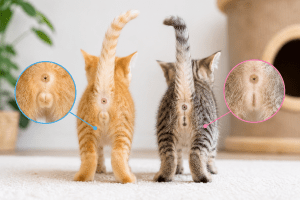
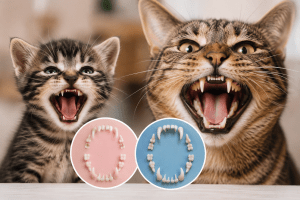
Do cats and dogs get lice? Yes, both do, but the reassuring twist is that lice are strictly species-specific: a cat’s lice cannot spread to a dog, and neither cat nor dog lice can live on people. So the family cat cannot catch your children’s head lice, and you cannot catch lice from your cat. This guide explains cat lice, their signs and treatment, and why the crossover fear is unfounded. It then widens out to the parasites and infections that genuinely can pass from cats to people, worms, toxoplasmosis, ringworm, and a few others, and the simple hygiene that keeps that already low risk small.
Routine parasite prevention and good hygiene keep both your cat and family protected. Check when your cat is next due with the Cat Vaccination & Wellness Schedule, and browse more tools in the pet calculators hub.
On this page
Lice are species-specific
The single most important fact about lice, and the one that resolves most people’s worry, is that lice are highly host-specific, meaning each type of louse lives on one kind of animal and cannot survive on another.
Both cats and dogs, like people, can get lice, but they get different lice. There is a cat louse that lives on cats, a separate dog louse that lives on dogs, and human lice that live on people, and these are distinct, specialised parasites adapted to their particular host. A louse from one species cannot make a home on another, so the crossovers people worry about simply do not happen: a cat cannot catch lice from a dog or from a human, a dog cannot catch a cat’s lice, and, crucially, you and your children cannot catch lice from the cat, nor can the cat catch head lice from the family. This species-specificity is why, when there is an outbreak of head lice at a school, the household pets are neither at risk nor a source, and why a cat with cat lice poses no lice threat to the people it lives with. The concern with cat lice is confined entirely to other cats. Understanding this one principle takes away the fear that sits behind the question, and it means the rest of the discussion of cat lice is really about the cat’s own comfort and about not spreading them between cats, not about any danger to the human family.
The confusion is understandable, because head lice are such a familiar household worry that people naturally wonder whether the pets are part of the problem or part of the cure. They are neither. Lice have evolved alongside their hosts for so long that a cat louse depends on feline body temperature, hair structure, and skin to survive, and it simply cannot establish itself on a human scalp any more than a human head louse could live on a cat. So during a school head-lice outbreak there is no need to treat, isolate, or worry about the cat, and equally, a cat with cat lice will not seed a human infestation. Keeping the two problems mentally separate saves a great deal of needless anxiety and wasted effort.
Cat lice: who gets them
With the crossover fear set aside, it helps to know that cat lice are actually fairly uncommon in well-cared-for pets and tend to appear in particular circumstances, which tells you a lot about when to suspect them.
Lice are relatively rare in healthy, well-kept cats in good conditions, and they are seen far more often in cats that are in some way compromised: elderly cats, kittens, sick or debilitated cats, cats with a matted or neglected coat, and cats living in overcrowded or unhygienic conditions such as some strays or poorly kept colonies. Part of the reason is grooming. A healthy cat grooms itself thoroughly and removes many parasites in the process, so a cat that cannot groom properly, because it is old, unwell, overweight, arthritic, or has a matted coat, is more likely to build up a population of lice. Cat lice spend their whole life on the cat, gluing their eggs to the hairs, and they spread from cat to cat mainly by direct contact or by shared grooming tools and bedding. So finding lice on a cat is partly a sign of the lice themselves and partly a hint that the cat may be run-down or unable to care for its coat, which is worth noting, since an underlying reason a cat has stopped grooming, such as illness or arthritis, may need attention in its own right. In a well cat in a clean home, lice are an unlikely diagnosis, which is one reason a vet will consider fleas and other causes of itching first.
This link between lice and a run-down cat is genuinely useful, because it means finding lice is worth treating as two questions rather than one: how to clear the lice, and why this cat became vulnerable to them in the first place. An older cat that has stopped grooming its back end may have arthritis making it painful to twist round; an unkempt coat may reflect illness, dental pain that discourages grooming, or obesity that prevents it. Simply treating the lice without asking why they took hold risks missing an underlying problem that the cat would benefit from having addressed, so a lice diagnosis in an older or unwell cat is a reasonable prompt for a broader health check.
Signs of lice on a cat
Because cat lice are uncommon and their signs overlap with other skin problems, it helps to know what to look for, both the effects on the cat and the lice and eggs themselves.
A cat with lice typically shows itching and scratching, sometimes intense, along with a dry, scruffy, unkempt-looking coat and restlessness or irritability. Hair loss can develop, particularly around the ears, head and neck, shoulders, and the rump and base of the tail, and the constant scratching may cause scabs and skin irritation. Because adult cat lice are just large enough to see, roughly a couple of millimetres, pale, and moving slowly through the coat, you may spot them, though more often what catches the eye is their eggs, called nits: tiny, pale, oval specks firmly glued to individual hair shafts, which can look a little like dandruff but, unlike dandruff or debris, do not brush or flick off because they are cemented to the hair. A heavy infestation causes more marked skin damage, and in kittens or frail, small cats a large number of blood-feeding lice can even contribute to anaemia. Since these signs, itching, a poor coat, hair loss, and scabs, overlap with fleas, mites, allergies, and other conditions, they point to a parasite or skin problem in general rather than proving lice, so the sensible step on noticing them is a vet check, where lice can be confirmed by finding the lice or their glued-on eggs and distinguished from the more common fleas.
Treating cat lice
The good news is that cat lice are treatable and, because they live entirely on the cat, often more straightforward to clear than fleas, which hide in the environment, so treatment is usually effective when done properly.
Cat lice are treated with anti-parasitic products recommended by a vet, and conveniently, many modern flea treatments, particularly certain spot-on products, also kill lice, so a suitable parasite treatment often deals with both. Because lice glue their eggs to the hairs and those eggs take roughly two to three weeks to hatch, a single treatment may not catch the lice that emerge later from eggs, so treatment is usually repeated over that period to clear newly hatched lice, following the vet’s instructions on product and interval. Grooming out loose debris and eggs, and clipping away heavily matted, egg-laden fur, can help both the treatment and the cat’s comfort, and it is worth addressing any matting that contributed to the problem. All cats in the household should be treated, since cat lice pass between cats, and the cat’s bedding and any shared grooming tools should be cleaned to remove stray lice or eggs. Importantly, because cat lice cannot live on people or dogs, you do not need to treat the human family or the household dog for the cat’s lice, only the cats. A vet can confirm the diagnosis and recommend the most effective, cat-safe product, which matters because some over-the-counter treatments are ineffective and, critically, products made for dogs can be toxic to cats and must never be used on them. With appropriate treatment and attention to any underlying reason the cat was vulnerable, cat lice usually clear up well.
Lice, fleas, or mites?
Since an itchy, scruffy cat could have any of several parasites, and lice are among the least common, it helps to understand how lice compare with the fleas and mites that are more often to blame.
Fleas are by far the most common external parasite of cats and the usual cause of itching, and unlike lice they are fast-moving, jump, spend much of their life cycle in the environment rather than on the cat, and can affect any cat regardless of health. The tell-tale sign of fleas is flea dirt, dark specks that smear reddish-brown on damp paper, whereas lice leave pale eggs glued to hairs. Ear mites, another common problem, cause intense ear scratching and dark, coffee-ground debris in the ears specifically. Other mites can cause skin disease and itching in various patterns. Lice, by contrast, are relatively uncommon, tend to appear in run-down or poorly groomed cats, move slowly, and live entirely on the cat with their glued-on nits. This matters because the treatments and implications differ: fleas require treating the home as well as the cat and are linked to tapeworm, ear mites need ear treatment and spread readily between pets, and lice need repeat treatment but pose no risk to people. Because these parasites overlap in their signs but differ in management, and because fleas are so much more common, a vet examining an itchy cat will usually look for fleas and flea dirt first and confirm the actual culprit rather than assuming, which is why a proper diagnosis beats guessing at home. For most itchy cats, fleas rather than lice will be the answer.
This is not just an academic distinction, because getting the parasite right changes what you have to do. If the problem is fleas, treating only the cat and ignoring the home guarantees the infestation returns, and the cat should also be covered for tapeworm; if it is ear mites, all the pets usually need treating and the focus is the ears; if it really is lice, the home is not a reservoir and the people are not at risk, but repeat treatment and attention to the cat’s general condition matter. A confident diagnosis, which for these look-alike parasites usually means a vet actually finding the culprit rather than an owner guessing, is what lets you direct the effort where it will work instead of treating the wrong thing.
What people CAN catch from cats
Having established that lice do not cross from cats to people, it is worth turning to the parasites and infections that genuinely can, because a balanced picture means acknowledging the real, if low, zoonotic risks alongside the ones that do not exist.
A number of cat parasites and infections are zoonotic, meaning they can pass from cats to humans, though for a healthy person practising good hygiene the risk is generally low. The main ones worth knowing are: certain intestinal worms, particularly roundworms and hookworms, whose eggs or larvae pass in cat faeces and can infect people who accidentally ingest eggs or, for hookworms, through skin contact with contaminated soil; toxoplasmosis, a single-celled parasite spread through cat faeces that is usually harmless but is a particular concern in pregnancy; ringworm, which despite its name is a fungal skin infection, not a worm, and can spread from an infected cat to human skin; cat scratch disease, a bacterial infection transmitted through a scratch or bite from an infected cat; and, more rarely, some other infections. The reassuring theme across almost all of these is that the same simple precautions protect against them: keeping the cat on routine parasite control, cleaning the litter tray promptly, washing hands after handling the cat, litter, or soil, avoiding rough play that leads to scratches, and taking extra care during pregnancy and with young children. So while it is true that some things can pass from cats to people, unlike lice, the everyday reality is that a well-cared-for cat in a hygienic home poses only a small risk, and the measures that keep the cat healthy also keep the family safe.
Worms and toxoplasmosis
Two of the zoonotic concerns deserve a little more explanation because they are the ones people most often ask about, and understanding them makes the sensible precautions clear.
Intestinal worms, chiefly roundworms and hookworms, are the classic zoonotic cat parasite. Their eggs pass in the cat’s faeces and, after a period in the environment, can infect a person who accidentally swallows them, usually from contaminated hands, soil, or surfaces, or, for hookworm larvae, through the skin from contaminated soil. Human infection is uncommon and usually mild or preventable, and children are the most at-risk group because of how they play and their hygiene habits. Toxoplasmosis is caused by a different, single-celled parasite that cats can shed in their faeces. In most healthy people a toxoplasma infection causes few or no symptoms, but it is a genuine concern in pregnancy, because it can affect the unborn baby, which is why pregnant women are commonly advised to avoid handling cat litter, or to wear gloves and wash hands, and to have someone else clean the tray. It is worth knowing that people more often get toxoplasmosis from undercooked meat or unwashed produce than directly from a cat, and that prompt daily litter cleaning reduces risk, since the parasite in fresh faeces takes a day or more to become infective. For both worms and toxoplasmosis, the protective habits are the same and simple: routine deworming for the cat, prompt daily litter tray cleaning, thorough hand washing, and extra care in pregnancy, with a doctor guiding anyone pregnant or immunocompromised.
The toxoplasmosis-in-pregnancy point is worth stating carefully, because it causes a lot of fear and sometimes leads people to rehome a cat unnecessarily. That is almost never warranted. A pregnant woman can usually keep her cat safely by having someone else clean the litter tray, or by wearing gloves and washing hands if she must do it herself, cleaning the tray daily so faeces cannot become infective, keeping the cat indoors and off worktops, and avoiding undercooked meat and unwashed produce, which are actually the more common sources of infection. With these measures the risk becomes very small, and a doctor can give personalised guidance, so the arrival of a baby and the presence of a cat are not incompatible in the way the worry can suggest.
Ringworm and cat scratch disease
Two other zoonotic conditions round out the picture, and both are worth knowing because they spread differently from the faecal-route parasites and call for slightly different precautions.
Ringworm, despite the misleading name, is not a worm at all but a fungal infection of the skin, hair, and nails, and it is one of the more genuinely contagious things a cat can pass to people. An infected cat may have patches of hair loss, scaly or crusty skin, and broken hairs, often on the face, ears, or paws, though some cats, especially certain longhairs, can carry it with few signs. It spreads by contact with the infected cat or with fungal spores it sheds into the environment, and in people it causes the classic round, red, itchy skin patches. Ringworm is treatable in both cats and people but can be persistent and spreads within a household, so a cat with suspected ringworm needs veterinary diagnosis and treatment, along with hygiene measures to limit spread, and any affected people should see a doctor. Cat scratch disease is different again: it is a bacterial infection that a cat, often a kitten carrying the bacteria without being ill, can transmit to a person through a scratch or bite, sometimes causing a swollen, tender lump and lymph nodes and flu-like feelings in the person days later. It is usually mild and self-limiting in healthy people but can be more serious in those who are immunocompromised. Avoiding rough play that leads to scratches and bites, keeping the cat’s claws trimmed, controlling fleas (which are involved in spreading the bacteria between cats), and washing any scratch or bite promptly all reduce the risk, and a doctor should be consulted for a wound that becomes infected or a person who becomes unwell.
It is worth knowing that cat scratch disease is another reason flea control is about more than just the fleas, since the bacteria responsible are carried between cats by fleas, so a well-flea-controlled cat is less likely to be a carrier in the first place. It is also a reminder that teaching children to play gently with cats, using toys rather than hands, and never provoking a cat into scratching or biting, protects them from more than just a sore scratch. Most scratches heal without any trouble at all, but treating them with a quick wash and keeping an eye on any that become red, swollen, or painful is a sensible habit in any cat-owning home.
Indoor cats and parasites
A common assumption is that an indoor cat is free of all this, so it is worth correcting, because while indoor life lowers the risk, it does not remove the need for sensible parasite control.
Indoor cats are at lower risk of parasites than outdoor cats, but they are not immune, and it is a myth that staying inside makes parasite prevention unnecessary. Lice specifically are uncommon and, as noted, tend to affect debilitated or poorly kept cats rather than well-cared-for house cats, so a healthy indoor cat is unlikely to have them. But other parasites still find their way to indoor cats: worms can come from hunting a mouse or insect that gets inside, from swallowing a flea while grooming, or, for kittens, from their mother; fleas and their eggs are carried indoors on people’s clothing and shoes and on other pets; and toxoplasma and other risks are reduced but not eliminated. Because of these routes, vets still recommend routine parasite prevention for indoor cats, tailored to their lower but real risk rather than skipped altogether. The practical point for an owner is not to assume an indoor cat needs nothing, but to ask the vet for an appropriate prevention plan, and to take an itchy or unwell indoor cat just as seriously as an outdoor one rather than ruling out parasites on the grounds that it never goes out. Indoor living is a helpful reduction in exposure, not a guarantee of a parasite-free cat.
The mother-to-kitten route is the clearest example of why even a spotless indoor upbringing does not remove the need for parasite control, since kittens are so commonly born with or quickly develop roundworms passed from their mother regardless of where they live. This is why deworming a new kitten on the vet’s schedule is standard rather than optional, and why an indoor cat that came as a kitten, or that lives with a dog that goes outside, still benefits from a prevention plan. The right level of parasite control for an indoor cat is a conversation to have with the vet, who can weigh the cat’s actual lifestyle rather than applying a blanket rule, but the answer is rarely nothing at all.
Prevention and hygiene
Pulling the practical advice together, protecting both your cat and your family from parasites, whether the cat-only lice or the zoonotic ones, comes down to a consistent set of simple habits.
The foundation is keeping your cat on a routine parasite-control programme suited to its lifestyle, as advised by your vet, covering worms and fleas and, through good flea control, helping with tapeworm and reducing the flea link in cat scratch disease. Grooming and general care matter too, since a well-groomed, healthy cat is far less likely to harbour lice, and grooming lets you spot skin problems early; helping an elderly or arthritic cat that can no longer groom well is part of this. On the hygiene side, clean the litter tray promptly and regularly, ideally at least daily, since prompt removal of faeces prevents worm eggs and toxoplasma from becoming infective, and wash your hands after handling the litter tray, the cat, or soil. Encourage everyone in the household, especially children, to wash their hands after playing with the cat, cover children’s sandpits, wear gloves for gardening, and wash home-grown produce. Take extra care in pregnancy, with someone else ideally handling the litter, and treat scratches and bites by washing them promptly. Treat new kittens for worms on the vet’s schedule and have new pets checked. None of these steps is onerous, and together they keep both the cat healthy and the human family safe, which is why a hygienic, well-managed household living closely with a cat rarely runs into trouble with any of these parasites.
When to see the vet or doctor
Finally, it helps to know when these issues warrant professional attention, and importantly, whether that means the vet for the cat or a doctor for a person.
For the cat, see your vet if you notice signs of lice or other parasites, itching, a scruffy coat, hair loss, scabs, visible parasites or eggs, or ear trouble, both to confirm what it is, since fleas and other causes are more likely than lice, and to get effective, cat-safe treatment. Have a cat with suspected ringworm (patchy hair loss and scaly skin) seen promptly, since it is contagious and needs proper treatment, and treat as more urgent a heavily infested kitten or a frail cat showing weakness or pale gums, which can mean anaemia. It is also worth asking the vet to set up an appropriate parasite-prevention plan for your cat’s lifestyle. For people, remember that a doctor, not the vet, handles human health: if a member of the household develops worrying symptoms that might relate to a cat-borne infection, an infected-looking scratch, a spreading skin rash that could be ringworm, or illness after possible exposure, or if someone is pregnant or immunocompromised and has questions, that is a matter for a doctor. The two professionals cover the two sides, the vet keeping the cat’s parasites under control and a doctor addressing any human concern, and between them, together with the everyday prevention above, they keep a cat-owning household safe and well.
Frequently asked questions
Do cats and dogs get lice?
Yes, both cats and dogs can get lice, but the important point is that lice are highly species-specific. Cats get their own type of cat louse, dogs get dog lice, and humans get human lice, and these do not cross between species. So a cat cannot catch lice from a dog or from a person, a dog cannot catch a cat’s lice, and you cannot get lice from your cat or give your head lice to it. Cat lice are actually quite uncommon in well-kept pets and are seen more in cats that are elderly, unwell, matted, or living in poor conditions. When they do occur, they spread between cats by direct contact or shared grooming tools and are treatable.
Can cats get lice from humans, or humans from cats?
No. Cat lice and human lice are completely different, species-specific parasites, so there is no crossover in either direction. Your cat cannot catch head lice or body lice from you or your children, and you cannot catch lice from your cat. This is one of the clearest examples of how host-specific lice are: each louse species is adapted to live on one kind of animal and cannot survive on another. So if there is head lice going around at school, the family cat is not at risk and is not a source, and if a cat has cat lice, the human members of the household have nothing to fear from them. The concern with cat lice is limited to other cats.
What are the signs of lice on a cat?
Signs of lice on a cat include intense itching and scratching, a scruffy, dry, or unkempt coat, hair loss especially around the ears, neck, shoulders, and rump, and restlessness. Because adult lice are just visible, you may see them or, more often, their tiny pale eggs (nits) glued to the hair shafts, which look a bit like dandruff but do not brush off. A heavy infestation can cause skin irritation, scabs, and, in kittens or frail cats, even anaemia. Lice are more common in cats that are old, sick, or unable to groom well. Because the signs overlap with fleas and other skin problems, a vet can confirm lice and recommend the right treatment.
How are cat lice treated?
Cat lice are treated with anti-parasitic products recommended by a vet, and helpfully, many modern flea treatments (certain spot-ons) also kill lice, so treatment is often straightforward. Because lice eggs are glued to the hairs and take a couple of weeks to hatch, treatment usually needs repeating over that period to catch newly hatched lice, and grooming out or clipping heavily matted, egg-laden fur can help. All cats in the household should be treated, since cat lice spread between cats, and bedding and grooming tools should be cleaned. As cat lice do not affect people or dogs, you do not need to treat them, only the cats. A vet can confirm the diagnosis and advise the best product, since some over-the-counter treatments are ineffective or, if meant for dogs, unsafe for cats.
What diseases or parasites can people actually catch from cats?
While lice cannot pass from cats to people, some other cat parasites and infections are zoonotic (can spread to humans), though the risk is low with good hygiene. These include certain roundworms and hookworms, which spread via cat faeces; toxoplasmosis, a parasite of particular concern in pregnancy; ringworm, a fungal skin infection despite its name; cat scratch disease, a bacterial infection from scratches or bites; and, rarely, others. The practical protection is the same for almost all of them: keep your cat on routine parasite control, clean the litter tray promptly, wash your hands after handling the cat, litter, or soil, and take extra care in pregnancy and with young children. With these simple habits, the risk to a healthy household is small.
Do indoor cats get lice or parasites?
Indoor cats can still get parasites, though lice specifically are uncommon and usually seen in cats that are debilitated or in poor conditions rather than well-kept house cats. For other parasites, indoor cats are not fully protected: they can get worms from hunting the occasional mouse or insect, from fleas carried indoors, or, for kittens, from their mother, and fleas and their eggs come inside on people and other pets. Because of this, routine parasite prevention is still recommended for indoor cats, tailored by a vet to their lower but real risk. It is a myth that staying inside removes the need for parasite control, so an indoor cat with itching or other signs should still be checked.
Is cat lice or a cat parasite an emergency?
Lice themselves are rarely an emergency, but they should be treated, and a heavily infested kitten or a frail cat with anaemia (pale gums, weakness) does need prompt veterinary attention. For other parasites, most are treated on a routine or prompt basis rather than as emergencies, but see the vet promptly for a kitten that is unwell with worms, a cat with severe skin disease, or any sign of significant illness. On the human side, if a person, especially a child or pregnant woman, develops worrying symptoms after possible exposure, that is a question for a doctor. In general, cat parasites are managed through prevention and treatment rather than emergency care, but a very young, frail, or clearly unwell animal warrants a quicker vet visit.
The quick version
Do cats and dogs get lice? Yes, but lice are strictly species-specific, so a cat cannot catch lice from a dog or a human and you cannot catch lice from your cat; the concern with cat lice is only for other cats. Cat lice are uncommon and mostly affect elderly, sick, or poorly groomed cats, causing itching, a scruffy coat, and glued-on nits, and they are treated with vet-recommended products (many flea treatments also kill lice), repeated over a couple of weeks. What can pass from cats to people are other things, worms, toxoplasmosis, ringworm, and cat scratch disease, but the risk is low with routine parasite control, prompt litter cleaning, hand washing, and extra care in pregnancy.
For related topics, see the guides on fleas in cats, worms and human risk, and ear mites. Keep parasite control on track with the Cat Vaccination & Wellness Schedule, browse the full cat blog and the pet calculators, or explore more free tools on the Waldev homepage.
Medical disclaimer: This guide is for general education and is not a substitute for veterinary or medical advice. A veterinarian should diagnose and treat parasites in your cat, and a doctor should advise on any human health concern. Some cat parasites and infections are zoonotic; pregnant women and immunocompromised people should seek personalised medical advice. Never use dog parasite products on a cat.
Some cat parasites are zoonotic; routine prevention and hygiene keep the human risk low. Pet care resources →
A vet can confirm lice versus fleas and set an appropriate parasite-prevention plan for your cat. Locate a hospital →