Can people get worms from a cat? The honest answer is yes, some cat worms can infect humans, but the risk is low with sensible hygiene, and it should not put you off having a cat. Understanding which worms matter, how they spread, and who is most at risk turns a worrying idea into a manageable one. Along the way it helps to know the signs of worms in cats, how even indoor cats pick them up, how deworming works, and the simple habits that protect both your cat and your family. This guide covers all of it, plainly and without alarm, so you can keep everyone, feline and human, safe.
Routine deworming is the backbone of protecting your cat and family. Check when your cat is next due with the Cat Vaccination & Wellness Schedule, and browse more tools in the pet calculators hub.
On this page
Can people really catch worms from cats?
Since this is the question that worries people most, it is worth answering clearly and in a balanced way, because the truthful answer is neither “never” nor “easily,” but “yes, some can, and the risk is low with good hygiene.”
Some of the worms cats carry are what are called zoonotic, meaning they can be passed from animals to people, so it is genuinely possible for a person to catch certain worms from a cat. At the same time, this is not a common event in households that practise ordinary good hygiene, and the fear of it is often out of proportion to the actual risk. The worms most relevant to human health are roundworms and hookworms, with some tapeworms a rarer possibility, and transmission generally requires eggs or larvae from cat faeces to reach a person, which good litter hygiene and hand washing largely prevent. Children are more at risk than adults because of how they play and their less consistent hygiene. The key message is one of balance: this is a real risk worth respecting, not ignoring, but it is also a very manageable one, and the same routine steps that keep your cat free of worms, regular deworming and flea control, along with basic hygiene like washing hands and cleaning the litter tray, reduce the human risk to very low. A well-cared-for cat in a hygienic home is not a meaningful worm hazard to its family, which is the reassuring context for everything that follows.
It is worth naming the fear directly, because many people quietly worry that having a cat is risky for their children in a way that would justify giving up the pet, and that conclusion is not supported by the actual level of risk. Millions of families live closely with cats, sharing homes and laps, without anyone ever catching a worm, precisely because ordinary hygiene interrupts the routes involved. The goal of this guide is not to make you fearful of your cat but to give you the small, specific habits that keep an already low risk low, so you can enjoy your cat with confidence rather than anxiety. Understanding the risk is what makes it manageable, and manageable is exactly what it is.
The worms that can infect people
To understand the risk properly, it helps to know which specific worms are the human-relevant ones, since not all cat worms pose the same threat to people.
The main worms of concern for human health are roundworms and hookworms. Roundworms are very common in cats, especially kittens, and their microscopic eggs pass out in the faeces and can survive in the environment; if a person accidentally swallows these eggs, usually from contaminated hands, soil, or surfaces, the larvae can migrate through the body and, rarely, cause illness, a condition that can affect various tissues and, uncommonly, the eyes. Hookworms are the other main concern: their larvae can penetrate human skin, for example bare feet on contaminated soil, causing a skin reaction, and they can also be ingested. Certain tapeworms are a rarer human possibility, and one type of cat tapeworm is usually acquired by swallowing an infected flea, which is not an everyday event for a person. It is worth being clear that these human infections are uncommon and usually mild or preventable, and that the everyday reality for most cat owners is that they never experience them, precisely because normal hygiene interrupts the routes of transmission. Knowing which worms matter, roundworms and hookworms above all, helps focus prevention where it counts, on litter hygiene, hand washing, and keeping the cat dewormed, which target exactly these parasites.
It also helps to keep the severity in perspective. Even in the uncommon cases where a person does become infected with a cat roundworm or hookworm, the illness is often mild and is generally treatable once identified, rather than the serious threat the idea can conjure. The rare more significant outcomes, such as the eye or tissue effects sometimes mentioned with roundworm larvae, are genuinely uncommon and are among the reasons prevention is worthwhile, but they are not the typical experience. Holding both facts together, that transmission is possible and that it is usually preventable and treatable, is the balanced way to think about it, and it is why sensible habits rather than worry are the right response.
How worms spread to humans
Understanding exactly how these worms get from a cat to a person is reassuring, because it shows how easily the chain is broken by ordinary hygiene, and where the actual risk lies.
The central point is that you do not catch worms simply by being near a cat or by a cat licking you in the normal way; transmission almost always runs through the cat’s faeces and the eggs or larvae in it. For roundworms, an infected cat passes eggs in its stool, those eggs become infective after a period in the environment, and a person is infected by accidentally swallowing them, typically from hands contaminated after handling the litter tray, soil, or a surface, then touching the mouth. This is why hand washing and prompt litter cleaning are so effective, since fresh eggs are not immediately infective and removing stool quickly, plus washing hands, breaks the chain. For hookworms, the larvae in contaminated soil can also penetrate skin directly, which is why walking barefoot on soil where cats have toileted, or handling such soil, is a route worth avoiding. Tapeworm transmission to people generally requires swallowing an infected flea, an unlikely accident. Gardens, sandpits, and soil where cats defecate are the main environmental reservoirs, which is why covering sandpits, wearing gloves for gardening, and washing hands and produce matter. The unifying theme is that the routes are specific and interruptible: keep faeces cleaned up, wash hands, control fleas, and the practical opportunities for transmission become very few.
A detail worth knowing about roundworm eggs is that they are not infective the moment they are passed; they need a period of days to weeks in the environment to develop before they can infect a person. This is actually good news, because it means that cleaning the litter tray promptly, ideally at least once a day, removes the eggs before they ever become a hazard. Fresh stool cleaned up quickly poses far less risk than stool left to sit, which is why daily litter hygiene is one of the single most effective things a household can do, quietly breaking the chain at the point where it is easiest to interrupt.
Who is most at risk
The risk of catching worms from a cat is not the same for everyone, and knowing who is more susceptible helps a household focus its precautions where they matter most.
Children are the group most at risk, for practical rather than mysterious reasons: young children play on the ground and in soil and sandpits where eggs may be present, put their hands and objects in their mouths, and are less reliable about washing their hands, all of which increase the chance of swallowing eggs. This is why supervising children’s hygiene around cats and outdoor play, and keeping sandpits covered, is emphasised. People who are immunocompromised may also be more vulnerable to complications if infected, and pregnant women are advised to take particular care with cat litter, though in their case the main concern is usually toxoplasmosis, a separate parasite, rather than worms specifically. Beyond these groups, healthy adults who practise ordinary hygiene are at low risk. The reason to identify the higher-risk groups is not to alarm them but to direct sensible extra care: households with young children, and anyone with a weakened immune system, benefit most from diligent litter hygiene, hand washing, flea control, and keeping the cat’s deworming up to date. For everyone else, the same basic measures keep the already low risk low, and there is no need for anxiety, just consistent, simple habits.
How indoor cats get worms
A common surprise for owners is that keeping a cat indoors does not make it immune to worms, so it is worth understanding the routes by which even a housebound cat becomes infected.
It is a myth that indoor cats cannot get worms, and believing it can lead owners to skip parasite prevention that their cat still needs. There are several ways an indoor cat picks up worms. Hunting and eating prey is one: even indoor cats catch the occasional mouse that gets inside, and they eat insects like flies, beetles, or cockroaches, some of which can carry worm larvae. Fleas are another major route, since cats swallow fleas while grooming and certain fleas carry tapeworm, so a flea problem can become a tapeworm problem even indoors. Kittens are frequently born already carrying roundworms or acquire them through their mother’s milk, so a kitten can be infected from the start regardless of where it lives. Eggs and larvae can also be carried into the home from outside on shoes, on soil, or by other pets that go outdoors, giving an indoor cat exposure it never sought. Because of all these routes, indoor cats are not worm-proof and still benefit from routine parasite prevention appropriate to their lower but real risk, which a vet can tailor. The practical lesson is simply that “indoor” reduces but does not eliminate worm risk, so deworming and flea control remain sensible even for a cat that never sets foot outside.
The mother-to-kitten route deserves particular emphasis, because it explains why almost every kitten needs deworming regardless of how carefully it is kept. Roundworm larvae can lie dormant in a mother cat and reactivate during pregnancy and nursing, passing to the kittens through the milk or, for some worms, before birth, so kittens are very commonly born with or quickly develop worms even in a clean indoor home. This is why vets recommend a specific early deworming schedule for kittens starting from just a few weeks of age, and why a new kitten should be dewormed on that schedule as a matter of routine rather than only if signs appear. Assuming a kitten is worm-free because it looks healthy or has never been outside is one of the most common mistakes new owners make.
Signs of worms in a cat
Knowing what worms look like in a cat helps you catch an infection, though an important caveat is that many infected cats show no obvious signs at all, which is a key reason routine prevention beats waiting for symptoms.
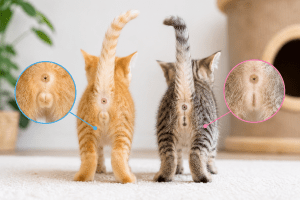
Plenty of cats, especially adults with a light worm burden, carry worms without any visible signs, which is exactly why relying on spotting symptoms is not enough and why regular deworming is recommended. When signs do appear, the more noticeable ones include seeing worms themselves: long spaghetti-like roundworms in vomit or stool, or small rice-grain-like tapeworm segments in the stool or stuck around the cat’s rear and tail base, sometimes moving. Other signs include a pot-bellied, swollen appearance particularly in kittens, weight loss despite eating normally or even more than usual, a dull, poor coat, vomiting, and diarrhea that may contain blood or mucus. Kittens can be more obviously affected, with poor growth and a characteristic pot belly, and a heavy burden in a small kitten can be genuinely dangerous. You might also notice a cat scooting its rear along the ground or over-grooming back there, sometimes due to tapeworm segments. Because signs range from obvious to entirely absent, the reliable way to detect worms is a stool test at the vet, which can identify parasites too small to see, and any of the visible signs, especially in a kitten, is a clear prompt to have the cat checked and treated.
Distinguishing worms from the segments and eggs of different parasites is not something to attempt by eye alone, which is another reason the stool test matters. What an owner can usefully do is describe or, if comfortable, photograph anything they see, whether long spaghetti-like worms or small pale rice-grain segments, and mention it to the vet, since that observation helps point toward the type involved. But because a light infection can produce no visible worms at all while still affecting the cat and posing a transmission risk, the absence of anything visible in the litter tray should never be taken as proof that a cat is worm-free, particularly for a kitten or a cat that has missed its routine treatments.
Worms can cause bloody or upset stool. See the guides on blood in a cat’s stool, vomiting, and a cat that is always hungry.
The common types of cat worm
It helps to know the main kinds of worm cats get, since they differ in how cats catch them, how they affect the cat, and what risk they pose to people.
Roundworms are the most common intestinal worm in cats, especially kittens, which often acquire them from their mother; they look like spaghetti, live in the intestines, and are the main human-relevant roundworm concern. Hookworms are smaller worms that attach to the gut lining and feed on blood, so they can cause anaemia in a heavy infestation, and their larvae can penetrate skin, making them relevant to human risk too. Tapeworms are long, flat, segmented worms usually caught by swallowing an infected flea, or sometimes from hunting; the tell-tale sign is the rice-grain segments around the cat’s rear, and controlling fleas is central to preventing them. Beyond these, cats can get other parasites such as lungworm, which affects the airways and relates more to coughing than to the gut, and single-celled intestinal parasites like giardia and coccidia, which are not worms but cause similar digestive upset and bloody diarrhea, particularly in kittens. The reason to distinguish the types is practical: different worms are caught differently and sometimes need different treatments, so identifying which parasite is involved, usually via a stool test, lets a vet choose the right product and advise on prevention, whether that means better flea control for tapeworm or environmental hygiene for roundworm.
The tapeworm-and-flea link is one of the most useful things for an owner to grasp, because it explains why a cat can keep getting tapeworms despite deworming: if the flea problem behind them is not addressed, the cat simply reinfects itself by swallowing more infected fleas during grooming. Treating the tapeworm without treating the fleas is a bit like mopping the floor with the tap still running, which is why effective, year-round flea control is genuinely part of worm prevention rather than a separate issue. Owners who find rice-grain segments recurring around their cat’s rear should think fleas as much as worms, and tackle both together.
Deworming and how it works
Deworming is the cornerstone of managing worms, so it is worth understanding what it does, how quickly it works, and why it is repeated rather than done once.
Deworming treatments, available as tablets, spot-on products, and pastes, work by killing the worms present in the cat at the time of treatment, and most act quickly, often beginning within hours and clearing the targeted worms within a day or two. It is normal to see dead worms passed in the stool for a day or so afterward. The important thing to understand is that deworming treats the worms present now but does not stop the cat becoming infected again, so it is not a one-off fix but a repeated measure on a schedule suited to the cat’s risk. How often depends on the cat’s lifestyle: hunting and outdoor cats, and multi-pet or child households, generally need more frequent treatment than a low-risk indoor adult, and kittens need a specific early schedule because they are so commonly infected. Products also differ in which worms they cover, so matching the treatment to the parasites involved matters, which is why veterinary guidance beats simply grabbing any product off a shelf. For a confirmed heavy infestation or a persistent problem, your vet may recommend a particular product and repeat interval, and sometimes a follow-up stool test to confirm the worms have actually cleared. The practical takeaway is that effective worm control is about the right product at the right frequency for your particular cat, set up with your vet, rather than a single dose given once and forgotten.
Preventing worms and protecting people
Bringing prevention together, protecting both your cat and your family comes down to a short list of consistent habits that between them close off almost every route of infection.
The first pillar is keeping the cat treated: maintain a routine deworming schedule appropriate to your cat’s lifestyle as advised by your vet, and control fleas year-round, since fleas transmit tapeworm and flea control is part of worm prevention. The second pillar is litter and faecal hygiene: clean the litter tray promptly and regularly, ideally at least daily, since roundworm eggs take time in the environment to become infective and removing stool quickly prevents this, and dispose of waste safely. The third pillar is hand hygiene: wash your hands after handling the litter tray, the cat, or soil, and encourage everyone in the household, especially children, to do the same. Outdoors, cover children’s sandpits when not in use, wear gloves for gardening and wash hands afterward, and wash home-grown produce, since cat-frequented soil can harbour eggs. Deworm new kittens on the schedule your vet recommends, as they are very commonly infected and are a common source of exposure for children. None of these steps is difficult, and together, deworming, flea control, prompt litter cleaning, and hand washing, they reduce the risk to your cat and your family to very low, which is why a hygienic, well-managed household rarely has any trouble with cat worms despite living closely with their pet. The habits reinforce one another, too: flea control supports worm prevention, prompt litter cleaning protects both cat and people, and a dewormed cat sheds fewer eggs into the environment in the first place, so the whole system works together to keep the numbers down.
Pregnancy, children, and extra care
Two situations, pregnancy and young children in the home, understandably prompt extra worry, so it is worth addressing them directly and putting the risks in perspective.
For households with young children, the sensible response is a little extra diligence rather than anxiety: because children are the group most likely to swallow eggs from soil or contaminated hands, keep on top of litter hygiene, cover sandpits, supervise hand washing after playing outside or with the cat, and keep the cat’s deworming current. These measures address exactly the routes by which a child might be exposed. For pregnant women, the most common advice is to avoid handling cat litter where possible, but it is important to understand that this is primarily because of toxoplasmosis, a separate single-celled parasite spread through cat faeces, rather than worms as such. Where a pregnant woman must handle litter, wearing gloves, cleaning the tray daily, and washing hands afterward reduces the risk, and having someone else take over litter duties is a common and reasonable precaution. Because both toxoplasmosis and worm concerns involve cat faeces and are addressed by the same hygiene, the good news is that one set of sensible habits covers both. For anything specific to a pregnancy or a child’s health, a doctor is the right source of personalised advice, while a vet keeps the cat’s parasite control appropriate, and between the two the household stays well protected without anyone needing to part with a beloved cat.
When to see the vet or doctor
Finally, it helps to know when worms warrant professional input, both for the cat and, occasionally, for people, so nothing important is missed.
For the cat, see your vet if you notice any signs of worms, visible worms or segments, a pot belly, weight loss, a dull coat, vomiting, or diarrhea that may contain blood, and especially if a kitten shows these, since a heavy burden can be dangerous in a small animal. It is also worth involving the vet simply to set up an appropriate routine deworming and flea-control plan for your cat’s lifestyle, and to identify a specific parasite via a stool test if there is a recurring problem, since the right product and interval depend on what is present. For people, the risk is low, but if a member of the household, particularly a child, develops unexplained symptoms and there has been possible exposure, that is a question for a doctor, who can advise and, if needed, test and treat; worm infections in people are generally treatable. The two professionals cover different sides: the vet manages the cat’s parasites and prevention, and a doctor handles any human health concern. In day-to-day terms, though, the main action for most owners is simply the preventive one, keeping the cat dewormed and the household hygienic, which is what keeps both trips, to the vet for a worm problem and to the doctor for a human one, rare.
It can help to build the cat’s deworming into an existing routine so it is not forgotten, for instance pairing it with a regular flea treatment or a calendar reminder, since the value of prevention lies entirely in its consistency. A worm treatment given reliably on schedule protects far better than one remembered only occasionally, and it also spares the household the more disruptive experience of dealing with an established infestation and its cleanup. For most families, this quiet, regular routine is all that is ever needed, and the worms remain a theoretical worry rather than a real one, which is exactly the outcome the whole guide is aiming for.
Frequently asked questions
Can people get worms from a cat?
Yes, some cat worms can infect people, though it is uncommon with good hygiene. Roundworms and hookworms are the main concern: their eggs or larvae pass in cat faeces, and a person can be infected by accidentally swallowing eggs, usually via contaminated hands, soil, or surfaces, or, with hookworms, by larvae penetrating the skin. Certain tapeworms can also occasionally infect humans. Children are at higher risk because of how they play and their hygiene habits. The reassuring part is that the risk is low with sensible precautions: regular deworming of your cat, prompt litter tray cleaning, and hand washing dramatically reduce any chance of transmission, so a well-cared-for cat poses little threat to a careful household.
How do indoor cats get worms?
Indoor cats can still get worms, which surprises many owners. Common routes include hunting or eating insects, mice, or other prey that carry worm larvae, since even an indoor cat may catch a mouse or a fly; ingesting fleas while grooming, as fleas carry tapeworm; kittens acquiring roundworms from their mother’s milk or before birth; and eggs or larvae brought indoors on shoes, soil, or other pets. Because of these routes, indoor cats are not immune and still benefit from routine parasite prevention. It is a myth that staying inside removes the need for deworming, and a vet can advise a suitable schedule based on your cat’s lifestyle and risk.
What are the signs of worms in a cat?
Many cats with worms show no obvious signs, especially adults with a light burden, which is why routine prevention matters. When signs do appear, they can include visible worms or rice-grain-like segments in the stool or around the cat’s rear, a pot-bellied appearance especially in kittens, weight loss despite a normal or increased appetite, a dull coat, vomiting or diarrhea that may contain blood or mucus, and poor growth in kittens. Occasionally you may see a cat scooting or over-grooming its rear. Because signs are often subtle or absent, a stool test is the reliable way to detect worms, and any of these signs, particularly in a kitten, is a reason to have the cat checked and treated.
How long does dewormer take to work on cats?
Most deworming treatments begin working quickly, often within hours, and typically clear the targeted worms within a day or two, though the exact timing depends on the product and the type of worm. You may see dead worms passed in the stool for a day or so after treatment, which is normal. Because a single dose does not prevent future infection, and because some products target only certain worms, deworming is usually repeated on a schedule and matched to the parasites involved. For a heavy infestation, a kitten, or a persistent problem, follow your vet’s guidance on which product to use and how often, since the right treatment and interval matter more than any single dose.
Can worms make a cat sick or be dangerous?
Yes, particularly in kittens and heavily infested cats. Worms take nutrition from the cat and can cause weight loss, poor growth, a pot belly, a dull coat, and digestive upset including bloody diarrhea, and a very heavy burden in a small kitten can cause anaemia or a dangerous intestinal blockage. Hookworms in particular can cause blood loss. Adult cats with a light burden often cope with few signs, but that does not make worms harmless, since they can still affect health over time and pose a transmission risk to other pets and people. Because worms are common, easily diagnosed, and readily treated, keeping up prevention and treating promptly protects both the cat and the household.
How can I prevent my cat and family from getting worms?
Prevention combines treating the cat and good hygiene. Keep your cat on a routine deworming schedule appropriate to its lifestyle, as advised by your vet, and control fleas, since fleas transmit tapeworm. Clean the litter tray promptly and regularly, ideally daily, and wash your hands after handling the tray, the cat, or soil. In gardens and sandpits used by cats, cover sandpits and wash hands after outdoor play, and supervise young children’s hygiene. Deworm new kittens on the schedule your vet recommends, since they are commonly infected. These simple measures, deworming, flea control, litter hygiene, and hand washing, keep the risk to your cat and family very low.
Do I need to worry about worms if I’m pregnant or have young children?
It is worth being a little more careful, though the risk remains low with good hygiene. Certain cat roundworms can, rarely, cause illness in people, and children are more susceptible because of their play and hygiene habits, so households with young children should be diligent about litter hygiene and hand washing. Pregnant women are often advised to avoid handling cat litter, mainly because of toxoplasmosis, a separate parasite, rather than worms specifically, and to have someone else clean the tray or to wear gloves and wash hands if they must. For personalised advice, a doctor can guide pregnant women and families, while a vet keeps the cat’s parasite control up to date, and together these keep the household safe.
The quick version
Can people get worms from a cat? Yes, some cat worms, mainly roundworms and hookworms, can infect people, usually through eggs or larvae in cat faeces reaching the mouth or, for hookworms, penetrating skin, but the risk is low with good hygiene. Children are most at risk. Even indoor cats get worms, through hunting, fleas, or eggs carried inside, and many infected cats show no signs, so a stool test and routine prevention beat waiting for symptoms. The protective habits are simple and cover both worms and toxoplasmosis: keep the cat dewormed and flea-free, clean the litter tray daily, wash hands, and take a little extra care with young children and in pregnancy.
For related signs, see the guides on blood in a cat’s stool, vomiting, and a cat that is always hungry. Keep parasite control on track with the Cat Vaccination & Wellness Schedule, browse the full cat blog and the pet calculators, or explore more free tools on the Waldev homepage.
Medical disclaimer: This guide is for general education and is not a substitute for veterinary or medical advice. Some cat worms can infect people, and only a veterinarian can diagnose and treat parasites in your cat, while a doctor should advise on any human health concern. If your cat shows signs of worms, or a person may have been exposed and is unwell, contact the appropriate professional. Pregnant women and immunocompromised people should seek personalised medical advice.
Some cat worms are zoonotic; routine prevention and hygiene keep the human risk low. Pet owner resources →
A vet can identify the specific parasite by stool test and set an appropriate deworming plan. Locate a hospital →