How to tell if cat has fleas? Fleas are tiny, fast, and easy to miss, so a cat can be quietly infested long before you ever spot a live one. The good news is that there are reliable ways to check, from watching for scratching and over-grooming to combing for the tell-tale flea dirt that confirms it even when the fleas hide. And once you know, getting rid of fleas is very doable, provided you treat the cat, the other pets, and the home together. This guide covers the signs, exactly how to check, why even indoor cats get fleas, how to clear an infestation properly, and when a flea problem needs the vet.
Year-round flea prevention protects your cat and helps prevent tapeworm. Check when your cat is next due with the Cat Vaccination & Wellness Schedule, and browse more tools in the pet calculators hub.
On this page
The signs your cat has fleas
Because you will often notice your cat’s behaviour before you ever see a flea, the first clues are usually changes in how the cat scratches, grooms, and behaves, so it helps to know what to watch for.
The most common sign of fleas is itching: a cat with fleas typically scratches more than usual, bites or nibbles at its skin, and licks or over-grooms itself, often focusing on the neck, back, and the base of the tail where fleas tend to gather. You may notice the cat suddenly twitching, jumping up, or acting restless and irritable, or grooming so intensely that it pulls out fur. Over time, the scratching and biting can leave physical signs on the skin, small scabs, red or irritated patches, thinning fur or bald spots, and sometimes tiny raised bumps, particularly along the lower back and around the tail base. Some cats also develop these signs from a flea allergy, where even a few bites cause an intense reaction out of all proportion to the number of fleas present. Not every itchy cat has fleas, and not every flea-infested cat shows dramatic itching, since sensitivity varies, but a cat that has newly started scratching, over-grooming, or developing scabby, thinning skin around the back end is showing exactly the pattern that should prompt a flea check. These behavioural and skin signs are the cue to move on to the more definite checks, looking for flea dirt and the fleas themselves, which confirm what the scratching suggests.
It is worth noticing where on the body the trouble is concentrated, because the pattern is a useful clue. Flea-related itching and skin damage classically cluster over the lower back, the base of the tail, and the back of the thighs, the areas a cat can reach to bite and where fleas tend to gather, whereas itching focused around the head and ears points more toward other problems such as ear mites or a food allergy. This is not a hard rule, since an itchy cat may scratch all over, but a cat that is chewing and thinning the fur specifically over its rump and tail base is showing a very typical flea distribution, which strengthens the case for a careful flea-dirt check before looking elsewhere.
Checking for flea dirt
The single most reliable way to confirm fleas, even when you cannot find a live one, is to look for flea dirt, so this is the check worth learning properly.
Flea dirt is the polite name for flea faeces, which is essentially digested blood, and it shows up as tiny black or dark reddish-brown specks scattered through the coat and on the skin, looking rather like ground pepper or coffee grounds. It collects most heavily where fleas congregate, around the tail base, the lower back, and the neck, so those are the areas to inspect. The classic and genuinely useful test is the wet-paper test: comb or brush some of the specks onto a piece of white paper or tissue that you have dampened, and watch what happens. Because flea dirt is made of digested blood, it dissolves and smears a reddish or rusty brown when wet, whereas ordinary dirt or a fleck of scab stays black or grey. A reddish-brown smear confirms flea dirt, and flea dirt means fleas, even if you never actually see one. This test is so reliable because the fleas themselves are fast, small, and good at hiding, especially on a dark or long-haired cat, so their droppings are often far easier to find than the insects. If you find flea dirt, you can be confident your cat has fleas and move straight to treatment, without needing to catch a live flea to prove it.
It is worth doing this check even when you are only mildly suspicious, because catching a flea problem early makes it far easier to clear. A light infestation, spotted from a few specks of flea dirt before the itching becomes severe, can often be dealt with before the home is heavily seeded with eggs, whereas a problem left until the cat is visibly sore and fleas are jumping has usually built up a large hidden population that takes much longer to defeat. The wet-paper test takes a couple of minutes and needs nothing more than a comb, a tissue, and a little water, so making it a routine part of grooming, especially in the warmer months, is a small habit that pays off.
How to use a flea comb
A flea comb is the simplest and cheapest tool for both finding fleas and flea dirt, so it is worth knowing how to use one effectively as part of checking your cat.
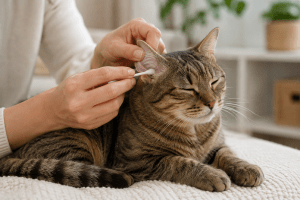
A flea comb is a fine-toothed comb whose teeth are close enough together to catch fleas and flea dirt as you draw it through the coat. To use it, sit your cat somewhere comfortable, ideally over a white surface or a sheet of damp white paper so anything that falls is easy to see, and comb slowly through the fur in the direction it grows, paying particular attention to the tail base, lower back, neck, and behind the ears. After each stroke, check the comb and the surface below for live fleas, fast-moving little brown insects, and for the dark specks of flea dirt. Have a bowl of soapy water beside you to dunk the comb into, since dropping any caught fleas into soapy water kills them and stops them jumping back. Combing regularly not only helps you detect fleas early but physically removes some fleas and eggs, and many cats enjoy the attention, so it can become a pleasant routine check rather than a task done only in a panic. If you comb out dark specks, apply the wet-paper test to confirm whether they are flea dirt. A flea comb will not clear an infestation on its own, but as a detection tool and a supplement to proper treatment it is genuinely valuable, and it is the easiest way to answer the question of whether your cat has fleas.
For cats that dislike being combed, it helps to keep sessions short and gentle, working on a relaxed, sleepy cat rather than one that is already agitated, and to reward it afterward so the comb becomes something tolerable rather than a battle. Even a quick pass over the tail base and lower back, the areas most likely to hold flea dirt, is enough to answer the question most of the time, so you do not need a full grooming session to get a useful result. Building the check into a moment when the cat is already settled on your lap turns it into a painless habit rather than a chore.
Spotting fleas and eggs
Sometimes you will see the fleas or their eggs directly, so it helps to know what they actually look like, though remember that not seeing them does not rule fleas out.
Adult fleas are small, roughly the size of a pinhead to a couple of millimetres, flattened side to side, and dark brown, and they move fast, jumping and darting through the fur, which is what makes them so hard to catch sight of. You are most likely to glimpse them scurrying across areas of thinner fur, such as the belly, the inner thighs, or where you part the coat around the tail base and neck. Flea eggs are different: they are tiny, oval, and white or pale, a bit like grains of salt or dandruff, and because they are laid on the cat but readily fall off, they end up in the cat’s bedding and around the home rather than staying in the coat, which is part of why the home becomes infested. You might therefore see pale specks in the cat’s bed and favourite sleeping spots as much as on the cat itself. Flea larvae and pupae live in the environment and are rarely seen, tucked deep in carpet fibres and floor cracks away from the light, where they are protected and hard to reach. The practical point is that live fleas are only the visible tip of the problem and are often outnumbered many times over by eggs and immature stages you cannot see, so while spotting a flea confirms an infestation, not spotting one proves nothing, which is exactly why the flea-dirt test and combing matter so much for a confident answer.
Can indoor cats get fleas?
A very common belief is that a cat kept indoors cannot get fleas, and because it leads owners to skip prevention and dismiss the possibility, it is worth correcting clearly: indoor cats absolutely can get fleas.
Fleas are remarkably good at finding their way indoors even without the cat ever going out. They and their eggs are carried into homes on people’s clothing and shoes, hitching a ride from anywhere fleas are present. Other pets are a major route, especially dogs that go outside and bring fleas back in, but also any visiting animal. Rodents and wildlife that get into a home, and in blocks of flats even fleas travelling from neighbouring properties through shared spaces, can introduce them. Once inside a warm, comfortable home, fleas can breed happily all year round, unbothered by the cold weather that limits them outdoors. Because of all this, an indoor-only cat is genuinely at risk and still benefits from flea prevention, and an indoor cat that starts scratching or over-grooming should not be assumed to be flea-free just because it never goes out. It is simply a myth that indoor living makes fleas impossible, and clinging to it is one of the more common reasons an indoor cat’s flea problem goes unrecognised for weeks. The practical implication is that flea prevention is worth considering for indoor cats too, on a vet’s advice, and that a suspected flea problem in an indoor cat deserves the same checking and treatment as it would in an outdoor one, rather than being ruled out on the grounds that the cat stays inside.
Why fleas are hard to shift
To treat fleas successfully you need to understand one crucial fact about them, which explains why so many people struggle to get rid of them: most of the flea population is not on the cat at all.
The fleas you see on your cat are only a small fraction of the total problem. The flea life cycle runs from egg to larva to pupa to adult, and the great majority of that population, the eggs, larvae, and pupae, lives not on the cat but in the environment, in carpets, rugs, bedding, soft furnishings, and floor crevices. Adult fleas on the cat lay eggs that fall off into the home, where they develop through their immature stages before emerging as new adults that jump back onto a host. The pupal stage in particular is tough and can lie dormant for a long time, protected inside a cocoon, waiting for the vibration and warmth that signal a host is near before hatching, which is why fleas can suddenly appear after a home has seemed clear. The consequence of all this is simple but important: treating only the visible fleas on the cat leaves the far larger hidden population in the home to keep producing new fleas, so the infestation returns. This is the single biggest reason flea treatment fails, and understanding it is what makes the difference, because it tells you that clearing fleas means tackling the cat and the environment together, and keeping it up for long enough to outlast the eggs and pupae still hatching.
The pupal stage is worth dwelling on, because it is the reason a home can seem flea-free and then suddenly is not. Pupae are wrapped in a sticky, protective cocoon that shields them from many insecticides, and they can wait dormant inside it for weeks or even months until the vibration, warmth, and carbon dioxide of a passing host tell them it is time to emerge. This is why people sometimes report a sudden burst of fleas when they return from a holiday to a house that had seemed clear, or when a new pet arrives: the movement wakes a wave of waiting pupae all at once. It is also why treatment has to continue well past the point where things look sorted, so that each newly hatched flea meets a treated cat and a treated home before it can breed again.
Fleas transmit tapeworm, so a flea problem often becomes a worm problem. See the guide on worms in cats, and for skin and scratching, the guide on signs a cat is unwell.
How to get rid of fleas
Armed with the knowledge that fleas live mostly in the home, getting rid of them follows a clear plan built around treating everything at once and sticking with it, so here is the practical approach.
Start by treating your cat with an effective, suitable flea product recommended by your vet, which may be a spot-on applied to the skin, a tablet, or another form; the key is to use a product proven to work and safe for cats, since some cheap over-the-counter options are ineffective. Treat every cat and dog in the household at the same time, not just the affected one, because the others are almost certainly carrying fleas too and will reinfest each other otherwise. Then address the home in parallel, since that is where most of the fleas are: wash the cat’s bedding, and any washable soft items it uses, on a hot cycle, and vacuum thoroughly and frequently, carpets, rugs, floors, skirting, under furniture, and upholstery, which removes eggs, larvae, and some pupae and, helpfully, the vibration encourages dormant pupae to hatch so they meet the treatment. Empty or dispose of the vacuum contents afterward, ideally into a sealed bag in an outside bin, so trapped fleas and eggs cannot simply crawl back out. For a heavy or stubborn infestation, a household flea spray or treatment may be needed, used according to instructions and with pets kept safe. The most important thing is persistence: because eggs and pupae keep hatching, it typically takes several weeks of consistent treatment of both cat and home to break the cycle fully, so keep up the cat’s regular flea product and the cleaning rather than stopping as soon as the visible fleas are gone.
Treating your home
Because the home is where the battle is really won or lost, it is worth spelling out the environmental side in a little more detail, since this is the step that most often gets neglected and most often causes failure.
Think of the home as the main reservoir of fleas that needs draining alongside treating the cat. Washing bedding on a hot wash kills fleas and eggs in the items your cat spends most time on, so launder the cat’s bed, blankets, and any washable covers, and repeat regularly during treatment. Vacuuming is your most powerful home tool: done thoroughly and often, ideally daily during an active infestation, it removes eggs and larvae from carpets and crevices, lifts flea dirt that larvae feed on, and disturbs pupae into hatching where the treatment can reach them, so vacuum carpets, rugs, floorboards and their gaps, along skirting boards, under and behind furniture, and any upholstery, then seal and bin the vacuum contents or empty the canister outside. Pay attention to the places your cat rests and sleeps, since eggs concentrate there. For significant infestations, an appropriate household flea product, such as a spray containing an insect growth regulator that stops immature fleas developing, can treat carpets and furnishings, used exactly as directed and with cats and other pets kept away until it is safe. Do not forget that pupae can keep hatching for weeks, so the home treatment and cleaning must continue well beyond the point where the cat seems clear, which is the patience that finally ends the cycle.
The dangers: allergy, tapeworm, anaemia
It is tempting to treat fleas as merely irritating, but they carry real health risks that make prompt treatment worthwhile, so it helps to know what a flea problem can actually cause.
Fleas do more than make a cat itchy. The most common complication is flea allergy dermatitis, an allergic reaction to proteins in flea saliva, in which even a small number of bites triggers intense itching and skin inflammation; an affected cat scratches and grooms fiercely, developing scabs, raw patches, and hair loss, especially over the lower back and tail base, and the damaged skin can become infected. A flea-allergic cat can be miserable from just a few fleas, which is one reason thorough control matters, since for these cats “not many fleas” is no comfort at all when even one or two bites set off days of intense itching. Fleas also transmit tapeworm: a cat swallows an infected flea while grooming and picks up the tapeworm, which is why a flea problem so often becomes a worm problem, and why controlling fleas is part of preventing tapeworm. In kittens and small, elderly, or frail cats, a heavy flea burden is genuinely dangerous, because fleas feed on blood and a large infestation can drain enough to cause anaemia, which in a tiny kitten can be life-threatening and shows as pale gums, weakness, and lethargy. This is one of the few flea situations that is a true emergency, since a small kitten has so little blood to lose that a bad infestation can bring it close to collapse surprisingly quickly. Fleas can carry other diseases too, including some that affect people, which is a further reason to keep them under control in the household. Taken together, these risks, allergic skin disease, tapeworm, and dangerous blood loss in the vulnerable, are why fleas should be dealt with promptly rather than tolerated, and why prevention is so worthwhile.
Preventing fleas
Since clearing an established infestation is far more work than avoiding one, prevention is well worth it, and it comes down to a few consistent habits that keep fleas from taking hold.
The cornerstone of prevention is regular, year-round flea treatment for your cat with an effective product suited to its needs, as advised by your vet, since fleas breed indoors in warm homes even in winter and a lapse in treatment is often when an infestation starts. Treat all pets in the household, since one untreated animal can quietly maintain fleas for everyone and undo the effort put into the others. Keeping on top of home hygiene helps too: regular vacuuming and washing of pet bedding reduce any eggs and larvae before they build up. Because fleas transmit tapeworm, flea prevention doubles as part of worm prevention, so the two go together. For multi-pet homes, homes with a garden or wildlife access, and anywhere fleas have been a problem before, consistent prevention is especially valuable, since these are exactly the settings where fleas find it easiest to get a foothold. The reassuring point is that prevention is simpler and cheaper than dealing with a full infestation and its complications, and a cat kept on regular flea control, in a home that is vacuumed and cleaned as normal, rarely has trouble with fleas. A vet can recommend a suitable product and schedule for your particular cat, which is the most reliable way to keep fleas away rather than reacting to them once they arrive.
It also helps to think of prevention as protecting the home as much as the cat, since a preventive product that stops the fleas on your cat from breeding keeps eggs from ever being shed into your carpets in the first place. Break that chain at the cat and you avoid the far bigger job of clearing an environment that has become a flea nursery. For anyone who has once endured a full household infestation, the modest ongoing effort of regular prevention is an easy trade, and it spares both the cat the discomfort and the household the weeks of vacuuming and washing that a serious outbreak demands.
When to see the vet
Most flea problems can be handled at home with the right products and persistence, but certain situations call for veterinary help, so it is worth knowing when a flea issue needs more than shop-bought treatment.
See your vet if flea treatments do not seem to be working or the infestation keeps coming back despite your efforts, since a vet can supply more effective prescription products and check what is going wrong. Go if your cat has severe or persistent itching, sore, scabby, or infected-looking skin, or significant hair loss, which may indicate flea allergy dermatitis or a secondary skin infection that needs treatment beyond flea control. Seek help if you find tapeworm segments, like tiny rice grains, around your cat’s rear, since that means the flea problem has led to worms and the cat needs deworming as well. Treat as urgent any kitten or small, elderly, or weak cat that is heavily infested or shows pale gums, weakness, or lethargy, as this can mean dangerous anaemia from blood loss. A vet is also the best source of advice on which products are both effective and safe, which matters because some over-the-counter treatments work poorly and, crucially, dog flea products can be toxic to cats and must never be used on them. When in doubt, especially with a young or unwell cat or a problem you cannot shift, a vet visit is the safe and effective route.
Frequently asked questions
How can I tell if my cat has fleas?
The clearest signs are excessive scratching, biting, or over-grooming, especially around the neck, back, and base of the tail, along with restlessness. The most reliable check is to look for flea dirt: comb through your cat’s coat, particularly near the tail base, with a fine-toothed flea comb, and look for tiny black specks. If you place those specks on damp white tissue and they turn reddish-brown, that is flea dirt (digested blood) and confirms fleas even if you never see a live one. You may also spot small, fast-moving brown insects in the fur, tiny pale eggs, scabs or hair loss from scratching, or pale gums in a badly infested kitten. Any of these means it is time to treat.
Can indoor cats get fleas?
Yes, indoor cats can absolutely get fleas, which surprises many owners. Fleas and their eggs can be carried into the home on people’s clothing and shoes, on other pets like dogs that go outside, and by rodents or wildlife that get indoors, and fleas can also come in from shared walls or hallways in flats. Once inside, a warm home lets fleas breed year-round. This is why indoor-only cats still benefit from flea prevention and why an indoor cat with itching should not be assumed to be flea-free. It is a myth that staying inside makes fleas impossible, so a suspected flea problem in an indoor cat is worth checking and treating just the same.
What does flea dirt look like on a cat?
Flea dirt is flea faeces, made of digested blood, and it looks like tiny black or dark reddish-brown specks, a bit like ground pepper or coffee grounds, scattered through the coat and skin, most often around the tail base, lower back, and neck. The classic test is to comb some onto a piece of damp white paper or tissue: because it is digested blood, flea dirt smears reddish-brown when wet, which distinguishes it from ordinary dirt or scabs that stay black. Finding flea dirt is one of the most reliable ways to confirm fleas, since the fleas themselves are fast and can be hard to spot, especially on a dark or thick coat.
How do I get rid of fleas on my cat?
Getting rid of fleas means treating the cat and the home together, because most of the flea population lives in the environment as eggs and larvae, not on the cat. Treat your cat with a suitable veterinary flea product (spot-on, tablet, or as advised by your vet), and treat all other pets in the household at the same time. Then tackle the home: wash the cat’s bedding on a hot wash, vacuum floors, carpets, and furniture thoroughly and often, emptying the vacuum afterward, and consider a household flea treatment for heavy infestations. Because eggs keep hatching, it takes weeks of consistent treatment to fully clear an infestation, so persistence and treating everything at once are key.
Are cat fleas dangerous or just annoying?
Fleas are more than a nuisance. Beyond itching and discomfort, they can cause flea allergy dermatitis, an allergic skin reaction to flea bites that makes a cat intensely itchy and sore even from a few bites, leading to scabs, hair loss, and skin infection. Fleas transmit tapeworm, which a cat swallows while grooming, so a flea problem often becomes a worm problem. In kittens and small or frail cats, a heavy flea burden can cause dangerous blood loss and anaemia, which can be life-threatening. Fleas can also carry other diseases. Because of all this, fleas should be treated promptly rather than tolerated, and prevention is well worth it.
Do I need to treat my home and other pets for fleas?
Yes, and this is the step people most often skip, which is why infestations come back. Only a small fraction of a flea population lives on the cat; the rest, as eggs, larvae, and pupae, is in the carpets, bedding, and furniture. If you treat only the cat, the environment keeps producing new fleas. So treat every cat and dog in the household at the same time with appropriate products, wash bedding hot, vacuum thoroughly and regularly, and for a stubborn infestation use a household treatment as advised. Treating the cat, the other pets, and the home together, and keeping it up for several weeks, is what actually clears fleas for good.
When should I take my cat to the vet about fleas?
See the vet if flea treatments are not working or the infestation keeps returning, if your cat has severe itching, sore skin, scabs, hair loss, or signs of a skin infection (which may mean flea allergy dermatitis needing treatment), if you find tapeworm segments around the rear, or if a kitten or a small or weak cat is heavily infested or has pale gums, which can signal dangerous anaemia and is urgent. A vet can also recommend the most effective, safest products for your cat, since some over-the-counter treatments are ineffective and dog flea products can be toxic to cats. Never use a dog flea product on a cat.
The quick version
How to tell if cat has fleas? Watch for scratching, biting, and over-grooming around the neck, back, and tail base, plus scabs or thinning fur, then confirm by combing for flea dirt: dark specks that smear reddish-brown on damp white paper, which means fleas even if you never see one. Indoor cats get fleas too, carried in on people, other pets, or wildlife. Getting rid of them means treating the cat and all other pets with a proper vet-recommended product and tackling the home, hot-washing bedding and vacuuming thoroughly, for several weeks, since most fleas live as eggs and pupae in the environment. See the vet for sore skin, tapeworm, a failing treatment, or a pale, weak kitten, and never use a dog flea product on a cat.
For related signs, see the guides on worms in cats, ear mites, and signs a cat is sick. Keep parasite control on track with the Cat Vaccination & Wellness Schedule, browse the full cat blog and the pet calculators, or explore more free tools on the Waldev homepage.
Medical disclaimer: This guide is for general education and is not a substitute for veterinary advice, diagnosis, or treatment. Flea products vary in safety and effectiveness, and dog flea products can be toxic to cats, so only use products suitable for cats and follow your vet’s advice. If your cat has severe skin disease, a heavy infestation, or is a weak or pale kitten, contact your veterinarian, and never use a dog flea treatment on a cat.
Effective flea control treats the cat, other pets, and the home together and takes persistence. Pet owner resources →
For a stubborn infestation, skin disease, or a vulnerable cat, a vet can supply the right products. Locate a hospital →