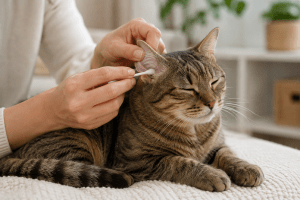
Can cats get headaches? Almost certainly they can feel head pain, but a cat cannot tell us, and that is the heart of a much bigger challenge: cats are experts at hiding illness. The same instinct that means a cat will not clutch its head also means it will quietly mask a fever, an ache, or a serious disease until it is well advanced. So the useful question is less whether cats get headaches and more how to read the subtle, early signs that a cat is unwell. This guide explains what we know about feline head pain, then walks through the quiet warning signs of a sick or hurting cat and when each one means a call to the vet.
Regular wellness visits catch illness before the signs become obvious. Check when your cat is next due with the Cat Vaccination & Wellness Schedule, and browse more tools in the pet calculators hub.
On this page
Can cats get headaches?
Since it is the question that brings many people here, it is worth answering directly, even though the honest answer is a careful “probably, but we cannot really know.”
Cats have the same basic pain machinery we do, with nerves and a brain that process pain, so there is no biological reason a cat could not experience head pain, and it is reasonable to think they can. The problem is entirely one of communication and evidence: a cat cannot tell us its head hurts, and there is no simple test for a plain headache, so a stand-alone “cat headache” is not something a vet can diagnose the way a doctor might in a person. What can be identified are the underlying conditions that would plausibly cause head or facial pain, and those are what actually matter. High blood pressure, common in older cats and often linked to kidney disease or an overactive thyroid, can cause problems that may involve head discomfort. Dental disease, ear infections, sinus and nasal problems, and conditions affecting the brain can all cause pain in or around the head. The key point is that these show up not as a cat rubbing its temples but as behaviour changes: hiding, squinting, pawing at the head or ear, sensitivity to touch, a head tilt, or a general change in mood and activity. So rather than hunting for a headache, the practical move is to notice these signs and let a vet look for a treatable cause behind them.
There is a specific version of this worth flagging, because owners often connect it to headaches: a cat that repeatedly paws or rubs at one ear, tilts its head, or shakes its head may well have an ear infection or ear mites, which are genuinely uncomfortable and very treatable. Likewise a cat that squints, paws at an eye, or keeps one eye partly closed may have an eye problem that is painful. Neither is a headache in the human sense, but both are real sources of head-area pain that a vet can find and fix, which is exactly why translating a vague worry about headaches into a look for concrete, treatable causes is the more useful approach.
Why cats hide illness
To understand every sign in this guide, it helps to start with the single most important fact about feline health: cats are built to conceal that they are unwell.
This instinct comes from cats’ wild ancestry. A solitary hunter that is also potential prey cannot afford to look weak, because visible illness or injury attracts predators and invites challenge from rivals, so cats evolved to mask signs of sickness and pain and to carry on as normally as they can for as long as they can. Our pet cats keep this instinct, which is why a cat can be genuinely unwell while still appearing more or less fine to a casual glance, and why the signs of illness, when they do appear, are often subtle. It also means that by the time a cat is obviously, unmistakably sick, the problem has frequently been developing for a while. This is not a reason for alarm but a reason for attentiveness: it explains why knowing your own cat’s normal patterns matters so much, why small changes deserve to be taken seriously rather than shrugged off, and why regular veterinary check-ups are so valuable in cats, since a vet can pick up on things a cat is actively hiding. Everything that follows, the quiet behaviour changes, the shifts in eating and grooming and litter habits, makes sense in light of this one instinct to hide weakness.
This is also why the common advice to “trust your gut” is more than a platitude with cats. You are the person who sees your cat every day, who knows how much it usually eats, where it likes to sleep, how it greets you, and how it moves, and that familiarity makes you the most sensitive detector of the small changes a cat is trying to hide. Vets frequently hear owners say they just knew something was off before any clear symptom appeared, and that instinct, grounded in daily familiarity, is genuinely valuable. It is worth taking seriously rather than talking yourself out of, because in cats the vague sense that something is not right is often the first and only early clue.
The early warning signs a cat is sick
Because cats hide illness, the earliest signs are usually not dramatic symptoms but small departures from normal, and learning to notice them is the most useful skill an owner can have.
The general signs that a cat may be unwell include a change in appetite, eating either less or noticeably more, a change in thirst or in how much it urinates, weight loss or gain, and low energy or a drop in the usual playfulness. A cat that hides more than usual, withdraws from the family, or tucks itself into an unusual quiet spot is often unwell. Changes in grooming matter too, with a normally fastidious cat letting its coat become unkempt, or a cat over-grooming one area. Litter box changes, going more or less, straining, accidents outside the tray, or a change in the stool or urine, are important clues. Other signs include vomiting or diarrhea, bad breath, drooling, a change in how the cat moves or holds itself, changes in the eyes or a discharge, and simply a cat that seems “not itself,” quieter, grumpier, or subtly off. No single one of these proves illness, and cats have off days like anyone, but the pattern to watch for is change that persists or worsens. A cat that is a little quiet for an evening is probably fine; a cat that has been quieter, eating less, and hiding for a couple of days is telling you something. The recurring theme is that you are looking for a shift away from that particular cat’s normal, which is why knowing what is normal for your cat is the foundation of catching illness early.
One practical habit makes this far easier: keep a loose mental or written baseline of your cat’s normal. Roughly how much it eats and drinks, how often it uses the tray and what that looks like, where it sleeps, how playful it is, and what its greeting routine is. You do not need a spreadsheet, just enough of a sense that a deviation stands out. Some owners find that weighing the cat every few months, or simply noticing when they can suddenly feel the spine or ribs more easily, catches gradual weight loss that day-to-day glances miss. The better you know the baseline, the sooner a meaningful change registers.
How cats show pain
Pain deserves its own section because it is one of the things cats hide most effectively, and the way it shows up surprises owners who expect a hurt cat to cry out.
Cats in pain rarely vocalise the way people imagine. Instead, pain usually reveals itself through behaviour and posture: a cat may hide, become withdrawn or unusually grumpy, lose its appetite, become reluctant to jump up or down or to move much, sit hunched with its paws tucked and a tense face, or stop grooming, or over-groom, a specific painful area. It may squint, hold its ears flattened or to the side, or react, sometimes with a swipe or a bite, when touched in a particular place. A cat with mouth pain may drool or eat awkwardly; a cat with joint pain may slow down and be labelled as “just getting old.” Importantly, some cats purr when they are in pain or distress, as a self-soothing behaviour, so purring does not mean a cat is comfortable. Because all of these signs are quiet and easy to attribute to mood or age, feline pain is frequently missed, which is a shame because it is treatable. The safe approach is to treat any of these behavioural changes as a possible sign of pain worth investigating, and never to give human painkillers, since common ones like paracetamol and ibuprofen are toxic to cats and can be fatal. A vet can identify the source of pain and provide relief that is safe for cats.
It is worth stressing the danger of home pain relief, because it is one of the most common and most tragic mistakes owners make with the best intentions. Reaching for a human painkiller to help a cat that is clearly hurting feels compassionate, but paracetamol, also sold as acetaminophen, is extremely toxic to cats and even a single tablet can be fatal, while ibuprofen and other anti-inflammatories are also dangerous. Cats lack the liver enzymes to process these drugs safely. If your cat is in pain, the right response is never the medicine cabinet but a call to the vet, who has pain relief formulated and dosed specifically for cats. Waiting a few hours for a proper, safe medicine is far better than causing a poisoning that is worse than the original pain.
Many common human medicines are toxic to cats. See the guide on human medicines and cats before giving anything, and check foods and products with the Cat Food & Toxin Safety Checker.
Appetite, thirst, and weight
Among all the signs, changes in eating, drinking, and weight are some of the most informative, because they shift with a wide range of illnesses and are relatively easy to notice if you are paying attention.
A change in appetite is one of the clearest early flags. A cat that goes off its food, eats noticeably less, or refuses meals it normally loves may be unwell, and because a cat that stops eating can develop serious problems quickly, loss of appetite is never something to ignore for long. At the other end, a sudden increase in appetite, a cat that seems constantly hungry, can also signal illness, such as an overactive thyroid or diabetes. Thirst is equally telling: a cat that starts drinking much more than usual, and often urinating more as a result, is showing a classic sign of conditions like kidney disease, diabetes, or thyroid disease, and increased thirst is one of the more important changes to report to a vet. Weight matters too, and gradual weight loss in particular, even in a cat that still seems to be eating, is a significant sign that warrants investigation, since it accompanies many chronic illnesses. Because these changes can be slow, they are easy to miss day to day, which is why periodically noticing how much your cat eats and drinks, and being alert to a collar or body that suddenly feels looser, helps you catch problems early. Any lasting change in appetite, thirst, or weight is a solid reason for a vet visit.
Increased thirst deserves particular emphasis, because it is both very informative and easy to overlook, especially if a cat has water in several places or drinks from taps and puddles. A cat that suddenly starts emptying its water bowl, hovering at the tap, or drinking from unusual sources is often showing an early sign of kidney disease, diabetes, or thyroid disease, all of which are far more manageable when caught early. If you find yourself refilling the bowl more often than you used to, that observation alone is worth mentioning to your vet, since a measurable rise in thirst is one of the more reliable early flags of several important illnesses.
Litter box changes
The litter tray is one of the most useful health monitors you have, because changes in what a cat produces, and how, often reveal illness that is otherwise hidden.
Pay attention to any change in your cat’s toileting. Urinating more than usual often accompanies the increased thirst of kidney disease, diabetes, or thyroid problems. Straining in the tray, going in and out frequently, producing only small amounts, crying while urinating, or blood in the urine can indicate a urinary problem, and in male cats an inability to pass urine is a life-threatening emergency that needs immediate veterinary care. Diarrhea, constipation, straining to defecate, or blood in the stool all point to digestive or other problems. Going outside the litter tray, in a cat that was previously reliable, can be a sign of a medical issue such as a urinary infection or pain, as well as a behavioural one, so it should not simply be treated as bad behaviour. Even the effort a cat makes and the posture it adopts can be telling. Because the litter tray gives you a daily window into your cat’s insides, getting into the habit of glancing at what is there, and noticing changes in frequency, amount, consistency, or effort, is a genuinely valuable early-warning practice. Any significant or lasting change, and especially any straining or inability to urinate, is a reason to contact the vet.
The male-cat urinary emergency is worth repeating on its own because it is so time-critical and so often misread. A male cat that goes in and out of the tray, strains, cries, produces little or nothing, and seems increasingly distressed may have a blocked urethra, which stops it passing urine at all. This is not constipation and not simple straining; it is a genuine emergency that can prove fatal within a day or two if not relieved, because toxins build up when the bladder cannot empty. Any male cat showing this pattern needs to be seen immediately, day or night, and it is one of the clearest examples of why watching the litter tray so closely matters.
Grooming, coat, and hiding
Changes in grooming and in a cat’s desire to be around you are quieter signs, but because they reflect how a cat feels in itself, they are often among the first things to change when it is unwell.
A healthy cat is usually a diligent groomer, so a coat that becomes dull, greasy, matted, or unkempt can mean a cat no longer feels well enough to groom properly, which is common when a cat is ill, in pain, or, in older cats, when arthritis makes twisting to groom uncomfortable. The opposite, a cat that over-grooms a particular spot until it is thin or bare, can signal pain, irritation, or stress focused on that area. Hiding and withdrawal are especially important. Because retreating somewhere quiet is such a deep-seated response to feeling unwell, a cat that suddenly starts hiding, spends much more time alone, chooses an unusual secluded spot, or pulls away from its normal interactions is often telling you something is wrong. A previously affectionate cat becoming distant, or a sociable cat becoming reclusive, is a change worth heeding rather than putting down to mood. As with the other signs, it is the change from your cat’s usual self that carries the meaning: some cats are naturally aloof or love a hiding spot, so what matters is a shift away from that individual’s normal pattern of grooming and sociability. A sudden change in either is worth watching and, if it persists, discussing with a vet.
Limping, dizziness, and balance
Some signs are more physical and specific, and two that owners often ask about, limping and loss of balance, sit at very different levels of urgency, so it helps to separate them.
A limp generally means pain or injury somewhere in a leg or paw. Common causes include a strain or sprain, a wound or bite, a torn claw, a foreign object stuck in a paw pad, or a joint problem such as arthritis in an older cat. A mild limp that quickly resolves may just be a knock, but a limp that persists, that is severe, or that comes with obvious swelling, a wound, or a cat that will not use the leg at all, should be checked by a vet, both to treat the cause and to provide safe pain relief. Loss of balance is a more serious matter. A cat that suddenly seems dizzy, wobbly, or disoriented, that tilts its head to one side, stumbles, falls, circles, or has flicking eyes, is showing signs that can point to an inner-ear problem, a neurological issue, high blood pressure, or a toxin, and this warrants prompt veterinary attention rather than waiting. Sudden balance problems, especially with a head tilt or disorientation, are among the signs that should prompt a quick call to the vet. So while a minor limp can sometimes be watched briefly, dizziness and loss of balance should be treated as a reason to seek help promptly, since the underlying causes can be serious and some are time-sensitive.
Common illnesses in cats
It helps to know the conditions that most often lie behind these signs, not so you can diagnose your cat, but so you understand why the changes matter and what a vet may be looking for.
Several illnesses are common enough to be worth knowing. Chronic kidney disease is very common in older cats and typically shows up as increased thirst and urination, weight loss, and a reduced appetite. Hyperthyroidism, an overactive thyroid, also affects middle-aged and older cats and often causes weight loss despite a big appetite, increased thirst, restlessness, and sometimes vomiting. Diabetes causes increased thirst, urination, and appetite along with weight changes. Dental disease is extremely common and can cause pain, drooling, bad breath, and difficulty eating. Urinary problems, from infections to blockages, are important and can be urgent, especially in male cats. Cats also get infections, including the upper respiratory infections behind cat colds, as well as parasites, arthritis, and, like any animal, cancer. Regarding tick-borne illness, cats can be exposed to the bacteria behind Lyme disease but develop illness from it far less readily than dogs, so while tick prevention still matters, Lyme is a much smaller concern in cats than many owners fear. The unifying lesson across all of these is not to memorise the list but to recognise that cats hide the early signs of every one of them, so watching for changes from normal and keeping up regular check-ups is what actually catches them in time.
This is also the strongest argument for routine wellness visits, particularly as a cat ages. Many of these conditions can be picked up on a physical exam or a simple blood and urine test long before an owner would notice anything, and several, kidney disease and thyroid disease especially, are far more manageable when treatment starts early. A yearly check-up for an adult cat, moving to twice a year for a senior, gives a vet the chance to catch what the cat is hiding, which is exactly the kind of illness this whole guide is about. Prevention and early detection, rather than waiting for obvious symptoms, is how you get ahead of a cat’s instinct to conceal.
Emergency signs: don’t wait
While most signs of illness call for a prompt but not frantic vet visit, some are true emergencies where every minute counts, and these are the ones to commit to memory.
Get emergency veterinary care immediately for any of these: difficulty breathing, open-mouth breathing, or fast, laboured breathing at rest; collapse or sudden weakness; a male cat straining in the litter tray but unable to pass urine; suspected poisoning; repeated vomiting or severe diarrhea; seizures; sudden inability to use the back legs; pale, blue, or white gums; a high fever with severe lethargy; or any cat that is obviously in severe pain or distress. These cannot wait for a routine appointment.
Each of these signals a situation that can become life-threatening quickly. Breathing difficulty in a cat is always urgent, since cats breathe quietly through the nose and any open-mouth breathing or visible effort means real distress. A male cat that cannot urinate can have a blocked urinary tract, which becomes fatal within a day or two without treatment. Suspected poisoning, whether from a toxic plant, human medication, or chemical, needs immediate action and, ideally, information about what was taken. Seizures, collapse, sudden paralysis of the back legs, which can signal a dangerous blood clot, and pale or blue gums, which indicate a lack of oxygen or circulation problem, are all emergencies. In any of these situations, the right move is to contact an emergency vet straight away rather than waiting to see if things improve. Knowing these signs in advance means you can act without hesitation when it counts, and when it comes to these particular signs, acting fast genuinely saves lives.
When to call the vet
Pulling it together, the practical question is how to translate all these signs into a decision, and a simple framework helps: match the urgency of your response to the nature of the sign.
For the emergency signs above, breathing trouble, collapse, a male cat unable to urinate, suspected poisoning, seizures, and the rest, the answer is immediate, emergency care with no delay. For the many quieter signs, a persistent change in appetite, thirst, weight, litter habits, grooming, energy, or behaviour, a limp that does not resolve, or simply a cat that is not itself for more than a day or so, the answer is to book a veterinary appointment rather than waiting and hoping, because these are exactly the subtle signals of the illnesses cats hide. Sudden balance problems, dizziness, or a head tilt fall toward the urgent end and warrant a quick call. And certain cats, kittens, senior cats, and any cat with a known health condition, deserve a lower threshold for all of this, since they become seriously ill faster and have less reserve. When you contact the vet, describe what has changed and over what period, the cat’s appetite, thirst, and litter habits, and any specific signs, which helps them judge urgency. Above all, trust your sense that something is off: you know your cat, and a nagging feeling that it is not right is itself a good reason to seek advice, since in cats the earliest sign is often just that subtle “not quite themselves.” No vet will think less of you for bringing in a cat that turns out to be fine; a great deal of veterinary medicine is exactly this kind of early check, and the occasional false alarm is a small price for catching the times it is not one.
Frequently asked questions
Can cats get headaches?
Cats most likely can experience head pain, but there is no way for a cat to tell us it has a headache, and there is no reliable way to diagnose a simple headache in a cat the way a doctor would in a person. What matters more is that some conditions that would cause head pain, such as high blood pressure, dental disease, ear infections, sinus problems, or something affecting the brain, are real and diagnosable, and they tend to show up as behaviour changes rather than a cat holding its head. So rather than trying to spot a headache directly, watch for signs like hiding, squinting, pawing at the head, sensitivity to being touched, or a change in behaviour, and let a vet investigate the underlying cause.
How can I tell if my cat is sick?
Cats hide illness well, so the signs are often subtle and are usually changes from your cat’s normal. Watch for changes in appetite or thirst, weight loss, hiding more, reduced grooming or an unkempt coat, low energy, changes in litter box habits, vomiting or diarrhea, bad breath, and any change in how the cat moves, breathes, or behaves. Because cats mask pain and illness by instinct, a cat that is ‘just a bit off,’ quieter, less playful, or eating a little less, may be showing the earliest sign of a problem. Knowing your cat’s normal is what lets you notice these shifts, and any persistent or worsening change is worth a vet visit.
What are the signs of pain in a cat?
Cats in pain rarely cry out, so pain usually shows as behaviour change: hiding, becoming withdrawn or grumpy, reduced appetite, reluctance to jump or move, a hunched posture, over-grooming or not grooming a painful area, squinting, flattened ears, or aggression when touched in a certain spot. Some cats purr when in pain, so purring does not rule it out. Because these signs are quiet and easy to miss, any cat that seems ‘off’ in these ways should be taken seriously, and pain that persists is a reason to see the vet, who can find the cause and provide safe pain relief, since human painkillers are toxic to cats.
When should I take my cat to the vet?
See the vet promptly for any breathing difficulty, collapse, suspected poisoning, inability to urinate, repeated vomiting or diarrhea, a cat that stops eating or drinking, sudden severe pain, or a cat that is very lethargic or hiding and clearly unwell, as these can be emergencies. Short of an emergency, book a visit for any persistent or worsening change: ongoing weight loss, increased thirst, a lasting change in appetite or litter habits, a limp that does not resolve, or a cat that simply is not itself for more than a day or so. Kittens, senior cats, and cats with known health problems should be seen sooner, since they go downhill faster.
Do cats hide when they are sick or in pain?
Yes, hiding is one of the most common and telling signs that a cat is unwell. It is an instinct inherited from wild ancestors, where a sick or injured animal that showed weakness was vulnerable, so cats mask illness and retreat somewhere quiet and safe when they feel bad. A cat that suddenly starts hiding, spends much more time alone, tucks itself into an unusual spot, or withdraws from the family is often telling you it does not feel well. Because this instinct means cats hide illness until it is fairly advanced, a newly hiding cat should not be dismissed as simply wanting peace, and it is worth checking for other signs and involving a vet.
Can cats get sick from things like Lyme disease or kidney disease?
Yes. Cats can develop many of the same categories of illness people worry about. Kidney disease is very common in older cats and often shows up as increased thirst and urination, weight loss, and reduced appetite. Cats can be exposed to tick-borne infections, though they show illness from Lyme disease far less often than dogs. They also get dental disease, diabetes, an overactive thyroid, urinary problems, infections, and more. The theme across all of these is that cats hide the early signs, so the practical approach is not to memorise every disease but to watch for changes from normal and to keep up regular vet check-ups, which catch many conditions before they become obvious.
Why is my cat limping or acting dizzy?
A limp usually points to pain or injury in a leg or paw, from a strain or a wound to a bite, a torn claw, or a joint problem, and a limp that does not quickly resolve, or that comes with swelling or obvious pain, should be checked by a vet. A cat that seems dizzy, wobbly, disoriented, tilts its head, or loses balance is a more urgent concern, as this can point to an inner-ear problem, a neurological issue, high blood pressure, or a toxin, and it warrants prompt veterinary attention. Neither a persistent limp nor sudden loss of balance is something to wait out, and dizziness in particular should be treated as a reason to call the vet quickly.
The quick version
Can cats get headaches? They very likely feel head pain, but they cannot tell us and a simple headache cannot be diagnosed, so what matters is spotting the behaviour changes, hiding, squinting, pawing at the head, sensitivity to touch, that can signal a treatable cause. More broadly, cats instinctively hide illness, so the early signs are subtle shifts from normal: changes in appetite, thirst, weight, litter habits, grooming, energy, or mood. Learn your cat’s normal, take any persistent or worsening change seriously, and know the emergencies, breathing trouble, a male cat unable to urinate, collapse, seizures, suspected poisoning, that need immediate care.
For related signs, see the guides on a cat that won’t eat, vomiting, and human medicines and cats. Keep up with check-ups using the Cat Vaccination & Wellness Schedule, browse the full cat blog and the pet calculators, or explore more free tools on the Waldev homepage.
Medical disclaimer: This guide is for general education and is not a substitute for veterinary advice, diagnosis, or treatment. Cats hide illness, and only a veterinarian who examines your cat can diagnose what is wrong. If your cat shows any emergency sign, or a persistent change from its normal, contact your veterinarian, and never give human medicines to a cat.
Cats mask illness, so subtle changes matter; regular check-ups help catch problems early. Pet owner resources →
If you suspect your cat has been poisoned, the ASPCA Animal Poison Control Center is available 24/7. Animal Poison Control →