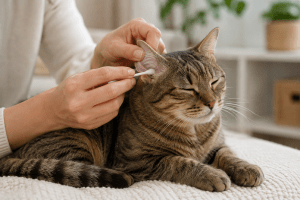
How long does gabapentin last in cats? A dose generally lasts around 8 to 12 hours, which is why it is often given two or three times a day, or a few hours before a stressful vet visit. Gabapentin is one of the few medicines vets genuinely do prescribe for cats, unlike the human painkillers in your cabinet, which are a different and far more dangerous story. Paracetamol, ibuprofen, and aspirin can seriously harm or kill a cat, and even allergy tablets need veterinary guidance. This guide explains how gabapentin works and lasts, which human medicines are toxic, what you can safely give a cat for pain or allergies (the answer is: only what a vet prescribes), and the emergency signs of medicine poisoning.
Only give medicines your vet has prescribed for your cat. Keep up routine care with the Cat Vaccination & Wellness Schedule, and check foods and products with the Cat Food & Toxin Safety Checker.
On this page
How long gabapentin lasts
Starting with the exact question, gabapentin’s effects in a cat generally last somewhere in the region of 8 to 12 hours, which shapes how it is dosed and what to expect after giving it.
For most cats, a single dose of gabapentin provides its effect for roughly 8 to 12 hours, which is why vets so often prescribe it to be given every 8 to 12 hours, that is, two or three times a day, when it is used for ongoing pain or anxiety. The drowsiness and calming effect are usually strongest for the first several hours after the dose and then gradually wear off across that window. When gabapentin is used differently, as a one-off dose to take the edge off a stressful event such as a vet appointment or a car journey, the practical experience for owners is that the cat becomes noticeably sleepy and mellow for much of the day, and in some cats a degree of drowsiness or wobbliness lingers longer, occasionally into the following morning, before it fully clears. How long it lasts in an individual cat is affected by the dose given, the cat’s size, and its health, and kidney function matters a great deal because gabapentin is cleared from the body by the kidneys; in a cat with reduced kidney function the drug lasts longer and can build up, which is why vets lower the dose in those cats. Because of all this variability, the 8-to-12-hour figure is a general guide, and the timing that matters for your cat is the one your vet has prescribed.
It is worth setting expectations for what “lasting” actually looks like, because owners sometimes worry when a cat given gabapentin to calm it stays sleepy longer than they expected. A degree of lingering drowsiness the evening of an anxiety dose, or a cat that is a bit mellow and wobbly the next morning, is common and usually nothing to be alarmed about; it simply reflects the drug still clearing. What would be worth a call to the vet is drowsiness that is far deeper than expected, a cat that cannot be roused properly, or that is still heavily affected well beyond a day, since that can point to too high a dose for that individual, particularly in a cat with reduced kidney function.
How fast it works and how it is used
Just as useful as how long it lasts is how quickly gabapentin starts working, since that determines when to give it, particularly for the popular use of calming a cat before a stressful outing.
Gabapentin usually begins to take effect within about 1 to 2 hours of being given by mouth, and its sedative, anxiety-reducing effect is often most pronounced around 2 to 3 hours after the dose. This timing is the key to its most familiar use. Many cats find vet visits, travel, or other events highly stressful, and a single dose of gabapentin given a couple of hours beforehand can make a world of difference, leaving the cat calmer, less frightened, and far easier and safer to examine or transport, which is kinder to the cat and helps the vet do a better job. For this purpose a vet typically advises giving the dose around 2 to 3 hours before the appointment or journey so that it is working at the moment it is needed. When gabapentin is instead used for ongoing pain, it is given on a regular schedule within that 8-to-12-hour rhythm, and its effect is maintained by the repeated dosing rather than a single peak. Whichever the use, the practical point is to give it at the time your vet specifies, since giving an anxiety dose too late means it has not kicked in when the cat reaches the clinic, and giving pain doses irregularly leaves gaps in relief.
A small practical tip for the pre-visit dose is to plan the timing backwards from the appointment and to build in the possibility of a battle. If the medicine needs to be working two to three hours before you arrive, and your cat is likely to make giving a tablet difficult, allow extra time so a missed first attempt does not throw the whole schedule off. Some owners find that giving the dose while the cat is calm at home, well before the carrier appears, works far better than trying once the cat has already sensed that something is up, and your vet can advise on the easiest way to give it for your particular cat.
What gabapentin is for and its safety
To use gabapentin sensibly it helps to understand what it is actually for in cats and why, used properly, it is regarded as a safe and valuable medicine rather than something to fear.
Gabapentin has become a widely used medication in feline medicine for two main reasons. The first is pain relief, particularly for chronic and nerve-related pain: it is often used to help manage the discomfort of conditions like arthritis, frequently alongside other pain medicines as part of a broader plan, because it works on pain in a different way from anti-inflammatories. The second, and the use most owners encounter, is reducing fear and anxiety, most commonly as a single pre-visit dose to calm a stressed cat before the vet, travel, grooming, or another ordeal. Used as prescribed by a vet, gabapentin is generally considered safe and well tolerated in cats, which is precisely why it has become so popular; it has a wide margin of safety compared with many drugs, and its main effects, sleepiness and mild wobbliness, are usually the intended calming rather than signs of harm. This is a genuinely important contrast with the human painkillers discussed later: gabapentin is a medicine vets choose to give cats because it is suitable for them, whereas those human drugs are ones vets warn against because they are not. Even so, gabapentin is a prescription medicine that should only be given on veterinary advice, at the prescribed dose and interval, and never shared from another pet or a person, since the right dose depends on the individual cat and its health.
Side effects and cautions
Although gabapentin is well tolerated, it does have side effects and a few important cautions, so knowing what is normal and what is not helps you use it confidently.
The usual side effects of gabapentin in cats are exactly what you would expect from a calming, sedative medicine: drowsiness, sleepiness, a wobbly or slightly drunken way of walking, mild incoordination, and sometimes a dazed appearance. When gabapentin is given to calm a cat, these effects are largely the point, and they wear off as the drug clears, typically over the hours after dosing, though a cat may seem a little unsteady or sleepy for a while afterward, so it is wise to keep it somewhere safe where it cannot fall from a height or hurt itself while woozy. Occasionally a cat may seem more agitated rather than calmer, or may vomit. The key cautions are around health and dose. Because the kidneys clear gabapentin, cats with kidney disease need lower doses to avoid the drug building up and causing excessive sedation, which is one reason the dose must be set by a vet who knows the cat. Gabapentin should not be stopped abruptly if a cat has been on it regularly for a long time, and it can interact with other medicines, so the vet needs to know everything the cat is taking. Also important: some liquid gabapentin formulations made for humans contain xylitol, and while xylitol’s toxicity is most associated with dogs, it is a reason to use only the product and form your vet provides. Given these sensible precautions, gabapentin remains a safe, useful medicine, but one to use strictly as directed.
Why human medicines are so dangerous to cats
The reason this guide pivots so sharply from gabapentin to a strong warning about other drugs is a fundamental fact about cats: they are unusually unable to process many common human medicines safely.
Cats have a particular gap in their liver chemistry. They are deficient in certain liver enzymes, especially a group involved in a process called glucuronidation, that other animals and humans use to break down and safely eliminate many drugs and toxins. As a result, a number of substances that a person or even a dog can handle build up to dangerous levels in a cat, or are converted into harmful products the cat cannot clear, which is why cats are so exquisitely sensitive to medicines like paracetamol. This same enzyme limitation is behind cats’ vulnerability to various other toxins, and it means that dose and drug choices safe for us can be lethal for a cat at even small amounts. The practical consequence is simple but vital: you cannot reason from human or dog medicine to cat medicine, and a tablet that would be a mild remedy for you can poison or kill a cat. This is the core reason behind the golden rule that runs through the rest of this guide, that you should never give a cat any medication that has not been prescribed for that cat by a vet, because the cat’s unique physiology makes home medicating with human drugs one of the most common and most preventable causes of serious poisoning. Understanding why cats are so sensitive makes the warnings that follow make sense rather than seem overcautious.
This is also why advice that circulates between pet owners can be so dangerous. A friend whose dog was given a certain painkiller, or a half-remembered tip about a small dose of a human tablet, can lead a well-meaning owner to poison their cat, because what was safe for the dog or the person is precisely what the cat cannot handle. The enzyme gap is not a matter of degree that a smaller dose gets around; for a drug like paracetamol it is a fundamental inability to detoxify the substance at all. Treating cats as small dogs, or as tiny people, when it comes to medicine is one of the most persistent and harmful misconceptions in pet care, and understanding the biology behind it is the best defence against it.
Tylenol, ibuprofen, and aspirin: never give
The human painkillers people most often think of reaching for when a pet seems sore are exactly the ones that are most dangerous to cats, so this warning is the single most important part of the guide.
Never give a cat human painkillers. Paracetamol (acetaminophen, sold as Tylenol and in many cold and flu remedies) is extremely toxic to cats; even a single regular tablet can be fatal, causing damage to the red blood cells and liver, with signs like brown or blue gums, facial or paw swelling, and difficulty breathing. Ibuprofen and other human anti-inflammatory painkillers (NSAIDs) cause severe stomach ulceration and kidney damage in cats. Aspirin is highly toxic except in rare, precisely vet-directed situations. If your cat has swallowed any of these, treat it as an emergency and contact your vet or a poison line at once.
To be absolutely clear, paracetamol is the most notorious and deadly of these: cats cannot detoxify it because of the enzyme deficiency described above, so it rapidly damages their red blood cells, robbing the blood of its ability to carry oxygen, and injures the liver, and a single common tablet can kill a cat. It hides in many combination cold, flu, and pain products too, which is one reason those must never be given. Ibuprofen, naproxen, and other human NSAIDs are also dangerous, causing painful stomach ulcers and serious, sometimes fatal, kidney damage in cats, which are far more sensitive to these drugs than people. Aspirin is toxic to cats and, although it has occasionally been used at tiny, carefully calculated doses under strict veterinary supervision for specific conditions, it must never be given on your own initiative, as the safe dose is minuscule and the margin for error deadly. The unifying message is that there is no human painkiller you can safely give a cat, and the instinct to relieve a pet’s pain with what is in the cabinet, however kind, is one of the most dangerous things an owner can do. The safe path for a cat in pain is always the vet, never the medicine drawer.
What you can give a cat for pain
Having ruled out the entire human medicine cabinet, the natural question is what you actually can give a cat that is hurting, and the honest, important answer is: only what a vet prescribes.
There is no safe over-the-counter or household pain relief for a cat. The only appropriate pain relief is medication prescribed by a vet specifically for cats and given at the correct, cat-calculated dose. Vets have several safe options, including anti-inflammatory painkillers that are licensed and formulated for cats and dosed to their tolerance, gabapentin for chronic and nerve pain and as part of multimodal pain control, and other medicines for particular situations, and they choose and dose these based on the cause of the pain and the individual cat’s health, especially its kidneys and liver. This is why the right response to a cat in obvious pain is not to search for a home remedy but to contact the vet, who can both identify why the cat is hurting, which matters, since pain is a symptom of an underlying problem that needs addressing, and provide relief that is genuinely safe. While you arrange veterinary care, the helpful things you can do are supportive rather than medicinal: keep the cat warm, comfortable, and quiet, minimise the need to jump or move if it is sore, ensure it can reach food, water, and a litter tray easily, and handle it gently. A cat in significant or persistent pain should be seen promptly, both for its welfare and because untreated pain and its cause can worsen. The key takeaway is that safe feline pain relief exists, but it comes only through the vet.
It also helps to recognise that cats hide pain, so by the time a cat is showing obvious signs of discomfort, it is often quite sore, which makes prompt veterinary help all the more important rather than something to put off. Signs of pain in a cat can be subtle: hiding, reduced grooming, reluctance to jump, a hunched posture, irritability, or going off food. Noticing these and acting on them, by arranging veterinary assessment and safe relief, is far kinder than leaving a stoical cat to cope, and infinitely safer than trying to treat the pain yourself with something from the cabinet that could kill it.
Benadryl, Zyrtec, and allergy medicines
Allergy medicines are a grey area that causes a lot of confusion, because some human antihistamines are sometimes used in cats, which leads owners to assume they can dose from their own supply, and that assumption is dangerous.
It is true that certain human antihistamines are, in some cases, used in cats under veterinary direction. Diphenhydramine (Benadryl) and cetirizine (Zyrtec) are examples that vets do sometimes recommend for particular cats and situations. But this absolutely does not mean you can give them yourself, for several important reasons. First, the dose for a cat is very different from a human dose and must be calculated for the individual animal, so guessing risks giving far too much. Second, many products sold under familiar brand names are combination products that contain additional active ingredients, decongestants, or, critically, paracetamol, which are toxic to cats, so a tablet with the right-sounding name can contain something deadly. Third, the liquid children’s versions can contain xylitol or alcohol, and formulations vary. Fourth, whether an antihistamine is even appropriate depends on the cat’s problem, and cats often show allergies through the skin in ways that need different treatment. For all these reasons, the safe rule is the same as for painkillers: if you think your cat has allergies or an itchy skin problem, do not reach for your own allergy tablets, but ask your vet what, if anything, is suitable and at what dose. The vet may indeed advise a specific antihistamine and dose, and following that is fine, but that is entirely different from self-medicating from the bathroom cabinet.
The combination-product trap deserves one more emphasis, because it catches out even careful owners. A great many everyday remedies, cold and flu tablets, sinus and allergy formulas, night-time versions of familiar brands, bundle several active ingredients into one pill, and it only takes one of them, very often paracetamol, to make the whole thing lethal to a cat. This means that even if you had a correct dose of a single antihistamine in mind, grabbing a similarly named combination product could poison the cat. It is one more reason the safe answer is never to improvise from human packaging, and always to let the vet specify both the exact drug and the exact product.
Signs of medicine poisoning
Because accidental exposure to human medicine, whether given in error or swallowed by a curious cat, is a real risk, it is vital to recognise the signs of poisoning so you can act fast, since speed can be the difference between life and death.
The signs of medicine poisoning in a cat vary with the drug, but warning signs to take seriously include drooling, vomiting, weakness, marked lethargy, unsteadiness or a drunken appearance, difficulty breathing or unusually fast breathing, collapse, tremors, or seizures. Certain signs point to specific poisons: paracetamol poisoning classically causes the gums and tongue to turn brown, muddy, or bluish as the blood loses its ability to carry oxygen, along with swelling of the face and paws, breathing difficulty, and profound weakness, and it comes on within hours and is rapidly life-threatening. NSAID poisoning tends to cause vomiting (sometimes with blood), loss of appetite, and signs of kidney damage. The crucial thing is not to wait for the picture to become clear: if you know or even suspect your cat has swallowed any human medication, whether you gave it not realising the danger or the cat got into a packet, treat it as an emergency straight away. Contact your vet or an animal poison control service immediately, take the medicine packaging with you so they know exactly what and how much was involved, and follow their instructions. Do not try to make the cat vomit unless a professional tells you to. Early treatment dramatically improves the outcome for many of these poisonings, and for paracetamol in particular, hours matter, so acting on suspicion rather than waiting for certainty is what saves cats.
There is a specific antidote for paracetamol poisoning that works best when given early, which is a large part of why speed matters so much with that particular drug: a cat treated within the first hours has a far better chance than one brought in once the gums have already turned brown and breathing is affected. This is the opposite of a wait-and-see situation. If you find a chewed packet or realise a tablet has gone missing near your cat, do not sit and watch for symptoms, because with paracetamol the symptoms appearing means the damage is already advancing. The right instinct is to phone for help the moment you suspect exposure, even if the cat still seems completely fine.
Giving prescribed medicine safely
When your vet has prescribed a medicine such as gabapentin, giving it correctly and safely matters, so a few practical points help you get it right and avoid mistakes.
Always follow the exact dose, timing, and instructions your vet gives, and use only the product they have dispensed or recommended, never a human version or another pet’s medicine, since strength and formulation differ. Give the medicine for the full course or duration advised, and do not stop a regular medication suddenly without checking, as some, gabapentin included when used long term, are best not stopped abruptly. If you miss a dose, ask the vet what to do rather than doubling up. Keep a note of what your cat is taking and tell any vet treating it, since drug interactions matter. Store all medicines, human and animal, well out of a cat’s reach, since cats can knock over and chew packaging, and keep handbags and bedside tables, common places tablets are left, off limits. When giving a tablet, your vet can show you how, and hiding it in a treat or using a pill giver can help, though take care with what you hide it in. If your cat reacts badly to a prescribed medicine, unusual agitation, vomiting, severe drowsiness beyond what was expected, or anything that worries you, contact the vet. Used this way, prescribed medicines like gabapentin do their job safely, and the discipline of giving only what the vet has prescribed, exactly as directed, is what keeps medicine a help rather than a hazard.
When to call the vet
To bring it together, there are clear situations around medicines and cats where you should contact the vet, ranging from routine questions to genuine emergencies.
Treat as an immediate emergency any known or suspected swallowing of human medication by your cat, whether given by mistake or taken from a packet, and any signs of poisoning such as brown or blue gums, facial or paw swelling, breathing difficulty, collapse, tremors, or seizures, contacting your vet or an animal poison control line without delay and taking the packaging. Contact your vet promptly, too, if your cat is in obvious or persistent pain, since it needs a diagnosis and safe relief rather than home medicating, and if a cat on a prescribed medicine like gabapentin seems excessively sedated, very wobbly, agitated, or otherwise reacts badly. On the routine side, ask your vet before giving your cat anything at all from a human medicine cabinet, including allergy tablets, and ask if you are unsure about the dose, timing, or a missed dose of a prescribed medicine, or about gabapentin’s expected effects and duration for your particular cat. The single principle underlying all of this is that decisions about medicating a cat belong with your vet, because the cat’s unique sensitivity to many drugs makes professional guidance not a formality but a genuine safeguard. When in doubt about any medicine and your cat, the safe and simple move is to phone the vet before acting.
Frequently asked questions
How long does gabapentin last in cats?
In most cats a dose of gabapentin lasts roughly 8 to 12 hours, which is why vets often prescribe it every 8 to 12 hours for ongoing pain or anxiety. It usually starts working within about 1 to 2 hours of being given, with the sedative and calming effects often most noticeable a couple of hours in. When it is used as a single dose to calm a cat before a stressful vet visit or car trip, it is typically given around 2 to 3 hours beforehand so it is working at the right time, and the drowsiness can then last for much of the day, sometimes into the next morning in some cats. Exact timing varies with the individual cat, the dose, and its health, especially kidney function, so always follow the dose and interval your vet gives you.
What is gabapentin used for in cats, and is it safe?
Gabapentin is a medication vets commonly prescribe to cats for two main purposes: to help manage certain kinds of pain, particularly chronic or nerve-related pain and the discomfort of conditions like arthritis, often alongside other pain relief; and to reduce fear and anxiety, most familiarly as a single dose before a vet visit, travel, or another stressful event, where it makes the cat calmer and easier to handle. Used as prescribed by a vet, gabapentin is generally considered safe and well tolerated in cats, with drowsiness, wobbliness, and mild incoordination being the usual side effects, which wear off. It should only be given on veterinary advice and at the prescribed dose, and doses are often adjusted for cats with kidney problems, since the drug is cleared by the kidneys.
Can I give my cat Tylenol, ibuprofen, or aspirin for pain?
No. Tylenol (paracetamol or acetaminophen) is extremely toxic to cats and even a single tablet can be fatal, so it must never be given. Ibuprofen and other human anti-inflammatory painkillers (NSAIDs) are also dangerous to cats and can cause severe stomach and kidney damage. Aspirin is highly toxic to cats except in very specific circumstances under close veterinary direction, and should never be given on your own initiative. In short, do not give any human painkiller to a cat. Cats are exquisitely sensitive to these drugs because they lack the liver enzymes to process them safely. If your cat is in pain, only a vet can provide safe, cat-specific pain relief, so contact your vet rather than reaching for the medicine cabinet.
What can I give my cat for pain at home?
Nothing from your own medicine cabinet, and this is the most important safety point. There is no safe human painkiller you can give a cat at home, because the common ones, paracetamol, ibuprofen, aspirin, are toxic to cats, some lethally so. The only safe pain relief for a cat is medication prescribed by a vet specifically for cats, such as cat-licensed anti-inflammatories, gabapentin, or other drugs, given at the correct dose. So the right response to a cat in pain is to contact your vet, who can identify the cause and dispense safe, effective relief, and, in the meantime, to keep the cat comfortable, warm, and quiet rather than medicating it yourself. A cat in obvious pain should be seen promptly.
Can cats take Benadryl, Zyrtec, or other allergy medicines?
Some human antihistamines are sometimes used in cats, but only under veterinary direction and at a vet-calculated dose, never on your own judgement. Benadryl (diphenhydramine) and cetirizine (Zyrtec) are examples that vets do sometimes recommend for certain cats, but the dose is very different from a human dose, some formulations contain other ingredients that are dangerous to cats, and giving the wrong thing or wrong amount can harm the cat. Crucially, you must never assume a product is safe just because it shares a name, since combination products (for example those with decongestants or added paracetamol) can be toxic. So if you think your cat has allergies, ask your vet what, if anything, is appropriate rather than dosing from your own supply.
What are the signs my cat has been poisoned by human medicine?
Signs depend on the drug but can include drooling, vomiting, weakness, lethargy, difficulty breathing or fast breathing, pale, blue, brown, or muddy gums, swelling of the face or paws, a wobbly or drunken appearance, collapse, or seizures. Paracetamol poisoning in particular can cause brownish or bluish gums, facial or paw swelling, and breathing difficulty and is rapidly life-threatening. If you know or suspect your cat has swallowed any human medication, treat it as an emergency: contact your vet or an animal poison control service immediately, take the packaging with you, and do not wait for symptoms to appear, since early treatment greatly improves the outcome and delay can be fatal.
How long does gabapentin take to work in cats?
Gabapentin usually begins to take effect within about 1 to 2 hours of being given by mouth, with its calming and sedative effects often becoming most noticeable roughly 2 to 3 hours after the dose. That is why, when it is used to reduce anxiety before a stressful event like a vet appointment or car journey, vets typically advise giving it around 2 to 3 hours ahead so it is working at the right moment. For ongoing pain management given on a regular schedule, the effect builds with each dose within the every-8-to-12-hour rhythm. Because onset and duration vary between individual cats, follow your vet’s specific instructions on when and how often to give it rather than a general timetable.
The quick version
How long does gabapentin last in cats? Around 8 to 12 hours, which is why it is dosed two or three times a day, and it starts working in about 1 to 2 hours, so an anxiety dose before a vet visit is given roughly 2 to 3 hours ahead. Gabapentin is a genuinely safe, useful medicine when prescribed by a vet, for pain and for calming, with drowsiness and wobbliness the main effects. Human painkillers are the opposite: paracetamol (Tylenol) is deadly to cats, ibuprofen and aspirin are toxic, and there is no safe home painkiller for a cat, only vet-prescribed relief. Even allergy tablets like Benadryl or Zyrtec need a vet’s dose and product. If a cat swallows any human medicine, treat it as an emergency and call the vet at once.
For related help, see the guides on signs a cat is sick, a cat that won’t eat, and essential oils and cats. Check plants and products with the Cat Food & Toxin Safety Checker, keep up care with the Cat Vaccination & Wellness Schedule, browse the full cat blog and the pet calculators, or explore more free tools on the Waldev homepage.
Medical disclaimer: This guide is for general education and is not a substitute for veterinary advice, diagnosis, or treatment, and nothing here is dosing guidance. Only give your cat medicines prescribed for it by a veterinarian, at the prescribed dose. Many human medicines, including paracetamol, ibuprofen, and aspirin, are toxic to cats. If your cat has swallowed any human medication or shows signs of poisoning, contact your veterinarian or an animal poison control service immediately.
Many human medicines are toxic to cats; only give medication prescribed by your vet. ASPCA Animal Poison Control →
A cat in pain needs safe, cat-specific relief from a vet, never human painkillers. Locate a hospital →