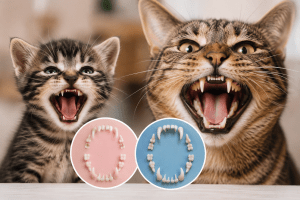
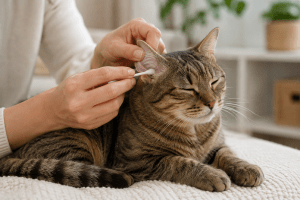
Why are my cats ears hot? It is a question that worries a lot of owners, usually after a cuddle where the cat’s ears felt surprisingly warm. The reassuring answer is that warm ears are almost always completely normal. A cat’s ears are full of blood vessels and help regulate body temperature, so they naturally feel warm and change with the surroundings, and because cats run hotter than we do, their ears feel warm against our cooler hands anyway. Hot ears only matter when they come with other signs of illness, or when the ear itself looks sore or infected. This guide explains what warm ears really mean, whether they signal a fever, and exactly when to see the vet.
If warm ears come with other signs, a vet visit is the reliable way to check. See when your cat is next due with the Cat Vaccination & Wellness Schedule, and browse more tools in the pet calculators hub.
On this page
Warm ears are usually normal
The most important thing to say up front, because it settles most people’s worry immediately, is that warm cat ears are usually completely normal and not a sign that anything is wrong.
Owners often notice their cat’s ears feel hot during a cuddle and jump to the conclusion that the cat has a fever or is ill, but in the great majority of cases warm ears are simply how a healthy cat’s ears are. The ears are thin, have a rich blood supply close to the surface, and play a part in regulating the cat’s body temperature, so they naturally feel warm and their temperature rises and falls with what the cat has been doing and where it has been. On top of that, a cat’s normal body temperature is higher than a person’s, so a cat’s ears will tend to feel warm, even hot, against our cooler hands regardless of whether the cat is unwell. The upshot is that warm ears on their own, in a cat that is bright, active, eating well, and behaving normally, are not a cause for concern and do not need any action. Warm ears become worth a second look only when they are accompanied by other signs that the cat is unwell, or when the ear itself is red, sore, smelly, or swollen. The rest of this guide explains why ears feel warm, why that is usually harmless, and how to tell the rare worrying case from the common normal one.
It is worth naming where this worry usually comes from, because understanding it helps put it to rest. Many of us instinctively check a person’s forehead for warmth when we think they might be feverish, and it feels natural to do the equivalent with a cat by touching its ears, which are one of the few relatively bare, warm parts we can easily feel. The problem is that this everyday human habit does not translate reliably to cats, whose ears are designed to change temperature constantly. So the very instinct that leads owners to feel the ears is also what makes them misread a perfectly normal warm ear as a sign of illness, when in fact the two things are only loosely connected.
Why cats’ ears feel warm
Understanding the simple anatomy behind warm ears takes away most of the worry, because it shows that warmth is exactly what you would expect from a healthy ear rather than a warning sign.
A cat’s ears are made of thin skin over cartilage, with relatively little insulating fur on the inner surface and a network of blood vessels running close beneath the skin. Because warm blood is flowing near the surface with little to insulate it, the ears radiate heat and feel warm to the touch, in the same way our own hands or ears can feel warm when blood flow to them is good. This is normal and healthy, and it is precisely what those blood vessels are there for, since the ears use that surface blood flow to help the cat manage its body temperature. The amount of warmth varies with how much blood is flowing to the ears at any moment, which in turn changes with the cat’s activity, its surroundings, and its temperature-regulation needs, so the same cat’s ears can feel cooler at one time and quite hot at another within the normal range. Add to this that cats naturally run a body temperature a degree or two above ours, and it becomes clear why a cat’s ears so reliably feel warm to us. So when you feel hot ears, you are usually just feeling a well-supplied, well-functioning ear doing its job, not a sign of sickness, which is why the warmth alone tells you very little without the wider context of how the cat is otherwise.
Ears and temperature regulation
The reason ears change temperature so much is that they are genuinely part of how a cat controls its body heat, so their warmth reflects that ongoing job rather than any fixed state.
Cats cannot sweat over their bodies the way we do, so they rely on other means to manage heat, and the ears, with their thin skin and surface blood vessels, are one of the areas used to release or conserve warmth. When a cat is warm, more blood flows to the ears and they give off heat, helping cool the cat, so the ears feel hotter; when a cat is cold, blood flow to the extremities reduces to conserve core warmth, and the ears can feel cooler. This is why a cat’s ears are not at a constant temperature but shift with circumstances, feeling hot after the cat has been warm and active and cooler after it has been somewhere chilly. It is a normal, dynamic process, and the changing warmth of the ears is a sign of that regulation working rather than of anything being wrong. This also explains why ear temperature is such an unreliable guide to whether a cat is ill: because the ears are constantly adjusting to help control body heat and respond so readily to the environment, their warmth at any given moment reflects the cat’s recent surroundings and activity far more than its internal health. Knowing that the ears are essentially small radiators the cat turns up and down makes their variable warmth reassuring rather than alarming.
You can see this regulation at work if you pay attention over a day. The same cat’s ears might feel cool to the touch first thing on a chilly morning, distinctly warm after it has spent an hour stretched out in a patch of afternoon sun, and somewhere in between when it is simply pottering about the house. None of these readings means anything about the cat’s health; they are just the ears responding to the moment, exactly as they are meant to. Once you have felt that natural range yourself, a warm ear stops registering as an alarm and starts reading as what it is, an ear doing its ordinary job.
Everyday reasons for hot ears
In practice, most instances of hot ears trace back to simple, everyday causes, so it helps to recognise the ordinary situations that leave a cat’s ears feeling warm with nothing behind it but comfort.
There are many perfectly innocent reasons a cat’s ears feel hot at a given moment. The cat may have been basking in a sunny spot or lying next to a radiator, fire, or other heat source, warming its ears directly. It may have been sleeping curled up, especially with its ears tucked against its body or a warm surface, which keeps them cosy. Physical activity warms a cat up, so ears often feel hotter after a burst of play, running about, or a mad half-hour. Warm weather naturally raises a cat’s ear temperature, as does a warm room. Even lying with one side of the head against you during a cuddle can leave that ear feeling hot. In all of these cases the warmth is external or activity-related and entirely harmless, and it typically settles once the cat has cooled down or moved away from the heat. Emotional arousal or excitement can also transiently flush the ears, so a cat that is worked up during play or a bit stressed may have warmer ears for a while. The common thread is that these causes make sense in context, the cat has just been in the sun, or playing, or asleep by the radiator, and the cat is otherwise completely well and comfortable. Recognising these everyday explanations is usually all it takes to set aside worry about hot ears, since they account for the overwhelming majority of cases owners notice.
Do hot ears mean a fever?
The specific fear behind this question is usually that hot ears mean the cat has a fever, so it is worth addressing that directly: hot ears are not a reliable sign of a fever, and you cannot diagnose one by feel.
It is a widespread belief, borrowed partly from how we sometimes check a child’s forehead, that warm ears indicate a fever in a cat, but this simply is not reliable. Because a cat’s ear temperature swings with its environment and activity, warm ears occur constantly in perfectly healthy cats and tell you little about the cat’s actual core temperature. A cat with hot ears may have been in the sun; a cat with a genuine fever might not have especially hot ears at that moment. In other words, ear warmth and fever are only loosely related, and feeling the ears is not a way to take a cat’s temperature. This matters because relying on hot ears could either cause needless worry about a healthy cat or, occasionally, false reassurance about a sick one. The only accurate way to know whether a cat has a fever is to measure its body temperature with a thermometer, which is best done by a vet or with veterinary guidance, since it must be done correctly and safely. So while hot ears could in principle accompany a fever, they are not evidence of one on their own. What actually points to a fever is not the temperature of the ears but the presence of other signs of illness, which the next section covers, since it is those signs, not the warm ears, that tell you whether a cat may genuinely be feverish.
The real signs of a fever
Since hot ears alone do not indicate a fever, it helps to know the signs that genuinely suggest a cat may be feverish or unwell, because it is these, not the ear warmth, that should guide you.
A fever in a cat, meaning a raised body temperature due to illness, tends to show itself through how the cat behaves and feels rather than through its ears specifically. The common signs include lethargy and sleeping much more than usual, a loss of appetite or refusing food, hiding away and withdrawing from the family, and a general dullness or seeming ‘off.’ A feverish cat may shiver or tremble, sit hunched, and be less interested in grooming, so its coat can look unkempt. Its nose may feel warm and dry, though, like the ears, the nose is not a reliable thermometer. There may be signs of whatever is causing the fever, such as a wound, or respiratory signs like sneezing, or vomiting and diarrhea. The key point is that a genuinely feverish cat is usually not just a normal cat with warm ears but a cat that is clearly not itself in these wider ways. So if a cat has hot ears and is otherwise bright, playful, and eating, a fever is unlikely and the warm ears are almost certainly normal; but if the hot ears come alongside lethargy, loss of appetite, hiding, shivering, or other signs of illness, then a fever or other problem becomes a real possibility and the cat should be seen by a vet. It is the company the hot ears keep that matters, not the warmth itself.
A simple mental checklist helps in the moment. Ask whether the cat is eating normally, whether it is playing and moving as usual, whether it is greeting and interacting the way it always does, and whether it looks comfortable rather than hunched or withdrawn. If the answer to all of these is yes, warm ears are almost certainly meaningless, whatever their temperature. If the answer to several is no, then the cat, not its ears, is telling you something may be wrong, and that is the signal to act. Running through that short list turns a vague worry about hot ears into a clear read on whether the whole cat is actually well.
If warm ears come with other changes, see the guides on the early signs a cat is sick and a cat that won’t eat, and never give human fever medicines to a cat.
When the ear itself is the problem
There is one situation where warm ears do point to a genuine issue, and it is not a fever but a problem in the ear itself, so it is worth knowing the signs that the ear, rather than the cat’s temperature, is the concern.
Sometimes an ear feels hot because it is inflamed or infected, in which case the warmth is localised to that ear and comes with other signs of an ear problem rather than general illness. An ear infection or a mite infestation can make the ear red, swollen, sore, and warm, and such a cat typically scratches at the ear, shakes its head, holds the head tilted, resents having the ear touched, and may have a bad smell or a dark, waxy, or unusual discharge from the ear. A wound, insect bite, or sunburn on the thin ear flap, which is prone to sunburn in white-eared cats, can also make an ear hot, red, and sore in one spot. The distinction from normal warm ears is clear: normal warm ears look healthy and the cat is comfortable, whereas a problem ear looks or smells abnormal and the cat is bothered by it. Warmth combined with redness, swelling, soreness, odour, discharge, or a cat scratching and shaking its head means the ear itself needs attention, and that is a reason to see the vet, who can diagnose an infection or mites and treat it. So while most hot ears are harmless temperature regulation, a hot ear that is also red, sore, smelly, or itchy is a different matter and should be checked.
The sunburn point is worth a moment of its own, since it catches owners out. Cats with white or pale ears, and those that sunbathe by a window or spend time outdoors, are prone to sunburn on the thin, sparsely furred ear tips, which can make the ears hot, pink, sore, and, over years of repeated exposure, can lead to more serious skin damage. If your cat has pale ears and enjoys the sun, warm, reddened ear tips after basking are worth keeping an eye on, and a vet can advise on protection. This is a different situation from the harmless warmth of a well ear, and it is one where the warmth and redness together are a genuine reason to pay attention.
One ear hotter than the other
A common specific worry is noticing that one ear feels hotter than the other, so it is worth explaining what that usually means, since it is generally far less significant than it seems.
A difference in temperature between the two ears is very often just normal variation. If a cat has been lying on one side, that ear may have been pressed against a warm surface or its own body and so feels hotter, while the upper ear, more exposed to the air, feels cooler. One ear might have caught the sun while the other was shaded. These everyday asymmetries mean nothing and even out once the cat changes position. So a one-sided difference in warmth alone, in a cat that is comfortable and otherwise well, is almost always harmless. The exception is when the hotter ear also shows signs of a local problem: if one ear is noticeably hotter and is also red, swollen, sore, itchy, smelly, or discharging, or the cat is scratching and shaking at that particular ear, then the warmth may reflect a localised infection, mites, or inflammation in that ear rather than simple positional difference. In that case the one-sided warmth is a clue pointing to which ear needs looking at. The rule mirrors the rest of this guide: a difference in ear warmth by itself is not a concern, but warmth combined with signs of irritation or infection in that ear is a reason to have it examined.
Kittens and warm ears
Kitten owners sometimes worry particularly about warm ears, so it is worth a brief note, both to reassure and to flag the greater caution that young kittens always warrant.
Warm ears in a kitten are, like in adult cats, usually just normal temperature regulation, and a bright, active, feeding kitten with warm ears is generally fine. Young kittens do have less ability to regulate their own body temperature than adults and rely more on external warmth and their mother and littermates to stay warm, which is why they are kept cosy, so a kitten’s ears reflecting the warmth of its environment is expected. The important caveat is the general one that applies to all kitten health: kittens are small, have little reserve, and can become unwell quickly, so any sign of genuine illness in a kitten, such as lethargy, not feeding, being cold and floppy, or seeming unwell, warrants prompt veterinary attention regardless of ear temperature. As with adults, it is these wider signs, not the warmth of the ears, that indicate whether a kitten is unwell, and a warm-eared kitten that is nursing keenly and wriggling about is showing you it is doing fine. So warm ears alone should not alarm a kitten owner, but a kitten that seems ill in other ways needs to be seen quickly, since the margin for a small kitten to deteriorate is narrow and it is always safer to check early.
What to do and what not to do
Putting it into practice, the response to hot ears is simple and depends entirely on how the rest of the cat is, with one firm rule about what never to do.
If your cat has warm ears but is otherwise completely normal, bright, playful, eating, and comfortable, the answer is to do nothing, because warm ears in a well cat are normal and need no action; you can simply reassure yourself by checking that the cat is behaving as usual. If the cat has been somewhere warm or active, you might just let it cool down naturally in a comfortable spot with access to water and shade. If, on the other hand, the hot ears come with any signs of illness, lethargy, loss of appetite, hiding, shivering, vomiting, or a cat that seems unwell, then the right step is to contact your vet, and to note the other signs you have observed so you can describe them. The firm rule that applies in every case is never to give your cat human fever or pain medicines to bring down a suspected temperature, because many of these, including paracetamol and ibuprofen, are toxic to cats and can be fatal even in small doses. Do not try to take the cat’s temperature yourself unless your vet has shown you how, and do not put anything into a sore or discharging ear without veterinary advice. In short, a well cat with warm ears needs nothing, an unwell cat with warm ears needs the vet, and no cat should ever be given human medicine for a fever.
The warning about human medicine cannot be overstated, because it is the one way a worried owner can turn a non-problem into a tragedy. Reaching for a painkiller or fever medicine to help a cat that feels warm seems caring, but paracetamol is extremely toxic to cats and even a single tablet can be fatal, while ibuprofen and similar drugs are also dangerous, because cats cannot process them the way people can. If you are ever genuinely worried that your cat has a fever, the right response is a call to the vet, who has safe, cat-specific treatments, and never the medicine cabinet. Warm ears, which are usually nothing anyway, are certainly not a reason to take that risk.
When to call the vet
To close, it helps to state plainly the situations where hot ears do warrant a vet visit, so you can act on the ones that matter and set aside the many that do not.
Warm ears by themselves, in a cat that is bright, active, eating, and behaving normally, do not need a vet at all and are just normal temperature regulation. Contact your vet, though, in these situations. If the hot ears come with signs that the cat is unwell, such as lethargy, not eating, hiding, shivering, vomiting or diarrhea, fast breathing, or a cat that is clearly not itself, since that combination can indicate a fever or other illness that needs assessment. If one or both ears are red, swollen, sore, smelly, or have a dark or unusual discharge, or the cat is scratching at its ears or shaking its head, since that points to an ear infection or mites needing treatment. If a kitten, elderly cat, or a cat with a health condition seems unwell in any way, since these cats should be seen sooner. And if you are simply worried and unsure, since a phone call to your vet for advice is always reasonable. When you contact the vet, describe the whole picture, how the cat is eating and behaving, any other signs, and what the ears look like, not just that they feel warm, since it is that fuller picture, rather than the ear temperature alone, that tells the vet whether the cat needs to be seen and how urgently.
Frequently asked questions
Why are my cat’s ears hot?
Warm cat ears are usually completely normal. A cat’s ears have lots of blood vessels close to the surface and help regulate body temperature, so they naturally feel warm and their temperature changes with the surroundings and the cat’s activity. Ears often feel hot after the cat has been lying in the sun or by a radiator, sleeping curled up, playing, or in warm weather, and this is nothing to worry about. Because a cat’s normal body temperature is higher than ours, its ears will often feel warm to our cooler hands anyway. Hot ears only suggest a problem when they come with other signs of illness, or when the ear itself is red, sore, smelly, or swollen, which can mean infection rather than a fever.
Are cats’ ears supposed to be warm?
Yes, warm ears are normal and healthy. The ears are one of the ways cats manage their body heat, with a rich blood supply near the skin, so they naturally feel warm and vary with temperature and activity. It is normal for a cat’s ears to feel warmer after sleeping, playing, or being somewhere warm, and cooler if the cat has been in a cold room. Because cats run a higher body temperature than people, their ears usually feel warm against our hands. So warm ears on their own, in a cat that is bright, eating, and behaving normally, are not a cause for concern and do not mean the cat is unwell.
Do hot ears mean my cat has a fever?
Not by themselves. You cannot reliably tell if a cat has a fever by feeling its ears, because ear temperature changes with the environment and activity and is not an accurate measure of body temperature. Hot ears might occur with a fever, but they occur just as often in a perfectly healthy cat that has been in the sun. A fever is more likely if the hot ears come with other signs, such as lethargy, loss of appetite, hiding, shivering, a warm dry nose, or the cat generally seeming unwell. The only accurate way to know if a cat has a fever is to measure its temperature with a thermometer, ideally done by or with guidance from a vet, so warm ears alone are not a diagnosis.
When should I worry about my cat’s hot ears?
Worry less about the warmth itself and more about what comes with it. See the vet if hot ears accompany signs of illness, such as lethargy, not eating, hiding, shivering, vomiting, or a cat that is clearly unwell, since that combination can point to a fever. Also have the ears checked if one or both ears are red, swollen, sore, smelly, or have dark or waxy discharge, or if the cat is scratching or shaking its head, since that suggests an ear infection or mites rather than normal warmth. Hot ears in a bright, normal cat are not a concern, but hot ears plus any sign of illness or a sore, discharging ear are a reason to contact your vet.
Why is one of my cat’s ears hotter than the other?
A difference between the two ears is often just normal variation, for example if the cat has been lying on one side so that ear was against a warm surface, or one ear caught the sun. In those cases it means nothing. However, if one ear is noticeably hotter and is also red, swollen, sore, itchy, smelly, or has discharge, that can indicate a localised problem such as an ear infection, mites, or inflammation in that ear, which is worth a vet check. So a one-sided difference in warmth alone, in a comfortable cat, is usually harmless, but one hot ear combined with signs of irritation or infection in that ear is a reason to have it looked at.
How can I tell if my cat is actually unwell, not just warm?
Look at the whole cat rather than the ears alone. A healthy cat with warm ears will be bright, alert, eating normally, playing, and behaving as usual. Signs that suggest the cat may genuinely be unwell include lethargy or sleeping much more than usual, loss of appetite, hiding or withdrawing, shivering or trembling, a hunched posture, vomiting or diarrhea, fast or laboured breathing, or simply seeming ‘off.’ If the warm ears come with any of these, the warmth may reflect a fever or illness and the cat should see a vet. If the cat is completely normal in every other way, warm ears are almost certainly just normal temperature regulation and nothing to act on.
What should I do if my cat has hot ears and seems sick?
If your cat has hot ears together with signs of being unwell, contact your vet rather than trying to diagnose a fever at home. Do not give any human fever or pain medicines, as many, including paracetamol and ibuprofen, are toxic to cats and can be fatal. Keep the cat comfortable, in a calm, not-too-warm place with access to fresh water, and note the other signs you have seen, how the cat is eating, its energy, any vomiting or hiding, so you can describe them to the vet. A cat that is genuinely feverish or unwell needs proper veterinary assessment to find and treat the cause, so the warm ears are a prompt to look at the whole cat and call the vet if it seems ill.
The quick version
Why are my cats ears hot? Almost always because warm ears are normal: a cat’s ears have a rich blood supply near the surface and help regulate body temperature, so they feel warm and change with sun, sleep, activity, and warm rooms, and because cats run hotter than us their ears feel warm against our hands anyway. Hot ears are not a reliable sign of a fever, which you cannot diagnose by feel, only by measuring temperature. What matters is the rest of the cat: warm ears with lethargy, loss of appetite, hiding, or shivering may mean a fever and need a vet, and a hot ear that is red, sore, smelly, or itchy suggests an ear infection or mites. Never give human fever medicines to a cat.
For related signs, see the guides on signs a cat is sick, ear mites, and a cat that won’t eat. Check your cat’s next check-up with the Cat Vaccination & Wellness Schedule, browse the full cat blog and the pet calculators, or explore more free tools on the Waldev homepage.
Medical disclaimer: This guide is for general education and is not a substitute for veterinary advice, diagnosis, or treatment. Ear temperature is not a reliable measure of a cat’s health, and only a veterinarian can diagnose a fever or ear problem. If your cat seems unwell, or an ear is sore, smelly, or discharging, contact your veterinarian, and never give human fever or pain medicines to a cat.
Ear warmth is not a reliable sign of fever; behaviour changes and a measured temperature are what count. Pet owner resources →
If warm ears come with illness or a sore, discharging ear, an examination is the reliable route. Locate a hospital →