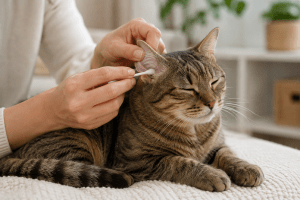
Why does my cats breath smell so bad? Most of the time the answer is dental disease, extremely common in cats and often hidden until the smell gives it away, though bad breath can occasionally point to kidney or other illness. This guide covers what causes bad breath and what to do about it. It then turns to the closely related worry of how a cat breathes, because while breath odour is usually a slow-burning dental issue, changes in breathing itself, fast, heavy, open-mouth, or panting, can be a genuine emergency. You will learn the causes of bad breath, how to check your cat’s resting breathing rate, and the red flags that mean urgent veterinary care.
Counting resting breaths per minute is a valuable health check, especially for heart or lung conditions. Use the Cat Breathing-Rate Checker, and keep up care with the Cat Vaccination & Wellness Schedule.
On this page
Why your cat’s breath smells bad
Starting with the question in the title, bad breath in a cat is worth taking seriously because, contrary to the idea of harmless ‘cat breath,’ persistently smelly breath almost always reflects a real problem, usually in the mouth.
It is a common misconception that cats naturally have bad breath and that a foul smell is just part of owning a cat. In reality, a healthy cat’s breath should not be strongly offensive; a brief food or slightly fishy smell right after eating is normal and passes, but genuinely bad, persistent breath is a sign that something is wrong. By far the most common cause is dental disease, which is extremely widespread in cats and tends to go unnoticed because cats hide mouth pain and keep eating through it, so the smell is often the first thing an owner detects. Less commonly, the bad smell comes from elsewhere: a mouth ulcer, a foreign object lodged in the mouth, or an infection can cause it, and certain internal illnesses give the breath characteristic odours, such as the ammonia-like smell of kidney disease or the sweet, acetone-like smell that can accompany diabetes. Because persistent bad breath so reliably points to a genuine problem rather than to normal ‘cat breath,’ the sensible response is not to accept it but to have the cat’s mouth, and general health, checked by a vet. The rest of this first half of the guide explains the causes of bad breath and what to do, before the guide turns to the separate and more urgent matter of how a cat is breathing.
Dental disease: the usual cause
Since dental disease is behind the great majority of bad breath in cats, it deserves a proper look, both to explain the smell and because these problems are painful and important to treat.
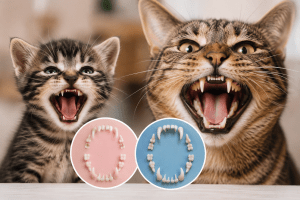
Dental and gum disease is one of the most common conditions in cats, and it is the leading cause of bad breath. It begins with plaque and tartar building up on the teeth, which leads to inflammation of the gums (gingivitis) and, if it progresses, to periodontal disease that damages the structures holding the teeth. Cats are also prone to tooth resorption, a painful condition where teeth break down, and to tooth root infections and abscesses. All of these harbour bacteria and produce the foul smell that owners notice. The reason dental disease so often goes undetected until the breath gives it away is that cats are stoical about mouth pain and will keep eating despite considerable discomfort, so beyond the smell, the signs can be subtle: a preference for soft food, chewing on one side, dropping food, drooling, pawing at the mouth, or simply being a bit withdrawn. Because dental disease is painful, progressive, and can even affect general health if bacteria spread, bad breath from the mouth is a genuine reason to see the vet, who can examine the teeth and gums and advise on treatment, which often involves a professional dental cleaning under anaesthetic and dealing with any diseased teeth. Treating it not only clears the smell but relieves pain the cat has been quietly enduring, and owners frequently notice their cat becomes brighter and more comfortable afterward.
It is worth pushing back on the common worry that a dental procedure under anaesthetic is too risky to be worthwhile, because that fear leads some owners to leave painful mouths untreated. Modern veterinary dentistry uses careful anaesthetic protocols and monitoring, and for most cats the benefit of removing the source of chronic pain and infection far outweighs the small anaesthetic risk, which your vet will assess and minimise with pre-anaesthetic checks. Leaving advanced dental disease in place is not the safer option it can feel like; it means ongoing pain, a persistent reservoir of infection, and a smell that will only get worse, so a recommended dental is generally very much in the cat’s interest.
Kidney, diabetes, and other causes
While the teeth are the usual culprit, bad breath can sometimes be a window onto illness elsewhere in the body, so it is worth knowing the non-dental causes, especially the ones with a characteristic smell.
Certain internal conditions change the smell of a cat’s breath in recognisable ways. Kidney disease, which is common in older cats, can cause breath that smells of ammonia or urine, because when the kidneys are failing to clear waste products, those wastes build up in the body and affect the breath; this is usually accompanied by other signs of kidney disease such as increased thirst and urination, weight loss, a poor coat, and reduced appetite. Diabetes can give the breath an unusual sweet or nail-polish-remover (acetone) smell, along with the increased thirst, appetite, and urination typical of the disease. Liver disease can also affect breath odour. Beyond these, non-dental mouth problems, ulcers (which the calicivirus of cat flu can cause), a foreign body such as a splinter of bone or a bit of plant material lodged in the mouth, growths, or infections, can produce a bad smell too. The value of knowing these causes is not to diagnose your cat at home but to understand why a vet, faced with bad breath, will look beyond the teeth if the mouth seems healthy or other signs are present. It also means that bad breath accompanied by increased drinking, weight loss, or other changes is a stronger reason to seek veterinary assessment, since the smell may be flagging a systemic illness that benefits from early diagnosis rather than a purely dental issue.
The distinction is often something an owner can begin to notice. Breath that smells foul and rotten, with visibly tartar-caked teeth and red gums, points strongly to the mouth, whereas breath that has an unusual chemical quality, ammonia-like or oddly sweet, in a cat that is also drinking more, losing weight, or off its food, hints at a problem beyond the teeth. You do not need to make the distinction yourself, but noticing which picture fits your cat, and mentioning it, helps the vet decide whether the focus should be a dental examination or a broader work-up including blood and urine tests.
If bad breath comes with more drinking or weight loss, see the guides on a cat drinking too much water and the early signs a cat is sick, and on drooling and mouth pain.
What to do about bad breath
Faced with a cat whose breath smells bad, the practical steps are straightforward, centred on a veterinary check and, once any problem is treated, ongoing dental care to keep it from returning.
The first step for persistent bad breath is a vet visit, because the smell needs its cause identified: usually a dental examination to look for tartar, gum disease, resorption, or infected teeth, and, if the mouth looks healthy or other signs are present, a check for underlying illness such as kidney disease or diabetes. Treating the cause, most often a professional dental cleaning under anaesthetic with removal or treatment of diseased teeth, both clears the smell and relieves pain. Once the mouth is healthy again, ongoing dental care helps prevent the problem returning: your vet can advise on measures such as tooth brushing with cat-specific products, dental diets and treats designed to reduce tartar, and regular check-ups, and keeping up with these makes a real difference over a cat’s life. What you should not do is try to mask bad breath or treat a suspected dental problem at home with human products, and you should never use human toothpaste, which is not safe for cats. Because dental disease is so common and so often silent apart from the smell, treating bad breath as a prompt for a proper dental assessment, rather than a cosmetic nuisance, is genuinely good for a cat’s comfort and health. With that side of the topic covered, the guide now turns to the separate and more urgent question of how a cat is breathing.
How a cat should breathe
Shifting from breath odour to breathing itself, it is essential to understand what normal feline breathing looks like, because cats breathe so quietly and efficiently that any obvious change is significant.
A healthy cat at rest breathes quietly, smoothly, and with very little visible effort, through its nose, with only a gentle rise and fall of the chest and no sound. Cats are nose-breathers by nature and normally do not pant or breathe through the mouth the way dogs readily do. A normal resting respiratory rate for a cat is generally under about 30 breaths per minute, with many healthy cats sitting somewhere around 15 to 30 breaths a minute when relaxed or asleep. The breathing should look effortless: you should not see the belly heaving, the nostrils flaring, the sides working hard, or the cat adopting an unusual posture to breathe, and you should not hear wheezing, rasping, or grunting. It is normal for the rate to rise temporarily with activity, play, heat, excitement, or stress, and to settle again with rest, just as ours does. Understanding this baseline matters because it makes the abnormal easy to recognise: a cat breathing rapidly at rest, breathing with visible effort, breathing through an open mouth, or making noise with each breath is departing clearly from how a cat should breathe, and that departure is the warning sign. Because cats hide illness and compensate until they can no longer cope, obvious breathing changes often mean a significant problem, which is why the sections that follow treat them with the urgency they deserve.
How to check the breathing rate
One of the most useful things an owner can learn is how to count a cat’s resting breathing rate, since it is simple, gives an objective number, and can catch trouble early, especially in cats with heart disease.
To measure the resting respiratory rate, wait until your cat is calm, resting quietly, or asleep, because activity and stress push the rate up and would give a misleadingly high figure. Watch the chest, or the flank, rise and fall, and count each complete breath, one inhale plus one exhale together counts as a single breath, over 30 seconds, then double it to get the rate per minute; counting for a full minute is even better. A normal resting rate is generally under about 30 breaths per minute. Knowing your own cat’s usual resting rate is valuable, and it is particularly recommended for cats diagnosed with heart disease, because a resting rate that is creeping up over its normal, or is consistently above 30, can be an early sign of fluid building up on the lungs before the cat shows obvious distress, allowing treatment before a crisis. For any cat, a resting or sleeping respiratory rate persistently above 30 breaths a minute, or breathing that clearly involves effort, is a reason to contact the vet. Getting into the habit of occasionally counting the rate when your cat is asleep gives you a personal baseline, so you can tell a meaningful change from normal variation, and it turns a vague sense that the cat ‘seems to be breathing fast’ into a concrete number that genuinely helps the vet judge urgency.
For cats with diagnosed heart disease, many vets now actively encourage owners to log the sleeping breathing rate every few days, because a sustained upward trend is one of the earliest and most reliable signals that fluid is starting to accumulate, often days before the cat looks unwell. Catching that trend allows medication to be adjusted before the cat tips into a breathing crisis, which is exactly the kind of early intervention that keeps these cats stable and out of the emergency room. Even for a healthy cat, having counted the rate a few times when all is well means that if you ever suspect a problem, you have a real number to compare against rather than a guess.
Fast breathing and what it means
Fast breathing is one of the most important signs to interpret correctly, because while it can be harmless in the right context, fast breathing at rest is a serious warning that should not be ignored.
Breathing faster than normal, called tachypnoea, is normal and expected after exercise, vigorous play, in hot weather, or with stress or excitement, and in these situations it should settle back to a calm rate within a reasonable time once the cat rests and cools. The concerning version is fast breathing that occurs at rest, when the cat is calm and cool, or that does not settle. A resting cat breathing faster than about 30 breaths per minute, or one whose breathing is both fast and laboured, may have a problem with the heart or lungs, and this needs prompt veterinary assessment. Common serious causes of increased resting respiratory rate in cats include fluid accumulating around the lungs (pleural effusion) or within the lungs (pulmonary oedema), often related to heart disease; asthma and other airway disease; pneumonia or infection; and other chest problems. Because heart disease in cats can be hidden until it suddenly causes breathing difficulty, and because a rising resting rate can be the earliest sign, fast breathing at rest is genuinely important and not something to watch for days. If your cat is breathing rapidly while resting and it does not quickly settle, especially if there is any effort, open-mouth breathing, or the cat seems unwell, it should be seen urgently, since these conditions can progress to a life-threatening crisis.
A useful way to sort a worrying case from a benign one is to give the cat a short period of genuine calm and then recount. If a cat that seemed to be breathing fast was actually just warm, excited, or recently active, a rest in a cool, quiet spot will bring the rate back toward normal within a reasonable time, which is reassuring. If, on the other hand, the cat is truly at rest, cool, and calm and the rate stays high or the breathing shows effort, that failure to settle is the meaningful finding and the prompt to seek help. What you should not do is repeatedly disturb a cat that is clearly struggling in order to keep checking, since with obvious distress the answer is already clear and the priority is getting to the vet.
Heavy breathing and panting
Closely related to fast breathing is heavy or laboured breathing and panting, which in cats carries even more weight than in dogs, because cats do not normally pant, so it is worth understanding clearly.
Heavy or laboured breathing means the cat is putting visible effort into breathing, you may see the chest and belly working hard, the sides heaving, exaggerated movement with each breath, or the cat adopting a hunched position with its elbows held out from the body to help it breathe, and this is a serious sign of respiratory distress. Panting, open-mouth breathing like a dog, is not normal for a cat in the way it is for a dog. A cat may occasionally pant briefly after intense exertion, in extreme heat, or with acute stress such as a frightening car ride, and this should stop quickly once the cat rests and cools. But panting that is not clearly explained by those causes, that does not stop promptly, or that comes with any distress, weakness, or blue-tinged gums is a warning of a possible heart or lung problem or of overheating, all of which can be emergencies. Because a cat resorts to open-mouth breathing or obvious effort only when it is struggling to get enough oxygen through normal quiet nose-breathing, heavy breathing and unexplained panting mean the cat is in trouble. The safe approach is to treat a cat that is panting without an obvious, brief, benign cause, or breathing with visible effort, as an emergency needing immediate veterinary attention rather than something to monitor at home.
Open-mouth breathing: an emergency
Of all the breathing signs, open-mouth breathing in a cat deserves to be singled out, because it is one of the clearest indicators that a cat is in serious respiratory distress and needs help immediately.
Open-mouth breathing in a cat is an emergency. Cats breathe through their nose and do not breathe through an open mouth unless they are struggling. A cat breathing with its mouth open, or panting, when it is not obviously just hot or recovering from brief intense exertion, is showing serious respiratory distress and needs emergency veterinary care right away. The same applies to fast or laboured breathing at rest, gasping, a heaving belly, blue, grey, or pale gums, or a hunched cat working to breathe. Keep the cat calm and cool and get to a vet immediately; do not delay.
The reason open-mouth breathing is such a red flag is precisely that it is so abnormal for a cat. Whereas a dog pants routinely to cool down, a cat only breathes through its mouth when its usual efficient nose-breathing can no longer supply enough oxygen, so it represents a cat that has run out of easier options and is genuinely struggling. This can arise from the serious causes already mentioned, fluid around or in the lungs, heart disease, asthma, and other chest problems, as well as from severe overheating or extreme distress. Whatever the cause, a cat breathing with an open mouth, or showing the other signs of distress such as effortful breathing, gasping, a hunched posture with elbows out, or discoloured gums, is in a potentially life-threatening situation where time matters. The correct response is not to wait, observe, or try remedies at home, but to get the cat to a vet or emergency clinic as quickly and calmly as possible, since minimising stress is important because stress makes breathing distress worse. Handling such a cat gently, keeping it cool, and phoning ahead so the clinic is ready all help. Recognising open-mouth breathing as the emergency it is can genuinely save a cat’s life.
It helps to have rehearsed, before it ever happens, what you would do if you found your cat breathing with its mouth open and struggling. Know where the nearest emergency clinic is and its out-of-hours number, keep a carrier accessible rather than buried in a cupboard, and have a plan for transport, because a cat in respiratory distress needs to reach help fast and calmly. In the moment, resist the urge to fuss or restrain the cat more than necessary, since handling and stress increase its oxygen demand and can worsen the crisis; move gently, keep the environment quiet and cool, and get moving toward the vet. Having thought this through in advance turns a frightening emergency into a set of actions you can carry out without freezing.
Breathing red flags: never wait
To make the urgent signs unmistakable, it helps to gather the breathing red flags in one place, because these are the situations where recognising the problem and acting immediately can be the difference between life and death.
Seek emergency veterinary care straight away, without waiting to see if things improve, for any of the following: breathing through an open mouth or panting when the cat is not clearly just hot or briefly over-exerted; fast breathing at rest that does not settle, or a resting rate persistently well above 30 breaths per minute; laboured breathing where the cat is visibly working, with the chest and belly heaving or exaggerated effort; a hunched posture with the neck extended and elbows held out from the body to breathe; gasping or gulping for air; unusual respiratory noises such as wheezing, rasping, or grunting with each breath; gums or tongue that look blue, grey, purple, or pale; or a cat that is weak, collapsing, or clearly distressed by the effort of breathing. Any of these means the cat may not be getting enough oxygen, which can become fatal quickly. In these situations, keep the cat as calm and cool as possible, avoid anything that adds stress, and transport it to an emergency vet immediately, ideally calling ahead. Because breathing emergencies in cats can escalate within minutes and cats hide their struggle until they are severely affected, erring firmly on the side of urgency with any breathing red flag is always the right choice, and it is far better to rush to the vet with a cat that turns out to be stable than to wait with one that is not.
When to call the vet
Bringing the two halves of this guide together, the timing of a vet visit depends on whether you are dealing with the slow-burn issue of bad breath or the potentially acute problem of abnormal breathing.
For bad breath, book a (non-emergency but not indefinitely delayed) vet appointment for any persistent or noticeably worsening bad breath, since it usually means dental disease that is painful and progressive, and sooner if the bad breath comes with signs of illness such as increased thirst and urination, weight loss, drooling, difficulty eating, or a cat that seems unwell, since that can indicate kidney disease, diabetes, or another problem. For breathing, the urgency is much higher: treat as an immediate emergency any open-mouth breathing or panting not clearly explained by brief heat or exertion, fast or laboured breathing at rest, gasping, a heaving belly, unusual breathing noises, blue or pale gums, or a cat hunched and struggling to breathe, and get to an emergency vet without delay. Contact the vet promptly, too, if your cat’s resting breathing rate is persistently above 30 or has risen over its normal, even without obvious distress, especially in a cat with known heart disease. When you contact the vet about breathing, describe the rate, the effort, whether the mouth is open, the gum colour, and how the cat is otherwise. The overriding principle is that bad breath is a reason to arrange a dental and health check, while abnormal breathing is frequently an emergency, so while smelly breath can wait for an appointment, a cat that is struggling to breathe cannot.
Frequently asked questions
Why does my cat’s breath smell so bad?
The most common reason for bad breath in a cat is dental disease, such as tartar build-up, gum disease, tooth resorption, or a tooth infection, which is extremely common in cats and often underdiagnosed because cats hide mouth pain. Beyond the teeth, mouth ulcers or a foreign object stuck in the mouth can cause a foul smell, and bad breath can also be a sign of problems elsewhere in the body: kidney disease can cause an ammonia-like breath, and diabetes can give a sweet or acetone-like smell. Because persistent bad breath usually reflects a genuine problem rather than just ‘cat breath,’ a cat with noticeably smelly breath should have its mouth and health checked by a vet.
Is it normal for cats to have bad breath?
Slightly fishy or food-related breath right after eating is normal and passes, but genuinely bad, persistent breath is not normal and should not be dismissed as just how cats smell. Ongoing bad breath almost always signals an underlying problem, most often dental disease, which is very common and progressive in cats. So while a whiff of cat food on the breath after a meal is nothing, breath that is consistently foul, or a noticeable change for the worse, is a reason to look closer. Because dental problems are painful and can affect overall health, and because bad breath can occasionally signal kidney or other disease, persistent halitosis warrants a vet check rather than being accepted as normal.
Why is my cat breathing fast?
Fast breathing in a cat can be normal after exercise, play, or in heat or stress, and should settle with rest. But fast breathing at rest, or that does not settle, is a serious warning sign. A resting cat normally takes fewer than about 30 breaths per minute, so a resting or sleeping cat breathing faster than that, or breathing with visible effort, may have a problem with the heart or lungs, such as fluid around or in the lungs, asthma, or heart disease, and needs urgent veterinary assessment. Because breathing problems in cats can be life-threatening and cats hide illness, persistent fast breathing at rest, any laboured breathing, or open-mouth breathing should be treated as an emergency.
How do I check my cat’s breathing rate?
Count your cat’s breaths while it is resting quietly or asleep, since activity and stress raise the rate. Watch the chest rise and fall, counting one full breath (in and out) at a time, for 30 seconds and doubling it, or for a full minute. A normal resting respiratory rate for a cat is generally under about 30 breaths per minute, and many healthy cats are around 15 to 30. Knowing your cat’s normal resting rate is genuinely useful, especially for cats with heart disease, because a rate that is consistently elevated at rest can be an early warning of fluid on the lungs before the cat looks obviously ill. A resting rate persistently above 30, or breathing with effort, is a reason to contact the vet.
When is a cat’s breathing an emergency?
Treat breathing as an emergency and seek immediate veterinary care if your cat is breathing with open mouth or panting when not hot or stressed, breathing fast or with obvious effort at rest, gasping, has a heaving belly with each breath, is making unusual respiratory noises, has blue, grey, or pale gums, or is hunched with elbows out and struggling to breathe. Cats are nose-breathers who normally breathe quietly and almost invisibly, so any open-mouth breathing or visible effort signals real distress and a potentially life-threatening problem with the heart or lungs. Do not wait to see if it improves, keep the cat calm and cool, and get it to an emergency vet at once, since minutes can matter.
Can bad breath in cats mean kidney disease or diabetes?
Yes, although dental disease is far more common, bad breath can be a sign of certain internal illnesses. Kidney disease, which is common in older cats, can cause breath that smells of ammonia or urine as waste products build up in the body, and it usually comes with other signs like increased thirst and urination, weight loss, and reduced appetite. Diabetes can give the breath a sweet or nail-polish-like (acetone) smell, along with increased thirst, appetite, and urination. Because of these links, persistent bad breath, especially with any of those other signs, is worth investigating with your vet, who can check both the mouth and, if needed, run tests to look for an underlying medical cause beyond the teeth.
Why is my cat panting like a dog?
Cats, unlike dogs, do not normally pant, so a cat panting with an open mouth is much more significant than a panting dog and should be taken seriously. Brief panting can occasionally follow intense exercise, extreme heat, or acute stress and should settle quickly with rest and cooling. But panting that is not clearly explained by those, that does not stop, or that comes with any distress is a warning of a possible heart or lung problem or overheating, all of which can be emergencies. Because open-mouth breathing in a cat signals it is struggling to get enough oxygen, a panting cat that is not obviously just hot or briefly stressed, and any panting with weakness or blue gums, needs urgent veterinary attention.
The quick version
Why does my cats breath smell so bad? Usually dental disease, tartar, gum disease, tooth resorption, or infection, which is very common in cats and often silent apart from the smell, so persistent bad breath is a reason for a vet dental check, not something to accept as normal ‘cat breath.’ Occasionally the smell points elsewhere, an ammonia smell can mean kidney disease and a sweet, acetone smell can mean diabetes. Separately, how a cat breathes matters urgently: a healthy cat breathes quietly through its nose at under about 30 breaths a minute at rest, so fast or laboured breathing at rest, open-mouth breathing, panting, gasping, or blue gums is an emergency needing immediate veterinary care. Learn your cat’s normal resting breathing rate so you can spot a change.
For related signs, see the guides on coughing, wheezing, and asthma, drooling and mouth pain, and signs a cat is sick. Check the resting rate with the Cat Breathing-Rate Checker, keep up care with the Cat Vaccination & Wellness Schedule, browse the full cat blog and the pet calculators, or explore more free tools on the Waldev homepage.
Medical disclaimer: This guide is for general education and is not a substitute for veterinary advice, diagnosis, or treatment. Bad breath and breathing changes can signal serious illness, and only a veterinarian who examines your cat can diagnose the cause. Breathing difficulty in a cat, including open-mouth breathing, fast or laboured breathing at rest, or blue gums, is an emergency, contact a veterinarian immediately.
Dental disease is a common cause of bad breath in cats and is painful and progressive. Pet owner resources →
Fast, laboured, or open-mouth breathing in a cat is an emergency needing immediate veterinary care. Locate a hospital →