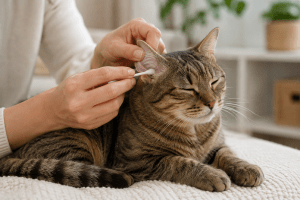
Why is my male cat drinking so much water? Cats are naturally light drinkers, so a cat that suddenly starts emptying its bowl, hovering at the tap, or seeking out water is doing something worth noticing. Some causes are harmless, a switch to dry food, hot weather, more activity, but increased thirst is also one of the most important early signs of serious feline illness, including kidney disease, diabetes, and thyroid problems. And in a male cat specifically, changes in drinking and urinating carry an extra warning, because male cats are prone to urinary blockage, a genuine emergency. This guide explains what is normal, the causes of increased thirst, and exactly when it means a vet visit.
Increased thirst is often the first sign of a condition a vet can catch early. Check when your cat is next due with the Cat Vaccination & Wellness Schedule, and browse more tools in the pet calculators hub.
On this page
How much water is normal?
Before worrying about too much, it helps to have a sense of what a normal amount looks like, though the honest answer is that the individual cat’s usual pattern matters more than any textbook figure.
As a rough guide, a cat needs somewhere around 40 to 60 millilitres of water per kilogram of body weight per day, so a typical four to five kilogram cat needs roughly 200 to 300 millilitres in total, but a large part of that can come from food rather than the bowl. This is why diet makes such a difference: a cat eating wet food, which is about three-quarters water, takes in a lot of moisture with its meals and so drinks relatively little from its bowl, while a cat on dry food has to make up almost all of its water needs by drinking, and so visibly drinks much more. Both can be perfectly healthy and properly hydrated. Because of this variation, and because cats drink from bowls, taps, fountains, and puddles in ways that are hard to total up, chasing an exact daily number is less useful than knowing your own cat’s normal. The practical measure is change: a cat that has clearly started drinking more than it used to, emptying a bowl that used to last, waiting at the tap, or seeking out water it previously ignored, is showing a shift worth paying attention to, regardless of whether the absolute amount lands inside any particular range. That change from the cat’s own baseline is the real signal.
It helps to know roughly where your cat sits on the wet-versus-dry spectrum before deciding whether its drinking is excessive, because the two look very different at the bowl even in perfect health. An owner who has always fed wet food may be alarmed to see their cat drink from a bowl at all, since it barely needed to before, while an owner of a dry-fed cat may consider frequent drinking completely normal. Neither impression is wrong, but both show why the meaningful comparison is against the same cat’s own recent history on the same diet, rather than against another cat or a general idea of how much cats “should” drink.
Why increased thirst matters
Increased thirst deserves attention out of proportion to how mild it can seem, because in cats it is one of the most reliable early windows into several important internal diseases.
The reason vets take increased drinking so seriously is that it is a classic early sign of some of the most common serious illnesses in cats, particularly the trio of chronic kidney disease, diabetes, and hyperthyroidism. In each of these, the body loses the ability to conserve water normally or drives the cat to drink more, so thirst rises, often before the cat looks obviously ill in any other way. This makes increased thirst genuinely valuable as a warning: it is frequently one of the first things an owner can notice, at a stage when the underlying condition is far more manageable than it will be later. Because cats are such light and private drinkers by nature, a cat that starts drinking conspicuously more is departing from a strong baseline, which makes the change meaningful rather than trivial. None of this means every cat that drinks a bit more is seriously ill, since there are harmless causes too, but it does mean that a genuine, sustained increase in thirst is not something to shrug off. It is exactly the kind of subtle early sign that, followed up with a vet, can catch a treatable disease early, which is why the rest of this guide treats a real change in drinking as something to investigate rather than ignore.
The male cat urinary warning
Because this question is so often asked specifically about male cats, one point belongs near the top, since it is the single most urgent thing to know: male cats are prone to a urinary emergency.
A blocked male cat is a life-threatening emergency. Male cats have a narrow urethra and can become blocked, unable to pass urine. If your male cat is straining in the litter tray, going in and out repeatedly, producing little or no urine, crying out, licking its genitals excessively, or seems restless and distressed, treat it as an emergency and get to a vet immediately, day or night. A complete blockage can be fatal within a day or two. This is the reason changes in a male cat’s drinking and urinating are never to be ignored.
The anatomy is the issue: a male cat’s urethra is longer and narrower than a female’s, which makes it far more likely to become obstructed by crystals, a plug of mucus and debris, or inflammation, to the point where the cat cannot urinate at all. This is a genuine emergency, because urine backing up quickly leads to a dangerous build-up of toxins and can be fatal within a day or two without treatment. Increased drinking can be part of the wider picture of urinary disease in male cats, and while thirst by itself is more often about the kidney, diabetes, and thyroid conditions covered below, the crucial thing is to watch the other end too. Any male cat that is drinking differently and also straining, going frequently with little result, crying in the tray, or over-grooming its rear needs to be seen immediately. This warning sits at the front of the guide precisely because it is the one scenario where waiting even a few hours can cost a cat its life, and it is why “why is my male cat drinking so much” should always come with a check of how, and whether, he is passing urine.
The signs of a blockage can be mistaken for constipation, which costs precious time, so it is worth being clear about the difference. A blocked cat is straining to pass urine, not stool, and may be crying, pacing, repeatedly visiting the tray, and licking at its penis, often with a tense, painful belly. If you are ever unsure whether a straining male cat is constipated or blocked, treat it as a possible blockage and get to a vet immediately, because the cost of being wrong about a blockage is far higher than the cost of an unnecessary urgent visit for constipation. When it comes to a straining male cat, erring toward the emergency interpretation is always the safer choice.
Harmless causes: diet, heat, and activity
Not every increase in drinking signals disease, so it is worth covering the genuinely harmless causes, which often explain a change and can be reassuring once recognised, though they never fully replace a vet check when doubt remains.
The most common harmless reason a cat drinks more is a change in diet, specifically a move from wet food to dry. Because wet food supplies most of a cat’s water needs and dry food does not, a cat switched onto dry food will naturally start drinking considerably more from its bowl to make up the difference, and this is normal and expected rather than a sign of illness. Similarly, feeding a saltier food or more dry treats can nudge thirst up. Weather and activity play a part too: cats drink more in hot weather and after exercise or play, just as we do, so a spell of warm days or a more active phase can temporarily raise water intake. Certain medications can also increase thirst as a side effect, which a vet would flag. The common feature of these harmless causes is that they usually make sense in context, a recent food change, a heatwave, and are not accompanied by other signs of being unwell such as weight loss, a bigger appetite, vomiting, or lethargy. The catch, and the reason these causes do not close the matter, is that harmless and serious causes can look identical at the bowl, so while a clear dietary or environmental explanation is reassuring, a sustained increase without an obvious reason, or with any other symptom, still warrants a vet check.
A useful way to test a suspected harmless cause is to see whether the drinking settles when the trigger passes. If a heatwave breaks or an activity phase ends and the drinking eases back to normal, the weather or exercise was probably the explanation. If you switched to dry food weeks ago and the higher drinking has simply become the new steady level, that too fits a dietary cause. What does not fit a harmless explanation is drinking that keeps climbing, that appears with no change in diet or weather, or that comes alongside weight loss or other signs, and that is the pattern that should move you from watchful reassurance to booking a vet visit.
Chronic kidney disease
Among the medical causes, chronic kidney disease is the one most strongly associated with increased thirst, especially in older cats, where it is extremely common.
The kidneys concentrate urine to conserve water, and as chronic kidney disease develops, they gradually lose this ability, so the cat produces larger volumes of more dilute urine and then drinks more to keep up with the water it is losing. Increased thirst and increased urination are therefore among the earliest and most consistent signs of kidney disease, and they often appear before the cat looks obviously ill. As the disease progresses, other signs typically join them: weight loss, a reduced appetite, a dull or unkempt coat, lethargy, and sometimes vomiting or bad breath. Chronic kidney disease is one of the most common conditions of senior cats, so a middle-aged or older cat that has started drinking noticeably more should always raise it as a possibility. The important and hopeful point is that while kidney disease cannot be cured, it can very often be managed, with special diets, medication, and support that can give a cat good quality of life for a long time, and management works far better when the disease is caught early, which is precisely the stage at which increased thirst first shows up. This is one of the clearest examples of why a change in drinking is worth acting on: it is frequently the first detectable sign of a condition that responds well to early intervention.
Because kidney disease is so common in older cats, many vets recommend routine blood and urine screening for senior cats even before any signs appear, precisely so it can be caught at its earliest and most treatable stage. If your cat is getting on in years and has started drinking more, mentioning that at a check-up, or asking about senior screening, can bring a diagnosis forward by months. The value of the increased thirst as a clue is only realised if it leads to testing, so treating it as a prompt to act, rather than a quirk to watch indefinitely, is what turns an early sign into an early diagnosis.
Increased drinking often comes with a bigger appetite or weight loss. See the guides on a cat that is always hungry and the early signs a cat is sick.
Diabetes
The second major cause of increased thirst is diabetes, which produces the same increased drinking and urination as kidney disease but by a different mechanism, and which is likewise common and treatable.
In diabetes, the cat cannot properly regulate its blood sugar, and when blood sugar rises high enough, excess glucose spills into the urine and pulls water with it, so the cat urinates more and, in turn, drinks more to compensate. The result is the same conspicuous increase in thirst and urination seen in kidney disease, but here it is typically joined by an increased appetite, often with weight loss despite the cat eating well, because the body cannot use its fuel properly. Diabetes is increasingly common in cats, with overweight and older cats at greater risk, and left unmanaged it leads to serious illness, so it is an important diagnosis to make. The encouraging aspect is that diabetes is treatable, usually with a combination of insulin, dietary change, and weight management, and some cats can even go into remission with good early control, particularly if excess weight is addressed. The combination of drinking more, urinating more, eating more, and losing weight is the classic diabetic pattern, and any cat showing it should be seen by a vet promptly. Because diabetes and kidney disease share the increased thirst and urination but differ in other features, distinguishing them, and this is only possible with blood and urine tests, is part of why a cat with increased thirst needs proper veterinary investigation rather than a guess.
There is a further reason not to delay with a diabetic cat: an unmanaged diabetic can develop a dangerous complication in which the body, unable to use sugar, starts breaking down fat and producing acids that make the cat seriously ill, with vomiting, weakness, and collapse. This is an emergency and is far more likely in a diabetic cat whose disease has gone undiagnosed or untreated. It is another argument for acting on the classic pattern of more drinking, more urinating, more eating, and weight loss promptly, since catching diabetes while the cat is still relatively well is both easier to manage and far safer than waiting until a crisis forces the issue.
Hyperthyroidism
The third member of the classic trio behind increased thirst is an overactive thyroid, another common condition of older cats that raises both drinking and, often, appetite.
Hyperthyroidism results from an overactive thyroid gland producing too much thyroid hormone, which speeds up the whole metabolism. Among its many effects, it commonly increases thirst and urination, so it belongs alongside kidney disease and diabetes as a leading cause of a cat that has started drinking more. Its most characteristic combination, though, is increased thirst and drinking together with a big appetite and weight loss, as the cat’s accelerated metabolism burns through energy faster than it can eat, often accompanied by restlessness, hyperactivity, a poor coat, and sometimes vomiting. Like the others, it is a disease of middle-aged and older cats, so it is very much on the list for an older cat with new increased thirst. It is also, reassuringly, very treatable, with several options a vet can discuss, and cats generally do well once it is controlled, but it needs diagnosing with a blood test and, left untreated, strains the heart and other organs. The overlap between hyperthyroidism, diabetes, and kidney disease, all of which can cause increased thirst and urination and can occur in the same older cats, sometimes together, is exactly why a cat with genuinely increased thirst needs a proper veterinary work-up, since only testing can sort out which condition, or combination, is responsible and guide the right treatment.
Urinary problems in male cats
Returning to the male-cat angle, urinary tract problems deserve fuller attention, because they are both common in cats and, in males, uniquely dangerous, and they can alter drinking and toileting.
Feline lower urinary tract disease covers a group of conditions affecting the bladder and urethra, including inflammation, crystals or stones, infection, and, in male cats, the obstruction that makes these problems an emergency. Affected cats may urinate more or less, strain in the tray, go frequently while producing little, have blood in the urine, cry while urinating, over-groom their rear, or begin urinating outside the litter tray, and some drink more as part of the picture. Stress and diet can contribute to these conditions, and they can recur. In female cats these problems are painful and need treatment but are rarely immediately life-threatening; in male cats, the risk that inflammation and debris progress to a complete blockage makes any such signs urgent. This is why, for a male cat especially, changes in drinking should always be considered together with what is happening in the litter tray. A male cat drinking more but urinating normally and otherwise well is likely showing one of the thirst-driven conditions above and needs a vet visit soon; a male cat drinking differently and straining, blocked, or distressed at the tray is a medical emergency needing care immediately. Keeping an eye on both the water bowl and the litter tray is the key to catching urinary trouble in a male cat before it becomes critical.
Diet and water intake themselves play a role in preventing these urinary problems, which is part of why they are worth understanding rather than simply fearing. Cats that take in plenty of water, often more easily on a wet-food diet, produce more dilute urine that is less prone to forming the crystals and plugs behind many blockages, which is one reason vets often encourage good hydration in cats prone to urinary trouble. Reducing stress, providing clean and appealing litter trays, and following any prescription diet a vet recommends for a cat with a history of urinary disease all help lower the risk of recurrence. None of this replaces emergency care for a blocked cat, but it does mean that supporting a male cat’s hydration and urinary health is a worthwhile everyday goal.
Other causes of increased thirst
Beyond the main conditions, several other causes can raise a cat’s water intake, and while they are less common, they round out the picture and reinforce why testing is needed to be sure.
Liver disease can cause increased thirst among its signs, as can some hormonal conditions less common than the main trio. Certain infections, notably of the uterus in unspayed female cats, cause marked increases in drinking, though this does not apply to males. Some medications, including steroids and certain diuretics, increase thirst as an expected side effect, which is why it matters to tell your vet what your cat is taking. High blood calcium and other metabolic disturbances can also drive thirst. Even behavioural drinking, where a cat drinks excessively out of habit or because it enjoys running water, occurs occasionally, though it is a diagnosis of exclusion made only after ruling out medical causes. The reason to list these is not to expect the unusual ones but to underline a consistent message: increased thirst has many possible causes, from the completely harmless to the serious, and they cannot be reliably told apart by watching the cat drink. Blood and urine tests are what distinguish them, which is why a genuine, sustained increase in a cat’s drinking is a reason to see the vet, who can work through the possibilities properly rather than leaving an owner to guess between a diet change and a serious disease.
How to measure your cat’s drinking
Because “drinking more” is easier to sense than to prove, it helps to know how to put a rough number on it, since concrete information is far more useful to a vet than a vague impression.
The simplest method is to measure the water you put into the bowl and then measure what is left after 24 hours, using the same bowl in the same place and allowing a little for evaporation, and repeating over a couple of days gives a better average than a single day. That tells you roughly how much your cat is drinking from that bowl. In practice, many cats drink from more than one bowl, a fountain, the tap, or puddles outdoors, which makes exact measurement difficult, but even then a clear sense that the cat is drinking much more than it used to, refilling a bowl that used to last, or being newly drawn to water sources, is genuinely useful information. It also helps to note any change in urination, since more drinking usually means more or larger wet patches in the litter tray, and to try to collect a urine sample if you can, because urine concentration is central to diagnosing the causes of increased thirst and a sample saves time at the vet. You do not need laboratory precision; the goal is simply to move from “he seems to be drinking a lot” to a firmer picture of how much and how much more than before, which sharpens the conversation with your vet and helps them decide how quickly to investigate.
When to call the vet
Pulling the threads together, the decision about a cat that is drinking more turns on whether the increase is genuine and sustained, whether other signs are present, and, for a male cat, what is happening at the litter tray.
Treat as an immediate emergency any male cat that is straining to urinate, going repeatedly with little or no result, crying in the tray, or seems blocked and distressed, since this is the life-threatening urinary obstruction described earlier and cannot wait. Short of that, book a vet visit for any genuine, sustained increase in your cat’s drinking, and treat it as more pressing if the increased thirst comes with increased urination, weight loss, a change in appetite in either direction, vomiting, diarrhea, lethargy, or a poorer coat, since these combinations point toward kidney disease, diabetes, or hyperthyroidism. A cat that is simply drinking a little more in hot weather or after a switch to dry food, and is otherwise completely well, may just be showing a harmless cause, but because harmless and serious look alike at the bowl, a sustained or unexplained increase is worth checking even without other signs. Older cats in particular should have new increased thirst investigated, as the classic causes are common in them. When you contact the vet, describe how much more the cat seems to be drinking and for how long, any change in urination, and any other symptoms, and bring a urine sample if you can. The overriding message is that increased thirst is one of the more useful early warnings a cat can give, so a real change in drinking is a reason to act, and in a male cat, any accompanying difficulty urinating is a reason to act immediately.
Frequently asked questions
Why is my male cat drinking so much water?
A male cat drinking noticeably more than usual can be reacting to something harmless or signalling a health problem, and the difference matters. Harmless causes include hot weather, more exercise, or a switch from wet food to dry food, since cats on dry diets drink more to make up the moisture. The medical causes are the important ones: chronic kidney disease, diabetes, and an overactive thyroid are the classic reasons a cat drinks and urinates much more, and urinary problems, which are particularly significant in male cats, can also change drinking and toileting. Because increased thirst is a key early sign of several serious but treatable conditions, a genuine, sustained rise in drinking is a reason to see the vet.
How much water should a cat drink?
As a rough guide, a cat needs roughly 40 to 60 millilitres of water per kilogram of body weight per day, so a typical 4 to 5 kg cat needs around 200 to 300 ml daily, but much of that can come from food. A cat on wet food, which is about three-quarters water, drinks far less from the bowl than a cat on dry food, and both can be perfectly hydrated. Rather than chasing an exact number, it is more useful to know your own cat’s normal and watch for change. A cat that suddenly empties its bowl, hovers at the tap, or drinks from unusual places when it did not before is showing a change worth noting, whatever the absolute amount.
Is it an emergency if my male cat is drinking a lot?
Increased drinking on its own is usually not an instant emergency, but in a male cat it deserves prompt attention because of one specific risk: urinary blockage. If a male cat is drinking more and also straining in the litter tray, going in and out frequently, producing little or no urine, crying while urinating, or seems distressed, that can indicate a blocked urinary tract, which is a true, life-threatening emergency needing immediate veterinary care. Short of that, a sustained increase in thirst, especially with weight loss, increased appetite, vomiting, or lethargy, is a reason to book a vet visit soon rather than to wait, since it can signal kidney disease, diabetes, or thyroid problems.
Does drinking a lot mean my cat has kidney disease?
Increased thirst is one of the most common early signs of chronic kidney disease, which is very common in older cats, but it is not the only cause, so it does not automatically mean kidney disease. As the kidneys become less able to concentrate urine, the cat urinates more and drinks more to compensate, often alongside weight loss, a reduced appetite, and a poorer coat. However, diabetes and hyperthyroidism cause the same increased drinking and urination, and there are more minor causes too. Only a vet can tell them apart, usually with blood and urine tests, which is exactly why a cat that has genuinely started drinking more should be examined rather than diagnosed at home.
Why is my cat drinking more and peeing more?
Drinking more and urinating more together, known as increased thirst and increased urination, is a classic and important combination in cats, because it points toward the major conditions vets look for: chronic kidney disease, diabetes, and hyperthyroidism, all common and all treatable. In these conditions the cat either loses more water in its urine and drinks to keep up, or drinks more and so passes more. The pairing is significant enough that it should always prompt a vet visit, ideally with a urine sample if you can collect one, since testing the blood and urine is how these conditions are diagnosed and distinguished. It is one of the clearest signals a cat can give that something needs checking.
Can stress or diet make a cat drink more?
Yes, some increases in drinking are not caused by disease. A change from wet food to dry food commonly raises how much a cat drinks from its bowl, because it is making up the moisture it no longer gets from food, and this is normal. Hot weather, increased activity, and eating saltier food can also raise thirst temporarily. These harmless causes usually make sense in context and are not accompanied by other signs of illness. The difficulty is that harmless and serious causes can look similar at first, so while a clear dietary or environmental explanation is reassuring, a sustained increase in thirst without an obvious reason, or with any other symptom, still warrants a vet check.
How can I measure how much my cat is drinking?
You can get a useful estimate by measuring the water you put in the bowl and what is left after 24 hours, using the same bowl in the same spot and accounting for evaporation, ideally over a couple of days for a better average. If your cat drinks from multiple bowls, a fountain, or the tap, this is harder, but even a rough sense of drinking much more than usual is valuable information for your vet. Collecting a urine sample, if you can, is also very helpful, since urine concentration is central to diagnosing the causes of increased thirst. Any clear, sustained increase, measured or simply observed, is worth reporting to your vet.
The quick version
Why is my male cat drinking so much water? Some causes are harmless, a switch from wet to dry food, hot weather, or more activity, but increased thirst is also one of the clearest early signs of chronic kidney disease, diabetes, and hyperthyroidism, the common and treatable conditions vets look for, especially in older cats. Because harmless and serious causes look alike at the bowl, a genuine, sustained increase in drinking is a reason to see the vet, ideally with a urine sample. And in a male cat there is a critical extra warning: any straining, frequent tiny trips to the tray, crying, or inability to pass urine can mean a urinary blockage, which is a life-threatening emergency needing care immediately.
For related signs, see the guides on a cat that is always hungry, signs a cat is sick, and how to collect a urine sample from a cat. Check your cat’s next check-up with the Cat Vaccination & Wellness Schedule, browse the full cat blog and the pet calculators, or explore more free tools on the Waldev homepage.
Medical disclaimer: This guide is for general education and is not a substitute for veterinary advice, diagnosis, or treatment. Increased thirst can signal serious conditions such as kidney disease or diabetes, and in male cats urinary blockage is a life-threatening emergency. Only a veterinarian who examines your cat can diagnose the cause. If your cat’s drinking has genuinely increased, or a male cat is straining to urinate, contact your veterinarian, and treat a suspected blockage as an emergency.
Increased thirst is a common early sign of kidney disease, diabetes, and thyroid problems in cats. Pet owner resources →
A male cat unable to urinate is a life-threatening emergency needing immediate veterinary care. Locate a hospital →