Most new graduates evaluate a first salary by how it compares to what their friends are making. That’s the wrong benchmark. The right question is whether the number on that offer letter can actually cover your life in the city where you’ll be working — rent, food, transportation, health insurance, and the student loan bill that starts arriving 90 days after graduation. This guide walks you through how to check your offer against the living wage for your location, what costs most first-timers miss, and how to make a clear-eyed decision before you sign anything.
The Reality Check Nobody Gives You
Here’s something most career centers don’t tell you: receiving a job offer does not mean you’ll be able to afford to live where that job is. The two things are completely separate conversations, and a lot of new graduates find out the hard way — usually around month three, when they’ve burned through their savings and realize their paycheck barely covers rent and groceries, let alone the loan payment that just hit their inbox.
This isn’t about being pessimistic. It’s about knowing what you’re getting into before you commit. A $52,000 starting salary is a genuinely good outcome in many parts of the country. In others, it puts you below the income threshold required to cover basic necessities without borrowing money or depleting savings every month.
The MIT Living Wage Calculator gives you the local income floor for any county in the United States — the minimum a single adult needs to cover housing, food, transportation, healthcare, and other essential costs without relying on assistance. It doesn’t include luxuries. It doesn’t include student loans. It’s just the bare minimum to keep the lights on and eat without going into debt.
Before evaluating any offer, look up the living wage for the city or county where the job is located. The MIT Living Wage Calculator on Waldev gives you the figure in under a minute. Select your state, choose your county, and look at the “one adult, no children” row. That’s your baseline.
If your offer clears that number with room to spare, great — you’re in solid shape and can focus on building savings and paying down debt. If it doesn’t clear that number at all, you have a real decision to make before you accept.
Note: Figures above are illustrative estimates based on commonly reported ranges in personal finance research. Always verify specifics for your situation.
What Living Wage Actually Means for a Single Adult
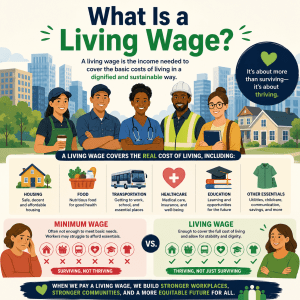
The living wage concept, as defined by researchers at the Massachusetts Institute of Technology, represents the income a household needs to cover basic necessities — housing, food, transportation, medical care, clothing, and personal expenses — in a specific geographic location. It is not a comfort level. It is not a savings goal. It is the threshold below which you are choosing between essential costs.
For a single adult with no children, the living wage is the simplest version of the calculation. There is no childcare, no extra mouths to feed, no second set of medical bills. It is purely what one person needs to sustain themselves in a given county.
What makes this number so useful for evaluating a first job offer is that it is grounded in real local costs — not national averages that blur the difference between Des Moines and San Francisco. The MIT model calculates housing based on fair market rents published by the Department of Housing and Urban Development for each region. Food costs come from USDA meal plans calibrated by age and region. Transportation reflects whether the county has transit access or whether a car is effectively required.
| Cost Category | What the MIT Model Includes | What It Does Not Include |
|---|---|---|
| Housing | Rent for a modest unit based on local fair market rent data | Mortgage, homeownership costs, moving expenses, security deposit |
| Food | Groceries based on USDA low-cost meal plan | Restaurant meals, coffee, alcohol, delivery apps |
| Transportation | Car ownership or transit costs appropriate for the region | Car purchase down payment, ride-shares, parking in high-cost areas |
| Healthcare | Insurance premium and estimated out-of-pocket costs | Dental, vision, elective procedures, mental health beyond basic coverage |
| Personal / Misc. | Clothing, household goods, phone, basic personal care | Entertainment, subscriptions, vacations, gym memberships |
| Taxes | Federal and state income tax, FICA (Social Security and Medicare) | Student loan payments, savings contributions, retirement |
| Student Loans | Not included in the model | — you must add this separately |
The most important thing to understand about this table: the living wage is a floor, not a ceiling. Meeting it means you can cover your basics. It does not mean you can build savings, travel, or handle an unexpected $800 car repair without stress. For new graduates with student debt, the real income floor is the living wage plus your monthly loan obligation.
Quick Conversion: To compare your annual offer to a living wage, divide your salary by 2,080 (52 weeks × 40 hours). That gives you your effective hourly rate. Then look up the living wage hourly figure for your county using the calculator. If your hourly rate is below the living wage, the gap in dollars per year is: (living wage hourly − your hourly) × 2,080.
The Student Loan Layer Nobody Accounts For
When you look up the living wage for your city, the number you see does not account for student loan payments. This matters a lot because the MIT model was built to reflect universal household costs — things everyone pays regardless of their educational background. Loan payments are not universal, so they’re not in the model.
For new graduates, this creates a systematic underestimate of how much income you actually need. You have to manually add your monthly loan payment to the living wage figure to get your real income floor.
How Loan Payments Change the Picture
The most common federal repayment plan spreads your loan balance over ten years at a fixed interest rate. A rough rule of thumb: expect to pay about $100 to $120 per month for every $10,000 you borrowed, depending on your interest rate. Someone who graduated with $35,000 in federal debt is looking at roughly $350 to $420 per month in loan payments — and that’s before factoring in private loans, which often carry higher rates.
| Loan Balance at Graduation | Estimated Monthly Payment (10-yr standard) | Annual Income Added to Your Living Wage Requirement |
|---|---|---|
| $15,000 | ~$155/month | +$1,860/year |
| $25,000 | ~$255/month | +$3,060/year |
| $35,000 | ~$360/month | +$4,320/year |
| $55,000 | ~$565/month | +$6,780/year |
| $80,000 | ~$825/month | +$9,900/year |
These are approximate figures. Your actual payment depends on your specific interest rate, loan servicer, and repayment plan choice. The point is directional: if you’re carrying $50,000 in loans and accepting a job in a city where the living wage is already $55,000, you need to earn closer to $62,000 just to break even on essentials and debt repayment, before saving a single dollar.
Income-Driven Repayment: A Caution
Some graduates choose income-driven repayment (IDR) plans, which cap monthly payments at a percentage of discretionary income. On a lower starting salary, this can reduce your monthly payment dramatically — sometimes to $0 if your income is below a certain threshold. That can feel like breathing room in the short term.
The catch: IDR plans extend your repayment timeline significantly, and interest continues to accrue on the remaining balance during that entire period. Unless your loans are eventually forgiven under a qualifying program, you may pay considerably more in total interest over the life of the loan. IDR is a legitimate tool, but it’s worth understanding the long-term cost before treating it as a permanent solution to a salary problem.
Use the MIT Living Wage Calculator to find the income floor for your city, then add your estimated monthly loan payment × 12 to that figure. The result is your actual minimum income requirement. Compare it to the after-tax value of any offer you’re considering.
What Your Offer Is Worth in Different Cities
One of the most disorienting things about your first job search is that a salary number means completely different things depending on where you’re going to live. A $55,000 offer in Austin, Texas feels very different from a $55,000 offer in Manhattan. The offer letter won’t tell you that. The living wage calculation will.
The figures in the table below represent approximate living wage ranges for single adults in the named metropolitan areas. These are illustrative based on publicly available MIT Living Wage data and should be verified using the calculator for your exact county, as costs vary significantly within metro areas.
| City / Metro Area | Approx. Living Wage (Single Adult) | Approx. Annual Equivalent | What $55k Looks Like |
|---|---|---|---|
| San Francisco, CA | ~$33–$38/hr | ~$69k–$79k/yr | Below Living Wage |
| New York City, NY | ~$31–$37/hr | ~$64k–$77k/yr | Below Living Wage |
| Boston, MA | ~$28–$33/hr | ~$58k–$69k/yr | Tight |
| Seattle, WA | ~$27–$32/hr | ~$56k–$67k/yr | Just at Threshold |
| Chicago, IL | ~$23–$27/hr | ~$48k–$56k/yr | Workable |
| Austin, TX | ~$21–$25/hr | ~$44k–$52k/yr | Above Living Wage |
| Atlanta, GA | ~$21–$24/hr | ~$44k–$50k/yr | Above Living Wage |
| Raleigh, NC | ~$20–$23/hr | ~$42k–$48k/yr | Comfortable |
| Columbus, OH | ~$19–$22/hr | ~$40k–$46k/yr | Comfortable |
Important: These figures are approximate and based on publicly available data. Living wage figures change annually as the MIT team updates local cost data. Always use the living wage calculator to get the exact current figure for your specific county — city-level averages can differ from suburban and rural county figures significantly.
What This Table Actually Tells You
The same $55,000 salary clears the living wage in most mid-sized cities in the South and Midwest, barely touches it in Seattle, falls significantly short in Boston and New York, and is nearly $25,000 below the living wage in San Francisco. These are not small differences. They mean the difference between building savings in your first year versus draining them.
This doesn’t mean you should automatically reject any offer in a high-cost city. It means you need to go in with a realistic budget, a negotiation strategy, or a plan for how the math works on your actual take-home pay.
How to Evaluate an Offer Step by Step
Here is a straightforward five-step process for evaluating any job offer against the living wage for your location. It takes less than 30 minutes and gives you a much clearer picture than gut instinct alone.
Use the MIT Living Wage Calculator and enter the state and county where the job is physically located — not the city name, because counties within the same metro area can have different figures. Select “one adult, no children” for the household type. Write down the hourly living wage figure.
Divide your annual salary by 2,080 (52 weeks × 40 hours per week). This is your effective hourly rate as a salaried employee. If your offer is $52,000 per year, that’s $52,000 ÷ 2,080 = $25.00 per hour. Compare that directly to the living wage hourly figure you found in step one.
Your gross salary and your take-home pay are different numbers. Federal income tax, state income tax (if applicable), Social Security (6.2%), Medicare (1.45%), and any health insurance or 401(k) contributions all come off the top. A rough estimate: most single adults in the $40k–$75k range take home about 70–78% of their gross salary, depending on state taxes and benefits elections. Do a more precise calculation using a free paycheck calculator for your state.
Take your estimated monthly student loan payment and multiply it by 12. Add that annual figure to the living wage annual equivalent (hourly figure × 2,080). The result is your true income floor — the minimum pre-tax annual salary that lets you cover necessities and loan payments simultaneously without drawing down savings each month.
Salary is not the whole picture. Employer-paid health insurance can be worth $3,000 to $10,000 annually. A 4% 401(k) match adds thousands more. Fully remote or hybrid flexibility eliminates commuting costs. Evaluate the full package, not just the base number. Sometimes a $48,000 offer with excellent benefits is financially superior to a $54,000 offer with minimal coverage.
Quick Offer Evaluation Tool
Use this visual assessment to see where a given offer falls relative to the living wage in different scenarios:
Figures above are illustrative based on approximate living wage ranges. Use the calculator for your exact county.
Three Real Scenarios Compared
Theory is useful. Examples are more useful. Here are three composite scenarios based on common situations new graduates face. The names are fictional, but the financial dynamics are real.
The Offer: $46,000/year base salary, employer pays 80% of health insurance premium.
Student Loans: $22,000 in federal loans at 5.5%. Estimated payment on 10-year standard plan: ~$240/month.
Living Wage for Wake County, NC: Approximately $20–$22/hr (~$42k–$46k/year).
The Analysis: The offer clears or matches the living wage for the county. After taxes and the employer health contribution, Marcus takes home roughly $33,500/year. Monthly loan payment of $240 leaves approximately $2,550/month for rent, food, transportation, and everything else. In Raleigh, a modest studio apartment runs $1,100–$1,400. This is tight but workable.
The Verdict: Financially Viable — with careful budgeting and modest lifestyle. Not comfortable, but sustainable without going into debt month to month.
The Offer: $72,000/year base salary, employer covers 70% of health insurance, no 401(k) match in year one.
Student Loans: $48,000 in federal loans at 5.0%. Estimated payment on 10-year standard plan: ~$510/month.
Living Wage for Suffolk County, MA: Approximately $30–$34/hr (~$62k–$71k/year).
The Analysis: The offer clears the living wage for the county. After Massachusetts income tax (5%) and federal taxes, take-home is roughly $50,000–$52,000/year. Monthly loan payment of $510 comes to $6,120/year. Remaining monthly take-home for living expenses: approximately $3,650. Boston studio rents run $1,800–$2,400 in many neighborhoods — tight but manageable, especially with a roommate.
The Verdict: Workable, Not Comfortable — loan payments and Boston rent leave minimal savings room. Building an emergency fund will take patience.
The Offer: $68,000/year base salary, employer covers 60% of health insurance.
Student Loans: $38,000 in federal loans. Estimated payment: ~$400/month.
Living Wage for San Francisco County, CA: Approximately $34–$38/hr (~$71k–$79k/year).
The Analysis: The offer falls below the living wage before accounting for loans. California state income tax is among the highest in the country. After taxes, take-home is roughly $47,000–$49,000/year. Monthly loan payment of $400 leaves approximately $3,700/month. San Francisco median studio rent exceeds $2,400. Groceries, transit, and utilities easily consume the remainder — with nothing left for savings or unexpected expenses.
The Verdict: Not Financially Sustainable — without a roommate, family support, or a higher salary, this offer does not support an independent life in San Francisco. A counter-offer of at least $82,000–$88,000 would be warranted.
These scenarios illustrate how the same type of job — entry-level professional work — can land in completely different financial territory depending entirely on where you live. Before you make a decision, run the numbers for your specific location. It takes two minutes and gives you a concrete foundation for everything that comes next.
Negotiating When You Think You Have No Leverage
One of the most persistent myths about first jobs is that new graduates have no power to negotiate. The idea seems to be that you’re so desperate for your first break that any pushback will get the offer pulled. This is almost never how it works in practice.
Most employers expect negotiation. Many build a range into their initial offer precisely because they know candidates will counter. Recruiters specifically are evaluated partly on how efficiently they close candidates — which means they generally have some flexibility and some motivation to use it rather than restart the search.
What to Do Before You Negotiate
Don’t negotiate without a specific figure in mind. “I was hoping for something higher” is a weak position. “Based on the living wage for this county and the market rate for this role at my experience level, I was expecting something closer to $X” is a specific, defensible request that is much harder to dismiss.
The living wage gives you your floor. Market rate data for your role and location gives you your ceiling. Sources like the Bureau of Labor Statistics Occupational Employment Statistics, LinkedIn Salary, Glassdoor, and Levels.fyi (for tech) provide salary distributions by role, city, and experience level. Your target should be somewhere between the floor and the midpoint of the market range.
If the employer can’t move on base salary — and some genuinely can’t, particularly in nonprofits, government, or companies with rigid compensation bands — ask about other components: signing bonus, remote flexibility, student loan repayment assistance, an earlier first performance review, or professional development budget. These can meaningfully offset a lower starting salary.
The Negotiation Conversation
When you get a verbal or written offer, you don’t have to respond immediately. It’s completely normal to say: “Thank you so much — I’m really excited about this opportunity. Could I have until [specific date, usually 2–5 business days] to review the full offer?” No legitimate employer will withdraw an offer because you asked for a few days to think.
When you come back with a counter, be direct and specific. Something like: “I’ve reviewed the offer carefully and I’m very interested in joining the team. Based on my research into the cost of living in this area and salary benchmarks for this role, I was hoping to see the base salary closer to $[X]. Is there flexibility there?” Then stop talking. Let them respond.
What not to do: Don’t give a range. Don’t say “anything above $X would work.” Don’t apologize for asking. Don’t make ultimatums. Don’t negotiate in writing if you can do it by phone — written negotiations are harder to read tonally and easier to misinterpret.
What If They Say No?
If the employer can’t or won’t move on salary or benefits, you have a genuine decision to make based on the numbers you’ve already done. This is not the moment to justify accepting a financially unsustainable offer because you’re excited about the role or afraid of the job market. If the math doesn’t work, it doesn’t work — and finding out in month three is worse than finding out now.
When It’s OK to Say No to a First Job Offer
Saying no to a first job offer is genuinely hard. It can feel like closing a door that took months to open. But accepting an offer that doesn’t cover your basic costs isn’t a stepping stone — it’s a trap that creates financial stress from the first paycheck and makes it harder to focus, perform, and build the career you’re trying to build.
There are specific circumstances where declining or deferring an offer is the more rational decision than accepting out of pressure or anxiety:
The Math Genuinely Doesn’t Work
If the offer, even after accounting for benefits, falls more than 10–15% below the living wage for the city — and you have no additional income source, family support, or roommate subsidy — the offer is financially unsustainable. Accepting it means you’ll be accumulating debt or depleting savings every month you stay, which creates pressure to job-hop in 6–12 months rather than building the experience and relationships that actually advance your career.
You Have a Better Offer Pending
If you’re actively in interviews elsewhere and expect a response within a reasonable window, it’s completely acceptable to ask for more time to decide. “I have another process that’s nearly complete and want to give each opportunity proper consideration” is honest and professional. Most employers will grant 5–10 additional business days if you ask thoughtfully.
The Role Has No Growth Path
A first job is not just about the current salary — it’s about where the role leads. If the offer is below the living wage and the position is a dead end with no clear promotion path or skill development, you’re not trading short-term financial hardship for long-term career gain. You’re just struggling for a resume line that won’t meaningfully advance your trajectory.
The Location Is the Whole Problem
Sometimes the role is genuinely good but the city makes the salary untenable. If the employer has other locations or a genuine remote option, it’s worth asking before declining. “I’m very interested in this role — is there flexibility on which office location I’d be based in, or is there a remote option?” can open a door that nobody thought to mention.
A note on “paying your dues”: The idea that new graduates should accept whatever is offered because they haven’t earned better yet is advice from a different labor market. You are allowed to have a financial floor. Knowing what that floor is — which is exactly what the living wage calculation tells you — is not entitlement. It’s basic financial literacy applied to a major life decision.
If You Have to Make a Low Offer Work
Not every situation allows you to decline or hold out for a better offer. Sometimes the job is important for your field, the experience is genuinely irreplaceable, the visa situation limits your options, or the timeline of your financial situation means you need income now. In those cases, you need a realistic plan for how to make a below-living-wage salary survivable in the short term while you work toward something better.
Practical Strategies for the Gap Period
🏠 Roommates
The single most effective lever on a tight income. Splitting a two-bedroom with one roommate can cut your housing cost by 40–50%, which often closes the gap between a below-living-wage salary and financial viability. It’s not glamorous, but it’s honest math.
🚘 Rethink Transportation
In cities with transit, eliminating a car saves $600–$900 per month (car payment, insurance, gas, parking). In transit-accessible neighborhoods, a monthly transit pass can replace that expense at $90–$150. This is often the second biggest lever after housing.
🆔 Income-Driven Repayment (Short-Term)
If your income is genuinely below threshold, IDR plans can reduce your loan payment to a manageable figure. This is a short-term strategy — not a long-term solution — to be reversed as your income grows, as interest compounds on the remaining balance during deferral.
🚀 Set a Timeline
Accepting a below-living-wage role is more tolerable when it’s explicitly temporary. Set a specific timeline: “I’ll give this 12–18 months to build my resume, and then I’ll aggressively pursue roles in the $X range.” Having a plan prevents the temporary from becoming permanent by default.
💰 Build Skills That Raise Your Rate
Use the time in the role to acquire specific certifications, skills, or experiences that directly increase your market value. Don’t wait for the employer to develop you — take ownership of your own career arc so that the next negotiation starts from a different position.
📈 Track Your Progress
Create a simple monthly budget that tracks whether your income is covering your costs or whether you’re falling behind. Awareness prevents the slow drain from going unnoticed. If you’re going backward month over month, that’s information you need to act on — not just endure.
As you get raises, promotions, or move to new roles, come back and re-run the numbers with the MIT Living Wage Calculator. The living wage for your area also updates annually, so the benchmark shifts over time. Knowing where you stand keeps the financial picture honest at every stage.
Frequently Asked Questions
What is a living wage for a recent college graduate?
A living wage for a single adult with no dependents ranges from roughly $20 to $38 per hour depending on where you live, which translates to about $41,000 to $79,000 per year before taxes. Cities like San Francisco, New York, and Boston sit at the high end, while mid-sized cities in the South and Midwest tend to be lower. The MIT Living Wage Calculator gives you the exact figure for your specific county — not a city average, but your exact local market.
How do student loans affect the living wage calculation?
The MIT Living Wage model does not include student loan payments in its calculation because it is built around universal household costs that apply to all workers. For new graduates, you need to add your monthly loan payment on top of the living wage figure to find your true income floor. A $400 per month loan payment adds roughly $4,800 to your annual income requirement — meaning if the living wage for your city is $50,000, your actual required income is closer to $54,800.
Is a $45,000 starting salary enough to live on?
It depends entirely on where you live. In many smaller cities and parts of the South and Midwest, $45,000 meets or slightly exceeds the living wage for a single adult. In high-cost cities like New York, San Francisco, Seattle, or Boston, $45,000 falls below the living wage and will make it very difficult to cover rent, food, transportation, and loan payments without going into debt. The only way to know for your specific situation is to look up the living wage for your exact county and compare.
Should I negotiate my first job offer?
Yes. Many employers expect negotiation and leave room for it in their initial offer, especially at the entry level. Knowing the living wage for your city gives you an objective floor to negotiate from rather than just guessing. Research the market rate for your role, come in with a specific number rather than a range, and be prepared to explain your reasoning calmly. The worst they can say is no — and even that is useful information about the employer before you commit.
What costs do new graduates forget to budget for?
The most commonly overlooked costs are renter’s insurance, health insurance premiums and deductibles once you age off a parent’s plan at 26, moving expenses, security deposits — often first and last month’s rent — work clothing, and professional development costs. Also budget for the gap between your start date and your first paycheck if your employer pays biweekly. You may work two weeks before receiving your first check, and that gap needs to come from somewhere.
Is it worth moving to a lower-cost city to earn a higher real wage?
Sometimes, but not always. A $60,000 salary in Austin or Raleigh often provides more financial breathing room than $80,000 in New York or San Francisco after housing, taxes, and transportation. However, high-cost cities often have stronger career networks, faster salary progression, and more opportunities for advancement in many industries. The right answer depends on your specific field, career goals, and personal priorities — not just the raw cost-of-living math.
What if my first job offer is below the living wage?
First, try to negotiate. If the employer cannot move on salary, look at the full compensation package — employer-paid health insurance, student loan assistance, remote work flexibility, or housing stipends can offset a lower base salary. Also consider whether the role provides rapid career growth or specific credentials that meaningfully increase your earning potential within one to two years. If none of those factors apply and the math genuinely doesn’t work, the offer may not be financially sustainable regardless of how exciting the role sounds.
How do I use the MIT Living Wage Calculator to evaluate a job offer?
Go to the MIT Living Wage Calculator, enter the state and county where the job is located, and select the household type that matches your situation — for most new graduates this is “one adult, no children.” Note the living wage figure in the results. Convert your offer to an hourly rate by dividing your annual salary by 2,080 (the standard number of working hours in a year). If your hourly rate meets or exceeds the living wage, the base salary is sufficient for basic living costs. If not, the gap in dollars tells you how much you need to either negotiate or offset through benefits.
Know Your Number Before You Sign Anything
The most important thing you can do before accepting a first job offer is spend three minutes checking whether it actually covers the cost of living where you’ll be working. Not nationally. Not according to some blanket estimate of what’s “good.” For your specific county, your specific household size, your specific situation.
That’s exactly what the MIT Living Wage Calculator does. It gives you the local income floor calculated from real housing, food, transportation, and healthcare data — so your decision is grounded in actual numbers, not assumptions.
Look up the living wage for any U.S. county in seconds. Free, no signup required. Use it to evaluate your offer, build your budget, or set a negotiation target. Open the calculator →
Once you have your living wage figure, add your estimated monthly loan payment multiplied by 12. That total is your real income floor. Everything above it is financial room to build with. Everything below it is a gap you’ll need a plan to close.
Using Living Wage Data to Negotiate Your Salary — How to turn the MIT Living Wage figure into a specific negotiation strategy for your job offer.
Am I Earning a Living Wage? A Self-Assessment — A personal diagnostic for anyone who already has a job and wants to know whether their current income is sufficient.
Living Wage by City: What You Actually Need to Earn — City-by-city breakdowns of what the living wage looks like in real budget terms across major U.S. metros.
Living Wage vs. the 50/30/20 Budget Rule — Does standard budgeting advice actually work on a living wage income? The math may surprise you.
Disclaimer: The salary figures, living wage estimates, and cost-of-living comparisons in this article are illustrative and based on publicly available data including MIT Living Wage Calculator outputs, Bureau of Labor Statistics data, and common personal finance benchmarks. Individual results will vary based on specific county, employer benefits, tax situation, loan terms, and personal spending. This article is for educational purposes only and does not constitute financial or career advice. Always consult current living wage data for your specific location using the calculator, and consider speaking with a certified financial planner for personalized guidance on evaluating job offers and managing debt.