How often should cats go to the vet? The short answer is that it depends on age and health: kittens need a series of early visits, healthy adults do well with a yearly check-up, and senior cats benefit from twice a year, with any cat seen promptly if it seems unwell. Because cats are experts at hiding illness, these routine wellness visits are one of the best ways to catch problems early, when they are far easier to treat. This guide sets out a clear schedule by life stage, explains what happens at a check-up and why it matters, covers indoor cats and vaccinations, and lists the signs that mean an extra visit.
Keep vaccinations and check-ups on track with the Cat Vaccination & Wellness Schedule, and browse more tools in the pet calculators hub.
On this page
The short answer, by age
Because the right frequency genuinely depends on the cat, the clearest way to answer is with a simple schedule by life stage that you can match to your own cat, before getting into the reasons behind it.
Here is the general schedule that most veterinary guidance supports. Kittens need a series of visits during their first few months, for their course of vaccinations, health checks, deworming, and usually neutering. Healthy adult cats, roughly from one year to their senior years, should have a wellness check-up at least once a year, which includes a physical examination and a vaccination and parasite-control review. Senior cats, generally those over about seven to ten years depending on the cat and the vet’s definition, benefit from check-ups twice a year, because age-related diseases develop and progress more quickly and are best caught early. Cats with a diagnosed health condition need to be seen as often as their vet advises, which may be considerably more frequently. And layered on top of all of this, any cat of any age should see the vet promptly whenever it shows signs of being unwell, since those illness visits are separate from and additional to the routine wellness schedule. That is the whole framework in brief: more visits at the start of life and in old age, a yearly minimum in the healthy adult years, more for cats with conditions, and prompt attention to any problem in between. The sections that follow explain each stage and why the frequency changes.
One thing worth holding onto as you read the schedule is that these are general guidelines, and your own vet may adjust them for your particular cat. A cat’s breed, its history, any early health scares, its lifestyle, and local disease risks can all shift the ideal frequency a little in either direction, and a vet who knows your cat can fine-tune the plan. The value of the framework is that it gives you a sensible default to work from and, just as importantly, tells you when the frequency should change, at the start of life, in old age, and whenever a health condition enters the picture, rather than leaving it to guesswork or to the cat seeming fine.
Why routine visits matter so much
Before the stage-by-stage detail, it is worth understanding why regular vet visits matter more for cats than many owners assume, because the reason shapes the whole approach: cats are exceptionally good at hiding illness.
Cats evolved as both predators and potential prey, and an animal that shows weakness in the wild is vulnerable, so cats instinctively mask signs of illness and pain and carry on as normally as they can for as long as they can. This means that by the time a cat looks obviously sick to its owner, a problem has often been developing for some time. Routine wellness visits are so valuable precisely because they get around this instinct: a vet examining a cat that seems perfectly well can pick up early signs the cat is hiding, a heart murmur, weight loss, dental disease, an enlarged thyroid, changes on a blood or urine test, at a stage when many conditions are far more manageable. The common serious diseases of cats, kidney disease, hyperthyroidism, diabetes, and others, are all much easier to treat and control when caught early, and early is exactly what a routine check-up aims for. This is the core argument for not waiting until a cat seems ill to take it to the vet, and for keeping up the regular schedule even for a cat that appears healthy: the appearance of health is not proof of it in an animal built to conceal sickness. Preventive, scheduled care is genuinely one of the most effective things an owner can do for a cat’s long-term health and comfort.
There is also a quieter benefit to regular visits that is easy to overlook: they build a health record over time. When a vet has seen a cat every year, they have a baseline for its weight, its heart, its bloodwork, and its normal, which makes a subtle change far easier to spot than it would be at a one-off visit years apart. A three-hundred-gram weight loss or a slightly raised kidney value means much more when there is a trend to compare it against, so the routine itself, quite apart from any single check-up, becomes a tool for catching disease early. This accumulating picture is one of the underappreciated reasons not to let the schedule lapse during the healthy years.
Kittens: the first year
Kittens need the most frequent veterinary care of any life stage, because they require a course of early preventive care and because their first months are when a good foundation for lifelong health is laid.
A kitten typically begins visiting the vet from around 8 or 9 weeks of age, or sooner for a first health check if newly acquired. The early visits centre on a course of vaccinations, usually a first dose from about 8 or 9 weeks with one or more follow-up doses a few weeks apart to complete the initial course and build proper protection against the core feline diseases. These same visits include thorough health checks, weight monitoring as the kitten grows, deworming on a schedule since kittens are very commonly born with or quickly acquire worms, the start of flea prevention, and advice on feeding, litter training, socialisation, and care. Neutering (spaying or castration) is usually carried out around 4 to 6 months of age, sometimes earlier depending on the vet’s approach, and is an important part of the first year both for health and to prevent unwanted litters. Microchipping is often done too. Once the kitten course and neutering are complete, the cat transitions onto the normal adult schedule of an annual check-up and booster vaccinations as advised. Because kittens are small, vulnerable, and developing fast, and because these early interventions protect them from serious preventable diseases, keeping closely to the vet’s recommended kitten schedule is well worth the several visits it involves, and it also builds a relationship with the vet and gets the kitten used to being handled and examined.
Adult cats: the yearly check
For the long stretch of healthy adulthood, the standard recommendation settles into a comfortable rhythm of an annual visit, which suits most cats well while remaining a minimum rather than a maximum.
Once a cat has finished its kitten course and reached adulthood, roughly from one year of age through the middle years, the general recommendation is a wellness check-up at least once a year. This annual visit combines a full physical examination, a review of which vaccinations are due (some are given yearly and others less often, which the vet will manage), a discussion of parasite control, and a conversation about diet, weight, behaviour, and anything you have noticed. For a healthy adult cat, once a year is widely considered the sensible minimum and is enough for many cats, provided it is paired with prompt visits whenever the cat seems unwell in between. It is worth stressing the minimum aspect: a yearly check is a floor, not a ceiling, and some vets suggest more frequent visits even for adults, particularly to keep an eye on weight and dental health, which commonly need attention. As a cat moves toward its senior years, the recommendation increases to twice yearly, covered next. The key point for the adult years is not to let the apparent good health of a young or middle-aged cat lead to skipping the annual check, since that visit is doing the quiet work of catching problems early and keeping preventive care current, even when the cat seems perfectly fine, which, being a cat, it will tend to do whether or not it truly is.
Senior cats: twice a year
As cats age, the recommended frequency increases, and understanding why senior cats benefit from twice-yearly visits is one of the most important messages in this guide, because it is where routine care makes the biggest difference.
Cats are generally considered senior from around seven to ten years of age, with the later part of life sometimes called geriatric, and for these older cats the recommendation shifts from yearly to twice-yearly wellness checks. The reason is straightforward: the diseases that become common with age, chronic kidney disease, hyperthyroidism, diabetes, high blood pressure, arthritis, dental disease, and cancer, develop and progress faster in an older cat, so the gap between annual visits can be long enough for a problem to advance significantly, whereas a check every six months catches changes sooner. Crucially, a cat ages faster than a person in later life, so six months is a meaningful stretch of an older cat’s life. These senior checks often include, or lead to, blood and urine screening, which can detect conditions like kidney disease, thyroid disease, and diabetes before the cat shows obvious signs, at the early stage when management is most effective and can add comfortable years to a cat’s life. Older cats also hide illness just as well as younger ones while being more likely to have something to hide, which makes the vet’s examination especially valuable. Weight, appetite, thirst, mobility, and dental health all warrant closer attention in a senior cat. For all these reasons, twice-yearly veterinary care in the senior years is one of the most worthwhile investments in an ageing cat’s wellbeing, and it is a change in routine worth making as your cat reaches that stage.
A useful way to think about the six-month interval is in terms of how fast an older cat ages relative to us. A senior cat can change more between two six-month visits than a middle-aged person would between annual physicals, so what feels to an owner like a short gap can be a meaningful stretch of the cat’s life in which a disease can take hold or worsen. This is also why owners of senior cats are encouraged to watch closely at home between visits, weight, appetite, thirst, litter habits, and mobility, and to report changes promptly rather than waiting for the next scheduled check, since in an older cat those months matter more.
Cats with health conditions
Beyond the age-based schedule, any cat with a diagnosed health problem sits on its own timetable, because managing a condition well requires monitoring that goes beyond routine wellness visits.
A cat that has been diagnosed with a health condition, such as kidney disease, hyperthyroidism, diabetes, heart disease, asthma, or another ongoing problem, needs to be seen as often as its vet recommends for that condition, which is frequently more often than the routine schedule. The purpose of these visits is to monitor the disease and the response to treatment: checking blood or urine values, weight, and clinical signs, and adjusting medication or diet as needed, since many feline conditions are managed rather than cured and require ongoing fine-tuning. For example, a newly diagnosed diabetic or hyperthyroid cat may need several close-together visits while treatment is stabilised, then regular monitoring checks; a cat with kidney disease needs periodic reassessment to track its progression and adjust care. Following the vet’s recommended monitoring schedule for a chronic condition is important, because it is what keeps the condition controlled and the cat comfortable, and because problems with treatment or a change in the disease are far better caught at a scheduled check than after the cat becomes unwell. So for a cat with a health condition, the answer to how often it should see the vet is simply whatever its own vet advises for its situation, layered on top of, or incorporating, the general wellness care, and it is worth prioritising these monitoring visits as a core part of managing the cat’s health.
It can be tempting, once a chronic condition seems stable and the cat is doing well, to start stretching out or skipping the monitoring visits, but this is usually a false economy. Many feline conditions drift over time even when treatment is going well, so a dose that was right six months ago may no longer be, and the only way to know is to check. Catching that drift at a scheduled monitoring visit, while the cat is still well, is far easier and cheaper than dealing with the crisis that an unnoticed change can eventually cause, which is why keeping to the vet’s monitoring schedule matters as much when the cat seems fine as when it does not.
What happens at a check-up
It helps to know what a routine wellness visit actually involves, both so you understand its value and so you can make the most of it, because a check-up is more than a quick look at the cat.
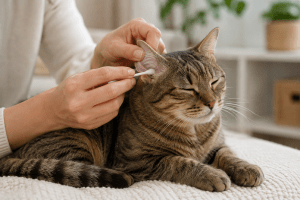
At a wellness check-up, the vet carries out a thorough nose-to-tail physical examination. This typically includes weighing the cat and assessing its body condition, since weight changes are an important early clue; listening to the heart and lungs for murmurs or abnormal breathing; feeling the abdomen to check the organs; examining the eyes, ears, nose, and the mouth and teeth, where dental disease is very commonly found; checking the skin and coat for parasites or problems; and assessing the cat’s overall condition, mobility, and demeanour. Alongside the examination, the vet reviews which vaccinations are due and administers any needed, discusses parasite control for worms and fleas appropriate to the cat, and talks with you about diet, weight, behaviour, and any concerns. For senior cats, or where the examination or history suggests it, the vet may recommend blood and urine tests to screen for the common diseases that a physical exam alone cannot detect. Just as importantly, the check-up is your opportunity to raise anything you have noticed at home, even small changes, since your observations combined with the vet’s examination give the fullest picture. The overarching purpose of all this is early detection and prevention: catching problems before they become serious in an animal that hides illness, and keeping vaccines and parasite control up to date. Coming prepared with any questions and a note of anything unusual you have seen makes each visit more useful.
It genuinely helps to jot things down in the days before an appointment, because it is easy to forget a small change once you are in the consulting room with a stressed cat. A note that the cat has been drinking a little more, has been slower to jump onto the bed, or has left more food than usual can be exactly the clue that prompts the vet to look further, and details like when a change started and how it has progressed are the kind of thing that is hard to reconstruct from memory. Owners are the vet’s eyes and ears for the other three hundred and sixty-odd days of the year, so bringing those observations to the visit makes the examination far more powerful than it would be on its own.
Do indoor cats need the vet?
A very common assumption is that a cat kept safely indoors does not really need regular veterinary visits, and because it can lead owners to skip important care, it is worth correcting clearly.
Indoor cats need regular veterinary care just as outdoor cats do, and the belief that staying inside removes the need for check-ups is a myth that can leave problems undetected. An indoor cat still ages and is still susceptible to the common feline diseases, kidney disease, hyperthyroidism, diabetes, dental disease, heart disease, and others, which develop regardless of whether a cat goes outside and which need catching early through routine wellness visits exactly as in any cat. Indoor cats also still benefit from core vaccinations, since some serious diseases can reach even an indoor cat, and from appropriate parasite control, because worms and fleas can find their way indoors. On top of that, indoor cats are prone to their own issues, such as obesity and boredom-related problems, that a vet can help address. So an indoor cat should follow the same age-based schedule as any other, the kitten course, then yearly checks through adulthood, then twice-yearly in the senior years, plus prompt visits for any signs of illness. The level of vaccination and parasite prevention can be tailored to an indoor cat’s lower exposure on the vet’s advice, but the routine wellness examinations are just as important, because the diseases they are designed to catch do not depend on whether the cat ever steps outside.
Vaccinations and parasite control
Two of the main reasons for routine visits, keeping vaccinations and parasite control current, run alongside the wellness examinations and are worth understanding as part of the schedule.
Vaccinations protect cats against serious infectious diseases, and their timing is part of what sets the visit schedule. Kittens receive their initial course, and adult cats receive boosters, with some vaccines given yearly and others every few years, according to the vaccine, the cat’s lifestyle and risk, and local guidance, all of which the vet manages as part of the routine visits. Keeping vaccinations up to date matters for indoor and outdoor cats alike, since some of the diseases they prevent can reach any cat. Parasite control is the other ongoing thread: routine deworming and flea prevention, at a frequency suited to the individual cat’s lifestyle and risk, protect the cat and, in the case of some parasites, the human household too, and they are reviewed and updated at each wellness visit. Because these preventive measures are tied to the check-up schedule, keeping up with the regular visits automatically keeps this protective care on track, which is part of why the routine matters. Your vet will tailor both the vaccination plan and the parasite-control programme to your particular cat, whether it is an indoor-only companion or an outdoor hunter, so the specifics vary, but the principle is constant: preventive care delivered on a regular schedule, reviewed and renewed at each visit, is a central purpose of taking a cat to the vet even when it seems perfectly well.
Signs that mean an extra visit
On top of the routine schedule, it is essential to remember that any cat should see the vet promptly whenever it seems unwell, and knowing the signs that warrant an extra visit is part of responsible care.
The routine wellness visits are the baseline, but they do not replace prompt attention to any problem that arises in between. Because cats hide illness, a change from your cat’s normal is often the earliest clue, so book a vet visit for signs such as a change in appetite, thirst, weight, or litter box habits; vomiting or diarrhea; lethargy, hiding, or a cat that is not itself; changes in grooming or coat; limping or reluctance to move; new lumps; bad breath or trouble eating; increased or decreased urination; or any persistent or worsening change. Treat as an emergency needing immediate care any breathing difficulty or open-mouth breathing, collapse or severe weakness, a male cat straining but unable to urinate, suspected poisoning, seizures, severe pain, repeated vomiting, or a cat that is obviously very unwell. Kittens, senior cats, and cats with existing conditions warrant a quicker call for any concern, since they have less reserve. These illness-driven visits are additional to, not a substitute for, the regular wellness checks: a cat still needs its routine examinations even if it has recently been seen for a specific problem, and it still needs prompt attention to new problems even if its annual check is not due. The two work together, scheduled prevention plus responsive care, to keep a cat healthy, and trusting your sense that something is off is itself a good reason to call, since you know your cat best.
Making vet visits easier
Finally, since many cats find the vet stressful and that stress can put owners off going, a few practical measures make visits calmer for everyone and help ensure the schedule is actually kept.
A cat that finds vet trips frightening is harder to take, which can tempt owners to delay visits, so making the experience less stressful genuinely supports better health care. Helpful measures include getting the cat used to its carrier at home by leaving it out as a familiar, comfortable space rather than only producing it before a dreaded trip, so it is not associated purely with the vet. Lining the carrier with familiar-smelling bedding, covering it with a light cloth during travel to reduce visual stress, and keeping the car journey calm all help. For particularly anxious cats, vets can advise on calming aids or, in some cases, a medication such as gabapentin given before the visit to reduce fear and make the cat easier and safer to examine. Choosing a cat-friendly practice, and booking quieter appointment times, can also make a difference. Handling the cat gently and staying calm yourself matters, since cats pick up on their owner’s stress. The reason all this is worth the effort is simple: a cat that can be taken to the vet without a battle is a cat whose routine wellness visits, and prompt visits when something is wrong, actually happen, which is exactly what keeps it healthy. Reducing the stress of the vet is therefore not just kindness but a practical way to make sure your cat gets the regular care this whole guide recommends.
If cost is part of what makes the schedule hard to keep, it is worth raising that openly with your vet rather than simply skipping visits, since many practices can help you plan preventive care, spread costs, or prioritise the checks that matter most for your cat’s stage of life. Pet insurance or a health-plan scheme can also make routine and unexpected care more manageable and predictable. The reason this is worth mentioning is that preventive visits, by catching disease early, often save money as well as suffering compared with treating an advanced illness, so the routine care this guide recommends tends to be the economical choice over a cat’s life, not just the healthier one.
Frequently asked questions
How often should cats go to the vet?
As a general guide, healthy adult cats should have a wellness check at least once a year, while kittens and senior cats need more frequent visits, and cats with health conditions need as often as their vet advises. Kittens require a series of visits in their first months for vaccinations, deworming, a health check, and usually neutering. Adult cats do well with an annual check-up and vaccination review. Senior cats, generally those over about seven to ten years, benefit from twice-yearly check-ups because age-related diseases develop faster and can be caught earlier with more frequent screening. On top of the routine schedule, any cat should see the vet promptly if it shows signs of illness, since these are extra visits beyond the regular wellness checks.
How often do kittens need to see the vet?
Kittens need several visits in their first few months. Typically a kitten starts a course of vaccinations from around 8 or 9 weeks of age, with follow-up doses a few weeks apart to complete the initial course, and these visits also include health checks, weight checks, deworming, flea prevention, and advice. Neutering is usually done around 4 to 6 months of age, sometimes earlier. After the kitten course is complete, the cat moves onto the normal adult schedule of a yearly check-up and booster vaccinations as advised. Because kittens are vulnerable and growing, these early visits are important for protecting their health and catching any problems early, so following the vet’s kitten schedule closely is well worth it.
How often should a senior cat see the vet?
Senior cats, generally those aged over about seven to ten years depending on the cat, benefit from check-ups twice a year rather than once, because the diseases common in older cats, such as kidney disease, hyperthyroidism, diabetes, arthritis, dental disease, and high blood pressure, develop and progress faster and are much easier to manage when caught early. More frequent visits, often with blood and urine screening, let a vet detect these conditions before an owner would notice obvious signs, at the stage when treatment works best. Older cats hide illness especially well, so twice-yearly wellness checks are one of the most valuable things you can do for an ageing cat’s health and comfort.
What happens at a cat’s routine check-up?
At a wellness check-up, the vet gives your cat a thorough physical examination, checking its weight and body condition, listening to the heart and lungs, feeling the abdomen, examining the eyes, ears, mouth and teeth, skin and coat, and assessing overall health. They review and give any due vaccinations, discuss parasite control for worms and fleas, and talk about diet, weight, behaviour, and any concerns you have. For older cats or where indicated, they may recommend blood and urine tests to screen for common diseases. The check-up is also your chance to raise anything you have noticed. Its main value is catching problems early, since cats hide illness, and keeping preventive care, vaccines and parasite control, up to date.
Do indoor cats still need to go to the vet?
Yes. Indoor cats still need regular veterinary care, and it is a myth that staying inside removes the need for check-ups. Indoor cats still age and develop the same diseases as any cat, kidney disease, thyroid problems, diabetes, dental disease, and more, which need catching early through routine wellness visits, and they still benefit from core vaccinations and appropriate parasite prevention, since some diseases and parasites can reach indoor cats. An indoor cat should follow the same age-based schedule of yearly checks for adults and twice-yearly for seniors, plus its kitten visits, and should see the vet promptly for any signs of illness, exactly like an outdoor cat.
When should I take my cat to the vet outside of routine visits?
See the vet promptly, outside the routine schedule, whenever your cat shows signs of being unwell, since cats hide illness and any change from normal can matter. Reasons to book a visit include changes in appetite, thirst, weight, or litter habits, vomiting or diarrhea, lethargy or hiding, a change in grooming or coat, limping, lumps, bad breath, or simply a cat that is not itself. Treat as an emergency any breathing difficulty, collapse, a male cat unable to urinate, suspected poisoning, severe pain, repeated vomiting, or a cat that is very unwell. Kittens and senior cats warrant a quicker call. These illness-related visits are separate from and additional to the regular wellness check-ups, not a replacement for them.
Is once a year enough for a healthy adult cat?
For a healthy adult cat in its prime, an annual wellness check-up with vaccination and parasite-control review is generally considered the minimum and is enough for many cats, provided you also see the vet promptly for any signs of illness in between. However, an annual visit is a floor rather than a ceiling: some vets suggest more frequent checks even for adults, and as a cat reaches its senior years the recommendation shifts to twice a year. So yearly is a reasonable baseline for a well adult cat, but it should be paired with prompt attention to any problems that arise, and it should increase in frequency for kittens, seniors, and any cat with a health condition.
The quick version
How often should cats go to the vet? Kittens need a series of early visits for vaccinations, deworming, health checks, and neutering; healthy adult cats need at least a yearly wellness check-up; and senior cats, generally over about seven to ten years, benefit from twice-yearly visits because age-related diseases progress faster and are best caught early. Cats with health conditions are seen as often as their vet advises, and any cat should go promptly whenever it seems unwell, since those illness visits are extra to the routine ones. Because cats hide illness, these regular check-ups, which catch problems the cat is concealing, are one of the most valuable things you can do, and they apply to indoor cats just as much as outdoor ones.
For related help, see the guides on the early signs a cat is sick, increased thirst, and vomiting. Check when your cat is next due with the Cat Vaccination & Wellness Schedule, browse the full cat blog and the pet calculators, or explore more free tools on the Waldev homepage.
Medical disclaimer: This guide is for general education and is not a substitute for veterinary advice. Recommended visit frequency and vaccination and parasite schedules vary with the individual cat, its health, and local guidance, so follow your own veterinarian’s recommendations. If your cat shows any sign of illness between routine visits, contact your veterinarian promptly.
Regular wellness visits catch illness early in cats, which hide sickness by instinct. Pet owner resources →
Your veterinarian can set a wellness and vaccination schedule tailored to your cat’s age and health. Locate a hospital →