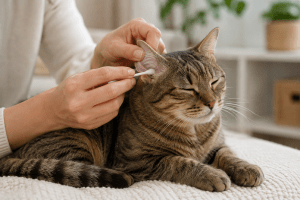
Can cats get colds? Yes, cats catch their own version of a cold, an upper respiratory infection often called cat flu, and it looks remarkably like ours: sneezing, a runny nose, watery eyes, and a cat that is a bit quiet and off its food. Most cat colds are mild and pass in a week or two with good home care, but they are not something to simply ignore, because they can turn more serious in kittens, older cats, and cats with weaker immune systems. This guide covers the symptoms, how to care for a cat with a cold at home, whether it spreads to other cats or to you, and the clear signs that mean it is time to see the vet.
Vaccination reduces the risk and severity of the viruses behind cat colds. Check when your cat is next due with the Cat Vaccination & Wellness Schedule, and browse more tools in the pet calculators hub.
On this page
Can cats really get colds?
The simple answer is yes, and it reassures a lot of worried owners to know that the sneezing, sniffly cat in front of them has something very much like the cold they get themselves.
What we casually call a cat cold is, in veterinary terms, an upper respiratory infection, and it is one of the most common illnesses in cats, especially where cats live in groups. It produces the familiar cluster of cold symptoms, sneezing, a runny or blocked nose, and watery eyes, along with a cat that often seems quieter and less interested in food, and just as with a human cold, most cases are mild and resolve with time and supportive care. The comparison to our own colds is genuinely useful, because it sets sensible expectations: a mild cat cold is uncomfortable but usually self-limiting, and the job is mainly to keep the cat comfortable while it recovers rather than to hunt for a cure that a virus does not really have. The important difference from a human cold is that a cat cold can be more serious in vulnerable cats and can sometimes lead to complications, so while there is no need to panic over a mild case, it should not be completely ignored either. Knowing that cats do get colds, that most are mild, and that some need veterinary help is the foundation for everything that follows.
It is also worth clearing up a small point of language, since owners sometimes wonder whether “cat cold,” “cat flu,” and “upper respiratory infection” are three different things. They are largely the same thing described in different registers: “cat cold” is the everyday term, “cat flu” is a common informal name in many countries, and “upper respiratory infection” is what a vet writes on the notes. None of them refers to human influenza, and a cat cold is not the same illness as the flu people catch. Keeping that straight helps when you read about the topic, because a search can throw up all three phrases for what is essentially one familiar illness.
What causes a cat cold
Understanding what actually causes a cat cold helps make sense of how it behaves, why it spreads, and why vaccination matters, so it is worth a moment even if the label “cold” is all most people need day to day.
The great majority of cat colds are caused by viruses, chiefly feline herpesvirus and feline calicivirus, which together account for most feline upper respiratory infections. These are the same viruses behind what people call cat flu, and each produces sneezing, eye and nose discharge, and general malaise, with calicivirus also known for causing painful mouth ulcers that can put a cat off eating. Bacterial infections can be involved too, sometimes taking hold on top of a viral infection and making it worse, which is one reason some colds need antibiotics from a vet rather than resolving on supportive care alone. The viruses spread from cat to cat, so cats in multi-cat homes, shelters, catteries, and those with outdoor access are more exposed, and stress and a weakened immune system make infection and flare-ups more likely. Knowing the cause is not just academic: it explains why cat colds are contagious between cats but not to humans, why vaccination against these specific viruses is protective, and why some cats, once infected, carry a virus for life and get recurring episodes. Each of those threads is picked up in the sections below, but they all trace back to these common feline viruses.
It also explains why a cold can appear seemingly out of nowhere in an indoor-only cat. Because these viruses are so widespread, many cats carry one from kittenhood, and stress or a dip in immunity can bring on signs without any new exposure at all. So an owner puzzling over how their housebound cat “caught” a cold is often looking at a flare-up of a virus the cat has quietly carried for years, rather than a fresh infection from outside. That distinction matters less for the day-to-day care, which is the same either way, but it does make sense of colds that seem to arrive from nowhere.
Symptoms of a cat cold
Recognising the symptoms clearly helps you judge how mild or serious a cold is, and most cat colds show a fairly consistent set of signs centred on the nose and eyes.
The classic symptoms of a cat cold are sneezing, often repeated, a runny or congested nose, and watery or gunky eyes, sometimes with the eyes looking red or sore. Alongside these, an affected cat commonly becomes quieter and less playful, sleeps more, and loses some interest in food, partly because a blocked nose dulls its sense of smell and cats rely heavily on smell to want to eat. Some cats run a mild fever, sound a little hoarse, or drool, and calicivirus in particular can cause painful mouth ulcers that make eating uncomfortable. In a mild cold, these signs stay centred on the upper airways and eyes, and the cat, while under the weather, keeps eating and drinking and remains reasonably bright between bouts of sneezing, much as a person with a head cold still gets on with the day. What marks a cold as more serious is when the signs go beyond this: a cat that stops eating or drinking, becomes very lethargic, develops thick yellow or green or bloody discharge, starts coughing, or shows any difficulty breathing has moved past a simple cold and needs a vet. So the symptom picture is not just a checklist for identifying a cold but a way to gauge its severity, with nose-and-eye signs in a still-eating cat pointing to mild, and chest signs or a cat that will not eat pointing to serious.
For more on individual signs, see the guides on why a cat keeps sneezing and coughing, wheezing, and asthma, since a cough can mean the infection has reached the chest.
Is it contagious? To cats and to you
One of the most common questions is whether a cat cold can spread, and the answer has two clear parts: yes to other cats, and no to people.
Cat colds are contagious between cats. The viruses spread through sneeze droplets, through nose and eye discharge, and through shared food and water bowls, bedding, and litter trays, as well as by direct contact between cats, which is exactly why these infections spread so readily in multi-cat households, shelters, and catteries. If you have more than one cat and one develops a cold, it is worth taking sensible steps: keep the sick cat separated where you can, give it its own bowls and litter tray, and wash your hands between handling different cats to avoid carrying the virus on your hands. The other half of the answer is reassuring. The viruses that cause cat colds are specific to cats and do not infect humans, so you cannot catch a cold from your cat, and the viruses that cause human colds do not infect cats, so you cannot give your cold to your cat either. If you both happen to be sniffly at once, it is coincidence, not cross-infection. So the contagion to plan around is entirely cat-to-cat, and the practical precautions are about protecting other cats in the home rather than the people.
If you do need to isolate a sick cat, the aim is a comfortable separate room with its own food, water, litter, and a cosy bed, rather than anything that feels like a punishment, since stress can make the illness worse. Cleaning shared surfaces, washing bedding, and not sharing bowls between a sick cat and healthy ones all reduce the viral load the others are exposed to. In a busy multi-cat home complete separation is not always realistic, and by the time signs show, others may already have been exposed, but even partial measures help limit how far and fast a cold spreads through the group.
How to treat a cat cold at home
For a mild cold in an otherwise healthy adult cat, much of the care is supportive and can be done at home, aimed at keeping the cat comfortable while its body clears the infection.
The core of home care is comfort and support. Keep your cat warm and cosy, away from draughts and cold, with a comfortable place to rest. Gently wipe away discharge from the nose and eyes using a soft cloth dampened with warm water, since crusty discharge is uncomfortable and can gum the eyes or block the nose, and keeping the face clean helps the cat breathe and see. Humidity eases congestion, so letting the cat sit with you in a steamy bathroom for a little while, or running a humidifier near its resting spot, can loosen a blocked nose and make breathing easier, in the same way a steamy shower can relieve our own stuffiness. Make sure fresh water is always available and that the cat keeps drinking, because staying hydrated matters, and keep encouraging food, covered in the next section. Above all, there is one firm rule: never give human cold, flu, or decongestant medicines to a cat, because many are toxic to cats and can cause serious harm. Home care like this suits a mild cold in a cat that is still eating, drinking, and reasonably bright. It is supportive rather than curative, helping the cat through the illness, and it comes with a clear limit: if the cold is severe, is not improving within a few days, or any warning sign appears, home care stops and the vet takes over.
Keeping a congested cat eating
Getting a cold cat to keep eating deserves its own focus, because loss of appetite is one of the trickier parts of a cat cold and one of the more important to manage.
Cats depend heavily on their sense of smell to want to eat, so a cat with a blocked, congested nose often goes off its food simply because it cannot smell it, not because it is not hungry underneath. This matters because a cat that stops eating for any length of time can become weaker and, in some cases, develop further problems, so tempting a congested cat to eat is a real part of nursing it through a cold. The most effective trick is to make food smellier and more tempting: gently warming wet food to body temperature releases its aroma and can cut through a stuffy nose, and offering strong-smelling favourites, such as a good-quality fish-based food, a lickable meat treat, or a little of a beloved snack, can spark interest. Keeping the nose clean, as above, also helps by letting a little more scent through. Offer small amounts often rather than a big bowl, and sit with the cat if that encourages it. If, despite all this, your cat refuses food for more than a day, or a kitten refuses even briefly, that is a reason to involve the vet, because not eating is one of the ways a cold tips from manageable into serious, and it should not be left to drift.
There is a specific reason cats cannot simply skip meals the way people sometimes do when unwell. A cat that goes without food, especially an overweight one, can develop a serious liver problem when the body starts mobilising its fat stores, so appetite is not a minor detail with a poorly cat but something to watch closely. This is why vets take a cat that has stopped eating so seriously, and why the effort to tempt a congested cat back to its bowl is genuine nursing rather than fussing. If warming and offering favourites does not work within a day, that is the point to ask for help rather than to keep waiting.
When a cold needs the vet
Knowing when a cold has outgrown home care is the most important judgment to get right, and a clear set of signs marks the point at which a cat should see the vet.
Contact your vet if the cold is more than mild, if it is not improving within a few days, or if it is getting worse rather than better, and act sooner if any of the following appear. Your cat stops eating or drinking, or eats far less for more than a day. It becomes very lethargic, weak, or withdrawn rather than just a bit quiet. The discharge from the nose or eyes turns thick, yellow, green, or bloody, or the eyes become very sore, swollen, or stuck shut. Your cat starts coughing, breathing fast, or showing any difficulty breathing, which suggests the infection has reached the chest and is always more serious. It has a high fever, or seems in pain, especially around the mouth. Any of these means the cold has become the kind that needs veterinary assessment and possibly treatment, such as antibiotics for a secondary bacterial infection, fluids, or other supportive care. And certain cats, covered below, should be seen promptly even for what looks like a mild cold. When you contact the vet, describe how long the cat has been unwell, its symptoms, whether it is eating and drinking, and anything that has changed, so they can judge how urgently it needs to be seen and whether it should come in the same day.
When a cold turns serious
It is worth understanding how a mild cold can become something more dangerous, because that progression is exactly what the warning signs are designed to catch early.
Some cold complications are emergencies. If a cat cold progresses to the chest, it can cause coughing or pneumonia, and any breathing difficulty, fast or laboured breathing at rest, open-mouth breathing, or blue-tinged gums, is an emergency needing immediate veterinary care. A cat that completely stops eating and drinking, or becomes severely lethargic and dehydrated, also needs urgent attention. Do not wait these out.
Most colds stay mild, but the ways they turn serious are worth knowing. A secondary bacterial infection can take hold on top of the original virus, producing thick, colored discharge and a sicker cat, and often needing antibiotics. The infection can spread from the upper airways down into the chest, leading to a cough or, in the worst cases, pneumonia, which is dangerous and shows up as breathing difficulty. A cat that stops eating because of a blocked nose or painful mouth ulcers can become dehydrated and weak, which is a problem in its own right, particularly in kittens who have little reserve. Eye infections can become severe enough to threaten the eye if left untreated, which is one reason sore, swollen, or gummed-shut eyes are on the list of signs to have looked at rather than wiped and ignored. None of this is meant to frighten an owner whose cat has a mild sniffle, since most colds never reach these stages, but it explains why the warning signs matter and why vulnerable cats are watched more closely. Catching the shift from mild to serious early, and getting veterinary help at that point, is what keeps a cold from becoming a crisis.
The reassuring counterpoint is that these complications are the exception, not the rule. The typical mild cold, in a healthy adult cat that keeps eating and drinking, resolves on its own with nothing more than the supportive care described above, exactly as most of our own colds do. The point of understanding the serious end is not to expect it but to recognise it quickly if it appears, so that a cat which is heading that way gets help before things become dangerous rather than after. An owner who knows the warning signs can relax about a mild sniffle while staying ready to act if it changes.
Recurring colds and lifelong carriers
Some owners notice that a particular cat seems to catch cold after cold, and there is a specific reason for this that is worth understanding, because it changes how you think about those repeated episodes.
The key fact is that feline herpesvirus, one of the main causes of cat colds, often stays in the cat for life once it has been infected. The cat recovers from the initial illness but carries the virus dormant, and it can reactivate at times of stress, such as a house move, a new pet, boarding, or another illness, producing a fresh bout of sneezing and runny eyes. So a cat that appears to get colds again and again is often not catching new infections each time but experiencing flare-ups of a virus it already carries. This does not mean the cat is permanently ill; between flare-ups it is usually fine. But it does mean that managing stress, keeping the cat generally healthy, and giving prompt supportive care during flare-ups all help reduce how often and how badly these episodes happen. If your cat has a history of recurring colds, this carrier pattern is worth discussing with your vet, who can advise on reducing triggers and, in some cases, supportive supplements. Understanding it also takes some of the worry out of the repetition, since a familiar flare-up in a known carrier is a different matter from a brand-new illness.
That said, familiarity should not tip into complacency. Even a known carrier can develop a secondary infection during a flare-up, or have an episode worse than usual, so the same warning signs apply: a flare-up that comes with a loss of appetite, thick discharge, a cough, or breathing trouble still warrants a vet, carrier or not. The value of recognising the pattern is in calibrating your response, treating a mild, familiar flare-up with supportive care and a watchful eye, while not assuming that because the cat has been through this before, this particular episode must be harmless.
Preventing cat colds
While you cannot guarantee a cat never catches a cold, several sensible measures genuinely reduce the risk and the severity, and vaccination is the cornerstone of them.
Vaccination is the single most effective step. Core cat vaccines protect against feline herpesvirus and calicivirus, the main viruses behind cat colds, and while vaccination does not always prevent infection entirely, it greatly reduces how severe the illness is and how often flare-ups occur, which is why keeping vaccinations up to date matters for indoor and outdoor cats alike. Beyond vaccination, reducing exposure and stress helps: minimising contact with unknown or sick cats, not overcrowding cats, and giving each cat enough space, resources, and calm lowers both the chance of catching a virus and the stress that triggers flare-ups in carriers. In multi-cat homes, good hygiene, cleaning shared bowls and litter trays and isolating a sick cat, limits spread and helps keep a single cold from sweeping through the whole household. Keeping a cat generally healthy, well fed, and up to date on veterinary care supports a strong immune system that copes better with viruses. None of these measures is a guarantee, but together they meaningfully cut the risk, and vaccination in particular turns what could be a serious illness into, at worst, a milder one. For any cat, staying current with its wellness schedule is the backbone of prevention.
It is worth being realistic that even a fully vaccinated, well-cared-for cat can still catch a cold, because the vaccines reduce severity more than they guarantee immunity, and new cats or stressful events can still trigger signs. That is not a reason to skip prevention but a reason to see it correctly: the goal is fewer, milder colds rather than a cat that never sniffles. Measured against that realistic goal, vaccination and good husbandry are clearly worthwhile, turning an illness that can be serious into one that, for most cats most of the time, is a minor and manageable episode.
Kittens and vulnerable cats
Finally, some cats need extra caution with colds, because what is a mild nuisance in a healthy adult can become genuinely dangerous in them, and they should be watched and treated more carefully.
Kittens are the biggest concern. They are small, have immature immune systems and little physical reserve, and can go downhill fast, so a cold in a kitten should be taken seriously and shown to a vet promptly rather than managed with wait-and-see home care, and a kitten that stops eating even briefly needs help. Elderly cats are similarly vulnerable, since their immune systems and overall resilience are weaker, and they are more likely to have other health conditions that a cold can worsen. Pregnant cats and any cat with an existing illness or a weakened immune system also warrant a lower threshold for veterinary care. For all of these cats, the sensible approach is to treat a cold as something to have checked early rather than watched at length, because the margin for a complication to become serious is smaller. In practical terms, this means that while a robust adult cat with a mild sniffle can often be nursed at home with a watchful eye, a kitten, a senior, a pregnant cat, or a cat with health problems showing the same signs deserves a quicker call to the vet. When in doubt with any vulnerable cat, err toward getting advice sooner.
A simple way to hold all of this together is to picture two cats with identical sniffles: a healthy young adult and a tiny kitten. The advice for the adult is to nurse it gently at home and watch for the warning signs, while the advice for the kitten is to call the vet now. Same symptoms, different response, because the margin for safety is so different. Keeping that comparison in mind makes the decision easier in the moment, since the question is never only “how bad are the symptoms” but “how much reserve does this particular cat have to cope with them.”
Frequently asked questions
Can cats get colds?
Yes. Cats get the feline equivalent of a cold, usually an upper respiratory infection caused by viruses, and often called cat flu. The signs look a lot like a human cold: sneezing, a runny or blocked nose, watery eyes, and a cat that seems quieter and off its food. Most cases are mild and clear up with supportive care over one to two weeks, much like our own colds. However, cat colds should not be ignored, because they can become more serious, especially in kittens, elderly cats, and cats with weaker immune systems, so a cat with cold-like signs is worth a vet check to confirm the cause and get help if needed.
What are the symptoms of a cat cold?
The common signs of a cat cold are sneezing, a runny or congested nose, watery or gunky eyes, and often a cat that is quieter, less playful, and less interested in food than usual. Some cats develop a mild fever, drooling, or a hoarse voice, and a blocked nose can dull their sense of smell and reduce appetite. Mild cases mostly affect the nose and eyes, but signs that reach the chest, such as coughing or any breathing difficulty, or a cat that stops eating and drinking, mean the illness is more serious and needs a vet promptly rather than home care.
How do you treat a cat with a cold?
Most mild cat colds are managed with supportive care at home: keep the cat warm, comfortable, and away from draughts, gently wipe discharge from the nose and eyes with a soft, damp cloth, and encourage eating by offering warmed, strongly scented food, since a blocked nose dulls appetite. A humid environment, such as sitting with the cat in a steamy bathroom or running a humidifier, can ease congestion. Make sure the cat keeps drinking to stay hydrated. Never give human cold or flu medicines, which can be toxic to cats. If the cold is severe, does not improve within a few days, or the cat stops eating or shows breathing trouble, see the vet, who may prescribe treatment.
Is a cat cold contagious to other cats?
Yes, cat colds are contagious between cats. The viruses that cause them spread through sneezes, discharge, and shared bowls, bedding, and litter trays, and through contact with an infected cat, which is why these infections spread easily in multi-cat homes, shelters, and catteries. If you have more than one cat, it helps to separate a sick cat where possible, use separate bowls and litter, and wash your hands between handling cats. The good news is that these feline viruses do not infect people, so you cannot catch your cat’s cold and your cat did not catch yours.
Can I catch a cold from my cat, or give mine to my cat?
No. The viruses that cause cat colds are specific to cats and do not infect humans, so you cannot catch a cold from your cat. Likewise, the viruses that give people colds do not infect cats, so you cannot give your cat your cold either. If you and your cat happen to have cold-like signs at the same time, it is a coincidence rather than one passing it to the other. Cat colds do spread readily between cats, though, so the caution about contagion applies to other cats in the home, not to the human members of the household.
How long does a cat cold last?
Most mild cat colds run their course in about one to two weeks, similar to a human cold, with the cat gradually returning to normal as the sneezing and discharge settle. Some cats, particularly those infected with feline herpesvirus, become lifelong carriers and can have recurring flare-ups at times of stress, so an individual cat may seem to get colds repeatedly over its life. If a cold drags on beyond two weeks, keeps getting worse, or clears and quickly returns, that is worth a vet visit, as a secondary bacterial infection or an underlying issue may be involved and may need treatment.
When should I take my cat with a cold to the vet?
See the vet if the cold is more than mild or does not improve within a few days, and sooner if your cat stops eating or drinking, becomes very lethargic, has thick, colored, or bloody discharge, is coughing or showing any breathing difficulty, has a high fever, or has eyes that are very sore, swollen, or gummed shut. Kittens, elderly cats, pregnant cats, and cats with existing health problems should be seen promptly, since colds hit them harder and can become serious quickly. When in doubt, a phone call to your vet for advice is the safe choice, and they can tell you whether to watch at home or come in.
The quick version
Can cats get colds? Yes, cats catch cold-like upper respiratory infections, usually viral and often called cat flu, with sneezing, a runny nose, watery eyes, and a quiet, off-food cat. Most are mild and clear in one to two weeks with supportive care: keep the cat warm, wipe away discharge, use humidity to ease congestion, tempt it to eat with warmed, smelly food, and keep it hydrated, but never give human cold medicines. Cat colds spread between cats but not to people. See the vet if the cold is more than mild, does not improve in a few days, or the cat stops eating, coughs, or struggles to breathe, and treat kittens and vulnerable cats with extra caution.
For related signs, see the guides on why a cat keeps sneezing, coughing and asthma, and a cat that won’t eat. Keep your cat protected with the Cat Vaccination & Wellness Schedule, browse the full cat blog and the pet calculators, or explore more free tools on the Waldev homepage.
Medical disclaimer: This guide is for general education and is not a substitute for veterinary advice, diagnosis, or treatment. Cat colds range from mild to serious and can affect vulnerable cats severely, and only a veterinarian who examines your cat can diagnose and treat the illness. If your cat’s cold is more than mild, does not improve, or comes with a loss of appetite or any breathing difficulty, contact your veterinarian without delay.
Core vaccines protect against the main viruses behind cat colds and reduce their severity. Pet owner resources →
For a cold that is more than mild or affects a kitten or vulnerable cat, an examination is the safe route. Locate a hospital →