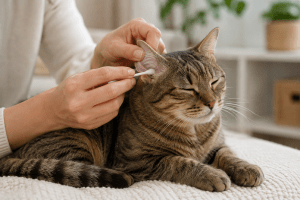
Declawing cost questions come up often, but the more important point is that declawing is a serious surgical procedure with significant welfare concerns — it’s banned in many places and declined by many veterinarians. This guide explains what the cost question involves while strongly encouraging humane alternatives, with all figures framed as illustrative examples, not quotes.
Important: Declawing (onychectomy) is not a simple nail trim — it’s the surgical amputation of the last bone of each toe. It is banned or restricted in many countries and some U.S. localities, and a great many veterinarians decline to perform it on welfare grounds. Major veterinary and animal-welfare organizations discourage it except in rare medical cases. This guide addresses the cost question that people search for, but its main message is to consider humane alternatives first and discuss any concern with your vet.
Short answer: Where declawing is actually legal and a veterinarian is genuinely willing to perform it, the cost depends on the surgical technique used, your location, the cat’s age and size, and exactly what’s included, such as the anesthesia, pain management, and follow-up care. Because it’s surgery under general anesthesia, it costs considerably more than routine procedures. However — and this is the key point — cost should not be the deciding factor here. Declawing carries real risks and lasting welfare concerns, it’s prohibited in many places, and effective humane alternatives exist. Many vets won’t perform it at all. So rather than focusing narrowly on price, this guide explains what the procedure actually involves, why the alternatives are so strongly preferred, and where to learn more about the ethics and legality of it all. For the question of whether vets even still offer it, see do vets still declaw cats.
For budgeting cat care more broadly — including the humane alternatives that are far more advisable — the cat cost calculator can help. This guide focuses on the declawing cost question while pointing firmly toward better options.
What declawing actually is
Let’s begin with what the procedure actually is. A lot of cost confusion comes directly from misunderstanding what declawing involves.
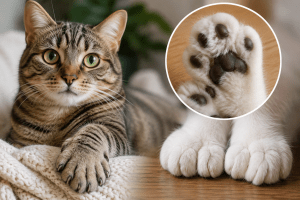
It’s important to be clear, because the procedure is far more serious than the casual name suggests.It’s surgical amputation. Declawing (onychectomy) removes the last bone of each toe entirely, not just the claw — it’s genuinely comparable to amputating a human finger at the last knuckle.
It’s done under general anesthesia. Because it’s genuine surgery and not a minor procedure, it requires general anesthesia, careful pain control, and a real recovery period afterward, which is partly why it ends up being so costly.
It’s not a grooming service. Unlike nail trimming, which is simple, routine, and entirely painless, declawing is a permanent and completely irreversible surgical procedure.
It can have lasting effects. Potential complications and possible long-term effects on a cat’s behavior and overall comfort are a large part of exactly why the procedure is now so widely discouraged.
Understanding all of this reframes the cost question almost entirely. People sometimes imagine declawing as a quick, minor service roughly comparable to a nail trim, and then wonder why on earth it might be expensive. In reality, it’s major surgery — the actual amputation of bone from each and every toe — performed under general anesthesia, which is exactly why, where it’s done at all, it costs far more than any routine care does. But the genuinely more important takeaway here isn’t the price at all; it’s that the sheer seriousness of the procedure is precisely why so many vets now decline it and why humane alternatives are so strongly preferred instead. The cost is, honestly, almost beside the point when set next to the serious welfare considerations involved. For the full picture on availability and whether vets still perform it, see do vets still declaw cats.
What affects the cost (where it’s done)
For completeness, here’s the cost structure. Where declawing is legal and a vet is willing to perform it, several factors influence the final price.
We share these factors purely for completeness here, while still strongly urging you to consider the alternatives first.| Factor | How it affects cost |
|---|---|
| Surgical technique | Different surgical methods (such as the blade or laser techniques) vary quite a bit in price, with some commanding noticeably higher fees than others do. |
| Anesthesia & monitoring | General anesthesia and the monitoring it requires are a significant part of any surgical cost like this one. |
| Pain management | Appropriate pain control before, during, and after the procedure adds to the total but is absolutely essential. |
| Cat’s age & size | Older or larger cats may involve higher anesthesia doses and some additional recovery considerations on top. |
| Location & clinic | Regional prices and the type of clinic cause wide variation, much as they do with other surgeries. |
| Follow-up care | Post-operative checks, medication, and any care for complications all add to the overall cost. |
So like any other surgery, declawing’s cost is really just built up from the anesthesia, the procedure itself, the necessary pain management, and the follow-up care — which is exactly why it’s far more expensive than a simple nail trim or a routine visit ever could be. We deliberately don’t quote figures because they vary so much by region, technique, and clinic, and also because we genuinely don’t want to frame this serious decision as a simple purchase. The numbers themselves, frankly, are by far the least important part of this whole decision in the end. Whatever the price happens to be, it’s really the welfare concerns and the ready availability of humane alternatives that should drive this choice. If you’re seriously weighing this up, please do read the sections below on the alternatives before focusing at all on the cost. For overall cat budgeting, including the alternatives, see the cat cost calculator.
Why people ask about declawing cost
It helps to understand the reasons behind the question, because in nearly every case the underlying concern has a humane, affordable solution that doesn’t involve surgery at all.
Furniture damage. This is by far the single most common reason people give — and conveniently it’s also the one most easily solved with scratching posts, regular trims, and a little patient training.
Scratches to people. Concern about being scratched, especially in homes with young children, is completely understandable, but it’s well managed with regular trims, nail caps, and gentle handling, rather than with surgery.
A landlord or housing rule. Some people believe declawing is somehow required for renting a home; in reality, the humane alternatives and an honest conversation with the landlord usually address this concern perfectly well without any surgery.
Habit or assumption. Some people simply assume that declawing is a normal and expected part of owning a cat, when in reality it’s increasingly seen as unacceptable and is now banned in many places.
In each and every one of these cases, the real underlying concern — protecting the furniture, avoiding scratches, satisfying a housing rule, or simply doing what seems like the normal thing — is far better served by understanding the humane alternatives than by resorting to surgery. Furniture and skin are well protected by trims, posts, and caps; housing concerns are addressed by those same humane measures plus an honest conversation; and the lingering assumption that declawing is somehow normal simply doesn’t hold up at all, given the bans and the sheer number of vets who now refuse it. So whatever it was that originally brought you to the cost question in the first place, there’s almost certainly a kinder and cheaper answer quietly waiting there for you to find. Recognizing the real goal sitting quietly behind the question is genuinely the very first step toward solving it well and humanely. For the legality and ethics behind all this, see do vets still declaw cats, and budget the humane options with the cat cost calculator.
Whatever the worry, humane options solve it affordably. Plan with the cat cost calculator.
Why to reconsider declawing
This is the part that really matters most of all. Before any cost decision whatsoever, it’s genuinely worth understanding clearly why declawing is so very widely discouraged these days. These welfare concerns are the real reason this guide points so firmly toward the humane alternatives.
It’s an amputation. Removing the last toe bone is a serious and completely irreversible surgery, certainly not any kind of cosmetic tidy-up — and this single fact alone gives many people and many vets real pause.
Possible complications. All surgery carries some inherent risks, and with declawing specifically there can be real potential for pain or complications during the recovery period afterward.
Possible long-term effects. Some cats may experience lasting effects on their comfort or their behavior afterward, which is a very significant part of why welfare bodies so actively discourage the procedure.
Effective alternatives exist. The natural scratching behavior that declawing targets can almost always be managed humanely instead, which removes the main reason people consider it in the first place.
The core message is that declawing addresses a normal feline behavior — scratching — with major surgery, when that behavior can almost always be managed through humane means instead. Scratching is entirely natural and genuinely necessary for cats; so the goal should always be to redirect it sensibly, never to surgically prevent it altogether. Given the genuine seriousness of the procedure, the real potential for complications and lasting effects, and the ready existence of effective alternatives, the strong consensus among welfare organizations is to avoid declawing entirely except in the rare medical situations a vet specifically identifies. This is exactly why the cost question, while so commonly searched for, somewhat misses the real point: the genuinely better question to ask is how to manage a cat’s scratching humanely. The next few sections cover precisely that, step by step. For the legality and vet-availability angle, see do vets still declaw cats.
The behavior declawing targets can be managed humanely. See the alternatives below, and whether vets still declaw.
Humane alternatives to declawing
Here’s the genuinely reassuring part. The reasons people consider declawing — furniture damage, unwanted scratching — can all be addressed effectively and humanely.
These approaches are now very widely recommended by welfare bodies and vets alike, and they’re all far less costly than any surgery would ever be.Regular nail trims
Routine trimming keeps the claws blunt and significantly reduces any damage. It’s simple, inexpensive, and something most owners can readily learn to do at home themselves, or otherwise have done quickly at the vet or groomer.
Scratching posts & pads
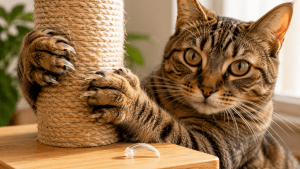
Providing appealing scratching surfaces — posts, pads, cardboard scratchers — redirects natural scratching away from the furniture. Both variety and placement really matter here.
Nail caps
Soft vinyl caps glued gently over the claws blunt their effect almost entirely and are simply replaced periodically as they grow out with the nail. They’re inexpensive and completely non-surgical.
Training & deterrents
Positive redirection, gentle deterrents on the furniture itself, and consistently rewarding the cat’s use of the scratching posts can all shift the behavior steadily over time.
These alternatives, used together as a combination, address the scratching problem right at its root, entirely without surgery. Trimming keeps the claws blunt; attractive scratching posts give cats an appropriate outlet for an entirely natural behavior; nail caps offer a simple non-surgical way to protect the furniture; and gentle, patient training gradually redirects the habit over time. Most cats respond really well indeed when given a good scratching surface in the right spot, since they genuinely want to scratch something anyway — so the whole aim is simply to make the right thing more appealing to them than the sofa is. Not only are these approaches genuinely humane, they’re also far less expensive than any surgery and carry none of the associated risks whatsoever. For the vast majority of situations, this straightforward combination resolves the very issue that prompts people to consider declawing in the first place. The cat cost calculator can help you budget for these inexpensive items.
What the alternatives cost
And the cost picture reinforces it. One reassuring point is that the humane alternatives are not only kinder but generally much cheaper than surgery.
Cost, if anything, argues for the alternatives.Nail trims are minimal. Doing it yourself costs almost nothing at all beyond a single pair of clippers; having a vet or groomer do it for you instead is only a modest, occasional fee.
Scratching posts are affordable. A wide range of scratching posts and pads exists at quite modest prices, and a good sturdy one will easily last a very long time.
Nail caps are inexpensive. Nail caps are sold in affordable sets and simply reapplied periodically as they grow out with the nail, which amounts to only a small ongoing cost.
No anesthesia or surgery cost. None of the humane alternatives involve any anesthesia, surgery, or recovery care at all, which neatly avoids the very largest cost drivers of declawing altogether.
So when cost genuinely is a real and pressing consideration for someone, it actually points quite firmly toward the humane alternatives rather than toward the surgery. Trimming, posts, and caps together cost only a small fraction of what a surgical procedure would, involve no anesthesia or recovery at all, and carry none of the welfare risks either. In other words, the kinder choice here just happens to be the more affordable one as well — a rare and genuinely welcome alignment of welfare and budget for once. This is genuinely worth emphasizing for anyone who arrived at the declawing question partly out of cost or convenience concerns: the humane alternatives clearly win on both counts. There’s simply very little practical or financial case left for surgery when effective, inexpensive, and humane options are this readily available. Budget for these easily with the cat cost calculator, which can fold them into overall cat costs.
Trims, posts, and caps cost a fraction of surgery. Budget them with the cat cost calculator.
Setting up a scratch-friendly home
Most of this is about the home, really. Much of the worry that leads people to consider declawing comes down to protecting furniture and belongings.
A few simple changes to the home solve most of this humanely, and inexpensively.Cats tend to scratch in specific spots for specific reasons (territory marking, a satisfying stretch). So putting an appealing post right there in that spot redirects the behavior far better than simply tucking it away out of sight in a corner.
Some cats clearly prefer tall vertical posts, others horizontal pads or angled surfaces; some like rough sisal, others love cardboard. A little variety helps you quickly find what your particular cat loves.
A sturdy, tall post that the cat can fully stretch right out on, perhaps with a little catnip rubbed into it to start, soon becomes the preferred scratching target over time.
Gentle deterrents placed on the furniture during the transition period, paired with consistently rewarding the cat for using the post, speed up the redirection nicely without any harm to the cat at all.
The principle behind all of this is simple: cats are going to scratch, so the goal is to make the right surface irresistible and the wrong surface unappealing, rather than to remove the ability to scratch at all. A sturdy post placed exactly where the cat already wants to scratch, in a texture it genuinely likes, will usually win out over the furniture with just a little patient encouragement. This whole approach costs very little indeed and, just as importantly, works with the cat’s natural instincts rather than fighting against them. For anyone who reached the declawing question mainly out of concern for their home and furniture, this really is the genuine solution — effective, humane, and refreshingly cheap. Budget the few inexpensive items with the cat cost calculator, and for the legality and ethics, see do vets still declaw cats.
The right post in the right spot beats surgery. Budget the simple items with the cat cost calculator.
Common misconceptions about declawing
It’s worth naming these directly. A number of common misunderstandings lead people to consider declawing when they otherwise wouldn’t.
Clearing these up often removes the reason for the question entirely.Myth: “It’s just removing the claws”
It really isn’t — it’s amputating the last bone of each and every toe. The claw actually grows from that bone, so removing the claw permanently means removing the bone itself.
Myth: “It’s a quick, minor procedure”
It’s genuinely major surgery performed under general anesthesia, with a real recovery period afterward, and not any kind of quick grooming service at all.
Myth: “There’s no other way to save furniture”
There are in fact several effective and humane ways — scratching posts, regular trims, nail caps, and training — that protect furniture perfectly well without any surgery.
Myth: “All vets offer it”
Many vets now decline declawing entirely on ethical grounds, and it’s banned in many places too, so it’s actually far from universally available.
These misconceptions genuinely matter because they so often make declawing seem far more reasonable or necessary than it actually is. Once people genuinely come to understand that it’s an amputation rather than a simple tidy-up, that it’s serious surgery rather than a quick service, that the furniture can be protected perfectly humanely without it, and that the procedure is now so widely restricted and declined, the appeal of it usually disappears altogether. The accurate, fuller picture leads quite naturally toward the humane alternatives instead. So if any of these particular assumptions brought you to the cost question, it’s really worth pausing here: the real situation is quite different from what it seems, and the better path is much clearer than it first appears. For the in-depth treatment of availability and ethics, see do vets still declaw cats.
Legality and availability
There’s a practical wrinkle worth knowing first. Declawing may not even be an option where you live, regardless of the cost.
This is genuinely worth knowing before any other consideration at all.Banned in many places. Declawing is now prohibited outright in numerous countries and in a growing number of U.S. states and cities, clearly reflecting the rising welfare consensus against it.
Many vets decline it. Even where it technically still remains legal, a great many veterinarians these days simply won’t perform declawing at all, on firm and considered ethical grounds.
Rules vary widely. Local laws and individual clinic policies differ considerably, so both availability and cost are heavily location-dependent.
Medical exceptions are rare. Where it’s even considered at all anymore, it’s typically reserved strictly for rare, specific medical reasons that a vet themselves identifies, rather than for any routine owner requests.
So before even thinking about the cost at all, the very first question is really whether declawing is legal and available where you actually are — and in many places now, the honest answer is simply no. The steadily growing number of outright bans, together with the rising number of vets who decline the procedure on principle, reflect a very clear shift toward viewing routine declawing as simply unacceptable. And even where it does still remain legal, it’s increasingly reserved only for cases of rare, genuine medical necessity, rather than for mere owner convenience. This whole availability picture, combined with the serious welfare concerns and the existence of effective humane alternatives, is precisely why the practical answer for most people is simply not to pursue declawing at all. For a fuller treatment of whether and where vets still perform it, see do vets still declaw cats, which covers the legality and ethics in depth.
Talking to your vet about scratching
This is where it all comes together. If scratching is the underlying problem, your vet is genuinely the best partner for solving it humanely.
A conversation focused on the real goal usually leads somewhere far better than surgery.Explain clearly to your vet what’s actually happening — furniture damage, scratching people, and so on. The real underlying issue is very nearly always just manageable behavior, not anything that genuinely needs surgery.
Your vet can readily recommend nail trims, caps, posts, and specific training approaches all tailored to your individual cat and your particular situation.
Sometimes excessive scratching or related behavior does have an underlying cause that’s worth checking out; your vet can properly assess that for you if needed.
In the rare case where there genuinely is a medical issue at play, your vet will of course advise you appropriately — but this is genuinely uncommon and always very specific.
Framing the whole conversation around the real goal — living comfortably alongside a cat’s natural scratching — rather than around declawing specifically, tends to open up exactly the humane solutions that actually work. A good vet will gladly help you manage scratching with trims, caps, posts, and training, and will clearly explain why surgery simply isn’t the answer for ordinary scratching behavior. If you came to this whole topic worried about damaged furniture or skin scratches, that worry is completely solvable without any surgery at all, and your vet can guide you through it. The cost question that brought so many people here ultimately resolves into a far better question: how to coexist happily with a clawed cat, which turns out to be both genuinely achievable and very affordable. You can plan all the simple alternatives into your overall budget easily with the cat cost calculator.
The ASPCA provides guidance on declawing, its welfare concerns, and humane alternatives for managing scratching.
The Humane Society offers resources on alternatives to declawing and understanding feline scratching behavior.
External references: ASPCA and The Humane Society.
The bottom line
If you came looking for a declawing price, here’s the honest summary — one that we hope reframes the question toward a better answer.
It’s serious surgery, not a service. Declawing amputates the last bone of each toe under general anesthesia, which is exactly why it’s so costly — and a big part of why it’s so widely discouraged today.
Cost isn’t the right question. The welfare concerns, the legal bans now in place in many areas, and the ready availability of humane alternatives all matter far more here than the price ever does.
Humane alternatives win on every count. Trims, posts, caps, and training are kinder, genuinely effective, and far cheaper too, with none of the surgical risks at all.
It may not even be an option. Declawing is banned outright in many places and declined by many vets elsewhere, so it often simply isn’t available at all, regardless of the cost.
Put plainly: the single most useful answer to “how much does it cost to declaw a cat” is really to reconsider the underlying question itself. Declawing is major, irreversible surgery with real welfare concerns, it’s prohibited outright in many places, and many vets simply won’t perform it — all while the scratching behavior that prompts it can be managed humanely and inexpensively instead. The kinder choice and the cheaper choice here are, very happily, exactly the same one. So rather than budgeting for an expensive surgery, budget instead for a good scratching post, some regular nail trims, and perhaps a set of nail caps, and have a talk with your vet about managing the scratching. That approach solves the real underlying problem far better, and far more kindly. For the ethics, legality, and availability in depth, see do vets still declaw cats, and plan the humane essentials with the cat cost calculator.
Frequently asked questions
How much does it cost to declaw a cat?
Where it’s actually legal and a vet is willing, declawing is surgery performed under general anesthesia, so it costs considerably more than any routine care — the price depends on the technique, the anesthesia, pain management, the cat’s age and size, your location, and follow-up care. We don’t quote figures because they vary so widely and because cost simply isn’t the right basis for this decision. Declawing carries real welfare concerns, is banned in many places, and has effective humane alternatives that are far cheaper anyway.
Why is declawing so discouraged?
Because it’s genuinely not a simple procedure at all — it’s the surgical amputation of the last bone of each toe, directly comparable to amputating a finger at the last knuckle. It carries real risks of complications and possible lasting effects on a cat’s comfort and behavior, and it surgically prevents a natural behavior (scratching) that can readily be managed humanely instead. Major welfare organizations discourage it, it’s banned in many places, and a great many vets decline to perform it.
What are the alternatives to declawing?
Effective humane alternatives include regular nail trims (which keep the claws blunt), providing appealing scratching posts and pads (which redirect the natural scratching), soft vinyl nail caps glued gently over the claws, and positive training paired with deterrents on furniture. Used together, these manage scratching very well for the great majority of cats. They’re also far less expensive than surgery and carry none of the risks, so they genuinely win on both welfare and cost.
Is declawing legal everywhere?
No, it isn’t. Declawing is banned or restricted in many countries and in some U.S. states and cities, clearly reflecting the welfare consensus against it. Even where it does remain legal, many veterinarians decline to perform it on ethical grounds, and it’s increasingly reserved for rare medical necessity rather than routine owner requests. Availability is very location-dependent, so it may simply not be an option where you live, regardless of the cost.
Do the alternatives really work?
Yes, they do, for the great majority of cats. Cats scratch because it’s a natural and necessary behavior for them, so the key is giving them an appropriate outlet — an appealing scratching post placed in a good spot — combined with regular nail trims and, if needed, nail caps. Most cats readily use a good scratching surface, and a little gentle training redirects the habit nicely. This addresses the underlying issue that prompts people to consider declawing in the first place, all without any surgery.
Is declawing the same as a nail trim?
No, not at all the same thing. A nail trim is simple, routine, painless grooming that just keeps the claws blunt. Declawing (onychectomy) is major surgery that amputates the last bone of each toe under general anesthesia — it’s permanent and entirely irreversible. The two are completely different in their nature, their risk, and their cost. If your goal is simply to manage scratching, then regular nail trims plus a good scratching post are the humane, inexpensive approach to take.
Why does this guide not give a price?
For two main reasons. First, declawing costs vary so much by technique, location, and clinic that almost any figure we gave would simply be misleading. Second, and far more importantly, cost is not the right basis for this decision at all — declawing is a serious surgery with real welfare concerns, is banned in many places, and has humane alternatives that are far cheaper anyway. We’d much rather point you toward those alternatives and a conversation with your vet than frame declawing as a simple purchase.
What should I do if my cat scratches the furniture?
Provide an appealing scratching post or pad right near where the cat currently likes to scratch, keep its claws trimmed regularly, consider nail caps, and use gentle deterrents on the furniture while rewarding the cat for using the post. Most cats will redirect readily enough with this approach. And if the scratching ever seems excessive or comes on quite suddenly, do ask your vet to check for any underlying cause. These simple humane steps solve the problem affordably, without any of the welfare concerns of surgery.
Choose the humane, affordable path
If scratching is the concern, the humane alternatives — nail trims, scratching posts, and caps — are both kinder and far cheaper than surgery. The Waldev cat cost calculator helps you budget these and other cat costs. For the ethics, legality, and whether vets still perform declawing, see our companion guide, and discuss any concern with your veterinarian.
Budget humane cat care → Plan the affordable, kind alternatives.
Related guides
- Do vets still declaw cats? — the ethics, legality, and availability.
- How much does it cost to vaccinate a cat? — routine care costs.
- Cost to get a cat fixed — another procedure cost.
- How much is it to adopt a cat? — upfront costs.
An important disclaimer
This guide is for general education, not veterinary or legal advice, and gives no price figures because cost varies widely and is not the appropriate basis for this decision. Declawing is a serious surgical procedure with significant welfare concerns; it is banned or restricted in many jurisdictions, and many veterinarians decline to perform it. Major veterinary and animal-welfare organizations discourage it except in rare medical cases. Laws and clinic policies vary by location and change over time — check your local regulations and consult your veterinarian, who can advise on humane alternatives and any genuine medical concern. Waldev is not affiliated with any veterinary practice, and the estimates from our calculators are illustrative planning aids only.