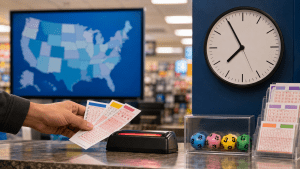
A ticket sitting in your wallet is worthless until you actually check it. Here is every reliable way to check lottery tickets — app, in-store scanner, official website, or by hand — and how to do it without missing a real prize.
You bought a ticket, the drawing happened, and now the only thing standing between you and knowing is a scrap of paper and a few numbers. Most people check their tickets in one of four ways: a free official lottery app, an in-store terminal scanner, the state lottery’s own website, or the old-fashioned method of reading the numbers off a printed results page. Each one works, and each one has a moment where it can go wrong — a misread barcode, a typo in a manually entered number, an app that has not synced the latest draw.
This guide walks through every method precisely, including what to do the instant you think you have a match, so you never wonder whether you checked correctly. Before anything else, though, it helps to know what a given prize is actually worth after taxes and the cash-value cut — the free Lottery Calculator turns any jackpot or prize figure into the real, take-home number, so you know what you are checking for in the first place.
Match a jackpot figure? Run it through the Waldev Lottery Calculator first, so you know the realistic after-tax take-home before you get ahead of yourself.
What this guide covers
The four ways to check a lottery ticket
There are really only four reliable ways to check whether a lottery ticket won, and it is worth knowing all four because each one is better suited to a different situation. The first is a free official lottery app on your phone, which lets you scan the ticket’s barcode and get an instant answer. The second is the scanner built into the terminal at any licensed lottery retailer, which does the identical scan without needing your own phone. The third is the official state lottery website, where you manually enter your numbers or look up the draw results yourself. The fourth is simply reading the numbers off a printed results page and comparing them by eye.
None of these is “more official” than another — they all check the same underlying draw data, just through a different interface. The app and the in-store scanner are fastest and least error-prone because a machine reads the ticket directly rather than you retyping numbers. The website and manual comparison are useful backups when you do not have the physical ticket in hand, or when you want to double-check a scanner result yourself. Use whichever is convenient, but understand that a scan is generally the safest option because it removes human transcription error from the process entirely.
| Method | Best for | Main risk |
|---|---|---|
| Official app barcode scan | Fast, accurate checks anywhere, anytime | Needs decent lighting and a flat, unfolded barcode |
| In-store terminal scan | When you are already at a retailer, or the app fails | Requires a trip to a licensed retailer |
| Official lottery website | Checking numbers before you have the ticket in hand | Manual comparison; no automatic prize-tier lookup |
| Manual comparison by eye | A quick first glance or a double-check of another method | Highest chance of misreading a digit or the wrong draw date |
Official lottery apps: the fastest way to check
Yes, there is an app to scan lottery tickets, and in most states it is free and published by the official state lottery itself, not a third party. Search your app store for your state lottery’s name (for example, “California Lottery” or “Texas Lottery”) rather than a generic “lottery scanner” app, because official apps pull results directly from the state’s own draw data the moment it is certified, while unofficial copycat apps can lag, show ads, or in rare cases mishandle your information. The official app is also where you will find second-chance drawing entry, subscription management, and winning-numbers history in one place.
Multi-state games add a layer worth knowing: Powerball and Mega Millions are sold through your individual state lottery, so you check a Powerball ticket bought in Ohio through the Ohio Lottery app, not a national “Powerball app,” because no single national app exists. The official Powerball.com and MegaMillions.com sites do publish numbers for every participating state, which is a handy universal backup, but ticket scanning and prize claiming always route through the state where you actually bought the ticket.
How to scan a ticket, step by step
The mechanics are nearly identical across every state lottery app, and once you have done it once it takes under ten seconds each time after.
Not a generic search-result app — the one published by your state lottery commission, which you can confirm from the state lottery’s own website.
Usually a prominent icon on the home screen, often shaped like a barcode or camera.
The app needs your phone’s camera to read the ticket’s barcode; this is a one-time prompt on first use.
Hold the ticket flat, in decent light, with the barcode fully inside the on-screen guide until it focuses and captures automatically.
The app will show whether the ticket won, and if so, which prize tier and amount — sometimes instantly, sometimes with a short “verifying” delay right after a draw.
Small prizes often show a “redeem” option in-app in states with digital claiming; larger prizes will direct you to a retailer or lottery office.
How the barcode scan actually works
Every printed lottery ticket carries a unique barcode that encodes far more than just your chosen numbers — it includes an internal serial number, the specific draw date and game, and validation data the lottery’s system uses to confirm the ticket is genuine and has not already been claimed. When you scan that barcode with an app or an in-store terminal, the device is not simply reading your six numbers off the front; it is querying the lottery’s central system with that unique code and getting back a definitive answer for that exact ticket.
This is precisely why scanning is more reliable than manually comparing numbers on your own: the barcode ties the check to one specific, physical, already-purchased ticket rather than to numbers you might mistype or misremember. It is also why a ticket can only be validated once its status is checked against the central database — if a prize has already been paid on that barcode, a second scan (or a second person trying to claim it) will correctly show it as already redeemed.
Checking numbers on the official lottery website
If you would rather not download an app, or you are checking numbers before you have the physical ticket in hand, every official state lottery website and both Powerball.com and MegaMillions.com publish winning numbers as soon as a draw is certified, usually within minutes. You can compare your numbers manually against the posted results, which works fine for confirming whether you matched anything, though it will not tell you the exact prize amount for lower tiers that vary by total ticket sales until the official prize table is posted alongside the numbers.
The advantage of the website method is that it does not require the physical ticket at all — useful if a family member texted you numbers, or you are checking from your desk before heading home. The disadvantage is that it puts the transcription burden on you: a single misread digit when you compare six numbers by eye is an easy mistake, so if a website check suggests a big win, always confirm with an actual scan of the physical ticket before getting excited. For the full walkthrough of where results are published and how quickly, see how to check lottery results.
How to check a Powerball ticket specifically
Checking Powerball numbers follows the same core process, with one detail that trips people up: Powerball has two separate number pools, five white balls plus one red Powerball, and prize tiers depend on matching different combinations of both. Matching the Powerball alone (with no white balls) still wins a small prize; matching all five white balls without the Powerball wins the second-largest tier. This means a ticket can “win” in ways that are easy to miss if you are only glancing for the jackpot combination.
Scan the ticket through your state lottery’s app or an in-store terminal for the safest read, since the barcode check accounts for every prize tier automatically, including the smaller matches a quick visual scan of the numbers might overlook. If you are checking manually against a posted results page, work through it methodically: check the Powerball number first, then count how many of your five white-ball numbers appear anywhere in the drawn five, since order does not matter for the white balls. The complete rules and every prize tier are laid out in how to play Powerball, and the general “did I win” question is covered directly in the FAQ below.
How to check a Mega Millions ticket
Mega Millions works on the same two-pool structure — five white balls plus one gold Mega Ball — so the checking logic mirrors Powerball closely. Matching only the Mega Ball wins a small prize, matching all five white balls without the Mega Ball wins a large second-tier prize, and every combination in between has its own payout. As with Powerball, scanning the barcode through the app or an in-store terminal is the most reliable way to catch every prize tier rather than eyeballing just the jackpot line.
One detail specific to Mega Millions worth remembering when checking: if you added the Megaplier option, your non-jackpot prizes may be multiplied, which a proper scan will reflect automatically in the amount shown, whereas a manual check against a bare numbers list will not show the multiplier unless you separately confirm which multiplier applied to that draw. The full rules and prize structure live in how to play Mega Millions.
Using the in-store terminal scanner
Every licensed lottery retailer has a terminal connected directly to the state lottery’s central system, and that terminal can scan your ticket’s barcode exactly the way the app does. This is often the fastest option if you are already at the store, do not want to use an app, or your phone battery is dead. Simply hand the ticket to the clerk, or in many states insert or scan it yourself at a self-service reader near the register, and the terminal will print or display a result within seconds.
The terminal is also the only place that can pay out most prizes on the spot, up to a state-set cap (commonly $600, though the exact figure varies), so for smaller wins it doubles as both the check and the claim in one visit. For prizes above that retailer cap, the terminal will still confirm the win, but it will tell you to file the claim through the state lottery’s claims center or office rather than pay out at the counter. See where to cash lottery tickets for exactly where different prize sizes get paid.
Asking a clerk to check for you
Handing your ticket to a store clerk and asking them to run it through the terminal is completely normal and something clerks do dozens of times a day. A few small habits make this smoother and safer. Watch the scan happen rather than stepping away, both so you see the result yourself and so the ticket stays in your line of sight the entire time. If the terminal shows a win, ask the clerk to state the amount out loud before you hand over anything or sign anything, so there is no ambiguity about what you are confirming.
For a larger unexpected result, it is completely reasonable to simply say thank you, take the ticket back, and step away to think rather than claiming or cashing anything on the spot. Retailers are required to pay verified small prizes, but you are never obligated to cash a ticket immediately just because a clerk offers to, and taking a moment costs you nothing since a validated winning ticket is still redeemable within the state’s normal claim window discussed in do lottery tickets expire.
Reading the numbers by hand, carefully
Sometimes you just want to compare numbers yourself, and doing it right prevents the two most common self-check mistakes: misreading a similar-looking digit (a 6 and an 8, a 3 and a 5 on a low-quality printout) and comparing the wrong draw’s results to your ticket. Before comparing anything, confirm the draw date and game name printed on your ticket match exactly the results you are reading, since checking last Wednesday’s numbers against a ticket for Saturday’s draw is an easy and common error.
Once the date and game line up, compare one number at a time rather than scanning the whole row at a glance, and read each digit aloud or point to it as you go. For games with a separate special-ball number (Powerball, Mega Millions, Cash4Life), check that number distinctly from the main set rather than lumping everything together, since the two pools have different odds and different prize implications. If your manual check turns up anything beyond the smallest prize tier, treat it as provisional and confirm with an actual barcode scan before you tell anyone or make plans, precisely because manual reading is the least reliable of the four checking methods. For a full breakdown of every printed element on a ticket, including where the numbers, draw date, and barcode sit, see how to read a lottery ticket.
Matching numbers to prize tiers
Understanding roughly what each match is worth helps you know what you are looking at before you even check, so a mid-tier win does not feel like nothing and a small win does not feel like a mistake.
| What you matched | Typical result | What it usually means |
|---|---|---|
| All main numbers + special ball | The jackpot | The rarest tier, roughly 1 in 300 million odds in the big multi-state games |
| All main numbers, no special ball | Second-largest fixed prize | Often a large fixed amount (commonly $1 million in Powerball/Mega Millions) |
| Some main numbers + special ball | Mid-tier prize | Amount scales with how many main numbers matched |
| Some main numbers only, no special ball | Smaller fixed prize | Still a real payout in most games; check your ticket type’s table |
| Special ball only, no main numbers | Smallest fixed prize | Often equal to or slightly above your ticket cost |
| No numbers matched | No prize | The vast majority of tickets land here — expected, not a scanning error |
Exact dollar amounts vary by game, by how many other winners split a prize tier that scales with sales, and by whether you added a multiplier like Power Play or Megaplier. For the definitive tier-by-tier numbers on any specific game, check that game’s official rules page rather than relying on memory, and see how many numbers you need to win for the full tier logic explained game by game. Once you know which tier you hit, plug the headline figure into the Lottery Calculator to see what a jackpot-scale prize would actually pay after the cash-value cut and taxes, rather than anchoring on the advertised number.
Checking a second-chance lottery entry
Second-chance drawings work differently from the main draw, and checking them trips people up because the “did I win” moment does not happen in real time the way a nightly drawing does. When you enter a non-winning ticket into a second-chance drawing through your state lottery’s app or website, you are submitted into a pool that gets drawn on its own separate schedule, sometimes weeks later, and the way you find out is different from scanning a fresh ticket.
Most states notify second-chance winners directly — by email, app notification, or a phone call for larger prizes — rather than expecting you to keep checking a scanner. Even so, it is worth periodically logging into your account on the app or website and checking your entry history and any “results” or “winners” section, since notification systems occasionally miss an update. If you entered several tickets over time, keep a habit of checking your account roughly as often as new second-chance drawings are held for the games you entered, so nothing slips through unnoticed. The complete mechanics of how entries, odds, and notifications work are covered in second chance lottery explained.
Setting up results alerts by text or email
Most official lottery apps and websites let you opt into automatic alerts, so you do not have to remember to check at all. You can typically save your favorite numbers or specific ticket entries in the app, and it will push a notification the moment a draw is certified telling you whether anything matched. Some state lotteries also offer email or SMS results subscriptions separate from the app, which is handy if you prefer a plain text message over opening an app every draw night.
These alerts are a genuinely useful habit for regular players, particularly for people who play the same numbers every draw or hold an active subscription, because it removes any chance of a forgotten ticket sitting unchecked past a state’s claim deadline. It does not replace the need to eventually scan the physical ticket to actually claim a prize, but it closes the far more common gap: simply not knowing you had a small win sitting in a drawer.
When the app or scanner won’t cooperate
A barcode that will not scan is almost always a physical problem with the ticket rather than a software bug, and most issues have a quick fix.
Glare or poor lighting. Move to brighter, even light and avoid direct glare bouncing off the glossy ticket surface, which confuses the camera’s focus.
Creased or folded barcode. Flatten the ticket as much as possible; a crease running through the barcode lines is the single most common scan failure.
Faded or smudged print. Thermal-printed tickets can fade with heat or time; if the barcode looks light or blurry, ask a clerk to try the in-store terminal, which sometimes reads a marginal barcode the phone camera cannot.
Outdated app version. Update the app; lottery apps periodically require updates to keep validating against the current draw database.
Checking too soon after the draw. Results can take a short while to certify and sync after a drawing closes; wait a bit and try again rather than assuming an error.
Wrong app or wrong state. Confirm you are using the app for the state where the ticket was actually purchased, since a ticket bought in one state will not validate through another state’s system.
If none of these resolve it, a licensed retailer’s terminal is the most reliable fallback, since it connects directly to the state system rather than relying on your phone’s camera and connection. As an absolute last resort, your state lottery’s customer service line or claims office can look up a ticket manually using the numbers printed on it.
Checking old or forgotten tickets
It is common to find a ticket in a coat pocket, glovebox, or junk drawer weeks or months after a draw, and the same scanning methods still work as long as the ticket is within its state’s claim window. Scan it through the app or an in-store terminal exactly as you would a fresh ticket; the system will return the same result regardless of how much time has passed, as long as the deadline for that draw has not lapsed.
The one real risk with old tickets is the clock, not the check itself: every state sets a claim deadline, commonly somewhere between 90 days and one year depending on the state and game, after which an unclaimed winning ticket becomes void and the prize money is typically redirected to state programs rather than paid out. If you regularly find loose tickets, make checking them a standing habit rather than a “someday” task, and see do lottery tickets expire for exact deadlines by state so you know how much time you realistically have.
Mistakes people make when checking tickets
A few checking habits cause more missed or misunderstood prizes than any technical glitch. Checking the wrong draw date is the single most common error, especially for players who buy tickets for multiple draws at once or hold a running subscription; always confirm the date on the ticket matches the results you are viewing before concluding anything. Relying only on a glance at the jackpot numbers is another frequent miss, since it skips right past legitimate smaller-tier wins that a full scan would have caught automatically.
People also sometimes trust an unofficial third-party “lottery checker” website or app that is not affiliated with the actual state lottery; these can be slow to update, riddled with intrusive ads, or in worse cases request unnecessary personal information. Stick to your state’s own app or website, or an in-store terminal, both of which query the actual official draw data directly. Finally, throwing away a ticket after a quick check that shows no obvious match is risky if that check was a rushed manual comparison rather than an actual barcode scan — when in doubt, scan before you toss.
Keeping the ticket safe once you check it
Whether a ticket wins or not, treat the physical ticket carefully until you are certain of its status. Do not sign the back of a ticket before you have confirmed a real win, since signing early can complicate claiming in some states if the ticket is later transferred or if you decide to have a trust or attorney handle the claim instead. Once a scan confirms a genuine win of any meaningful size, sign the back promptly, since an unsigned winning ticket is technically a bearer instrument that anyone holding it could attempt to claim.
Store the ticket somewhere secure and dry rather than a wallet or pocket where it can fade, tear, or get lost, and consider photographing both sides immediately as a backup record of the numbers and barcode. For prizes worth planning around, this is also the moment to start thinking ahead rather than acting immediately — see what to do if you win the lottery for the full first-72-hours sequence.
What to do the moment you have a confirmed match
Once a scan or terminal confirms a real prize, the next steps depend almost entirely on size. Small prizes, commonly up to a few hundred dollars, can usually be claimed and paid right at the retailer terminal that scanned the ticket, on the spot. Mid-size prizes above a retailer’s cash cap typically require a visit to a regional lottery claims office or mailing the ticket to the state lottery, with identification and a claim form. Large prizes, especially anything near or at jackpot scale, should go through the state lottery’s claims center specifically, ideally after you have taken time to arrange professional advice rather than rushing in the same day.
Regardless of size, the practical sequence is the same: confirm the win with an actual scan (not just a manual glance), sign the ticket once confirmed, keep it somewhere secure, and find out your specific state’s claiming process and deadline before you do anything else. The step-by-step claim process, including required documents and how long payouts typically take, is fully covered in how to claim lottery winnings, and the exact figure you would actually receive after taxes is only a few clicks away in the Lottery Calculator.
Checking a ticket someone gave you
Lottery tickets are a common small gift — a birthday scratch-off, a Powerball ticket bought as a joke for a coworker’s retirement, a handful of Quick Picks tucked into a holiday card. Checking a gifted ticket works exactly the same as checking your own: scan the barcode through the state lottery’s app, an in-store terminal, or compare the numbers manually against the correct draw’s posted results. The lottery system does not distinguish who purchased a ticket; whoever physically holds a valid, unsigned, unclaimed ticket generally has the right to check and claim it.
That simplicity is also worth a word of caution. Because an unsigned ticket functions like a bearer instrument, anyone holding it can typically claim a prize, so if you are gifting or receiving a ticket that turns out to be a real winner, be clear between the parties about who is claiming it before signing anything. For sizable amounts, this is exactly the kind of situation where a short conversation up front prevents a messy disagreement later, and it is one more reason to confirm any real match with an actual scan rather than a guess before either party gets ahead of themselves.
Checking multiple tickets or a running subscription
Regular players who buy several lines per draw, hold a standing subscription, or play more than one game at once benefit from a slightly different checking habit than someone with a single ticket. Rather than scanning tickets one at a time as an afterthought, most official apps let you save or “favorite” your regular number combinations, then check an entire batch against a single draw’s results at once, which is faster and less error-prone than repeated manual comparisons across several slips of paper.
If you play a subscription service through your state lottery, results and any wins are usually tied automatically to your account rather than a physical ticket at all, since the system already knows exactly which numbers you have on file for which draws. Even so, it is worth periodically reviewing your account’s results history rather than assuming every win would trigger an obvious notification, for the same reason it is worth checking a second-chance entry status directly: automated alerts are convenient, but a quick manual review now and then closes the rare gap they can miss.
The quick version
The safest way to check a lottery ticket is scanning its barcode through your state lottery’s official app or an in-store terminal, since both query the ticket’s unique code directly against the official draw database rather than relying on you retyping or eyeballing numbers. The official state lottery website is a solid backup for checking numbers without the physical ticket in hand, and manual comparison works too as long as you match the exact draw date and check the special ball separately from the main numbers. Second-chance entries are checked differently, through your account history and win notifications, rather than a fresh scan.
Whatever method confirms a match, sign the ticket, keep it secure, and confirm your state’s claim deadline before you do anything else — then see what the number is really worth in the Lottery Calculator. Go deeper with how to check lottery results, how to read a lottery ticket, how to claim lottery winnings, and where to cash lottery tickets, and browse more in the lottery blog, the finance calculators, or from the homepage. A checked ticket costs nothing extra; an unchecked one is just an expensive piece of paper.
Checking lottery tickets: frequently asked questions
How do I check if I won the lottery?
Scan your ticket’s barcode using your state lottery’s official app or an in-store terminal at any licensed retailer, both of which query the actual draw database directly and confirm whether the specific ticket won and at what tier. You can also compare your numbers manually against results posted on the official lottery website, but a barcode scan is more reliable because it does not depend on you correctly reading or remembering every digit. Always confirm the draw date on your ticket matches the results you are checking.
Is there an app to scan lottery tickets?
Yes. Nearly every state lottery publishes a free official app that lets you scan a ticket’s barcode with your phone’s camera for an instant result. Search your app store for your specific state lottery’s name rather than a generic lottery scanner app, since official apps connect directly to certified draw data while unofficial copycats can be slower, ad-heavy, or less trustworthy. Powerball and Mega Millions tickets are checked through the app of the state where you actually bought the ticket, not a single national app.
How do you scan a lottery ticket on your phone?
Open your state lottery’s official app, tap the scan or check-a-ticket option, allow camera access if prompted, and hold the ticket flat under good lighting with the barcode fully inside the on-screen frame. The app reads the barcode automatically within a second or two and displays whether the ticket won and, for smaller prizes, often the exact amount. If the scan fails, try better lighting, flatten any creases near the barcode, or ask a retailer to run it through their in-store terminal instead.
How do I know if I won second-chance lottery?
Second-chance drawings are held on their own schedule after you submit a non-winning ticket through your state lottery’s app or website, so you typically find out through a notification, email, or account update rather than by scanning anything new. Most state lotteries directly notify second-chance winners, especially for larger prizes, but it is worth periodically logging into your account and checking your entry and winners history, since notification emails occasionally get missed or filtered.
How to check lottery numbers for Powerball?
Compare your ticket’s five white-ball numbers and separate red Powerball number against the official results for the exact draw date printed on your ticket, checking the Powerball number distinctly since it has its own odds and prize tier. The most reliable way is scanning the ticket’s barcode through your state lottery’s app or an in-store terminal, since that automatically checks every prize tier, including smaller wins that a quick glance at just the jackpot combination could easily miss.
Can a lottery ticket be checked after the drawing has passed?
Yes, a ticket can be checked any time after the draw as long as it is still within your state’s claim deadline, which is commonly somewhere between 90 days and one year depending on the state and game. Scanning through the app or an in-store terminal works exactly the same whether the draw was yesterday or months ago. The only real time pressure is the claim deadline itself, after which an unclaimed winning ticket becomes void, so check older tickets promptly rather than letting them sit.
What if the lottery app or scanner won’t read my ticket?
A failed scan is almost always a physical issue rather than a software bug: try better, glare-free lighting, flatten any creases running through the barcode, and make sure you are using the correct state’s app since a ticket only validates against the state where it was purchased. If the app still will not read it, a licensed retailer’s in-store terminal can often scan a marginal barcode the phone camera cannot, and as a last resort your state lottery’s customer service can look up the ticket manually.
Where can I check winning lottery numbers if I don’t have an app?
Every official state lottery website, along with Powerball.com and MegaMillions.com for those specific games, posts winning numbers as soon as a draw is certified, usually within minutes. You can compare your ticket’s numbers manually against the posted results without downloading anything. Just be sure to match the correct draw date and game, and if a manual check suggests you matched more than the smallest prize tier, confirm it with an actual barcode scan before assuming it is accurate.
Disclaimer: This article is general informational content about checking lottery tickets, not official confirmation of a win. Always verify results through your state lottery’s official website, app, or a licensed retailer before assuming a ticket is a winner, and never rely solely on a third-party site. If checking tickets starts to feel compulsive or stressful, confidential help is available through the resources noted below.
Confirm every draw against the source lotteries themselves before trusting any other site.
The official Mega Millions site posts numbers immediately after each draw closes.