Interior Painting Cost Calculator
Estimate interior painting costs instantly based on room size, ceiling height, number of rooms, paint quality, wall condition, trim painting, and primer needs. This calculator helps homeowners budget painting projects before requesting contractor quotes.
Enter your interior painting details
Use the fields below to estimate what professional interior painting may cost. Larger spaces, higher ceilings, premium paint, wall repairs, trim work, and extra prep can all increase the total project price.
Base pricing is estimated from total paintable square footage and room count, then adjusted using ceiling height, paint quality, wall prep, and number of coats. Optional trim painting and primer are added separately. A low-to-high estimate range is generated for planning purposes.
Free Interior Painting Cost Calculator: The Definitive 2026 Guide to Estimating, Planning, and Executing Any Interior Paint Project
An accurate interior painting estimate is one of the most powerful tools a homeowner can have before a single drop of paint is mixed, and the reason it matters so much is that interior painting is genuinely complex in ways that are easy to underestimate from the outside. The total cost is shaped by dozens of overlapping variables: the number of rooms, ceiling heights, the condition of existing surfaces, the quality of paint selected, whether prep work is included, and the labor market in your specific city or region. A homeowner who walks into this process with only a rough idea risks either overpaying a contractor by a wide margin or, just as common, budgeting far too little and encountering cost surprises mid-project that are both stressful and avoidable. That is exactly why our Interior Painting Cost Calculator at WalDev exists, to give you a structured, credible baseline estimate before any conversation with a contractor begins.
Whether you are refreshing a single bedroom, repainting an entire home ahead of a sale, or managing a multi-unit residential property, the same core calculation logic applies. The difference is in the scale, and having the right tools to handle that scale accurately is what separates a well-planned project from one that goes sideways. Alongside this guide, you will find links to our full suite of home improvement calculators, including specialized tools for square footage, paint materials, cabinet painting, and more, all designed to work together as a complete pre-project planning system.
This guide goes far beyond what any single calculator page can convey. We cover the full economics of interior painting in 2026 including how inflation has reshaped both labor and material costs, a step-by-step masterclass on measuring rooms accurately, a detailed breakdown of painting different surface types, everything you need to know about prep work and its hidden costs, how to calculate material volumes precisely, a comprehensive comparison of DIY versus professional approaches, and a 25-question FAQ that addresses the specific, nuanced questions homeowners actually face when planning real projects.
The Economics of Interior Painting: Labor, Materials, Regional Costs, and 2026 Inflation Realities
When most people think about the cost of painting a room, they think about paint. They picture a can in the hardware store, recall a price tag, and start mentally multiplying. That instinct is understandable, paint is the most visible part of the project, but it captures only a fraction of the actual financial picture. In professional interior painting, labor is almost always the dominant cost driver, typically representing 70% to 85% of the total invoice on most residential projects. Understanding that ratio is the first step toward building an estimate that actually reflects reality.
Labor costs for interior painting in 2026 range widely by region, project scope, and crew experience level. In lower-cost markets across the Midwest and rural South, experienced residential painters typically charge between $35 and $55 per hour. In mid-tier markets, mid-sized cities, suburban metros, that range shifts to $55 to $80 per hour. In high-cost coastal markets like New York, San Francisco, Seattle, and Boston, hourly rates of $80 to $120 are common, and specialty work can push even higher. When you translate those hourly rates to per-square-foot pricing that most contractors quote, the typical range for walls and ceilings lands between $1.50 and $4.00 per square foot for the combined labor-and-materials project total.
The inflationary pressures that reshaped virtually every corner of the construction and trades economy between 2020 and 2025 have had a lasting effect on painting costs that homeowners planning projects in 2026 need to factor into their expectations. Paint prices, driven by petrochemical inputs, titanium dioxide pigments, and resin costs, rose sharply through 2021 and 2022. While raw material price inflation has moderated somewhat, the structural increase in skilled painting labor costs has not reversed. The skilled trades workforce shortage that accelerated during the pandemic has persisted, and demand for interior painting services from an active residential renovation and home-sale market continues to keep labor pricing elevated compared to pre-2020 baselines.
Regional price variation is one of the most significant and often overlooked factors in any painting estimate. A 2,000-square-foot home interior that costs $5,500 to paint professionally in Kansas City might cost $9,500 to $12,000 for an equivalent quality job in Manhattan or San Francisco. The differential is almost entirely explained by local labor market rates, prevailing business overhead in dense urban areas, and the competitive landscape in each market. This is why national average figures, while useful as a starting reference, should always be adjusted for your specific location before being used to evaluate contractor bids. Our Interior Painting Cost Calculator is designed with regional calibration in mind, ensuring the estimates it produces are meaningful in your actual market context.
Material costs, while less dominant than labor, are not trivial and vary significantly with quality level. Budget interior paints from entry-level product lines typically run $20 to $30 per gallon. Mid-grade paints from established brands, the segment most professional contractors use for standard residential work, range from $35 to $55 per gallon. Premium paints with enhanced durability, coverage, or specialty properties (low-VOC formulations, self-priming products, scrubbable finishes) regularly sell for $55 to $85 per gallon or more. For a 2,000-square-foot home requiring 12 to 15 gallons of wall paint across all rooms, the difference between budget and premium product is approximately $180 to $825 in materials alone, a meaningful variable in the total project equation.
Understanding the economics of a painting project also means understanding where the money goes beyond paint and labor. Professional painters carry licensing, insurance, and bonding costs that are embedded in their hourly rates. They purchase or maintain equipment, sprayers, scaffolding, professional-grade rollers and brushes, that represents a real capital investment. They spend time on project preparation, masking, and cleanup that does not show up as wall coverage but is essential to the quality of the result. When evaluating a professional quote, you are not just paying for someone to move a brush across a surface. You are paying for the whole system of expertise, equipment, and professionalism that produces a result that holds up and looks right. Use the full suite of planning tools available through WalDev to get a complete financial picture before any project begins.
| Project Type | Typical Size | Low Estimate | High Estimate | Key Cost Drivers |
|---|---|---|---|---|
| Single bedroom | 120–180 sq ft | $350 | $750 | Ceiling height, condition, ceiling included or not |
| Living room / great room | 200–350 sq ft | $600 | $1,400 | Accent walls, vaulted ceilings, large trim areas |
| Full 3-bedroom home interior | 1,400–2,000 sq ft | $3,200 | $7,500 | Number of colors, prep scope, urban vs. rural labor |
| Full 4–5 bedroom home interior | 2,000–3,500 sq ft | $5,500 | $14,000+ | High ceilings, extensive trim, premium finishes |
| Kitchen (walls only, no cabinets) | 100–160 sq ft | $400 | $850 | Grease degreasing prep, backsplash work, tight areas |
| Bathroom | 40–80 sq ft | $200 | $500 | Mold-resistant paint, ventilation, tight access |
These estimates reflect professional painting including labor, standard-grade paint, and basic prep. Projects requiring extensive surface repair, specialty finishes, or premium paint products will fall toward or beyond the upper end of each range. Always use the Interior Painting Cost Calculator for your specific room dimensions before soliciting contractor quotes.
Why labor dominates the cost
Painting is fundamentally a labor-intensive trade. Even with high-efficiency equipment like airless sprayers, a professional painter’s productive output is limited by the time required for masking, prep, drying intervals between coats, and meticulous trim work. The physical time-per-square-foot for quality interior work has not changed meaningfully despite better tools, what has changed is the cost of the labor itself, which reflects the tightening skilled trades market of the 2020s.
How paint quality affects total cost
Higher-quality paints cost more per gallon but typically cover more area per coat, require fewer total coats for full opacity, and last significantly longer before fading or chipping. In a professional context, specifying a premium paint that achieves full coverage in two coats versus a budget paint requiring three coats can actually reduce total labor cost while improving durability, a dynamic that experienced contractors factor into their paint-grade recommendations.
Inflation’s lasting effect in 2026
While general consumer price inflation has moderated from its 2022 peak, the structural increases in painting labor costs and paint materials have largely held. Skilled painters who raised their rates during the labor shortage years have not reduced them as demand has remained steady. Homeowners planning 2026 projects should budget at 2024–2025 cost levels rather than using pre-2021 references as their baseline expectation.
The Step-by-Step Estimation Masterclass: How to Measure Your Rooms Like a Professional
The most common reason homeowners end up with inaccurate painting estimates, whether from a calculator or from a contractor, is inaccurate room measurement at the start of the process. It seems like a simple step, and that simplicity is what leads people to treat it carelessly. The reality is that measuring rooms for a painting estimate requires a specific methodology that accounts for the three-dimensional nature of the space, the deductions for windows and doors, and the separate calculation logic that applies to ceilings versus walls versus trim. Getting this right from the start is what makes every downstream calculation reliable.
The fundamental unit of measurement for interior painting estimates is the square foot of paintable surface, not floor area. This distinction trips up a surprising number of homeowners. When someone says “I have a 200-square-foot bedroom,” they are describing the floor area. The paintable wall area in that room is a completely different number, and it scales with the ceiling height and room perimeter in a way that is not intuitive from floor dimensions alone. A 200-square-foot floor could be a 14-foot by 14-foot room or a 10-foot by 20-foot room, and those two rooms have meaningfully different wall perimeters and therefore different paintable surface areas.
For total wall area accuracy and convenience, our Square Feet Calculator is designed to handle exactly this type of multi-dimensional measurement, making it the logical first step in any room-by-room painting estimate. It accounts for irregular room shapes, allows multiple measurements to be combined, and produces the total surface area figures that flow directly into the painting cost calculation.
Using a tape measure, record the length of each wall from corner to corner at approximately waist height. Write down every wall separately even in rectangular rooms, rooms that appear perfectly square often have slight dimensional variations that add up. For rooms with alcoves, bay windows, or irregular geometry, treat each wall segment as a separate measurement and add them all together to get the full perimeter. Do not estimate or round aggressively, measure to the nearest inch and convert to decimal feet for calculation purposes.
Measure floor-to-ceiling height at one point in the room using a tape measure held vertically against a wall. For rooms with sloped or vaulted ceilings, measure the height at the shortest wall point and again at the tallest point, then use the average for calculation purposes unless one section is much larger than the other, in which case split the ceiling into zones. Standard 8-foot ceilings are straightforward; 9- and 10-foot ceilings are increasingly common in newer construction and add meaningful paintable surface area compared to standard heights.
Multiply the total room perimeter (all wall lengths added together) by the ceiling height. The result is your gross wall area before any deductions. For example: a room measuring 12 feet by 14 feet has a perimeter of 52 feet. At a standard 8-foot ceiling height, gross wall area is 52 × 8 = 416 square feet. Use our Square Feet Calculator to handle this arithmetic across multiple rooms simultaneously without manual errors.
Standard interior door openings are approximately 20 square feet (3 feet wide × 6.8 feet tall). Standard windows are typically 15 square feet, though this varies considerably. For each door in the room, subtract 20 square feet from your gross wall area. For each standard window, subtract 15 square feet. If you have unusually large windows, picture windows, or sliding glass doors, measure the actual opening width × height and use that figure instead. This deduction step is often skipped, but on a room with four windows and two doors, it can represent 100+ square feet of meaningless area addition to your paint calculation.
Ceiling area is simply the floor area of the room, not the wall area. For a 12-foot by 14-foot room, the ceiling area is 12 × 14 = 168 square feet. Add this to your net wall area if the ceiling is included in the scope. Note that ceilings require separate pricing from walls due to higher labor difficulty; do not blend ceiling square footage into your wall cost-per-square-foot calculation when estimating professionally.
Baseboards, door casings, window casings, and crown molding are measured in linear feet rather than square feet. Walk the perimeter of the room at floor level to measure baseboard linear footage. Measure the perimeter of each door opening twice (two sides of the casing) and add the head piece for total door casing linear footage. Crown molding, if present, matches the ceiling perimeter. Trim is typically quoted separately from walls and requires a different per-linear-foot cost from contractors.
Before entering numbers into any calculator, create a simple room-by-room summary that lists each room name, net wall area, ceiling area, and trim linear footage. This document becomes the foundation of every estimate you request or generate and makes it easy to spot any room that seems inconsistent with your mental picture of the space. It also ensures that when you discuss scope with a contractor, both parties are working from the same specific, documented measurements rather than rough impressions.
Gross Wall Area = Total Room Perimeter (ft) × Ceiling Height (ft)
Net Wall Area = Gross Wall Area − (Doors × 20 sq ft) − (Windows × 15 sq ft)
Ceiling Area = Room Length (ft) × Room Width (ft)
Total Paintable Area = Net Wall Area + Ceiling Area (if applicable)
Gallons Needed (per coat) = Total Paintable Area ÷ 350 sq ft per gallon
One dimension that is easy to overlook in room measurement for painting is what might be called “complexity surface area”, the additional effective area created by architectural features that require more careful, time-consuming work even though they may not add meaningfully to the square footage count. Chair rails, wainscoting panels, coffered ceilings, built-in shelving that needs to be painted around, and multi-piece crown molding all increase labor intensity in ways that square footage alone does not capture. When you encounter these features in a room, note them separately in your summary sheet and discuss them explicitly with any contractor, as they will add to the project cost regardless of what the square footage calculation shows.
Use the WalDev Square Feet Calculator to handle all of your room measurement math in one place, covering multiple rooms, irregular shapes, and combined totals with no manual arithmetic required. It feeds directly into the painting cost estimate workflow.
Surface Science: How Different Interior Surfaces Affect Painting Cost, Prep, and Technique
Not all interior surfaces are created equal when it comes to painting, and the type of surface you are working with has a substantial effect on both the preparation required and the cost of achieving a quality finish. The assumption that “painting is painting” regardless of what is underneath is one of the most common misconceptions that leads to budget surprises and disappointing results. Professional painters spend years learning how different substrates behave, how they absorb paint, what primers adhere to them, how they respond to moisture and movement, and that knowledge is reflected in the different pricing that experienced contractors apply to different surface types.
Standard Drywall: The Most Common and Most Forgiving Surface
Standard painted drywall that is in good condition is the baseline surface type against which all other surfaces are priced. It accepts latex paint readily, requires minimal prep beyond cleaning and touch-up patching of minor damage, and produces a consistent, smooth finish with good quality materials and technique. Most of the cost benchmarks discussed in this guide assume standard previously-painted drywall in acceptable condition. New drywall, whether in an addition, a newly built home, or a space that has been renovated, is a different proposition. Unpainted drywall is extremely porous and will absorb the first coat almost completely, effectively turning that coat into a primer regardless of whether you intended it that way. New drywall should always be primed with a PVA drywall primer before finish painting, which adds material cost and a full drying cycle to the project timeline.
Wood Paneling: Prep-Intensive but Transformative
Wood paneling, common in homes built in the 1960s through 1980s and experiencing a design renaissance in some contemporary interiors, is one of the more prep-intensive interior surfaces to paint. The issues are multiple and interconnected. First, the panel surface typically has a factory finish or decades of conditioning that reduces adhesion for standard latex paint. Second, the tannins and oils in wood products can bleed through standard primers and topcoats, creating yellow or brown staining that shows through even multiple coats of finish paint. Third, the grooves between panels create a visual element that telegraphs through paint no matter how many coats are applied unless filled.
Properly painting wood paneling requires cleaning with a degreasing solution, light scuff-sanding across all surfaces, applying a shellac-based or oil-based bonding primer that blocks tannin bleed, filling panel grooves with joint compound if a smooth wall appearance is the goal, and then applying two coats of finish paint. The additional labor and materials for this workflow typically add 30–50% to the per-square-foot cost compared to standard drywall painting.
Interior Brick and Masonry: High Character, High Effort
Interior exposed brick walls, often found in converted loft spaces, older row homes, or homes where brick chimneys or fireplaces form part of a living space wall, are visually dramatic but present real painting challenges. Brick and mortar are highly porous and irregular in absorption rate. They require a masonry-specific primer that penetrates the surface and creates a uniform base, significantly more paint than smooth surfaces due to the textured area being much greater than the flat measurement suggests, and careful technique to work paint into mortar joints without creating buildup. Expect to use 20–30% more paint per measured square foot on brick than on smooth drywall, and expect labor costs to be higher due to the additional time required per square foot.
One important consideration with painted brick is permanence: once brick is painted, removing that paint is extremely difficult and expensive. If the goal is preserving the option to return to bare brick in the future, sealing with a masonry sealer rather than painting is worth discussing with a contractor.
Trim, Doors, and Millwork: The Detail Work That Defines Quality
Interior trim work, baseboards, door and window casings, crown molding, chair rails, and wainscoting, is where the difference between a professional paint job and a DIY attempt is most visibly apparent to the trained eye. Trim requires sharp, clean lines at every transition with the wall or ceiling surface, smooth coverage without runs or brush marks, and often a different paint sheen than the adjacent wall that creates a clean visual separation. Achieving this requires quality trim brushes, a steady hand, appropriate masking or exceptional freehand cutting technique, and typically a higher-quality semi-gloss or gloss finish paint that is less forgiving of imprecise technique than a flat wall paint.
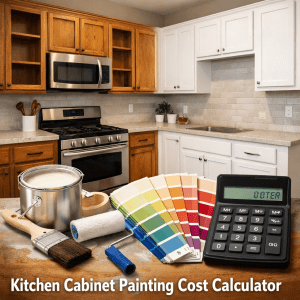
For homeowners considering cabinet painting as a specialized application of interior surface work, the complexity multiplies further. Cabinet surfaces require degreasing, sanding, bonding primer, and specialty cabinet-grade enamel to achieve a durable, professional finish, a scope that goes well beyond standard wall painting. If your project includes cabinets, our Kitchen Cabinet Painting Cost Calculator provides a dedicated estimate tool built specifically around the unique materials, labor, and process requirements that cabinet refinishing involves.
Textured walls and ceilings
Knockdown, orange peel, and popcorn textures all increase the effective paintable surface area beyond what the flat measurement captures, because paint must cover the three-dimensional surface of the texture rather than a flat plane. Standard texture can increase actual paint consumption by 15–25% compared to smooth surfaces. Popcorn ceilings in particular absorb paint aggressively and are also a potential asbestos concern in homes built before 1980, which should be tested before any sanding or disturbance.
Previously painted surfaces in poor condition
Walls with heavy gloss finishes, significant chipping, peeling, or flaking paint represent a condition issue rather than a surface type issue, but they drive costs in similar ways. Peeling paint must be scraped, sanded, and spot-primed before any finish coats are applied. Walls with heavy gloss require deglossing or scuff-sanding for the new paint to adhere properly. These prep steps add time, materials, and cost to any project involving surfaces that are not in good baseline condition.
Important note on lead paint: Homes built before 1978 may contain lead-based paint on interior surfaces. Sanding, scraping, or disturbing lead paint without proper precautions creates serious health hazards, particularly for children. Before starting any painting project in an older home that involves prep work on existing paint, consider testing with an EPA-approved lead test kit. If lead is present, work must comply with EPA Renovation, Repair, and Painting (RRP) rules, which require certified contractors for renovations affecting painted surfaces.
The Hidden Costs of Prep Work: Why Surface Preparation is the Most Underestimated Line Item in Any Painting Budget
If there is a single area where homeowners most consistently underestimate interior painting costs, it is surface preparation. Prep work is invisible in the finished product. You cannot look at a beautifully painted wall and see the hours of cleaning, patching, sanding, and priming that made it possible. This invisibility creates a persistent blind spot in budgeting, because people instinctively allocate their mental budget toward the visible outputs (paint color, sheen, area coverage) while underweighting the foundational work that determines whether any of those visible outputs will look good and last.
Professional painters are emphatic on this point for a simple reason: a poor paint job almost always traces back to inadequate preparation rather than low-quality materials or bad technique during the paint application itself. Paint applied over dirty surfaces, unsanded glossy finishes, or unfilled cracks will fail faster, adhere inconsistently, and look inferior from the day it is applied, no matter how much it costs per gallon. The prep work is not a cost to be minimized; it is an investment in the durability and appearance of everything that follows.
In terms of specific cost impact, surface preparation typically adds 20% to 40% to the total painting project cost when performed professionally. For a standard room that would cost $600 purely for paint application, professional prep might add $120 to $240 depending on the condition of the surfaces. For a whole-house project with significant repair needs, prep can represent a larger share still. Understanding the components of prep work helps you evaluate contractor quotes intelligently and make informed decisions about which prep elements are truly necessary versus which might be discretionary given your specific conditions.
Cleaning and degreasing: All surfaces should be cleaned before painting to remove dust, grease, smoke residue, and general grime that would interfere with adhesion. In kitchens and living spaces where cooking oils and airborne contaminants accumulate over years, this step is non-negotiable. Professional prep typically uses TSP (trisodium phosphate) substitute or dedicated degreasing solutions applied with a sponge or mop, followed by rinsing and allowing adequate drying time before paint is applied.
Patching and filling: Nail holes, small cracks, dents, and gouges in drywall should be filled with lightweight spackling compound or setting-type joint compound, allowed to dry completely, sanded smooth, and spot-primed before finish painting. Larger repairs, significant cracks, water damage areas, or holes from hardware removal, may require mesh patch kits, multiple compound applications, and more extensive sanding. Large-scale drywall repair beyond patching should be scoped and priced separately from painting.
Sanding: Light scuff-sanding is required on any surface where the existing finish is glossy or has imperfections that need to be smoothed before new paint is applied. Glossy surfaces must be dulled for the new paint to adhere properly. Patched areas must be sanded smooth and feathered into the surrounding surface. Woodwork and trim typically require more careful sanding than walls due to the sharper visual scrutiny trim receives in a finished room.
Priming: A coat of appropriate primer before finish paint is essential in several situations: bare or new drywall, patched areas, stain-blocking over water marks or smoke damage, color changes from dark to light, and transitioning from oil-based to latex paint systems. Skipping primer in these scenarios costs more in the end, because additional topcoats will be required to achieve the coverage that a primer coat would have delivered at lower cost per square foot.
Masking and surface protection: Professional painters invest significant time in masking floors, fixtures, hardware, and adjacent surfaces before painting begins. This step protects finished surfaces from paint, enables clean edges at every transition, and defines the quality level of the finished work. The time required for masking, often 1 to 2 hours per room, is real labor cost that is embedded in professional quotes and represents genuine value even if it produces no visible painted output by itself.
One area of prep work that touches on the boundary between interior painting and broader home repair is the condition of areas adjacent to exterior walls, particularly in older homes where moisture intrusion, settling, or exterior deterioration can manifest as interior wall damage. Cracks that trace along the perimeter of a room, water staining near windows or ceiling-wall junctions, and efflorescence on basement walls are all symptoms of external issues that paint alone cannot solve. Addressing these underlying problems before painting is essential; painting over active moisture or structural issues is a temporary cosmetic fix that will fail and often masks worsening conditions. For homeowners dealing with issues near chimneys, fireplaces, or masonry-adjacent interior walls, our Chimney Repair Cost Calculator can help estimate the scope of any underlying exterior repair that needs to happen before the interior surfaces can be properly prepared and painted.
If moisture, cracking, or deterioration near a chimney or masonry feature is driving interior paint failures, use the WalDev Chimney Repair Cost Calculator to estimate exterior repair costs before budgeting your interior painting project, addressing the source first ensures the painting investment lasts.
Material Volumetrics: How to Calculate Exactly How Many Gallons of Paint You Need
Calculating paint quantity accurately is one of the most practically useful skills in home improvement planning, and it is also one of the areas where people most consistently go wrong in both directions. Buying too little paint mid-project means a trip back to the store and the risk of a color batch mismatch if the exact paint lot was different. Buying significantly too much means money tied up in unused product that either ages in storage, gets disposed of, or sits in your garage for years. The goal is to buy exactly what you need, with a modest safety buffer, and that requires understanding the variables that determine how far a gallon of paint actually goes in a specific application context.
The theoretical coverage rate printed on paint can labels, typically 350 to 400 square feet per gallon, is measured under laboratory conditions on smooth, non-porous surfaces with optimal application technique. Real-world application almost always delivers lower coverage than the label suggests, due to surface texture, absorption variation, roller loading practices, and natural application variance. A practical working figure for most interior wall painting on standard previously-painted drywall is approximately 300 to 350 square feet per gallon per coat. For textured surfaces, porous surfaces, or first coats over bare material, plan for 250 to 300 square feet per gallon.
Once you have your net paintable area from the measurement process described in the previous section, the quantity calculation is straightforward: divide your total area by your expected coverage rate to get gallons needed per coat, then multiply by the number of coats planned. For most interior projects with good surface prep and standard color changes, two coats are the professional standard. Projects involving drastic color changes (particularly dark to very light), bare surfaces, or stain coverage may require three coats, which adds 50% to material costs.
Gallons Per Coat = Net Paintable Area (sq ft) ÷ Coverage Rate (sq ft/gallon)
Total Gallons for Walls = Gallons Per Coat × Number of Coats
Ceiling Gallons = Ceiling Area ÷ Coverage Rate × Number of Coats
Trim Paint (quarts) = Linear Feet of Trim ÷ 125 linear ft per quart × Number of Coats
Total Paint Budget = (Wall Gallons × Price/Gallon) + (Ceiling Gallons × Price/Gallon) + (Trim Quarts × Price/Quart)
A common and sensible practice is to buy paint in the largest container size available for the main color to minimize cost per gallon, then purchase smaller quantities for accent colors or trim. Most professional painters also buy approximately 10% more paint than the calculation strictly requires, this buffer accounts for touch-up needs during and after the project, maintains consistency if a second mixing is needed, and allows for the coverage variability that inevitably occurs in real application conditions.
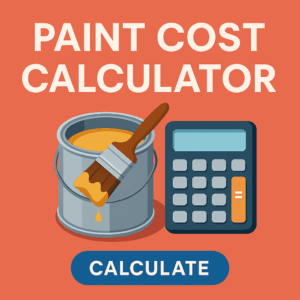
For a complete material cost picture that goes beyond quantity calculation into actual pricing, our Paint Cost Calculator is the ideal companion tool to use alongside the Interior Painting Cost Calculator. It allows you to factor in specific paint brand pricing, calculate costs per room, and generate a total material budget that separates material costs from labor, giving you the most granular and accurate cost breakdown possible for your specific project.
Once you know your room dimensions and gallon requirements, use the WalDev Paint Cost Calculator to build a full material budget based on the specific paint product and price you are working with. It handles walls, ceilings, and trim separately for maximum accuracy.
Professional vs. DIY Interior Painting: A Complete Analysis of Cost, Time, Quality, and ROI
The decision between hiring a professional painter and taking on an interior painting project yourself is not a simple cost comparison. It is a multi-variable decision that involves your available time, current skill level, the quality standard the project requires, the complexity of the surfaces involved, and the broader context of why the painting is happening. Getting this decision right requires thinking through all of those dimensions honestly rather than making it purely on the basis of which option has a lower upfront cash outlay.
On a pure material cost basis, DIY interior painting does deliver genuine savings. A homeowner purchasing paint, primer, rollers, brushes, drop cloths, tape, and other supplies for a standard 3-bedroom home interior might spend $400 to $800 in materials. The same project completed professionally might cost $4,000 to $7,500. The difference, $3,200 to $6,700, represents real money, and for homeowners with strong painting skills, adequate time, and manageable project complexity, that savings is achievable. But the comparison changes significantly when you assign an honest value to the time invested.
| Factor | DIY | Professional | Verdict |
|---|---|---|---|
| Upfront cash cost | $400–$800 (materials only) | $3,500–$12,000+ | DIY wins on cash outlay |
| Time investment | 40–120 hours for whole house | 3–7 crew-days, minimal homeowner time | Pro wins on time efficiency |
| Finish quality | Variable; highly skill-dependent | Consistent; experience-backed | Pro typically wins on quality |
| Prep quality | Often under-done by inexperienced DIYers | Professional standard; included in scope | Pro typically wins on prep thoroughness |
| Equipment access | Limited to consumer tools unless rented | Professional sprayers, scaffolding, full toolkit | Pro wins on equipment quality |
| Warranty / accountability | None | Reputable contractors warranty their work | Pro wins on accountability |
| Flexibility and control | Full control of schedule and product choices | Coordinating around contractor schedule | DIY wins on flexibility |
| Pre-sale home value impact | Depends on quality; buyers notice amateur work | Professional finish supports asking price | Pro wins for pre-sale contexts |
The time analysis deserves particular attention because it is the factor most consistently underestimated by homeowners considering a DIY approach. A reasonably skilled DIYer painting a standard 12-foot by 14-foot bedroom, including moving furniture, masking, priming, two coats, trim, and cleanup, can expect to invest 8 to 12 hours. That is a full working day or two half-days for a single room. For a 3-bedroom home with hallways, a living room, kitchen, and bathrooms, the total time investment reaches 50 to 80 hours for a careful, thorough job. If your time has any market value, through paid work, lost leisure, or family obligations, that time cost belongs in your DIY-versus-professional calculation alongside the material savings.
Quality level matters enormously when the purpose of the painting project is to support a home sale. Buyers and their agents notice amateur paint work, drips on trim, ragged cut lines at ceilings, roller marks, patchy coverage in corners. These defects do not just fail to help the sale; they can actively hurt it by signaling to buyers that the home has been maintained by inexperienced hands. For any pre-sale painting project, the investment in professional execution is almost always justified by the impact on buyer perception, offer quality, and time on market.
When DIY makes strong sense
DIY interior painting is a legitimate and cost-effective choice for homeowners with painting experience, adequate time, manageable scope (one or two rooms), standard ceiling heights, good surface conditions requiring minimal prep, and no immediate sale motivation. The cost savings are real in these scenarios, and the quality outcome is achievable if the work is done carefully and methodically. Investing in quality materials and tools narrows the gap between DIY and professional finish quality significantly.
When professional painting is clearly worth it
Professional painting delivers the best value for whole-house projects, homes being prepared for sale, rooms with high ceilings or complex architectural detail, surfaces requiring extensive prep, situations where the homeowner’s time is genuinely constrained, and any project where long-term durability and appearance consistency are priorities. The warranty coverage provided by reputable contractors also provides a layer of protection that DIY work cannot replicate.
Home Value Impact: How Fresh Interior Paint Affects Appraisals, Buyer Perception, and Sale Prices
Interior painting sits in a distinctive position among pre-sale home improvement investments: it is one of the lowest-cost projects available in terms of absolute dollar expenditure, while consistently ranking among the highest in measurable impact on buyer perception and sale outcomes. Understanding why fresh paint has this disproportionate effect helps homeowners make smarter decisions about when and how much to invest in interior painting as part of a sale preparation strategy.
The mechanism behind paint’s outsized influence on buyers is largely psychological and cognitive. When a buyer enters a home, their brain is continuously processing and categorizing signals about the property’s condition, maintenance history, and livability. Fresh, clean, neutral-colored walls communicate care, modernity, and move-in readiness in a way that is immediate and difficult to rationally dismiss even for experienced buyers. Conversely, dated colors, faded or scuffed paint, and visibly worn surfaces trigger the brain’s “cost and effort” assessment, buyers begin mentally accumulating the work they would need to do after purchase, and that mental accounting reduces the offer they feel justified in making.
From a quantitative standpoint, the National Association of Realtors Remodeling Impact Report has repeatedly identified interior painting as one of the top three pre-sale improvements by cost recovery, with most analyses suggesting homeowners recover 107% to 150% of the painting investment in increased sale price and reduced days on market, making it one of the few home improvements that reliably returns more than it costs. For a $5,000 interior painting investment, a 130% return represents $6,500 in additional home value or reduced price negotiation, a net gain of $1,500 on top of the full project cost recovery.
Color choice plays a critical role in maximizing the value impact of a pre-sale paint project. Real estate professionals consistently recommend neutral, light, and broadly appealing color schemes, warm whites, warm grays, soft greiges, rather than strong personal color choices. The goal is to help buyers visualize themselves in the home, which requires a visual canvas that does not impose the previous owner’s aesthetic preferences. Accent walls and bold colors that the current owners may love can actually work against sale outcomes by triggering “paint over” thinking in buyers who prefer different palettes.
For homeowners not preparing for sale, the value case for interior painting is more about livability, psychology, and maintenance rather than measurable financial return. Research in environmental psychology consistently links fresh, clean living spaces to reduced stress and improved mood, benefits that are real and meaningful even if they do not show up on an appraisal. From a maintenance perspective, keeping interior paint fresh also protects surfaces from accumulated damage: walls that are regularly updated are less likely to develop the substrate damage from embedded grime, moisture, and physical impacts that makes eventual repairs more expensive. Combine the Interior Painting Cost Calculator with our full range of tools at WalDev to plan a phased home maintenance and improvement program that maximizes both livability and long-term property value.
Interior painting also plays a supporting role in the appraisal process. Appraisers are trained to assess condition systematically, and visibly poor paint condition is typically noted as a condition adjustment that reduces the appraised value. Fresh paint brings a home to “average” or “good” condition in this dimension, which influences the comparable adjustment analysis that determines appraised value, most directly in purchase transactions where the lender requires the appraisal to support the contract price.
25-Question Interior Painting Master FAQ: Answers to the Questions Homeowners Actually Ask
How much does it cost to paint the interior of a house in 2026?
In 2026, the average cost to paint the interior of a house ranges from $1,800 to $7,000+ depending on square footage, number of rooms, ceiling height, surface condition, and local labor rates. Most homeowners pay between $2 and $6 per square foot for professional interior painting including both labor and materials. High-cost markets such as New York, San Francisco, and Boston regularly see total project costs 30–50% above the national average for equivalent scope. Use our Interior Painting Cost Calculator to generate a localized estimate based on your specific project variables.
How much do painters charge per square foot for interior work?
Professional painters typically charge between $1.50 and $4.00 per square foot for interior walls, with labor alone accounting for $1.00 to $3.00 of that range. Ceilings, trim, and specialty surfaces command higher per-square-foot rates due to the additional difficulty and time involved. Regional labor markets vary significantly, major metropolitan markets consistently run 30–50% above the national average for professional painting labor.
What is the best way to calculate how much paint I need for a room?
Measure the room perimeter (all wall lengths added together), multiply by the ceiling height for gross wall area, subtract approximately 20 square feet per door and 15 square feet per standard window to get net wall area, then divide by 350 square feet per gallon and multiply by 2 for two coats. Our Square Feet Calculator handles the measurement math, and our Paint Cost Calculator converts gallons needed into material budget figures based on your specific product pricing.
Is it cheaper to paint a house yourself or hire a professional?
DIY interior painting typically costs 60–75% less in cash outlay than hiring a professional, but that figure excludes the significant time investment (a 3-bedroom home requires 50–80 DIY hours for a careful, thorough job). For homes being prepared for sale, complex surfaces, high ceilings, or any situation where quality consistency is critical, professional painting typically delivers a better overall outcome, and often returns more than its cost in reduced sale price negotiation and buyer perception value.
How much does ceiling painting cost compared to walls?
Ceiling painting typically costs 30–50% more per square foot than wall painting due to the physical difficulty of overhead work, higher drip protection requirements, and the additional time required for proper masking of walls and fixtures below. Budget for ceilings separately in your project estimate rather than blending them into the per-square-foot wall rate.
How long does it take to paint a room professionally?
A professional painter typically completes a standard 12×12 foot bedroom in 4–6 hours including prep, two coats on walls, and cleanup. Larger living rooms or rooms requiring extensive prep can take 8–12 hours per painter. Whole-house projects are typically quoted in crew-days: a 3-person crew usually completes a 2,000 square foot home in 3–5 days depending on condition and complexity.
What factors make interior painting cost more than average?
Key above-average cost drivers include ceilings higher than 9 feet, heavily textured or damaged walls requiring significant repair, dark existing colors requiring 3+ topcoats, intricate millwork and trim, oil-based-to-latex transitions requiring special primer, premium or specialty paint products, and urban markets with elevated labor rates. Identifying these factors before getting contractor quotes allows you to have an informed conversation about what scope is genuinely necessary versus what is optional.
Do I need to prime before painting interior walls?
Priming is essential when painting over bare or new drywall, covering stains or water damage, making a significant color change from dark to light, painting over glossy finishes, or transitioning from oil-based to latex paint. In these situations, skipping primer typically increases the number of topcoats required, costing more in paint and labor than the primer would have added to the project.
Can you paint over oil-based paint with latex paint?
Yes, but the surface must first be lightly scuff-sanded and coated with a shellac-based or oil-based bonding primer. Applying latex paint directly over an intact oil-based finish without this intermediate step will result in poor adhesion, peeling, and paint failure within months. The primer bridges the chemical incompatibility between the two paint systems and ensures long-term adhesion.
How does humidity affect interior painting?
High humidity (above 70% relative humidity) slows paint drying dramatically, increases the risk of sagging and running, can trap moisture under the paint film leading to blistering or mold growth, and interferes with proper adhesion. For best results, paint when indoor relative humidity is between 40% and 65% and temperature is between 50°F and 90°F. Use a dehumidifier in damp spaces such as basements before painting.
What are VOCs and do they matter for interior painting?
VOCs (volatile organic compounds) are chemicals that off-gas from paint as it cures, contributing to indoor air quality concerns. Low-VOC paints (under 50g/L) and zero-VOC paints (under 5g/L) are widely available and strongly recommended for bedrooms, children’s rooms, and spaces with limited ventilation. Premium low-VOC products today match the performance of conventional paints in durability and coverage while providing meaningfully better indoor air quality during and after application.
How do I get an accurate interior painting quote from a contractor?
Get at least three written estimates that specify scope of work, number of coats, paint brand and sheen, prep included, and timeline. Use our Interior Painting Cost Calculator to establish a baseline before speaking with contractors. If a quote is more than 25–30% below the calculator estimate, ask detailed questions about what is being excluded from the scope, unusually low bids often reflect reduced prep, cheaper paint, or fewer coats than the project requires.
What is the best paint sheen for interior walls?
Eggshell and satin finishes are the most versatile choices for living rooms, bedrooms, and hallways, offering slight sheen that is easier to clean than flat paint without the reflectivity of semi-gloss. Semi-gloss and gloss are best for trim, doors, and high-moisture areas. Flat or matte paint is ideal for ceilings and low-traffic rooms where washability is less important than visual smoothness.
How much should I budget for paint prep work?
Surface preparation typically adds 20–40% to the total painting cost when done professionally. Budget approximately $0.50 to $1.50 per square foot for standard prep including cleaning, patching nail holes, light sanding, and priming. Extensive repairs involving large drywall damage or water intrusion can add significantly more and may need to be scoped as a separate line item from the painting contract itself.
Does fresh interior paint actually increase home value?
Yes, strategically applied fresh interior paint in neutral colors consistently delivers among the highest ROI of any pre-sale home improvement. Industry analysis suggests homeowners recover 107–150% of their painting investment in improved sale price and reduced days on market. Neutral, freshly painted interiors help buyers visualize themselves in the home, reduce the mental “work needed” calculation, and signal general property care to both buyers and appraisers.
What is the cost difference between painting drywall versus wood paneling?
Wood paneling typically costs 25–50% more to paint than standard drywall due to the need for thorough degreasing, scuff-sanding, a shellac or bonding primer to prevent tannin bleed, and often more topcoats over the panel grooves for a uniform finish. If achieving a completely smooth appearance is the goal, filling panel grooves with joint compound adds further labor and drying time to the project scope.
How many square feet can one gallon of paint cover?
Most interior latex paints cover approximately 350 to 400 square feet per gallon on smooth, previously painted surfaces in a single coat. Textured, porous, or bare surfaces reduce this to 250–300 square feet per gallon. Always check the coverage rate on the specific paint can and plan for at least two coats for a professional-quality finish. Use our Paint Cost Calculator to generate a full material quantity and cost estimate for your project.
Should I paint the ceiling or walls first in a room?
Always paint the ceiling first, then walls, and finally trim. This order allows ceiling overspray and roller splatter to fall onto unpainted wall surfaces, which will be painted over during the wall phase. Reversing this sequence wastes cleanup time and increases the risk of fresh wall paint being contaminated by ceiling work.
What type of roller nap should I use for interior walls?
A 3/8-inch nap roller is the standard choice for smooth to lightly textured walls. Use a 1/2-inch nap for moderate texture and a 3/4-inch nap for heavy texture or masonry. Thinner nap produces a smoother finish on flat surfaces; thicker nap holds more paint and penetrates texture better but leaves a slightly rougher surface appearance.
How do I calculate how many gallons of paint I need for a whole house?
Calculate net wall area per room (perimeter × ceiling height, minus doors and windows), add ceiling area where applicable, total all rooms, divide by your working coverage rate (300–350 sq ft/gallon), and multiply by the number of coats planned. Add separate calculations for trim and ceilings using the appropriate coverage rates for each. Use our Square Feet Calculator for measurements and our Paint Cost Calculator for the final material budget.
Can I paint over wallpaper instead of removing it?
While technically possible in limited situations, painting over wallpaper is strongly discouraged by most painting professionals. Wallpaper seams and bubbles telegraph through paint, moisture from latex paint can loosen adhesive and cause bubbling, and future removal becomes exponentially more difficult. Removing wallpaper before painting almost always produces better long-term results and is the standard professional recommendation for any quality painting project.
What is the average cost to paint interior trim and doors?
Painting interior trim professionally typically costs $1.00 to $3.00 per linear foot. Door painting averages $75 to $150 per door including both sides and the frame. Paneled or raised-detail doors take significantly longer than flat-slab doors due to the additional brush work required in the recessed panel areas, and are priced accordingly, often at the higher end of the per-door range.
How does ceiling height affect interior painting costs?
Standard 8–9 foot ceilings are included in most base rate quotes. Ceilings from 9 to 12 feet typically add 10–20% to labor costs due to ladder requirements. Ceilings over 12 feet or vaulted ceilings can add 30–50% or more due to scaffolding needs, extended setup time, and additional safety requirements. Always disclose ceiling height when getting contractor quotes to ensure the estimate reflects the actual working conditions.
What is the cost of painting a single room versus a whole house?
A standard bedroom professionally painted typically costs $350 to $750. Whole-house projects benefit from contractor economies of scale, crew and equipment mobilization costs are spread across more rooms, reducing per-room cost by approximately 15–25% compared to individual room bookings. For multi-room projects, always get a whole-house quote alongside individual room quotes to compare the economic advantage of doing everything at once versus phasing the work.
How do I know if my painter’s estimate is fair?
A fair estimate should itemize labor and materials separately, specify the paint brand, grade, and coat count, describe the prep scope included, and provide a timeline. Use our Interior Painting Cost Calculator as your baseline reference before collecting bids. Quotes more than 30% below the calculator estimate warrant careful scrutiny, ask specifically what is excluded from prep, what paint brand and grade will be used, and whether the stated coat count is realistic for your current surface conditions.
Final Thoughts: How to Use This Guide and Your Calculator Results with Confidence
A well-informed homeowner is a better client, a smarter DIYer, and a more effective project manager, and that is precisely what this guide is designed to create. Interior painting is one of the most common and most impactful home improvement investments available, and approaching it with the right planning tools transforms it from a source of budget anxiety into a predictable, controllable project with a clear financial and visual outcome.
The Interior Painting Cost Calculator gives you the financial baseline. The measurement methodology in this guide gives you accurate inputs. The surface and prep sections help you identify the complexity factors that will drive your specific project’s cost above or below average. The DIY-versus-professional analysis helps you make the right choice for your specific situation. And the FAQ addresses the specific, nuanced questions that arise when theory meets the reality of an actual home.
When you are ready to extend this planning beyond painting, to flooring, structural work, outdoor improvements, or full renovation planning, WalDev has the full toolkit waiting. Our home improvement calculators cover every major project category with the same philosophy that drives this page: structured, accurate, actionable planning that replaces guesswork with clarity.