Free Army Height & Weight Calculator (AR 600-9) – With % Body Fat Check
Check whether a Soldier passes the Army height and weight screening table, see the maximum screening weight for the selected age and sex, estimate body fat using the current one-site abdomen method, compare it to the age-based body fat standard, and optionally apply the current Army Fitness Test exemption rule.
Enter Soldier details
Add sex, age, height, weight, and abdominal circumference. The calculator will first check the Army screening table. If the Soldier is over screening weight, it will estimate body fat and compare it to the maximum allowable standard for that age group. You can also apply the current AFT exemption rule.
1) Height is converted to total inches and rounded to the nearest whole inch for screening.
2) Screening weight is pulled from the Army weight-for-height table by sex, age group, and height.
3) If screening weight is exceeded, estimated body fat is calculated using the current one-site abdomen method:
Male: %BF = -26.97 – (0.12 × weight in lb) + (1.99 × abdomen in inches)
Female: %BF = -9.15 – (0.015 × weight in lb) + (1.27 × abdomen in inches)
4) Estimated body fat is compared against the age-based Army maximum allowable body fat standard.
5) Optional AFT exemption logic: if a Soldier scores 465+ with at least 80 in each event and completes all 5 primary events, they are deemed in compliance with the Army body fat standard until the next qualifying record AFT.
Free Army Height & Weight Calculator (AR 600-9) Guide: How Screening Weight, Tape Referral, and Body Composition Planning Work
An Army Height & Weight Calculator is most useful when it is understood as a screening tool rather than a final official determination. Soldiers, recruits, family members, coaches, and military-focused fitness planners often want a fast way to see whether a height-and-weight entry appears to fall within the screening table or above it. That is where this kind of calculator helps. It takes your sex, age, height, and body weight, compares them to the screening-table style threshold used in the calculator, and gives you a practical first-pass result that can tell you whether you appear to be within the table or whether a body-fat measurement process would generally be the next step.
The key point is that screening weight is not the entire body composition story. A screening table is designed to be fast and simple, but real-world military body composition processes involve official procedures, administrative guidance, and formal measurement steps. That is why this guide explains not only how to use the calculator, but also how to interpret the result responsibly. If you want more tools around body metrics, nutrition, pregnancy timing, health tracking, calorie planning, and related wellness measurements, the broader health calculators category is a natural next stop.
This article also includes related health links in a practical way, because people checking military weight screening often also want to understand body composition, calorie intake, dosage logic, kidney function, due dates, sobriety tracking, or reverse goal-setting. That is why tools like the Free Body Fat Percentage Calculator – Track Your Fitness Easily, Free Reverse BMI Calculator – Find Your Ideal Weight Instantly, and Ultimate BSA Calculator for Accurate Body Surface Area Measurement often fit naturally into the same planning workflow.
What the Army Height & Weight Calculator actually does
This calculator is designed to estimate whether a person appears to be within a screening-table style maximum for height, sex, and age grouping or whether they appear above that screening threshold. In simple terms, it helps answer a first question: based on the values entered, does the person look like they would likely remain inside the screening table, or would they likely move on to the next body composition step?
That means the calculator is most useful for pre-checking and planning. It is not a substitute for official measurement, official administrative handling, or command-level decisions. It is a practical guide. If the result shows that the entered weight is within the table maximum, that suggests the person appears to pass the screening layer represented in the calculator. If the result shows that the person is above the table threshold, that usually means the screening table alone would not close the question and further body composition assessment would generally become relevant.
This is why the calculator should be viewed as an entry point. It gives structure to a common question, but it does not replace formal procedures. That distinction matters because many users confuse “above screening table” with immediate failure, when in practice the body composition conversation is usually more layered than that.
Fast screening
Good for quickly checking whether a height and weight entry appears inside or above the screening threshold used by the tool.
Planning support
Useful for personal fitness planning, recruiter preparation, and early self-checking before formal evaluation.
Education
Helpful for understanding that screening weight and full body composition review are not the same thing.
Why screening calculators matter in practice
A screening calculator matters because uncertainty creates avoidable stress. Someone preparing for enlistment, trying to return to standards, or simply planning a body-composition goal often wants to know where they stand before stepping into an official process. A calculator provides a first layer of clarity. It helps users see whether the current weight looks comfortably under the screening level, close to it, or above it.
That clarity can improve decision-making. A user who is far below the table maximum may decide to shift focus toward performance, strength, and general conditioning. Someone very close to the threshold may realize that small day-to-day fluctuations in hydration, food intake, and measurement timing matter more than expected. Someone above the screening threshold may recognize that the next priority is not panic, but structured preparation, body composition awareness, and a better understanding of what the official process does next.
In other words, the value of the calculator is not only the pass-like or above-table output. Its value is the planning perspective it creates. It helps users shift from vague worry to measurable preparation.
How the Army Height & Weight Calculator works
The calculator starts with four essential inputs: sex, age, height, and body weight. Height is converted into total inches so the measurement can be compared against the screening table framework inside the tool. Age is placed into the relevant age grouping used by the calculator. Once those values are in place, body weight is compared against the maximum screening-table weight for the matching height and age group.
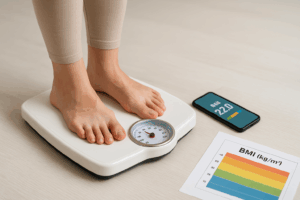
If the entered body weight is within the table maximum, the calculator reports that the entry is within the screening table. If the entered body weight is above the table threshold, the calculator reports that the value is above the screening table and indicates that tape or body-fat assessment would generally be the next step. The calculator also shows a BMI estimate as a reference point, but that BMI value is not the same as an Army body-fat determination.
Feet and inches are combined into one standard height figure so the table lookup can work properly.
Age matters because screening thresholds can vary by age grouping inside the calculator’s logic.
The entered body weight is checked against the table-style maximum for the matching height, sex, and age bracket.
The calculator tells you whether the entry appears within the screening table or above it, and whether tape would likely be the next step.
The calculator is intentionally framed as a screening tool. It helps you understand where you appear to stand, but it does not replace official body composition procedures.
Understanding every input before you trust the result
The result is only as useful as the information entered. That is why it helps to understand each input clearly. Even a small measurement mistake can shift the result, especially when someone is close to the screening threshold.
Sex
This matters because the calculator uses sex-specific screening data structure. Selecting the wrong option can make the result meaningless.
Age
Age determines which grouping the calculator applies. Entering the wrong age can push the result into the wrong bracket.
Height in feet and inches
Height should be entered carefully, because one inch can change the maximum allowable screening weight enough to affect the outcome.
Body weight
Weight should be entered as accurately as possible and ideally measured under consistent conditions rather than guessed.
BMI estimate
This is shown as a general body-size reference, but it is not the same thing as an Army body-fat result and should not be treated as one.
Difference from threshold
This helps you see not only pass-like or above-table status, but how close you are to the screening maximum used in the calculator.
How to use the calculator step by step
Start with a fresh, honest measurement rather than a remembered number from weeks ago. Measure body weight in pounds on a reliable scale. Then enter height carefully in feet and inches. After that, select sex and enter age. Once all four fields are correct, calculate the result and review not only the status line, but also the table maximum, your difference from it, and whether tape would likely be required.
The best way to use the result is comparatively and strategically. If you are well within the screening threshold, that creates one kind of planning confidence. If you are close to the threshold, it suggests that consistency in routine, weigh-in timing, and preparation matters. If you are above the threshold, it tells you to shift focus toward body composition planning rather than relying on simple scale reduction alone.
Use a reliable scale and avoid relying on old remembered numbers if you want a meaningful result.
Even a one-inch error can change the threshold enough to alter the calculator outcome.
These are not minor fields. They affect how the tool applies the table-based structure.
Do not stop at pass-like or above-table. The margin matters for planning and self-monitoring.
Above-table status usually means more information is needed, not that the entire process is already decided.
Screening weight is not the same as a full body-fat determination
This is the most important concept in the entire guide. A screening table is a fast filter. It is designed to answer the question “Does this person appear clearly within the table-based screening threshold?” If the answer is yes, the process is simpler. If the answer is no, the next layer of body composition assessment becomes relevant.
That means being above the screening table is not the same as receiving a final body composition failure judgment through this calculator. It means the screening table alone is not enough to close the question. Many users misunderstand this and assume that a number above the screening threshold means the entire situation is already decided. That is not the right way to view the screening result.
This is why related tools like the Free Body Fat Percentage Calculator – Track Your Fitness Easily can be useful for broader body-composition thinking. That kind of tool does not replace official military assessment either, but it can help users better understand the difference between body weight alone and body composition.
Use the calculator result as a screening signal. Do not treat it as an official replacement for formal procedures, official measurements, or administrative determinations.
Why BMI is shown as a reference but should not be treated as the deciding metric
BMI is helpful in some general health discussions because it connects height and weight in a simple ratio. It can offer a quick personal reference point and help users see whether they are trending upward or downward over time. But BMI is a broad population-level screening concept, not a military body-fat process by itself. That is why the calculator shows it only as a secondary reference.
A muscular person can look heavier on paper than a sedentary person at the same height even if the body composition picture is very different. That is one reason BMI should never be treated as a perfect indicator of readiness, fitness quality, or body-fat distribution. It is useful context, but it is not the whole story.
If you are trying to work backward from a target weight rather than just interpreting a current measurement, the Free Reverse BMI Calculator – Find Your Ideal Weight Instantly can be a useful companion tool because it helps frame weight goals more deliberately. Likewise, the Ultimate BSA Calculator for Accurate Body Surface Area Measurement can be helpful for people exploring broader body metrics in health-related contexts.
How to prepare before measuring height and weight
Consistency matters. People often think only about the number itself, but not about the conditions under which the number was taken. Weight can move based on hydration, food intake, time of day, clothing, and recent training. Height measurement can shift with posture, shoes, and sloppy rounding. If you are close to the threshold, these details matter more than you might think.
A sensible self-check routine is to weigh at a consistent time, use the same scale where possible, avoid heavy clothing, and enter measurements as accurately as you can. If your result is close to the threshold, repeat the check under similar conditions rather than reacting emotionally to one isolated reading.
| Preparation habit | Why it matters | Practical effect |
|---|---|---|
| Use the same scale | Different scales can produce slightly different readings. | Improves consistency over time. |
| Measure at a similar time of day | Weight can fluctuate across the day due to fluids and meals. | Makes weekly comparisons more meaningful. |
| Enter exact height | Height affects the screening threshold used in the calculator. | Prevents avoidable classification errors. |
| Track trends, not one number | Single weigh-ins can be noisy. | Supports calmer, more rational planning. |
How to use the result in fitness, weight management, and readiness planning
The calculator is most powerful when used as a planning checkpoint rather than a judgment device. If you are comfortably within the screening threshold, the right lesson may be to stay consistent and focus on performance, endurance, recovery, and sustainable eating habits. If you are close to the threshold, then stability becomes the goal: better weight control, smarter meal timing, more awareness of hydration, and fewer large fluctuations.
If you are above the screening threshold, the answer is rarely to slash weight recklessly. A rushed, extreme approach can backfire on strength, energy, training quality, and long-term compliance. A better path is usually to improve body composition gradually and systematically. That often means smarter calorie intake, consistent training, sleep discipline, and better body metric awareness rather than simple crash dieting.
This is where related tools can support the bigger picture. Someone looking at body weight standards may also want to examine calorie intake using the Free CAVA Calorie Calculator – Build & Track Your Bowl, the Free Starbucks Calorie Calculator, or even the Free Panda Express Nutrition Calculator and Meal Builder if restaurant choices are part of the real-world nutrition problem. The screening number itself is important, but daily habits are what move the number.
Common mistakes to avoid when using an Army Height & Weight Calculator
The most common mistakes are usually not technical. They come from interpretation problems. People either treat the calculator as too weak to matter or too strong to question. The smart middle ground is to use it seriously as a screening guide while still understanding its limits.
If height or weight is approximate, the result may be misleading, especially close to the threshold.
Above-table status generally points to the next step, not a full official conclusion by itself.
BMI can be useful context, but it is not the same thing as an official body composition result.
A single reading can create stress that disappears when trends are measured more consistently.
Restaurant meals, sleep, hydration, and routine consistency often matter more than short-term panic strategies.
How to interpret your result correctly
A “within table” result is best interpreted as “you appear to be within the calculator’s screening threshold based on the values entered.” It does not mean every official requirement has been fully satisfied in every context. An “above table” result is best interpreted as “the screening table alone likely does not resolve the question, so body-fat assessment would generally be the next relevant layer.”
The real value of the output is not only the status label. It is the margin. Someone ten or fifteen pounds under the screening threshold is in a very different planning situation from someone one pound below it. In the same way, someone slightly above the threshold is in a different position from someone far above it. That is why the difference-from-maximum field is so useful. It gives shape to the result.
If you are using the calculator for readiness planning, a smart approach is to review the result together with body-composition awareness, nutrition behavior, and trend tracking. That broader approach is much more reliable than focusing on one isolated weigh-in.
Frequently asked questions about the Army Height & Weight Calculator
Does this calculator tell me whether I officially pass Army body composition?
No. It is a screening guide that helps show whether the entered values appear within or above the screening table used by the calculator. Official body composition outcomes depend on formal procedures and current guidance.
If I am above the screening table, does that automatically mean I fail?
Not in the way many people assume. Being above the screening threshold generally means the next body composition step becomes relevant rather than the screening table alone settling the matter.
Why does the calculator show BMI?
BMI is shown as a general reference because many users recognize it, but it is not the same thing as an Army body-fat determination and should not be treated as the final deciding metric.
How important is exact height entry?
Very important. A one-inch difference can change the screening threshold enough to affect the calculator result, especially for users close to the limit.
Can I use this calculator for fitness planning even if I am not in the Army?
Yes. Many people use screening calculators for structured self-checking, but they should still understand that this tool is tied to military-style screening logic rather than general civilian wellness standards.
What other tools should I use with this one?
The body fat percentage calculator, reverse BMI calculator, and the wider health calculators category are some of the most natural next steps.
Can restaurant calorie tools really help with military weight planning?
Yes. People often underestimate how much real-world eating patterns affect body weight trends. Tools like the CAVA calorie calculator, Starbucks calorie calculator, and Panda Express nutrition calculator can support more realistic habit planning.
Where can I find more tools like this?
The best place to continue is the full health calculators category, which includes body metrics, due date tools, dosage tools, food calculators, and other health-related estimators.
Final thoughts
The Army Height & Weight Calculator is most useful when it is used calmly and correctly. It gives you a structured screening-style check, helps you understand where your current height and weight entry stands relative to the table used in the tool, and points you toward the next layer of planning. That alone can reduce confusion and turn anxiety into something more measurable.
It also reinforces an important lesson: body weight screening is not the same thing as a full body composition understanding. The smartest users treat the calculator as a starting point, then combine it with habit-level thinking, body-composition awareness, and practical planning around training, nutrition, and consistency.
When you want to keep building that broader health picture, move naturally into the health calculators category. That way the screening result becomes part of a larger, more useful health workflow instead of a single isolated number.